Octane Files
Explore CarsBugatti Chiron

Bugatti Chiron

Overview

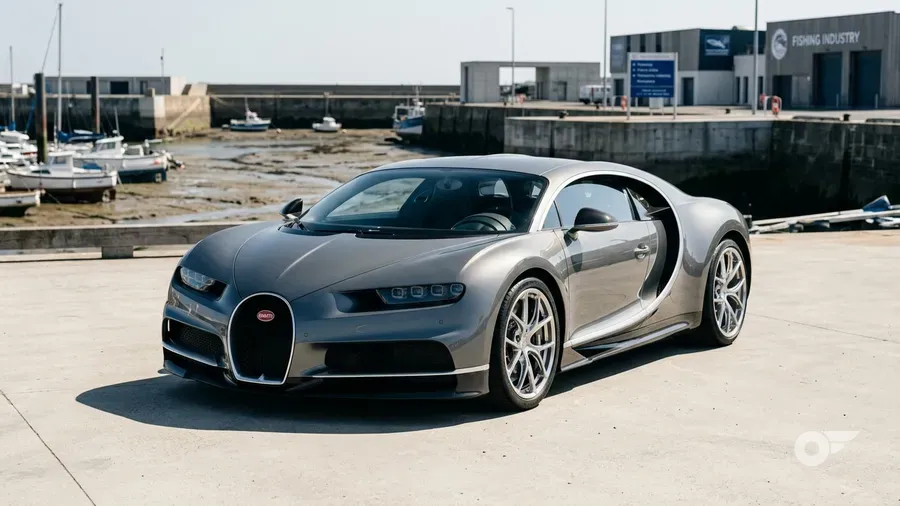
The lazy version is that the Chiron is a Veyron with more boost. The W16 does carry over, and Wikipedia is blunt that it is the main component which does, but very little else survived. The engine was reworked to 1,500 PS at 6,700 rpm and 1,600 Nm from 2,000 rpm, which is 221 kW more than the most powerful Veyron ever built. The carbon monocoque, the aerodynamics, the cooling, the suspension and the cabin are all new. Bugatti showed the car at Geneva on 1 March 2016 having already sold the first 200, and capped the run at 500. It reached the cap: the last, a Super Sport called L'Ultime, left Molsheim in May 2024 with the number 500 engraved through the interior, and a single Chiron Profilee built outside the allocation makes 501 W16 Chirons in the world. Along the way it took the 0-400-0 km/h record with Juan Pablo Montoya driving, and in August 2019 a prototype ran 490.484 km/h at Ehra-Lessien. That figure is the one everyone repeats and the one most often reported wrongly, which is where the Chiron's real story starts.

Distinctions

The defining attributes and collector status that make this car garage-worthy.

Legend
A car that transcended the hobby, known far beyond the people who drive them.
Poster Car
The car on the bedroom wall, the one people dreamed about before they could drive.
Octane Files Select
Renowned for its history, engineering, or cultural weight.

Collectibility scorecard

Rated 1 to 10 on the traits that matter for owning, driving, and holding on to a car like this.

Desirability
9/10
Rarity
7/10
Driving thrill
8/10
Investment trajectory
7/10
Usability
5/10
Ease of restoration
2/10
Cultural impact
8/10
Electronic dependence
Fully analogHeavily electronic

Every system on this car is mediated. The W16 runs drive-by-wire throttle, direct injection and four turbochargers under electronic management, and the seven-speed dual clutch, the all-wheel-drive split, the traction and stability control, the hydraulic rear wing and the adaptive dampers all share a network. The active aerodynamics change the car's shape and ride height with speed and under braking, and top-speed mode is a software state entered with a second key rather than a mechanical setting. One of the 2020 recalls makes the point neatly: the defect was that the stability system failed to return to its default after an ignition cycle, a fault that can only exist because the behaviour is software in the first place. The cabin resists screens, but nothing behind it is analog.

Market data

Demand tier, price trend, and typical values by condition. Our own assessment, not a quoted valuation.

Demand tier
EntrySolidHighBlue-chip

The proven elite. Values are established, liquid, and defended at every auction.

Value trajectory
AppreciatingStableCooling

Values are holding steady. What you pay today is what it's worth tomorrow.

Price by condition
Driver
$2.6M
Excellent
$3.2M
Concours
$3.8M

The band covers the base Chiron and the Chiron Sport, roughly 267 of the 501 cars. The pattern is flat with a firming top rather than a straight climb. Early flip-market results in 2017 and 2018 were the highest the model has seen, and base cars settled below them: a 2,200-mile 2018 example sold on Bring a Trailer in May 2025 for 2,850,000 dollars against a 3,192,750 dollar original list. The 2026 season was stronger. RM Sotheby's took 3,670,000 dollars for a 1,281-mile 2019 Chiron Sport at Monterey in August, and Bonhams sold a 2024 Super Sport at Laguna Seca for 4,570,000 dollars as the top lot of the sale. Super Sports, Pur Sports and 300+ cars sit above the band and behave as a separate market. Sell-through at public auction runs low, around 40 per cent, so reserves frequently go unmet and the cars that do sell are not a complete picture of what the model is worth.

Values as of August 2026.

Buyer's guide

What anyone seriously considering this car should know first.

Why it's worth it
The first road car rated at 1,500 PS, and the platform under six other Bugattis
Callout
The 304.773 mph run was one way, in a prototype, so it set no official record
What to watch for
The Chiron is young enough that you are buying paperwork and specification rather than assessing decay. Start with the build sheet, because a great deal of the money sits in what was ordered: exposed carbon, two-tone paint and Sur Mesure work add up fast, and a 2018 car sold publicly in 2025 carried 194,000 dollars of options against a 3,192,750 dollar list price. Establish which variant you are looking at, since Sport, Pur Sport, Super Sport and 300+ are separate cars with separate markets and the badges are easy to misread. Confirm the recalls: seat recliner brackets on 47 early cars, a stability control software fault on 73, a rear left driveshaft on four, and a US seatbelt chime affecting 156 cars from 2016 to 2023. Check tyre dates rather than tread. Ask how the car has been used, because unlike most of the Molsheim limited runs, Chirons genuinely get driven, and mileage here is closer to a sign of health than a discount. Establish warranty status before anything else.

The Story

Driving character

What surprises people about a Chiron is not the speed, which is expected, but how little it asks of you the rest of the time. It trickles through traffic with the gearbox slurring quietly in the background, and Top Gear's verdict after driving several of them was that the car begs to be used because it is so outrageously usable. Then you ask, and the sensation is of the turbochargers priming, the car gathering itself and detonating down the road. Bugatti quotes 2.4 seconds to 100 km/h and 13.1 to 300, and the run Juan Pablo Montoya drove in August 2017 took 41.96 seconds from a standstill to 400 km/h and back to a standstill, a record at the time. The W16 is more audible in here than it was in a Veyron, and the Pur Sport with its thinner rear glass is louder again. That is the one to drive if you want steering that answers immediately, because the extra front camber makes its nose far more willing than any other Chiron's.

Design

Sasha Selipanov came from Volkswagen's Potsdam studio and won the internal competition that set the Chiron's direction, working under Achim Anscheidt alongside Frank Heyl and Etienne Salome. The signature is the C on the flank, an open oval taken from Louis Chiron's own signature, which wraps the cabin and reappears inside as a dividing line in the trim. Selipanov has described the side intake as a deliberate restraint: aerodynamic testing allowed a much larger and wider opening, and they chose a narrow one tucked close to the body so the C stayed readable. The other borrowed line runs front to back over the roof, a central fin recalling the riveted seam down the middle of the Type 57SC Atlantic. The shape was previewed by the Vision Gran Turismo concept at Frankfurt in 2015 and softened considerably for production. Where the Veyron looked like a solved cooling problem, the Chiron looks composed, and that difference is most of the argument for building a second car at all.

Motorsport pedigree

No Chiron has raced, and Bugatti has run no competition programme since the pre-war company. There is no class for a two-tonne, 1,500 PS all-wheel-drive road car, and Bugatti Rimac has been consistent that its business is road cars in tiny numbers. The pedigree is in the name. Louis Chiron won the Monaco Grand Prix on 19 April 1931 in a Type 51 that had only just been introduced, finishing roughly five minutes clear of Luigi Fagioli, and he remains the only Monegasque to have won his home Grand Prix. He had already taken the Rome, Marne, San Sebastian and European Grands Prix in 1928, and he won the French Grand Prix at Montlhery the same year as Monaco, sharing car 32 with Achille Varzi. What the modern car did instead was run against a clock, and it took that seriously, with TUV measurement, professional drivers in Juan Pablo Montoya and Andy Wallace, and a purpose-built prototype. Then Bugatti stopped, deliberately and publicly.

In culture

On 2 August 2019 Andy Wallace drove a Chiron prototype to 490.484 km/h at Ehra-Lessien and the 300 mile per hour barrier fell. That is the moment the Chiron will be remembered by, and it is also the moment most often described wrongly. The run was made in one direction only, in a modified pre-production car 249 millimetres longer than a production Chiron and carrying a roll cage in place of the passenger seat, so it never met the two-way requirement that makes a record official. Bugatti has always described it accurately, and then did something more interesting: Stephan Winkelmann announced the company was withdrawing from the top-speed contest altogether, saying this was the last time and that Bugatti would focus elsewhere. The other cultural marker is financial. When the single Chiron Profilee crossed the block at RM Sotheby's in Paris in February 2023 it made 9,792,500 euros against an estimate of 4.2 to 5.5 million, becoming the most valuable new car ever sold at auction.

Owning One

Why collectors want it

The Chiron is the most numerous W16 Bugatti and, for exactly that reason, the one you can actually buy. It is also the end of something. Nothing else will be built around that engine, the Tourbillon having replaced it with a naturally aspirated V16, and the one-off F.K.P. Hommage of 2026 closed the W16 line for good. Within the 501 cars the hierarchy is unusually legible. The base car and the Chiron Sport are the volume, roughly 267 between them, and the Sport's 18 kilograms, stiffer dampers and carbon wipers make it a genuine improvement rather than a badge. Above them sit the 60 Pur Sports, which is the handling car, and the roughly 80 Super Sports, which is the fast one. At the top are the 30 Super Sport 300+ cars in orange over bare carbon, wearing the record livery. Then the small series and the one-offs, and above everything the single Profilee, which made 9,792,500 euros at RM Sotheby's in Paris in February 2023 and remains the most valuable new car ever sold at auction.

Which one to look for

Start by learning which car you are looking at, because the badges do less work than the numbers. The base Chiron, roughly 207 of them, is the whole idea at 1,500 PS and 420 km/h. The Chiron Sport, about 60, is the same car 18 kilograms lighter with dampers ten per cent stiffer, lighter wheels and the first production windscreen wipers made entirely of carbon fibre. The Pur Sport, 60 cars from 2020, is the one for drivers: 50 kilograms lighter, gear ratios 15 per cent closer, redline up 200 rpm to 6,900, springs 65 per cent firmer at the front, and a fixed 1.9 metre wing traded against top speed. The Super Sport, around 80, makes the opposite trade at 1,600 PS and 440 km/h with a limiter that cannot be released. Above both, the 30 Super Sport 300+ cars in orange over lacquered carbon, 249 millimetres longer than standard, are the record car made public. Then the small series: 20 each of the 110 Ans, the Noire and Les Legendes du Ciel, three L'Ebes, and the single Profilee.

Chiron · 2016–2023

The base car and the volume of the run. 1,500 PS at 6,700 rpm and 1,600 Nm from 2,000 rpm, seven-speed Ricardo dual clutch, all-wheel drive, 420 km/h in top-speed mode. Base price 2,400,000 euros net; a US-market 2018 car listed at 3,192,750 dollars.

Chiron L'Ebe · 2022

A three-car series closing European Chiron deliveries, named for L'Ebe Bugatti, Ettore's daughter, whose name was made from her father's initials so that she would keep the Bugatti name after marriage. Blue-tinted exposed carbon with gold on the grille, badges, wheels and engine cover, and her signature repeated through the car. One Chiron and two Chiron Sports.

Chiron Noire · 2020

A tribute to the lost 1936 Type 57SC Atlantic chassis 57453, offered in two forms: Noire Elegance in exposed black carbon and Noire Sportive with a matte black finish over it. Available as a 100,000 euro package on the Chiron or the Chiron Sport, from around 3.3 million dollars.

Chiron Profilee · 2022

Conceived as a less extreme interpretation of the Pur Sport, with wider air dams, a bigger grille, a redesigned front splitter, a small hollow-centred rear wing, revised steering and suspension and gear ratios 15 per cent shorter. The fastest-accelerating Chiron of all at 2.3 seconds to 100 km/h, with a 380 km/h top speed. Fully road legal in Europe.

Chiron Pur Sport · 2020–2022

The driver's Chiron, and the one that gives up top speed to get something back. 50 kilograms lighter via a 3D-printed titanium exhaust, magnesium aero-blade wheels 16 kilograms lighter than standard and titanium brake pads. Redline raised 200 rpm to 6,900, 80 per cent of the transmission revised for a 15 per cent closer ratio spread, springs 65 per cent firmer at the front and 33 per cent at the rear, camber at minus 2.5 degrees, and a fixed 1.9 metre rear wing. Top speed 350 km/h. 3,000,000 euros net.

Chiron Pur Sport Grand Prix · 2021

The first commission from Bugatti's Sur Mesure programme. The number 32 is hand-painted on the doors for Louis Chiron's 1931 French Grand Prix win at Montlhery in a Type 51, shared with Achille Varzi, with hand-painted EB patterns in red on the fenders and an interior in black leather and red Alcantara.

Chiron Sport · 2018–2024

The chassis-focused version and the sweet spot of the range. 18 kilograms lighter through new lightweight wheels, a carbon fibre stabiliser, a carbon intercooler cover and the first production windscreen wipers made entirely of carbon fibre, 77 per cent lighter than before. Dampers ten per cent stiffer with a revised control strategy. Roughly 400,000 dollars over a standard Chiron.

Chiron Sport 110 Ans Bugatti · 2019

An appearance and trim series marking Bugatti's 110th anniversary, built on the Chiron Sport and themed around the French tricolore.

Chiron Sport Les Legendes du Ciel · 2020

A Chiron Sport series honouring the Bugatti racing drivers who flew for the French Air Force. Gris Serpent matte grey with a gloss white centre stripe, a new grille, a French flag behind the front wheels, and an interior in tan leather and turned aluminium. 2,880,000 euros.

Chiron Super Sport · 2021–2024

The 300+ made civilised. Same 1,600 PS, but limited to 440 km/h with a limiter that Bugatti will not release, plus a painted body instead of bare carbon, redesigned wheels, no interior stiffening and a normal Chiron cabin. 0 to 200 km/h in 5.8 seconds and 0 to 300 in 12.1.

Chiron Super Sport 300+ · 2019–2022

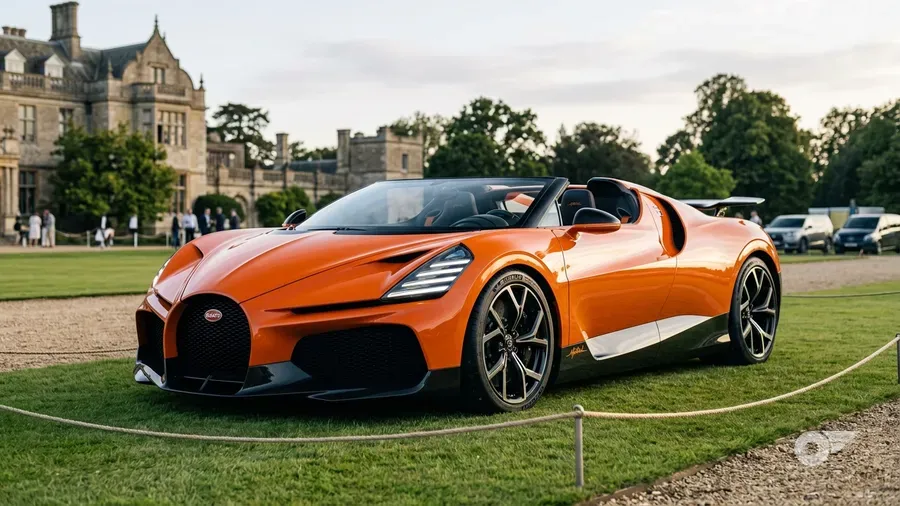
The record car made available. 1,600 PS from the engine shared with the Centodieci, longer gear ratios, the Centodieci exhaust, and a body 249 millimetres longer for high-speed aerodynamics. Finished in lacquer-coated bare carbon with orange stripes, echoing the Veyron Super Sport World Record Edition. Bugatti would prepare an owner's car for a full-potential run at Ehra-Lessien. 3,500,000 euros net.
What owning one is like

The reassuring thing about the Chiron is how ordinary its trouble has been. Six US recalls exist across eight model years and almost all of them are small: improperly welded seat recliner brackets on 47 cars, a badly positioned airbag heat shield on two, a stability system that failed to return to its default state after an ignition cycle on 73, a rear left driveshaft that could detach on four, one car with a frame support screw torqued to 9 Nm instead of 19, and a seatbelt warning chime on 156 cars configured to European rather than American rules. That is a defect record most volume cars would be pleased with. What owners actually live with is the scale of everything else. Consumables are hypercar consumables, tyres age out by date rather than wear, and nothing can be worked on outside the factory network. The good news is that Chirons get used, so a second-hand one is far less likely to have been sitting than any of the limited-run cars built beside it.

Upkeep & parts

The Chiron is the volume car of the W16 era, and that is quietly the best thing about owning one. With 501 built against 40 Divos or 10 Centodiecis, it is the car Molsheim's parts and service system was built around, and everything from consumables to major components is shared with the rarer cars sitting next to it in the workshop. The tyre is the part worth understanding. Michelin developed the Pilot Sport Cup 2 for this car with the casing belts reinforced for the roughly 5,300 g of load they carry at speed, validated it on a rig at Charlotte originally built to test Space Shuttle tyres and capable of 510 km/h, and X-rays every one after production. That is the level everything else is done at as well. Work goes through Bugatti's own network rather than a local specialist, servicing is scheduled by time as much as distance, and warranty cover is the single biggest variable between two otherwise identical cars.

Country of origin
France
Class
Exotic
Production years
2016–2024
Units built
501
Model
Chiron
Nickname
No nickname
Body
Coupe
Layout
Mid-engine, AWD
Engine
8.0-litre (7,993 cc) quad-turbocharged W16, 1,500 PS (1,479 hp) at 6,700 rpm and 1,600 Nm (Chiron, Sport, Pur Sport, Noire); 1,600 PS (1,578 hp) (Super Sport, Super Sport 300+)
Transmission
7-speed Ricardo dual-clutch automatic
Designer
Achim Anscheidt (Head of Design), Sasha Selipanov, Frank Heyl, Etienne Salome