Octane Files
Explore CarsHennessey Venom F5

Hennessey Venom F5

Overview

The Venom GT was a Lotus with a Chevrolet engine in it. The Venom F5 is not, and the whole point of the car sits in that sentence. Hennessey Special Vehicles was established in 2017 as an accredited titled manufacturer, contracted Delta Motorsport of Silverstone, the firm that had built every Venom GT, to develop the new car, and produced a carbon chassis and body of its own and an engine of its own. The engine is called Fury: a 6.6-litre twin-turbocharged V8 making 1,817 hp on E85 and 1,542 hp on 91 octane, with an Evolution package released in April 2025 taking it to 2,031 hp. The name comes from the top of the Fujita tornado scale, where wind speeds run from 261 to 318 mph, and the stated target from the beginning has been more than 311 mph. That has not happened. What has happened is a production car half-mile record, four variants that each sold out before they were built, and a firm that is now the most convincing small-volume manufacturer in the United States. The F5 is Hennessey growing up.

Distinctions

The defining attributes and collector status that make this car garage-worthy.

Octane Files Select
Renowned for its history, engineering, or cultural weight.

Collectibility scorecard

Rated 1 to 10 on the traits that matter for owning, driving, and holding on to a car like this.

Desirability
8/10
Rarity
9/10
Driving thrill
9/10
Investment trajectory
6/10
Usability
4/10
Ease of restoration
3/10
Cultural impact
6/10
Electronic dependence
Fully analogHeavily electronic

For a car of this power in this decade, the F5 is deliberately restrained. There is no hybrid system, no all-wheel drive and no torque vectoring to arbitrate, so the electronics manage one engine and two driven wheels. The active aerodynamics shown on the concept were deleted from the production car in favour of a smaller fixed spoiler. What remains is thoroughly modern: full engine management running several fuel calibrations from 91 octane to E85, drive modes, traction control, and a seven-speed CIMA single-clutch automated manual with paddles and no clutch pedal. The exception is significant. Twelve F5-M Roadsters and the one-off Revolution LF use a six-speed gated manual, which puts gear selection back into the driver's hand and would pull those specific cars down the scale.

Market data

Demand tier, price trend, and typical values by condition. Our own assessment, not a quoted valuation.

Demand tier
EntrySolidHighBlue-chip

Strong, sustained collector demand. Good examples never wait long for a buyer.

Value trajectory
AppreciatingStableCooling

Values are climbing. The market wants more of these than exist.

Price by condition
Driver
$2.2M
Excellent
$2.3M
Concours
$2.4M

The F5 is the only car in this group with enough public results to carry a band. Broad Arrow sold one at Amelia Island in March 2024 for 2,205,000 dollars. Barrett-Jackson sold a 2023 Roadster, number 2 of 30 with 683 miles, at Scottsdale in January 2025 for 2,200,000. Broad Arrow sold another 2023 Roadster in Banner Green, the fifth of 30, with 681 miles, at Monterey in August 2026 for 2,425,000. The band is drawn from those three. Excluded from it, and reported here instead, is the 2023 Revolution coupe that made 2,837,500 dollars at Broad Arrow's Quail sale on 13 August 2026 against an estimate of 2.9 to 3.2 million, which is the highest auction price recorded for any Hennessey. Against original prices of 1.6 to 2.1 million for coupes and three million for Roadsters, coupes are trading comfortably above list and Roadsters below it. The Classic Valuer records four sold against four unsold, a sell-through of half, so this is a thin market that rewards patience on both sides.

Values as of August 2026.

Buyer's guide

What anyone seriously considering this car should know first.

Why it's worth it
Hennessey's first car of its own design, chasing 311 mph and not there yet
Callout
The Fury V8 makes 1,817 hp on E85, and 2,031 hp with the 2025 upgrade
What to watch for
Everything starts with which car it is, because the F5 name covers four meaningfully different vehicles and the money follows them precisely. A coupe is one of 24 and was 1.6 million dollars for the first twelve and 2.1 million for the last twelve. A Roadster is one of 30 at three million, and twelve of those are F5-M cars with a six-speed gated manual instead of the seven-speed automated one, which is a different car to drive and priced accordingly. A Revolution is one of 36, track-focused, and the Revolution LF is a single car. Confirm the fuel calibration, since 1,817 hp is an E85 number and 1,542 hp is what 91 octane gives, and ask whether the 285,000-dollar Evolution package has been fitted, which takes the car to 2,031 hp. Mileage is almost irrelevant; every F5 sold publicly so far has had under 700 miles. Ask instead about heat cycles, track days and whether the car has been run at speed. Service is Hennessey in Sealy, Texas, and the company is healthy and expanding, which is not a small consideration.

The Story

Driving character

The F5 is a rear-drive car with 1,817 hp and roughly 3,000 lb, which is a set of numbers nobody else currently offers because most manufacturers decided at about half that figure that four driven wheels were compulsory. Hennessey did not, and the result is a car whose character is set entirely by traction and by the driver's willingness to trust it. The Fury V8 is Hennessey's own rather than a modified production engine, and it behaves like a big-capacity twin-turbo should: enormous mid-range, a long build rather than an instant hit, and a deep pushrod-derived voice with none of the flat-plane shriek the European cars use. The seven-speed CIMA single-clutch automated manual is the honest part of the driving experience. A single clutch shifts with a definite interruption rather than the seamless overlap of a dual clutch, which is slower on paper and considerably more physical from inside. The twelve gated F5-M Roadsters take that further. Aerodynamics are deliberately modest: the concept's active system was dropped for a fixed spoiler and a claimed drag coefficient of 0.39, because this is a car built to go fast in a straight line rather than to stick.

Design

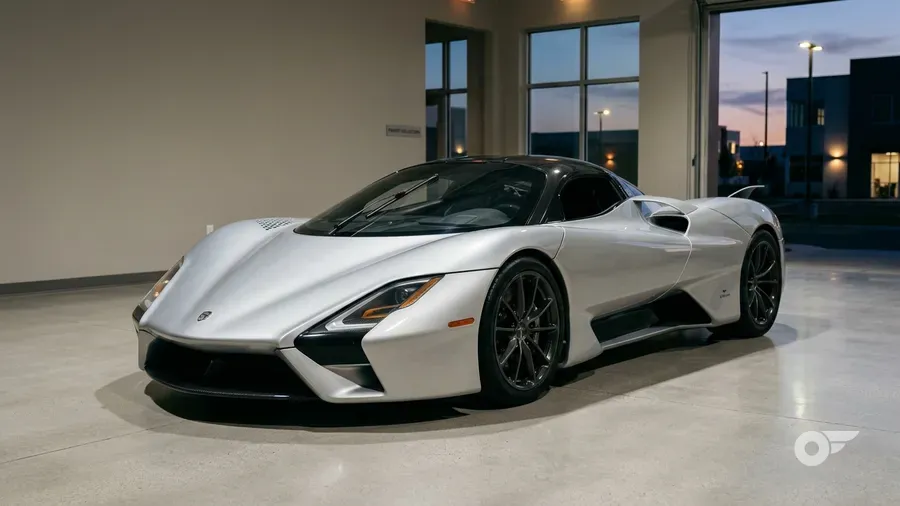
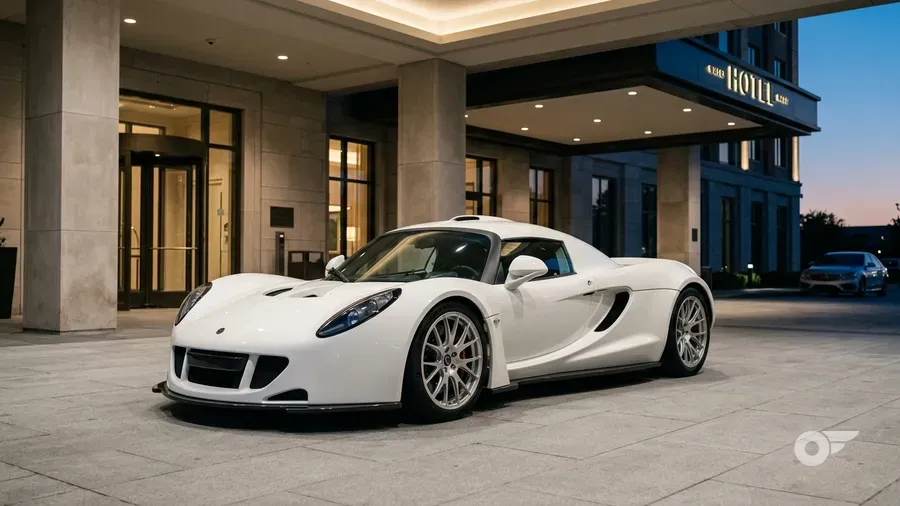
Nathan Malinick is Hennessey's design director and the F5 is the first car the company has drawn from nothing. It shows in the discipline. The concept shown at SEMA in November 2017 had three exhausts and full active aerodynamics; the production car has four exhausts, a smaller fixed spoiler and no active surfaces at all, which is a rare direction of travel for a low-volume maker who could easily have kept the drama. Butterfly doors, a long tapering tail and a body drawn around drag rather than downforce give it a claimed 0.39 drag coefficient, high against the SSC Tuatara's 0.279 but achieved with far more frontal cooling area. The interior is the surprise. Hennessey made cabin space an explicit design requirement, to the point that an unnamed NFL player of six foot seven was reported to have ordered one of the first cars, and the company built its case on the idea that a hypercar should be comfortable enough to use. Set against the Venom GT's borrowed Lotus cockpit, that is the clearest possible statement of what changed between the two cars.

Motorsport pedigree

There is no racing history and none was ever intended. Hennessey Special Vehicles is a manufacturer of a few dozen cars a year with no competition department, and the F5 sits in a class that has no series: too powerful and too heavy for GT racing, ineligible for prototypes, and pointless in any category where balance of performance would erase its advantage. Its competition is against the clock. On 30 July 2024 in Florida, with John Hennessey driving, the F5 took the standing half-mile production car record at 14.44 seconds and 219 mph, alongside an eighth mile in 6.77 seconds at 121 mph and a quarter in 9.82 seconds at 169 mph. Hennessey has separately published a 271.6 mph test figure, which is a manufacturer test rather than a two-way record run and should be read as one. The stated ambition remains more than 311 mph, and the pursuit has had a cost: a Venom F5 crashed during high-speed testing on the Kennedy Space Center runway at around 250 mph. The company kept testing.

In culture

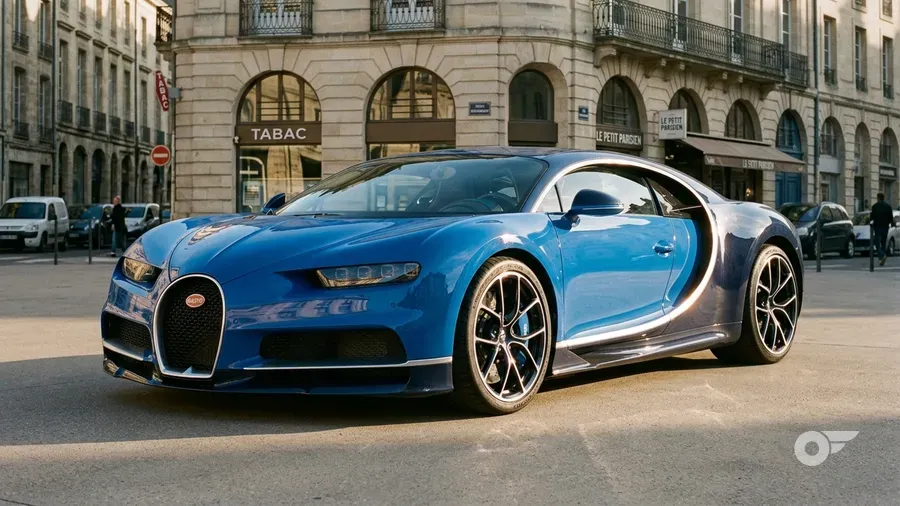
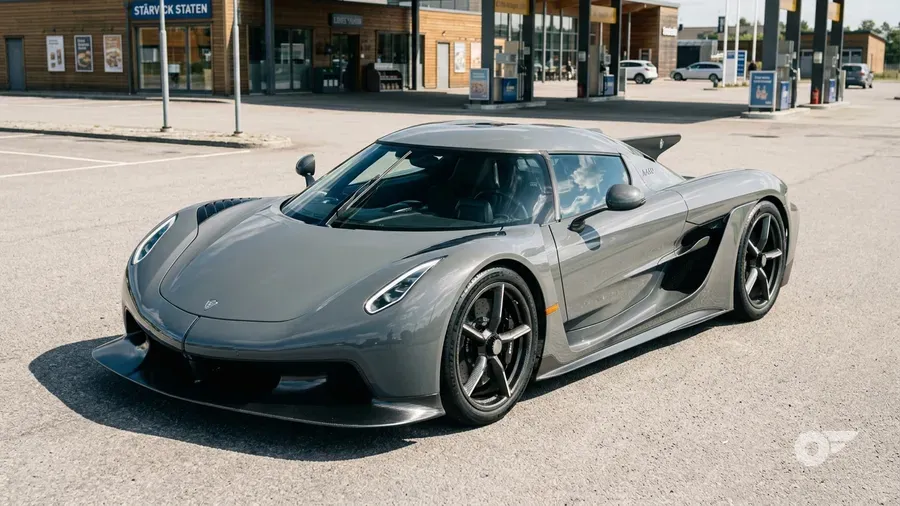
The F5 exists inside a specific argument that has run since 2019, when Bugatti took a Chiron prototype to 304.773 mph in one direction and the record books declined to count it. Koenigsegg has estimated its Jesko Absolut at 500 km/h and has never gone out and run it. SSC claimed 331 mph and had to take it back. Hennessey is the only one of the four to have stated a number publicly, put it on the car's marketing, and then kept testing in front of cameras without having reached it, which is either commendable or reckless depending on your view and is certainly more interesting than silence. The crash at the Kennedy Space Center became public through records requests rather than a press release, which did the company no harm at all. And in August 2026 Hennessey answered the question of what comes next in the least expected way: the Blackbird, a naturally aspirated 6.2-litre V8 developed with Ilmor, 71 cars, a gated manual, no screens, and a top speed of 220 mph. After three decades of chasing numbers, the next Hennessey is not about them.

Owning One

Why collectors want it

The F5 is the moment Hennessey stopped modifying and started manufacturing, and the market has priced that change more generously than anything else in this group. Its own chassis, its own engine, its own titled VIN, and a public record of demand that has never once fallen short: 24 coupes sold out by August 2021, 30 Roadsters including 12 gated-manual F5-M cars, 36 Revolutions, a one-off Revolution LF. Every allocation gone. Auction results have followed suit rather than sagged, which is unusual for a new marque, and in August 2026 a Revolution coupe made 2,837,500 dollars at Broad Arrow, the highest price ever paid for a Hennessey. Inside the family the order is clear. The Revolution sits on top, then the Roadster, with the F5-M gated manual the one to watch because a naturally rare thing has been made rarer on purpose. The standard coupe is the historically important car and currently the cheapest way in. The risk is easy to name too. The 311 mph claim is the car's whole pitch and it is still unclaimed.

Which one to look for

Four cars, and they are not trim levels. The coupe came first: 24 units, twelve sold by December 2020 at 1.6 million dollars and the remaining twelve at 2.1 million, all gone by August 2021. The Roadster followed at three million dollars and 30 units, of which twelve are F5-M cars fitted with a six-speed gated manual rather than the seven-speed automated one, and those twelve are the connoisseur's choice for exactly the reason a manual always is at this power level. The Revolution of January 2023 is the track car: 36 units, 24 coupes and 12 roadsters, developed under John Heinricy, the ex-General Motors engineer behind the Cadillac CTS-V and the Corvette Z06, with revised aerodynamics, retuned suspension, lighter wheels, a roof-mounted intake and onboard telemetry, at around 2.7 million dollars. Above all of them sits a single Revolution LF built by Hennessey's Maverick division, a gated manual with the full 2,031 hp. The Evolution package of April 2025 is not a variant but an upgrade, 285,000 dollars for 2,031 hp on E85 and a claimed 0 to 200 mph in 10.3 seconds.

Venom F5 Coupe · 2020–present

The first car, and Hennessey's first vehicle of its own design as an accredited titled manufacturer. Carbon chassis and body, the 6.6-litre twin-turbocharged Fury V8 at 1,817 hp on E85, and a seven-speed CIMA single-clutch automated manual driving the rear wheels.

Venom F5 Revolution · 2023–present

The track car, unveiled 9 January 2023 and developed under chief engineer John Heinricy, formerly of General Motors and the engineer behind the Cadillac CTS-V and Chevrolet Corvette Z06. Revised aerodynamics, retuned suspension, lightweight wheels, a roof-mounted air intake and onboard digital telemetry.

Venom F5 Revolution LF · 2025

A one-off built by Hennessey's Maverick division, combining the Revolution package with a six-speed gated manual and the full 2,031 hp Evolution output.

Venom F5 Roadster · 2022–present

The open version, mechanically the coupe. Every Venom F5 sold publicly at auction so far has been a Roadster.

Venom F5-M Roadster

The manual car. A six-speed gated manual replaces the seven-speed automated transmission, which changes the character of the F5 more than any other single option and puts gear selection back in the driver's hand at 1,817 hp.
What owning one is like

Every F5 in existence is effectively new. Public sales have all been cars with under 700 miles, so nothing has yet accumulated the running that would tell you where the weak points are, and the honest answer is that the ownership record is too short to have one. What can be said is where the demands lie. The Fury is Hennessey's own engine rather than a modified production V8, so it is a factory item rather than something a good machine shop can rebuild, and the E85 calibration that produces the headline 1,817 hp requires E85 to be available where the car lives. The single-clutch automated gearbox is a wearing item by design; single clutches always are, and 1,193 lb-ft does not help. Tyres and brakes are consumables at a rate that surprises people coming from ordinary supercars. On the other side, the car was engineered around usable cabin space and a conventional layout with no hybrid system to complicate anything, which makes it one of the more approachable machines at this power level. Hennessey is growing rather than shrinking, which is the most useful thing an owner can know.

Upkeep & parts

Support runs through Hennessey in Sealy, Texas, and the company is in the strongest position of its history: the F5 sold out four times over, the Blackbird was revealed in August 2026 with more than two thirds of its 71 cars allocated before the public debut, and Hennessey Special Vehicles is now an established manufacturer rather than a tuning shop with ambitions. That matters more than any parts catalogue, because for a car like this the manufacturer is the parts catalogue. Delta Motorsport in Silverstone developed the car and remains in business, which is useful for European owners. Consumables behave as they do across the class: carbon-ceramic brakes, bespoke tyres, and fluids on a short schedule if the car is used. The items to plan for are the Fury engine and the CIMA gearbox, both of which are factory-only, and the carbon body, which has no aftermarket. There is no owners club or registry for the marque, so the factory is also the community. Budget for shipping to Texas rather than a local specialist and the arithmetic becomes predictable.

Country of origin
USA
Class
Exotic
Production years
2020–present
Units built
~99
Model
Venom F5
Nickname
No nickname
Body
Coupe, Roadster
Layout
Mid-engine, RWD
Engine
6.6L twin-turbocharged Fury V8, 1,817 hp and 1,193 lb-ft on E85 (1,542 hp on 91 octane); 2,031 hp and 1,445 lb-ft with the 2025 Evolution package
Transmission
7-speed CIMA single-clutch automated manual; 6-speed gated manual (F5-M Roadster, Revolution LF)
Designer
Nathan Malinick (design director)