Octane Files
Explore CarsHennessey Venom GT

Hennessey Venom GT

Overview

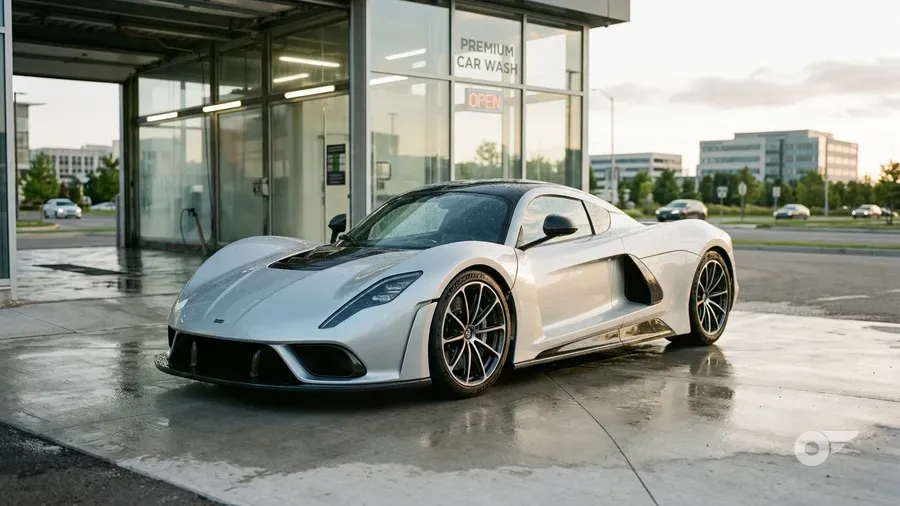
John Hennessey spent two decades making other people's cars faster before he built one of his own, and the Venom GT is exactly what that history would produce. Not a clean-sheet hypercar, but the most extreme available answer to the question of what happens when a twin-turbocharged 7.0-litre Chevrolet LS7 goes into something weighing 2,743 lb. The something was a Lotus. The Venom GT keeps the Elise and Exige roof, doors, side glass, windscreen, cockpit, floorpan, heating system, wipers and headlamps, and for road use it is registered as a modified Lotus Exige. That is Hennessey's own description of the car, not somebody else's insult, and it is the fact everything else follows from. Delta Motorsport in Silverstone built the cars and Sealy, Texas finished them. Thirteen were made between 2010 and 2017, seven coupes and six Spyders, at 1.2 million dollars apiece. In that window it took a Guinness world record it still holds credit for, went faster in a straight line than any road car had, and could not be recognised for the second one. The numbers still look absurd.

Distinctions

The defining attributes and collector status that make this car garage-worthy.

Poster Car
The car on the bedroom wall, the one people dreamed about before they could drive.
Octane Files Select
Renowned for its history, engineering, or cultural weight.

Collectibility scorecard

Rated 1 to 10 on the traits that matter for owning, driving, and holding on to a car like this.

Desirability
7/10
Rarity
10/10
Driving thrill
9/10
Investment trajectory
5/10
Usability
3/10
Ease of restoration
3/10
Cultural impact
7/10
Electronic dependence
Fully analogHeavily electronic

The Venom GT is the least electronic car among the speed chasers of its era, and deliberately so. Drive goes through a Ricardo six-speed manual with a clutch pedal, the same gearbox the Ford GT used, so gear selection is entirely mechanical. Against that, the LS7 runs modern engine management with three selectable power maps at 800, 1,000 and 1,200 hp, and the car carries programmable traction control, an active rear wing and a suspension that alters ride height by up to 2.4 inches with speed and conditions. A driver can switch most of the assistance off and be left with a manual gearbox and 1,244 hp, which is why this sits at 4 and not 5.

Market data

Demand tier, price trend, and typical values by condition. Our own assessment, not a quoted valuation.

Demand tier
EntrySolidHighBlue-chip

Strong, sustained collector demand. Good examples never wait long for a buyer.

Value trajectory
AppreciatingStableCooling

Values are holding steady. What you pay today is what it's worth tomorrow.

Price by condition
Driver
Excellent
Concours

New cars were 1.2 million dollars, with the three World's Fastest Editions at 1.25 million. Public trading is almost nonexistent, which is what thirteen cars produces. Two results are on record. Steven Tyler's Spyder made 800,000 dollars at Barrett-Jackson Scottsdale on 20 January 2017 with the proceeds going to his charity, so it is a charity result and should not be read as a market price. Then in August 2025 a 2011 Venom GT sold at Broad Arrow's Monterey Jet Center auction for 588,000 dollars against an estimate of 350,000 to 450,000, which Broad Arrow described as a record for a non-charity offering of the model at auction. No price band is published here, because two public results in fifteen years, one of them for charity, do not make one. The direction is interesting though: the 2025 car beat its own estimate by a third, which suggests the market has decided the borrowed chassis is part of the story rather than a discount. Thirteen cars, a real record and a genuinely odd origin is a combination that usually holds up.

Buyer's guide

What anyone seriously considering this car should know first.

Why it's worth it
Went 270.49 mph once, in one direction, and Guinness would not count it
Callout
Registered for the road as a modified Lotus Exige
What to watch for
The first question is not mechanical. Because the Venom GT is titled and registered as a modified Lotus Exige rather than as a series production car with its own VIN, the paperwork behind any given car matters more than usual, and it is worth understanding exactly how a car is registered in the country where you intend to keep it before money changes hands. After that, establish which of the thirteen it is, because the difference between a standard coupe, one of three World's Fastest Editions and the one-off Final Edition is most of the value. The good news is that a meaningful share of the car is Lotus. Glass, doors, roof, wipers, lamps and heating are Elise and Exige parts, still made and still cheap, which is not something you can say about any other car in this bracket. Everything else is bespoke: carbon bodywork, carbon wheels, 15in Surface Transforms rotors, the Ricardo six-speed. Ask about fuel system history, since Hennessey publicly attributed a 300 hp shortfall on the 2016 Spyder record run to one of three high-capacity fuel pumps failing. Service goes through Hennessey.

The Story

Driving character

Nothing else in this class asks so much of the driver. There is a clutch pedal, a gate, and 1,244 hp going to two wheels through a car that weighs 2,743 lb, with no all-wheel drive, no hybrid torque fill and no dual clutch to smooth over a bad shift. The Ricardo six-speed came out of the Ford GT and behaves like it, mechanical and deliberate rather than quick. The LS7 underneath is a pushrod V8, so the noise is deep and American and completely unlike the flat-plane engines that came after it, and the twin Precision turbochargers give it a long, building, slightly delayed shove rather than the instant hit of the modern cars. The three power settings exist because 1,244 hp is not a road number and Hennessey knew it. Then there is the cabin, which is an Elise cabin: tight, low, built around a driver rather than around comfort, with the windscreen and switchgear of a car that cost a twentieth as much. That combination of Lotus intimacy and unmanageable power is the reason people remember driving it.

Design

Steve Everitt drew the body and the interesting part is what he had to work with. The Elise and Exige greenhouse stayed, so the roofline, screen, doors and glass are Lotus, and everything around them is new carbon fibre stretched to 183.7 inches long on a 110.2-inch wheelbase. A standard Exige is more than two feet shorter. That stretch is what gives the Venom GT its silhouette: a tiny cabin pushed forward, then an enormous rear deck feeding the turbochargers and the aerodynamics, with the proportions of a Group C car rather than a road car. The wheels are carbon fibre, which was still unusual in 2010. The rear wing deploys and adjusts rather than sitting fixed, and the ride height drops with speed. What the car does not do is disguise its origins. Stand at the door and it is a Lotus; step back ten feet and it is not. That honesty about the recipe is a large part of why the car has aged better than the more conventional low-volume supercars that were around it.

Motorsport pedigree

The Venom GT never raced, and Hennessey never suggested it would. There was no factory programme, no series that would take a car with no series production status, and no advantage in a category where the balance of performance would have deleted its only weapon. Its competition record is the timed run, and it is a real one. On 21 January 2013 it took the Guinness world record for 0 to 300 km/h at 13.63 seconds, and set an unofficial 0 to 200 mph mark of 14.51 seconds, more than three seconds inside the Koenigsegg Agera R. On 3 April 2013 it ran 265.7 mph over two miles at Naval Air Station Lemoore, logged by two VBOX 3i systems with Racelogic officials present. On 14 February 2014 Brian Smith, director of Miller Motorsport Park, ran 270.49 mph on the Kennedy Space Center's shuttle landing facility, within a limited 2.3 miles. Guinness would not certify it: one direction only, and a thirty-car production minimum the Venom GT could never meet. On 25 March 2016 the Spyder ran 265.57 mph at Lemoore, verified by Racelogic, the fastest open-top road car recorded.

In culture

The Venom GT is the car that made the phrase world's fastest production car a legal argument rather than a boast. Its 270.49 mph run happened on NASA property, on the strip the Space Shuttle landed on, and NASA published its own account of it, which is not a sentence available to many road cars. The refusal that followed is what the car is really known for, and the reasoning is worth stating plainly because it is usually mangled: the run was in one direction, and Guinness requires thirty cars built, so a thirteen-car project was never eligible whichever way it drove. Modern record keeping adds a second objection, that a car titled as a modified Lotus Exige has no manufacturer VIN of its own. Both are true and neither makes the car slower. The other thread is Steven Tyler, whose Spyder was the first open Venom GT and who sold it at Barrett-Jackson in 2017 for charity, and who is the reason a great many people who have no interest in Hennessey have seen one at all.

Rivals

Cars from other manufacturers that competed for the same buyers when new.
Owning One

Why collectors want it

Thirteen cars is the headline and it is not the argument. The argument is that for about three years this was genuinely the fastest accelerating and fastest road-legal car anyone had built, and it did it by borrowing a chassis from a company that had nothing to do with it. Guinness certified the 0 to 300 km/h record on 21 January 2013 at 13.63 seconds, which is the record Hennessey actually holds. The 270.49 mph of February 2014 is the one people remember and the one that was refused, because the run went in a single direction and because Guinness requires a minimum of thirty cars built, a number a thirteen-car run was never going to reach. Inside the thirteen there is a clear order. The three World's Fastest Editions at 1.25 million dollars, sold before they were built. The single Final Edition Spyder in Glacier Blue that closed production in 2017. Steven Tyler's Spyder, the first one made, which is the only Venom GT most people have seen. Everything else is one of the remaining coupes, and there are not many of those either.

Which one to look for

Seven coupes and six Spyders, and the Spyder exists because Steven Tyler asked for it. Having ordered a Venom GT in 2011 he asked Hennessey whether the roof could come off; the conversion added 30 lb, and his was the first of five scheduled for the 2013 model year. For 2016 the Spyder gained 207 hp for a total of 1,451, which makes the late open cars the most powerful Venom GTs built. The three World's Fastest Editions of 2014 are the connoisseur's pick: coupes at 1.25 million dollars commemorating the 0 to 300 km/h Guinness record, all three sold as soon as they were announced. The Final Edition of 2017 is a single Spyder in Glacier Blue with double narrow white stripes, 9 lb lighter than standard, pre-sold at 1.2 million dollars before it was shown, and it is the car that ended production. Tyler's own Spyder sold at Barrett-Jackson in January 2017 for 800,000 dollars with the proceeds going to his charity, which makes it the best documented Venom GT of the thirteen and also the least useful as a market comparison.

Venom GT Coupe · 2010–2017

The standard car. Twin-turbocharged 7.0-litre GM LS7 making 1,244 hp at 6,600 rpm, with selectable 800, 1,000 and 1,200 hp settings, a Ricardo six-speed manual, and 2,743 lb of Lotus Elise and Exige structure under carbon bodywork. The car that ran 265.7 mph at Lemoore in 2013 and 270.49 mph at the Kennedy Space Center in 2014.

Venom GT Final Edition · 2017

A single Spyder built to close the six-year production run. Same 1,451 hp output, 9 lb lighter than standard, finished in Glacier Blue with double narrow white stripes.

Venom GT Spyder · 2013–2017

The open car, created after Steven Tyler asked Hennessey in 2011 whether the roof could come off. The structural changes added 30 lb. For 2016 it gained 207 hp for a total of 1,451 hp, making the late Spyders the most powerful Venom GTs built. Ran 265.57 mph at Lemoore on 25 March 2016, verified by Racelogic as the fastest open-top road car.

Venom GT World's Fastest Edition · 2014

A commemorative coupe marking the Guinness world record for 0 to 300 km/h set on 21 January 2013 at 13.63 seconds.

What owning one is like

The Venom GT is more livable than its numbers imply and less livable than its Lotus half suggests. Everything you touch is Elise: a small, low, hard cabin with a windscreen you look down over and switchgear from a car that cost a fraction as much. That means it is easy to get into and out of, easy to see out of, and completely unfitted for luggage or long distances. Heat is the recurring theme. Two turbochargers and a 7.0-litre V8 in a space designed for a 1.8 four-cylinder produce a lot of it, and the cooling and fuel systems work hard; Hennessey itself disclosed that one of three high-capacity fuel pumps had failed during the 2016 Spyder record run, costing about 300 hp, which is a useful indication of what the fuel system is being asked to do. Tyres and clutches are consumables at this power level and behave like it. What owners get in return is a car with almost no direct competitor for feel: an analogue gearbox and 1,244 hp is a combination nobody has built since, and nobody is likely to build again.

Upkeep & parts

Upkeep splits into two halves that behave completely differently. The Lotus half is the easiest of any car at this price. Doors, glass, roof panel, screen, wipers, lamps and heating components are Elise and Exige parts, still in production or still widely stocked, and any competent Lotus specialist knows them. The Hennessey half is the opposite. Carbon bodywork, carbon wheels, the twin-turbo installation, the Ricardo six-speed and the 15in Surface Transforms carbon-ceramic rotors are all bespoke or specialist, and the practical route to any of them is Hennessey itself in Sealy, Texas, which is still trading and still supports the car. Delta Motorsport in Silverstone, which built every Venom GT, remains in business too, which is worth knowing if a car lives in Europe. Brembo supplies the six-piston front and four-piston rear calipers, so brake hardware behind the rotors is at least conventional. Budget the way you would for a race car rather than a road car: consumables often, big items rarely, and a relationship with one specialist rather than a local garage.

Country of origin
USA
Class
Exotic
Production years
2010–2017
Units built
13
Model
Venom GT
Nickname
No nickname
Body
Coupe, Spider
Layout
Mid-engine, RWD
Engine
7.0L (427ci) twin-turbocharged GM LS7 V8, 1,244 hp at 6,600 rpm and 1,155 lb-ft at 4,400 rpm, with selectable 800, 1,000 and 1,200 hp settings; 1,451 hp in 2016 Spyder specification
Transmission
6-speed Ricardo manual
Designer
Steve Everitt