Octane Files
Explore CarsKoenigsegg Jesko

Koenigsegg Jesko

Overview

The Jesko is named after Christian von Koenigsegg's father, who backed the company financially in its early years, and it is the car where the firm's habit of building its own components reached its logical end. The centrepiece is the Light Speed Transmission: nine speeds, seven clutches, no synchros, shifts quoted at 20 to 30 milliseconds, and a function Koenigsegg calls Ultimate Power on Demand that jumps straight to whichever gear the situation wants rather than working down through the ratios. The engine was reworked around a new 180-degree flat-plane crankshaft that saves 5 kg and lifts the redline from 8,250 to 8,500 rpm, making 1,280 hp on petrol and 1,600 hp on E85, and a 20-litre carbon air tank pressurised to 20 bar spins the turbos so there is nothing to wait for. The car comes two ways. Attack is the downforce version, good for 1,400 kg of it. Absolut deletes the wing, drops drag to a coefficient of 0.278, and exists to go as fast as a road car can. It was unveiled in 2019, sold out before the Geneva show ended, and the first customer car was delivered in June 2023.

Distinctions

The defining attributes and collector status that make this car garage-worthy.

Legend
A car that transcended the hobby, known far beyond the people who drive them.
Poster Car
The car on the bedroom wall, the one people dreamed about before they could drive.
Octane Files Select
Renowned for its history, engineering, or cultural weight.

Collectibility scorecard

Rated 1 to 10 on the traits that matter for owning, driving, and holding on to a car like this.

Desirability
9/10
Rarity
8/10
Driving thrill
10/10
Investment trajectory
7/10
Usability
3/10
Ease of restoration
2/10
Cultural impact
9/10
Electronic dependence
Fully analogHeavily electronic

The Jesko is at the top of this scale for reasons beyond the usual engine management. Its gearbox is a computer-controlled multi-clutch device with no mechanical selector logic at all, choosing gears and executing shifts in software, and the Ultimate Power on Demand function is a control strategy rather than a mechanism. Boost is managed by an electrically driven compressor charging a 20-litre air tank to 20 bar, so turbo response itself is an electronic decision. Each cylinder carries its own pressure sensor feeding the engine management in real time. On top of that sit active aerodynamics, electronic traction and stability systems, adjustable drive modes, and a touchscreen cabin with connectivity and over-the-air updates. There is no hybrid system here, which is the one thing keeping the car mechanically simpler than the Regera, and it makes no practical difference to where it sits.

Market data

Demand tier, price trend, and typical values by condition. Our own assessment, not a quoted valuation.

Demand tier
EntrySolidHighBlue-chip

Strong, sustained collector demand. Good examples never wait long for a buyer.

Value trajectory
AppreciatingStableCooling

Values are holding steady. What you pay today is what it's worth tomorrow.

Price by condition
Driver
Excellent
Concours

No Jesko has sold at public auction, so this page carries no price band. The entire run was spoken for in 2019, four years before the first customer delivery in June 2023, and cars still move by allocation rather than open sale. What is on the record is where the pricing started. Attack and Absolut both opened at around 2.8 million dollars before options, the Absolut quoted higher in some markets, and options routinely add 20 to 40 percent on top. Sadair's Spear followed in 2025 at 3.8 million euros, all thirty sold before the car was shown publicly. Secondary asking prices since 2023 have run between roughly 4 and 5.7 million dollars. Those are asks, not results, and the gap between the two runs wider in this marque than most. A CCX advertised at 3.7 million dollars had last changed hands at 1,215,000. Printing a band off current listings would dress a guess up as a valuation. There is no trend to report yet either. Deliveries are ongoing, the final run size is unpublished, and until a few cars change hands in public the market has not actually spoken.

Buyer's guide

What anyone seriously considering this car should know first.

Why it's worth it
Built to run 500 km/h, and Koenigsegg has never taken it out to try
Callout
A nine-speed gearbox with seven clutches that can jump straight to whichever gear it needs
What to watch for
Almost every Jesko changing hands now is a nearly new car, so this is a specification and allocation exercise rather than a condition inspection. Establish which version you are buying, because Attack and Absolut are built differently from the tub outward and a car cannot be converted from one to the other afterwards. Get the original commission sheet: options on a car at this price run to very large sums and they drive resale far more than mileage does. Check the fuel history, since the 1,600 hp figure requires E85 and the car makes 1,280 hp on petrol, and ethanol left standing in a system is the one avoidable expense here. Ask about software, as the drivetrain and the LST are defined by calibrations that the factory updates. Then look at where the car has lived, because a hypercar delivered in 2023 and driven 400 km still needs fluids, belts and tyres on the same calendar as one that has been used. Buy through the official network if you can. Koenigsegg keeps the build record for every chassis, and with a run this small, a car whose history the factory cannot confirm is a car with a problem.

The Story

Driving character

The gearbox is the thing you notice first and keep noticing. With seven clutches and no synchros the Light Speed Transmission does not step through ratios, it selects them, so a downshift from ninth to fourth happens as one event rather than five, and the shifts themselves are quick enough to feel like a change in engine note rather than a mechanical action. The engine behaves accordingly. The pressurised air tank spinning the turbos removes the pause that normally separates the decision from the acceleration, and the lighter flat-plane crank lets the V8 rev to 8,500 rpm with a hard, flat, unmistakably not-American sound. On E85 the car makes 1,600 hp and has run from rest to 400 km/h and back to a standstill in 25.21 seconds, which is the current benchmark for that measure. The two versions feel genuinely different at speed: Attack is pinned to the road and rewards commitment through corners, while Absolut is quieter, calmer and eerily stable in a straight line, with the sensation that the car has more left than the road does.

Design

The Jesko is built on a tub 40 mm longer and 22 mm wider than the Agera's, now incorporating an aluminium monocoque section, and everything visible on top of it is aerodynamic argument. Attack wears the big active rear wing mounted on swan-neck supports with front canards and a full underbody, all of it working toward 1,400 kg of downforce. Absolut answers by deleting the wing entirely, adding two vertical stabiliser fins at the rear and stretching the tail 85 mm to a drag coefficient of 0.278, which makes it the slipperiest car the company has built. The familiar elements survive: dihedral synchro-helix doors, a detachable hardtop that stows under the front lid, the ghost badge. Inside, the cabin is more habitable than the Agera's and introduces the SmartWheel, a steering wheel carrying two small touchscreens with haptic controls for the phone, audio and the nose lift. Sadair's Spear takes the Attack philosophy further with a double-blade wing, new canards, a reshaped splitter, extended diffuser strakes and revised wheel arch louvres, and looks exactly as purposeful as that list suggests.

Motorsport pedigree

Koenigsegg has never run a factory race programme and the Jesko has not changed that. There is no series a 125-car manufacturer can homologate for without spending more than the cars earn, and the company's engineering effort goes into road cars that set records instead. The Jesko's competitive record is therefore a set of numbers rather than results: 0 to 400 km/h and back to a standstill in 27.83 seconds at Orebro on 26 June 2024, driven by Markus Lundh, improved to 25.21 seconds on 7 August 2025, and a Laguna Seca lap of 1:24.86 in Attack specification. Sadair's Spear is the closest the marque has come to a race car in twenty years, a 30-car track special with a double-blade wing and aero tuned for circuit speeds rather than top-end running, and it is still a road car sold to private owners rather than an entry in anything. The one time Koenigsegg did build a racing car, the CCGT of 2007, the rules changed underneath it and it never started a race.

In culture

The name is the most personal thing about the car: Jesko von Koenigsegg was Christian's father and an early investor in the company, and the naming carried through to the track version, since Sadair's Spear was the racehorse he rode in his final race in 1976. Top Gear named the Jesko its Hypercar of the Year for 2022. The car's larger cultural role is as the standard-bearer in the 300 mph argument that has run through the last few years of hypercar building, with several manufacturers claiming, contesting and re-running the number. Koenigsegg's position has been the odd one: it built a car it says will do 500 km/h and then declined to go and prove it, which reads as either commendable restraint or a very long tease depending on your temperament. Meanwhile the Jesko has become the default modern hypercar for a generation that meets cars through screens, appearing in Forza Horizon 5 as one of the fastest things in the game, which is how most of its audience will ever drive one.

Rivals

Cars from other manufacturers that competed for the same buyers when new.

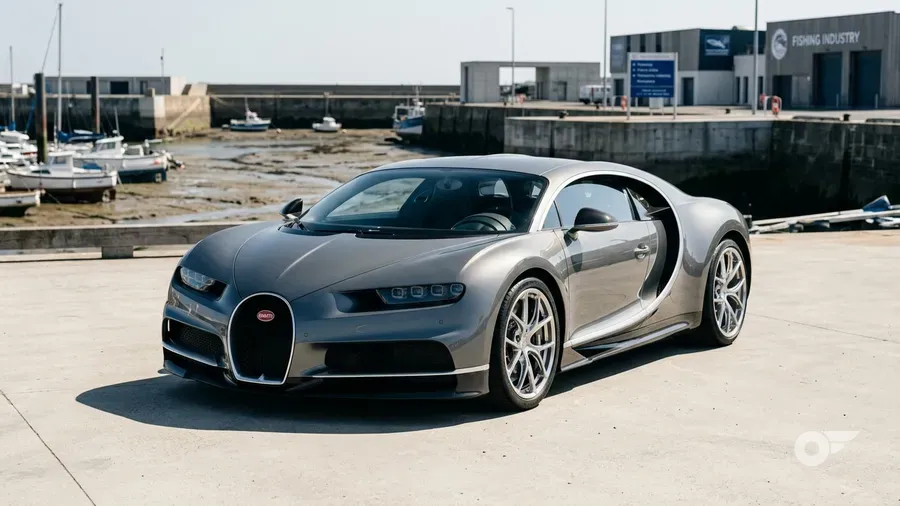
Bugatti Tourbillon

Bugatti Tourbillon

France·Exotic·2026–present

Owning One

Why collectors want it

There is no published production figure for the Jesko and there will not be one until the run finishes. Koenigsegg has said it plans 125 cars, which is a plan rather than a count, and the company builds to order across the Attack and Absolut versions plus the 30-car Sadair's Spear, so any total quoted today is somebody's arithmetic rather than the factory's. What can be said is that the whole run sold before the 2019 Geneva show closed, four years before the first customer car was delivered. The collectibility case is about what the car represents. It is the last Koenigsegg conceived around an engine that only burns fuel, it carries the most complicated transmission ever fitted to a road car, and it holds the standing 0 to 400 to 0 km/h record. The internal hierarchy is clear enough: Sadair's Spear at the top with 30 cars and the most extreme aerodynamics, then Absolut for the top speed argument, then Attack for the lap time one. There is no wrong version, only a wrong version for what you intend to do.

Which one to look for

Three versions, and the choice is about intent rather than status. Attack is the aerodynamic car, with a large active rear wing generating around 1,000 kg of downforce at 171 mph and up to 1,400 kg at speed, and it has lapped Laguna Seca in 1:24.86. Absolut is its opposite: the wing goes, two vertical fins take its place, the body is 85 mm longer, downforce falls to about 150 kg and the drag coefficient drops to 0.278. Koenigsegg estimates it at 500 km/h and has said theoretical figures higher still, but has never taken it out to run the number, and until that happens it is an estimate and nothing more. Sadair's Spear, revealed in 2025 and limited to 30 cars, is the track answer: 1,625 hp on E85, 35 kg lighter, a double-blade active rear wing tuned to make downforce at the lower speeds a circuit actually uses, and around 1,770 kg of peak downforce, roughly 20 percent more than Attack. All 30 were sold before the public reveal. For most buyers the real decision is Attack or Absolut, and it is made at order.

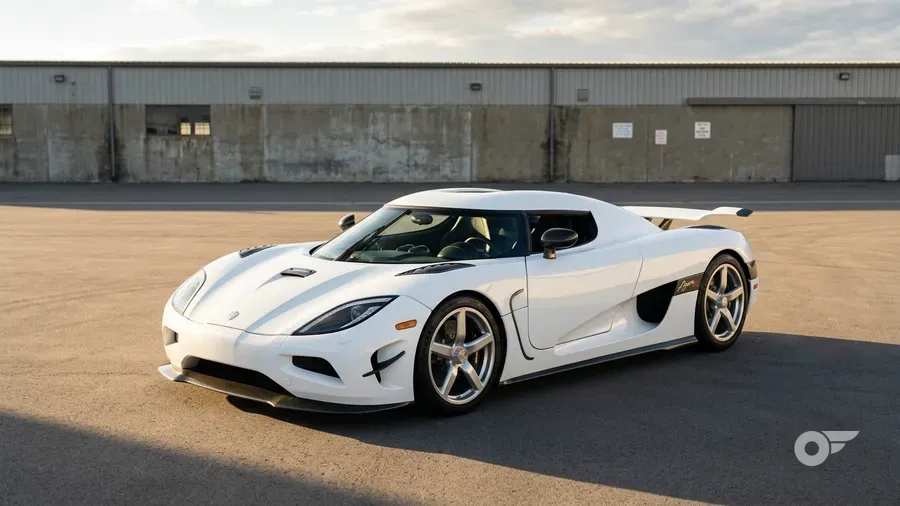
Absolut · 2020–present

The low-drag version, built for one purpose. The wing is deleted in favour of two vertical stabiliser fins, the tail is 85 mm longer, downforce falls to roughly 150 kg and the drag coefficient to 0.278. Koenigsegg estimates 500 km/h and has never run it.

Attack · 2020–present

The downforce version. A large active rear wing on swan-neck mounts, front canards and a worked underbody produce around 1,000 kg of downforce at 171 mph and up to 1,400 kg at speed, and the car has lapped Laguna Seca in 1:24.86.

Sadair's Spear · 2025–present

The track version, revealed in 2025 and named after the racehorse Jesko von Koenigsegg rode in his final race in 1976. 1,625 hp on E85, 35 kg lighter, a double-blade active rear wing tuned for circuit speeds, and around 1,770 kg of peak downforce, about 20 percent more than Attack.

What owning one is like

There is very little owner history to draw on yet, which is itself the honest answer: the first customer Jesko was delivered in June 2023 and most cars in private hands have covered little distance. What owners are managing is a car of extraordinary mechanical complexity supported by a company that is still building it. The Light Speed Transmission is a bespoke nine-speed with seven clutches and no aftermarket, so it is factory work by definition, and its behaviour is defined by software that the factory keeps revising. The pressurised air system that feeds the turbos, the per-cylinder pressure sensors and the active aerodynamics all add sensors and actuators that dislike long storage more than they dislike use. Fuel is a live decision rather than a defect: the headline output needs E85 and the car reverts to 1,280 hp on petrol. Tyres are consumable at this power level. Against that, the support position is the best it has ever been for a Koenigsegg owner, with a factory that doubled its capacity in 2023 and a dealer network that did not exist when the CC8S was new.

Upkeep & parts

This is the easiest Koenigsegg to keep, in relative terms, because the company that built it is at its largest and best organised. Koenigsegg opened a new factory in Angelholm in July 2023 that doubled capacity, and the marque now runs a proper network of official dealers across Europe and the United States staffed by factory-trained technicians, with the option of sending a technician to the car for owners far from a workshop. Parts come from the factory, warranty work runs through the network, and software updates are part of routine servicing rather than an afterthought. Budget for tyres above everything else, since they are a bespoke fitment consumed quickly by 1,600 hp, and for annual service scheduled around the factory's calendar. Owners chasing the full output need a plan for E85 supply, which is a matter of geography rather than money. Keep the original commission documentation together, since it is what values the car, and use the unofficial Koenigsegg Registry to verify any chassis before buying, as it tracks Attack, Absolut and Sadair's Spear cars separately.

Country of origin
Sweden
Class
Exotic
Production years
2020–present
Units built
In production
Model
Jesko
Nickname
No nickname ("Absolut" and "Sadair's Spear" name specific variants, not the generation)
Body
Targa
Layout
Mid-engine, RWD
Engine
5.0 L twin-turbo Koenigsegg V8 with a 180-degree flat-plane crank (1,280 hp on petrol, 1,600 hp on E85); Sadair's Spear tune (1,300 hp on petrol, 1,625 hp on E85)
Transmission
9-speed, 7-clutch Light Speed Transmission (LST)
Designer
Christian von Koenigsegg, Joachim Nordwall