Octane Files
Explore CarsKoenigsegg Regera

Koenigsegg Regera

Overview

Every hypercar of the 2010s answered the same question with more gears. The Regera answered it by removing them. Koenigsegg Direct Drive connects the engine to the rear wheels through a single fixed 2.73:1 ratio and nothing else: no dual clutch, no seven speeds, no shift at all. Below about 30 mph a hydraulic coupling called the HydraCoup slips while electric motors do the work, and above it the coupling locks one to one and stays there to the top of the range. Three axial-flux motors from YASA make that possible, one on the crankshaft doing starter, generator and torque fill duty, and one on each rear driveshaft driving and vectoring. They are fed by a 4.5 kWh, 800-volt, 75 kg battery developed with Rimac, which made the Regera the first 800-volt production car. Combined output is 1,500 hp. The number that makes the whole argument work is smaller and less glamorous: adding the entire hybrid system and deleting the gearbox cost 88 kg. Eighty-five were built, all of them sold by 13 June 2017, and Koenigsegg positioned it as the grand tourer of the range rather than the track car.

Distinctions

The defining attributes and collector status that make this car garage-worthy.

Poster Car
The car on the bedroom wall, the one people dreamed about before they could drive.
Octane Files Select
Renowned for its history, engineering, or cultural weight.

Collectibility scorecard

Rated 1 to 10 on the traits that matter for owning, driving, and holding on to a car like this.

Desirability
9/10
Rarity
9/10
Driving thrill
9/10
Investment trajectory
7/10
Usability
4/10
Ease of restoration
2/10
Cultural impact
8/10
Electronic dependence
Fully analogHeavily electronic

The Regera sits at the top of this scale and would be difficult to place anywhere else. Its drivetrain does not function without computers: with a single fixed ratio and no gearbox, every transition between electric drive, hydraulic slip and locked direct drive is arbitrated in software, and the three motors are used for torque fill and torque vectoring under electronic control. Around that sits an 800-volt battery management system, a fully robotised body whose panels and mirrors open on hydraulics and proximity sensors, over-the-air software updates that can change drivetrain parameters remotely, and a touchscreen infotainment system with CarPlay and connectivity. There is no mechanical path from the driver's hands to a gear selection because there is no gear to select. This is a car that is engineered rather than assembled, and unplugging the electronics would not leave a simpler car behind, it would leave a stationary one.

Market data

Demand tier, price trend, and typical values by condition. Our own assessment, not a quoted valuation.

Demand tier
EntrySolidHighBlue-chip

The proven elite. Values are established, liquid, and defended at every auction.

Value trajectory
AppreciatingStableCooling

Values are holding steady. What you pay today is what it's worth tomorrow.

Price by condition
Driver
$2.8M
Excellent
$3.1M
Concours
$3.4M

The Regera has the healthiest market of any Koenigsegg because 85 cars is enough to produce actual listings. Auction data is still thin, with a recorded median around 2,043,900 pounds, but dealer stock is visible: examples advertised in 2025 ranged from about 2.9 million to 3.35 million dollars, with an average across US listings of roughly 3.13 million against a US base price of about 2.21 million when new. Heavily optioned cars, and options here could add more than a million dollars, sit at the top of that range. Values look stable rather than climbing: the car sold out in 2017, deliveries ran to 2022, and the population is neither growing nor being consumed. The long-term case rests on Direct Drive remaining a one-off in the industry, which so far it is.

Values as of August 2026.

Buyer's guide

What anyone seriously considering this car should know first.

Why it's worth it
The hypercar that deleted the transmission, and got quicker for it
Callout
No gearbox at all: one fixed ratio, and the whole hybrid system added just 88 kg
What to watch for
This is the first Koenigsegg where the electrical system carries as much weight in a purchase decision as the engine. The 4.5 kWh, 800-volt pack is small by electric car standards and works hard, so its condition, service history and any factory replacement work matter, and none of that is assessable by an independent inspector. Establish who has maintained the car and whether it has kept up with the factory's software updates, which arrive over the air and change how the drivetrain behaves. Autoskin is the other area to check: the body panels, doors and mirrors are hydraulically actuated with proximity sensors, and actuators and sensors are the kind of hardware that suffers from a car sitting still for years, which most of these have. Options are the third piece. Regeras were commissioned with option lists running into seven figures, and specification drives value here far more than mileage, so get the original build sheet. Finally, ask about storage. A hybrid left uncharged and unused for long periods is not the same car as one that has been exercised, and putting that right is factory work.

The Story

Driving character

The absence of shifting is the whole experience and it takes a few minutes to understand. There is no creep and no clunk at low speed, just electric motors moving the car while the hydraulic coupling slips, and then, without any event marking it, the coupling locks and the V8 is connected straight to the rear wheels. From there acceleration is a single continuous pull with nothing interrupting it, which sounds like a small thing until you have felt 1,500 hp arrive without a gearchange breaking it up. Koenigsegg quotes 0 to 100 km/h in 2.8 seconds and 400 km/h in around 20 seconds, and the car has run 0 to 400 km/h and back to a standstill in 28.81 seconds. In ordinary use it is the easiest car the company has built: quiet at low speed on electric power, comfortable on the Triplex-damped suspension, with proper luggage space and a cabin designed for distance. Then you use the throttle and it is a Koenigsegg again. The party trick is that the drama comes entirely from the engine, never from the transmission.

Design

The Regera is where Joachim Nordwall's influence joins Christian von Koenigsegg's, and where the marque's design language turned smoother without turning soft. The signature feature is Autoskin: every opening on the car, doors, front and rear clamshells and the wing mirrors, is hydraulically actuated with proximity sensors to stop panels colliding with obstacles, which Koenigsegg described as the first fully robotised car. The rear treatment is the other landmark, with a wraparound glass canopy over the engine bay that shows off the packaging where a gearbox would have been. Suspension is double wishbone at both ends with the Triplex arrangement at the rear, three Ohlins dampers rather than two, the third acting against squat under hard acceleration. The interior is the least Koenigsegg-like part of the car and deliberately so: memory foam seats with eight-way electric adjustment, a nine-inch infrared touchscreen, Apple CarPlay and parking cameras, all pointed at the idea that this one is meant to be driven across a continent rather than around a circuit.

Motorsport pedigree

Koenigsegg has never entered a race series, and with the Regera the reason is close to definitional. A car with one fixed ratio and a hybrid system tuned for roll-on acceleration has no class to enter, and the company has no factory racing programme to enter it with. What the Regera competes in is the acceleration record, where its drivetrain is genuinely advantaged, and its record is real. On 23 September 2019 at Rada in Sweden, Sonny Persson took a Regera from 0 to 400 km/h and back to a standstill in 31.49 seconds. Rimac's Nevera later took that record with 29.93 seconds, and one month after losing it Koenigsegg answered on 16 June 2023 at Orebro, where Markus Lundh recorded 28.81 seconds in a Regera, in a car that by then had been out of production for a year. That is the competitive record: no grids, no championships, two drivers, a runway and a set of timing beams.

In culture

The Regera's cultural footprint is an engineering argument rather than a film credit, and it is a livelier one than most. Direct Drive divided opinion immediately, because a hypercar without a gearbox reads as either the most elegant solution anyone has proposed or a stunt, and a decade later no other manufacturer has copied it while Koenigsegg has never gone back. Enthusiast media took the car apart in detail and the explanations became some of the most watched technical content the hobby produces, helped by a founder who explains his own engineering on camera better than most journalists could. The 0 to 400 to 0 duel with Rimac gave it a rivalry that played out on video rather than on television. And the Regera reached a very large audience through gaming: it appeared in Forza Horizon 3 in 2016 as VIP content and has been in the series ever since, including Forza Motorsport 7 and Forza Horizon 5, which is where most people have driven one.

Rivals

Cars from other manufacturers that competed for the same buyers when new.
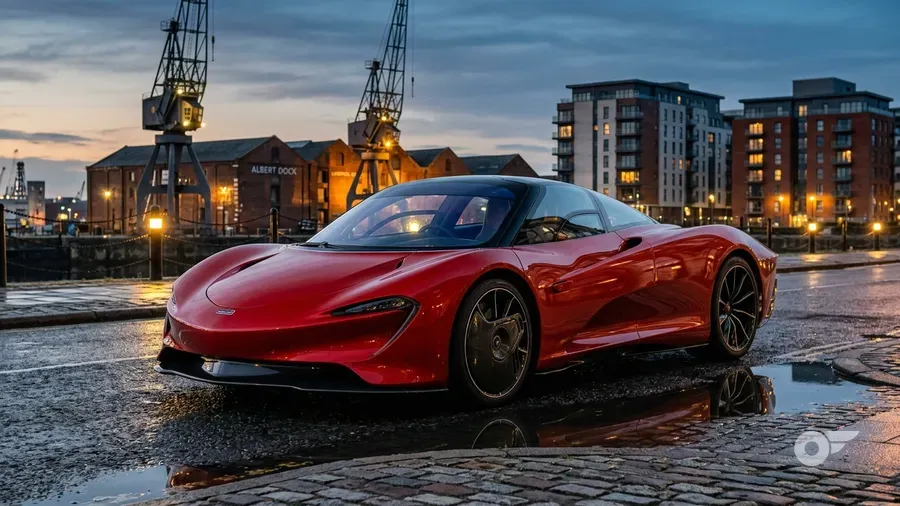
McLaren Speedtail

McLaren Speedtail

UK·Exotic·2020–2020

Owning One

Why collectors want it

Eighty-five cars, every one sold by June 2017, and a drivetrain nobody else has built before or since. That last part is the real argument. Hypercars converge on shared solutions quickly, and Direct Drive is the rare piece of engineering that has stayed proprietary because it required a company small enough to gamble and stubborn enough to make it work. The Regera is also a genuine first, the first production car to run an 800-volt electrical architecture, using a pack developed with Rimac before Rimac was famous, and the industry took years to follow it there. Within the range it sits deliberately apart. The Agera and the Jesko chase lap times and top speeds; the Regera was conceived as a fast, comfortable, usable machine for covering distance, which in a marque this focused on absolutes is close to heresy and is exactly why it has its own following. Values reflect scarcity rather than hype, and the car remains one of the more reasonable ways into the marque.

Which one to look for

There are no trims in the conventional sense. Koenigsegg built the Regera as a single specification and let the options list do the work, and that list ran deep enough that individual cars differ by seven-figure sums. The one factory option package worth knowing is the Ghost package, which brings the more aggressive aerodynamic addenda and track-oriented Cup 2 tyres and turns the GT of the range into something closer to its siblings. Beyond that, the notable cars are one-off commissions rather than variants. The Regera KNC, for Koenigsegg Naked Carbon, wears unpainted, unlacquered carbon fibre finished by hand, and the Regera d'Elegance was built to a single customer's brief. When buying, the meaningful questions are the specification of the individual car, whether it carries the Ghost package, and what the original commission sheet says, because in a car with no model hierarchy the build sheet is the hierarchy.

What owning one is like

The good news is structural: there is no gearbox, so the single most expensive wear item in a hypercar simply is not present, and the electric motors doing low-speed work spare the engine the abuse of crawling in traffic. What replaces it is electrical. The 800-volt pack is compact and works hard, and it ages on the calendar as much as on use, so a car that has stood for years unused and uncharged needs attention that only the factory network can give. The Autoskin hydraulics and their proximity sensors are the second area to watch, for the same reason: actuators dislike sitting still. Software matters too, since the drivetrain's behaviour is defined by calibrations that arrive over the air, and a car that has missed updates is running old logic. Tyres are bespoke and, on a 1,500 hp rear-drive car, consumable. None of this is unusual for a modern hybrid hypercar, and the Regera has an advantage over most of them: the company that built it is still independent, still run by its founder, and still supports every car it has made.

Upkeep & parts

Servicing is a factory affair and the high-voltage system makes that non-negotiable. Koenigsegg-trained technicians work through official dealers across Europe and the United States, high-voltage work requires their qualification and equipment, and remote cars are usually handled by sending a technician rather than moving the car. Parts come from Angelholm; the battery was developed with Rimac and is not a component any independent shop will touch. Budget for tyres first, since a bespoke fitment on a car of this output is a recurring rather than occasional cost, and for annual servicing that is scheduled around Sweden's calendar. Set against that, the running costs are lower than the specification suggests, because deleting the transmission removed a major service item and the hybrid system does much of the low-speed work. Keep the car charged and exercised rather than stored, keep the software current, and keep the original build documentation together, since specification is what values a Regera. The unofficial Koenigsegg Registry remains the best public record of individual cars and their commissions.

Country of origin
Sweden
Class
Exotic
Production years
2016–2022
Units built
85
Model
Regera
Nickname
No nickname
Body
Targa
Layout
Mid-engine, RWD
Engine
5.0 L twin-turbo Koenigsegg V8 (820 kW at 7,800 rpm, 1,280 Nm) with three YASA axial-flux electric motors (one 215 hp crank-mounted, two 241 hp on the rear driveshafts), 1,500 hp combined
Transmission
Koenigsegg Direct Drive: single fixed 2.73:1 ratio with a hydraulic coupling, no gearbox
Designer
Christian von Koenigsegg, Joachim Nordwall