Octane Files
Explore CarsMcLaren Speedtail

McLaren Speedtail

Overview

The Speedtail is the car McLaren built because the F1 kept coming up. Three seats with the driver in the middle, a carbon tub, and a production run capped at 106 to match the number of F1s built between 1992 and 1998. None of that is coincidence. It is 5,137 mm long, most of that behind the cabin, because the tail is the aerodynamic device: no wing and no active spoiler, just a shape that keeps the airflow attached and two flexible carbon ailerons built into the rear bodywork that bend rather than hinge. The powertrain is a 4.0 litre twin-turbo V8 with an electric motor between it and the gearbox, 1,036 bhp combined, and a 250 mph maximum that McLaren verified rather than calculated. Chief test driver Kenny Brack took a prototype to 403 km/h more than thirty times on the space shuttle landing runway in Florida to prove it. All 106 were sold before the car was shown publicly in October 2018, and roughly a third went to American buyers who cannot legally drive them on the road at home.

Distinctions

The defining attributes and collector status that make this car garage-worthy.

Octane Files Select
Renowned for its history, engineering, or cultural weight.

Collectibility scorecard

Rated 1 to 10 on the traits that matter for owning, driving, and holding on to a car like this.

Desirability
9/10
Rarity
10/10
Driving thrill
8/10
Investment trajectory
5/10
Usability
3/10
Ease of restoration
2/10
Cultural impact
7/10
Electronic dependence
Fully analogHeavily electronic

A hybrid with no mechanical alternative to almost anything. The V8 and the electric motor are blended by software, the seven-speed dual-clutch shifts electronically, and the throttle is drive-by-wire. There are no mirrors: two HD cameras deploy when the ignition is switched on and retract again in Velocity mode, so rearward vision is a screen feed and nothing else. The roof is electrochromic glass that darkens on command. Velocity mode lowers the car and reconfigures the aerodynamics through the car's own control systems rather than through anything the driver operates directly. The battery is a 1.647 kWh lithium-ion pack topped up by a bespoke wireless charging pad. A five, without much argument.

Market data

Demand tier, price trend, and typical values by condition. Our own assessment, not a quoted valuation.

Demand tier
EntrySolidHighBlue-chip

The proven elite. Values are established, liquid, and defended at every auction.

Value trajectory
AppreciatingStableCooling

Values are softening. Patience buys better cars for less.

Price by condition
Driver
$1.9M
Excellent
$2.3M
Concours
$2.8M

The Speedtail has a real auction record and a clear direction. The first one offered publicly made 3,277,500 dollars at RM Sotheby's Arizona in January 2021. Recent results are lower: 1,974,000 dollars at RM Sotheby's Miami in February 2026, and 2,260,000 dollars at RM Sotheby's Monterey in August 2026 for a 231-mile car carrying 86,000 pounds of MSO options. The Classic Valuer records 11 sold cars at a 52 percent sell-through rate, with results moving from a 2.0 to 2.45 million pound range in 2021 and 2022 down to 1.44 to 1.68 million pounds in 2026. That is a cooling market rather than a collapsing one, and the pattern is familiar: an early scarcity premium unwinding as the cars bought to flip finish changing hands. List price is genuinely contested, quoted at 2.1 million pounds by some sources and closer to 1.75 million before options by others. The band below reflects verified sales rather than asking prices.

Values as of August 2026.

Buyer's guide

What anyone seriously considering this car should know first.

Why it's worth it
The three-seat McLaren that took the F1's job, down to the 106-car production run
Callout
All 106 were sold before the car was shown, matching the number of McLaren F1s ever built
What to watch for
The first question is where you live. The Speedtail is not US road legal, because a centre seat cannot carry the side airbags federal rules require and camera mirrors do not satisfy them either. American cars come in under Show or Display, which caps them at 2,500 miles a year, and McLaren stated plainly that it would not help owners with the importation paperwork. Roughly a third of the run went to American buyers, so a large share of surviving cars carry that history; confirm the exemption paperwork actually exists rather than assuming it does. Beyond that, this is a car bought on specification. Documented MSO content on individual cars has run from 86,000 pounds to well over 250,000 dollars, and the build sheet is the document that matters most. Check that the bespoke wireless charging pad is present and working, since the hybrid battery expects to be kept topped up. Look closely at the static carbon front wheel covers, which scuff easily and are not generic parts. Delivery-mileage cars dominate the market and are priced accordingly.

The Story

Driving character

You get in by stepping over a wide sill and dropping into the middle of the car, which takes practice and is the thing every owner mentions first. Once there, the driving position is dead centre, the two passengers sit slightly behind you on either side, and the view forward is the long taper of the nose with no mirrors interrupting it. It does not drive like a track car and was never meant to. The electric motor fills in underneath the turbos so the car pulls hard from anywhere without waiting, and the sensation is less violence than inevitability, a 5.1 metre car gathering speed and refusing to stop gathering it. Velocity mode drops the ride height, retracts the cameras and sets the flexible carbon ailerons in the tail for minimum drag, which is the configuration in which the 250 mph figure becomes relevant. In ordinary use it is quiet, docile and surprisingly easy to place for something this long. The strangeness is all in the seating, and it never quite wears off.

Design

The tail is the whole car. There is no rear wing and no active spoiler; instead the body tapers for close to two metres behind the cabin to a 5,137 mm overall length, keeping the airflow attached rather than fighting it. Where a conventional car would hinge a flap, the Speedtail has two flexible carbon ailerons built into the rear bodywork that bend under hydraulic pressure, with no join and no gap for air to leak through. The front wheels wear static carbon covers so the wheel face does not churn air. The mirrors are gone entirely, replaced by cameras that pop out of the front wings on ignition. The roof is electrochromic glass, darkened by a switch. The doors are dihedral, the tub is carbon, and the cabin narrows around the central seat rather than being packaged around a pair of them. Rob Melville and Alex Alexiev are credited. The result reads as a 1930s land-speed record car reinterpreted by people with a wind tunnel, which is roughly what it is.

Motorsport pedigree

None, and the reasons are structural rather than accidental. A 5.1 metre three-seat road car with a central driving position fits no class in any championship anywhere; GTE and GT3 both write their rules around two-seat production shapes, and no series has ever existed for a hyper-GT built to go fast in a straight line. McLaren's competition programme in the period was Formula One and the 720S GT3, and nothing about the Speedtail was ever intended to feed either. What it does have is a race result in its family tree that McLaren never planned. The F1 was not designed to race, and customer pressure put it on the grid anyway, where F1 GTRs finished first, third, fourth, fifth and thirteenth at Le Mans in 1995, Yannick Dalmas, JJ Lehto and Masanori Sekiya winning outright. The Speedtail's only contest was against a number, and Kenny Brack settled it by running a prototype to 403 km/h more than thirty times on a runway built for returning spacecraft.

In culture

For a car almost nobody has seen, the Speedtail generated an unusual amount of story. It sold out before it was announced, which is a sentence that reached business pages rather than car magazines. Its American buyers, roughly a third of the run, discovered they had bought something they could not legally drive at home, and the Show or Display workaround with its 2,500-mile annual cap became the car's defining anecdote in the United States. The 106-car cap is a piece of deliberate mythology that worked: people who could not name a single Speedtail specification know the number matches the F1. The prototype name did similar work, since Albert reaches back to the F1's own development mule and to Albert Drive in Woking, and McLaren made sure the press understood the reference. The top-speed run gave the car the image it is remembered by, alone on a runway built for landing space shuttles. It is better known for its circumstances than for anything it actually does.

Rivals

Cars from other manufacturers that competed for the same buyers when new.
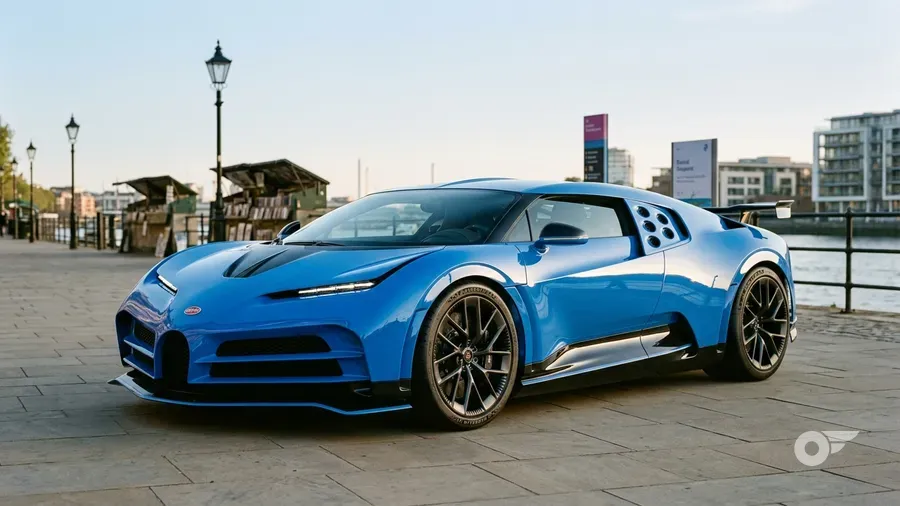
Bugatti Centodieci

Bugatti Centodieci

France·Exotic·2022–2022
Koenigsegg Regera

Koenigsegg Regera

Sweden·Exotic·2016–2022

Owning One

Why collectors want it

The Speedtail exists because McLaren spent twenty years being asked when it would build another F1, and it answers with specifics rather than sentiment. Three seats with the driver in the middle. A carbon tub. A run capped at exactly 106, the number of F1s built. A prototype named Albert, which was the name of the F1's own test mule and of the Woking street where the F1 was designed and built. None of that is decoration; it is the brief. What makes the car collectible beyond the lineage is that nothing else has tried it since. Central driving positions are a solved problem that nobody wants to solve, because they make a car heavier, harder to homologate and impossible to sell in America, all of which the Speedtail simply accepted. Every one was allocated before the reveal in October 2018. Values have come off the frenzy of the first sales, which makes now a better time to buy one than 2021 was, and none of the reasons to want one have changed.

Which one to look for

There are no variants, and that is worth stating clearly because every other Ultimate Series McLaren has them. McLaren built 106 Speedtails to one specification and never made a track version, a roadster, an LM or an anniversary run. What separates cars is entirely MSO: paint, the choice between painted and exposed carbon bodywork, leather against the carbon and titanium interior options, and whatever individual buyers commissioned on top. Documented option content has ranged from 86,000 pounds to more than 250,000 dollars, and that spread is the real variance in the market. The one car worth knowing that is not a customer car is Albert, the first attribute prototype, formally MVY02, whose name deliberately repeats that of the McLaren F1's own development mule and the Albert Drive premises in Woking where the F1 was built. For a buyer, the decisions that matter are colour, exposed carbon, mileage, option content and whether the car has ever left the market it was delivered into.

What owning one is like

Most Speedtails have barely moved, and that is the ownership story rather than any mechanical fault. A hybrid that sits does not thank you for it: the 1.647 kWh battery expects to be kept charged through its bespoke wireless pad, and the 12V system in modern McLarens flattens inside a week or two of standing. Cars in the United States are additionally capped at 2,500 miles a year by the terms of their own import exemption, so under-use is structural rather than a choice their owners made. The mechanical parts underneath are shared with McLaren's volume cars and carry the same habits: coolant hose clamps that seep over time, radiators mounted low enough to collect road debris, and a general preference for being driven rather than stored. The bodywork is where the costs live. Carbon panels, static wheel covers and the two flexible ailerons in the tail are not parts a body shop can improvise, and with no mirrors anywhere on the car the camera system is load-bearing rather than a convenience.

Upkeep & parts

Service goes through McLaren and nowhere else, which for 106 cars is less of a hardship than it sounds. Routine work runs roughly 1,000 to 2,500 dollars at ten-thousand-mile intervals, though most Speedtails will reach a service interval by time rather than by distance. A full set of carbon-ceramic brakes is around 20,000 dollars and tyres around 1,500 dollars a set, and those tyres were developed with Pirelli specifically to survive 250 mph while staying usable at ordinary speeds, so substitution is not a sensible economy. There is no aftermarket, no published workshop documentation and no independent parts supply. McLaren does not sell factory manuals to owners and nothing has grown up around a car this rare, so McLaren Special Operations handles anything bespoke or structural. The variable worth watching is corporate: CYVN Holdings completed its acquisition of McLaren Automotive from Bahrain Mumtalakat in April 2025, and long-term support for a 106-car hybrid depends on that business staying interested in its own back catalogue.

Country of origin
UK
Class
Exotic
Production years
2020–2020
Units built
106
Model
Speedtail
Nickname
No nickname ("Albert" names the first Speedtail prototype specifically, not the production car)
Body
Coupe
Layout
Mid-engine, RWD
Engine
4.0 litre M840T twin-turbocharged V8, 756 PS (746 hp) and 800 Nm, with an electric motor adding 310 PS (306 hp); 1,050 PS (1,036 bhp) and 1,150 Nm combined, fed by a 1.647 kWh lithium-ion battery
Transmission
7-speed Graziano dual-clutch
Designer
Rob Melville (McLaren design director), Alex Alexiev