Octane Files
Explore CarsMcLaren Senna

McLaren Senna

Overview

McLaren built the Senna to do one thing and was honest about what that cost. The brief was the quickest lap a road-legal McLaren could manage, and everything the car looks like follows from it. All 500 were allocated before anyone outside the customer list saw one at Geneva in March 2018, which meant the styling backlash that followed cost McLaren nothing at all. Underneath sits MonoCage III, a carbon tub wearing carbon panels, with a 4.0 litre twin-turbo V8 rated at 800 PS (789 hp) and a dry weight McLaren quotes at 1,198 kg. The aerodynamics are the argument: 800 kg of downforce at 155 mph, about two thirds of what the car itself weighs, produced by a double-element rear wing that moves, a double-element diffuser and a roof scoop feeding the engine. It is the third Ultimate Series car after the F1 and the P1, and the first McLaren to carry a driver's name, which the Senna family granted alongside a contribution to the Instituto Ayrton Senna. The 500th build slot was held back and auctioned to customers for 1,916,793 pounds, all of it to the Institute.

Distinctions

The defining attributes and collector status that make this car garage-worthy.

Poster Car
The car on the bedroom wall, the one people dreamed about before they could drive.
Octane Files Select
Renowned for its history, engineering, or cultural weight.

Collectibility scorecard

Rated 1 to 10 on the traits that matter for owning, driving, and holding on to a car like this.

Desirability
9/10
Rarity
9/10
Driving thrill
10/10
Investment trajectory
7/10
Usability
3/10
Ease of restoration
2/10
Cultural impact
7/10
Electronic dependence
Fully analogHeavily electronic

Almost nothing on this car is a direct mechanical linkage. The steering is the exception, hydraulically assisted rather than electric, and it is the reason the car feels the way it does. Everything else is managed: drive-by-wire throttle, ECU engine and turbo control, a seven-speed dual-clutch that shifts on software, and RaceActive Chassis Control II, a hydraulically interlinked suspension with no anti-roll bars that computes roll and heave control instead of resisting it mechanically. The rear wing moves under software command and doubles as an airbrake. Stability control, launch control and the drive modes are electronic, and the instrument display is a screen. A five.

Market data

Demand tier, price trend, and typical values by condition. Our own assessment, not a quoted valuation.

Demand tier
EntrySolidHighBlue-chip

The proven elite. Values are established, liquid, and defended at every auction.

Value trajectory
AppreciatingStableCooling

Values are holding steady. What you pay today is what it's worth tomorrow.

Price by condition
Driver
$900k
Excellent
$1.3M
Concours
$1.7M

Sennas trade often enough to have a real market, which not every 500-car hypercar manages. Verified results include 905,000 dollars at RM Sotheby's Abu Dhabi in 2025, 1,215,000 dollars at RM Sotheby's Arizona in January 2025 and 1,435,000 dollars at Broad Arrow in Monterey in August 2026, against a list price of 750,000 pounds, roughly a million dollars, in 2018. The Classic Valuer records 33 sold cars at a 66 percent sell-through rate, which is healthy for the money involved. The band below covers the road car only: GTR, LM, Sabre and GTR LM cars sit above it and are traded too thinly to band honestly. Values look stable rather than climbing, since the car has held its list price and a little more for several years without running away from it, and the population is fixed. Specification, MSO content and documented track history move individual cars within the band more than mileage does.

Values as of August 2026.

Buyer's guide

What anyone seriously considering this car should know first.

Why it's worth it
The quickest road-legal McLaren around a circuit, and the first to carry a driver's name
Callout
800 kg of downforce at 155 mph, roughly two thirds of what the car itself weighs
What to watch for
Start with the recall. NHTSA covers 2019 Sennas alongside certain 720S, GT and 570GT cars for an NVH foam pad under the fuel tank that can hold moisture and corrode the tank, so get written confirmation the work has been done. After that the questions are about how the car has lived. Trofeo R tyres are a track compound with a shelf life, so date codes matter as much as tread depth. Ask about track days honestly rather than hoping, then inspect the underfloor, the splitter edges and the leading edges of the carbon panels, because kerbs and badly judged ramps leave marks that are expensive to make invisible again. The hydraulic suspension carries accumulators that are a service item, not a lifetime part. Cars that sit flatten their 12V battery inside a fortnight, which is normal and easy to mistake for something worse. On paperwork, check whether the glazed lower door panels were specified, get the full MSO build sheet, and treat specification as the asset rather than the odometer: buyers here pay for how a car was ordered more than for how little it has moved.

The Story

Driving character

The Senna does not reward a gentle first lap, which is what catches people out. Slow, it feels stiff and busy and slightly hostile, the seats are thin carbon shells, and the cabin is loud in ways that have nothing to do with the exhaust. Then the speed arrives and the car changes character completely. The aero loads up, the front end starts to bite in a way no road car has any business doing, and the brakes turn out to have travel and feel rather than the on-off response carbon ceramics usually give. Chris Harris ran one at Silverstone against a 650S GT3 and found the road car holding an honest conversation with a purpose-built racer, on road tyres. The V8 is not the beautiful part. It is savage and slightly industrial, and the roof scoop pipes induction noise straight down onto your head, which is more effective than any exhaust tuning. The dual-clutch shifts hard on purpose. Harris also said he would rather have a 600LT, and both of those things are true at once.

Design

Rob Melville's studio was given an aerodynamic target and a weight target and very little else, and the Senna is what happens when nobody is allowed to overrule those. The shape is a teardrop cabin with the mechanical parts of the car hung off it and then cut away wherever air needed to pass. The double-element rear wing is enormous and hydraulically actuated, doubling as an airbrake. The diffuser is double-element too, the front splitter is deep enough to be a liability on driveways, and the rear deck is mostly louvres because there was no room left for panel. The most divisive choice was the optional glazed lower door panels, which turn the doors into windows and let you watch the road pass under your elbow. Reaction at launch was brutal and almost entirely aesthetic, and McLaren's answer never changed: the car looks like this because the lap time required it. Several years on, the shape has aged better than the argument about it, which is the usual fate of function-led design.

Motorsport pedigree

The strangest thing about the Senna is that its racing version was finished before the road car was shown, and then never raced. McLaren GT at Woking built a full GTE-specification Senna, had factory and customer teams lined up for WEC and IMSA and drivers evaluated, and was days from a global launch at Geneva in March 2018 when the group lost its nerve. Formula One trouble, internal turmoil and programme cost killed it. What appeared instead was the Senna GTR, a track-only car for 75 customers that was essentially the same machine with the racing intent stripped out, still wearing Richard Mille branding and ACO-regulation position lights it had no further use for. The road Senna itself was never eligible for anything, because a car making 800 kg of downforce fits no class written for road-derived racers. McLaren's actual customer racing in the period was the 720S GT3. The competition record the name carries belongs to Ayrton Senna: three world championships with McLaren, in 1988, 1990 and 1991.

In culture

Putting a driver's name on a car is a risk, and McLaren took the biggest one available. The Senna family agreed, with a contribution to the Instituto Ayrton Senna attached, and Bruno Senna, a McLaren ambassador, did much of the public work around the launch. The 500th build slot was held back from the allocation list and auctioned to McLaren customers, raising 1,916,793 pounds for the Institute, which funds education for children in Brazil. The reception was not uniformly kind. A large part of the enthusiast internet decided the car was ugly and said so at length, and an argument about whether the name had been earned ran alongside it. The car's answer arrived through games rather than through debate: the Senna launched in Forza Horizon 4 and has appeared across the Forza series since, which put it in front of an audience that will never see one on a road. For a car built to be lapped, it became famous mostly for being looked at.

Rivals

Cars from other manufacturers that competed for the same buyers when new.

Lamborghini Aventador

We haven’t profiled this car yet. Request to add

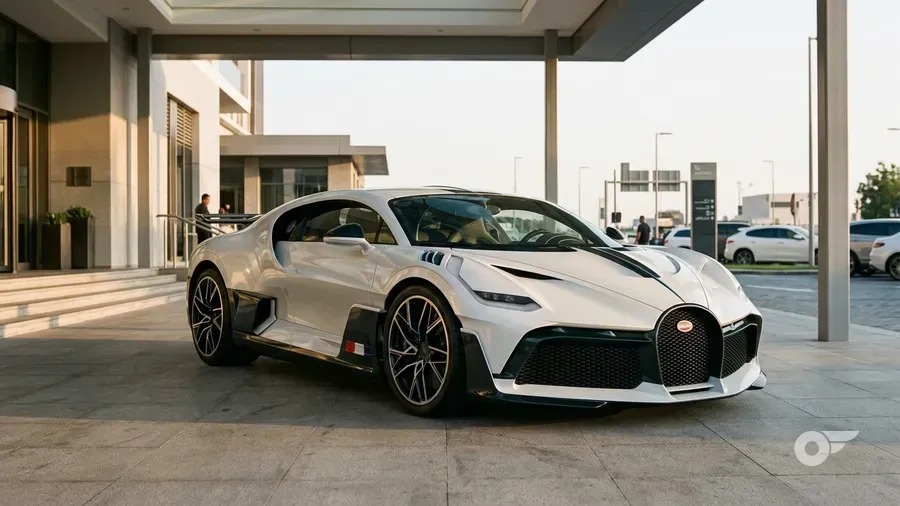
Bugatti Divo

Bugatti Divo

France·Exotic·2019–2021
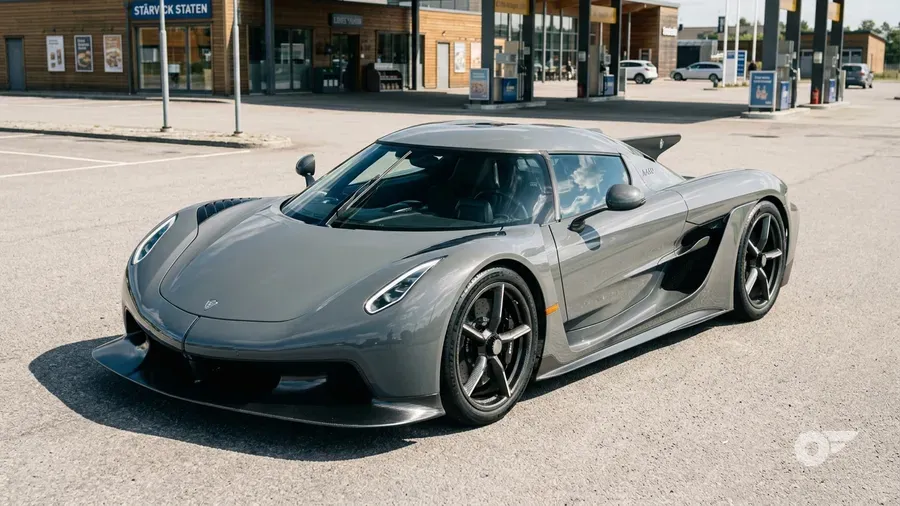
Koenigsegg Jesko

Koenigsegg Jesko

Sweden·Exotic·2020–present

Aston Martin Valkyrie

We haven’t profiled this car yet. Request to add

Owning One

Why collectors want it

Five hundred cars, a name no other manufacturer could have used, and a purpose narrow enough that nothing else in the Ultimate Series overlaps it. That is the case, and the market has accepted it: Sennas trade at or a little above the roughly one million dollars they cost new, which very few 2018 hypercars manage. The hierarchy inside the run is unusually steep for such a young car. The 500 road cars are the floor. Above them sit the 75 track-only GTRs, then the 35 MSO LM cars with their polished ports, OZ centre-lock wheels and satin-gold exhaust tips, then the 15 US-only Sabres, and at the top the five GTR LMs painted in the liveries of the McLaren F1 GTRs that finished first, third, fourth, fifth and thirteenth at Le Mans in 1995. Specification matters more here than on almost any other modern collectible, because MSO options routinely ran into six figures and the cars that were ordered thoughtfully are the ones that sell. The one thing the Senna lacks is a quiet consensus about how it looks, and that has never held the money back.

Which one to look for

There is one road Senna and four cars built around it, and the ranking is clearer than usual. The 500 base cars are the ones to buy if you intend to drive it: fully road legal, fully warranted, and the only version with a real service network behind it. The 75 Senna GTRs are track-only, carrying wider bodywork, GT3-derived suspension and around 1,000 kg of downforce, and cannot be registered without conversion work. The 35 MSO LM cars are the connoisseur's pick, an F1 LM tribute with polished ports and cylinder heads, OZ centre-lock wheels and satin-gold quad exhaust tips, of which only seven are right-hand drive and five went to the United States. Fifteen Sabres were built for US customers alone, drawing on the Ultimate Vision Gran Turismo concept and rated at 835 PS. At the top sit five GTR LMs, road-legal GTRs finished in the colours of the five F1 GTRs that ran at Le Mans in 1995. Rarity and price track that order almost exactly, and the base car is the only one most buyers should consider.

Sabre

An MSO commission built for the United States alone, drawing on the McLaren Ultimate Vision Gran Turismo concept for its styling and taking aerodynamic elements from the Senna. Rated at 835 PS (824 hp), the highest output of any road-legal Senna.

Senna · 2018–2019

The road car, and the only version with full type approval and a normal service relationship behind it. MonoCage III carbon tub, 4.0 litre twin-turbo V8 at 800 PS (789 hp), 1,198 kg dry, 800 kg of downforce at 155 mph from a hydraulically actuated double-element rear wing that also works as an airbrake. Brembo carbon ceramics, Pirelli Trofeo R on centre-lock wheels, RaceActive Chassis Control II hydraulic suspension with no anti-roll bars. Glazed lower door panels were a notable option.

Senna GTR · 2019

Track-only, and effectively the GTE race car McLaren built and then cancelled. Wider front and rear bodywork, a larger front splitter, suspension derived from the GT3 programme, a race dual-clutch transmission and slick tyres on OZ Racing wheels. Peak power raised to 825 PS (814 hp) via bespoke calibration and an Inconel and titanium exhaust, with around 1,000 kg of downforce. Cannot be road registered without conversion work.

Senna GTR LM

A road-legal conversion of the track-only GTR, and the rarest Senna of all. Each of the five carries a paint scheme reflecting one of the five McLaren F1 GTRs that ran at the 1995 24 Hours of Le Mans, marking the 25th anniversary of that outright win. Rated at 845 PS (833 hp).

Senna LM

McLaren Special Operations' tribute to the McLaren F1 LM, and the connoisseur's pick of the road cars. Polished ports and cylinder heads, OZ centre-lock wheels, satin-gold-tipped quad exhausts and McLaren orange livery referencing the F1 GTR victory at Le Mans in 1995. Rated at 825 PS (814 hp).

What owning one is like

Living with a Senna is less fraught than the car's appearance suggests, which is the standing surprise of McLaren ownership. The mechanical package comes from the same family as the 720S, so it inherits that car's known items: coolant hose clamps that loosen and seep, radiators mounted low enough to collect stones, and hydraulic suspension accumulators that need attention on a schedule rather than lasting forever. The 12V battery flattens in a week or two if the car sits unplugged, and since most Sennas sit, a trickle charger is standard equipment rather than an accessory. The 2019 cars fall under the fuel tank corrosion recall, which is a documentation question rather than a mystery. Carbon bodywork is the expensive part of any accident, and the splitter sits low enough that a badly judged ramp counts as one. None of it is unusual for the type, and the cars that get used report fewer problems than the cars that are stored, which is worth taking seriously before buying one as an ornament.

Upkeep & parts

Everything here goes through McLaren, and that is the honest starting point. Annual service runs around 2,200 dollars at a retailer, with routine work between roughly 1,000 and 2,500 dollars at ten-thousand-mile intervals, which is unremarkable until something wears out. A full set of carbon-ceramic discs sits somewhere between 12,000 and 25,000 dollars. Trofeo R tyres are a consumable measured in track days rather than years. There is no independent parts ecosystem worth the name: McLaren does not sell factory workshop manuals to owners, no aftermarket has grown up around a 500-car model, and the specialist independents that exist work from accumulated experience rather than published documentation. Their labour rates run meaningfully below a retailer's, though a dealer stamp still carries weight at resale on a car this closely tracked. McLaren Special Operations remains the route for anything bespoke or accident-related. Company ownership changed in April 2025, when CYVN Holdings completed its purchase of McLaren Automotive from Bahrain Mumtalakat.

Country of origin
UK
Class
Exotic
Production years
2018–2019
Units built
500
Model
Senna
Nickname
No nickname
Body
Coupe
Layout
Mid-engine, RWD
Engine
4.0 litre M840TR twin-turbocharged V8, 800 PS (789 hp) at 7,250 rpm and 800 Nm; the same engine rated at 825 PS (814 hp) in the track-only Senna GTR and the MSO LM, 835 PS (824 hp) in the Sabre and 845 PS (833 hp) in the GTR LM
Transmission
7-speed dual-clutch (seamless shift gearbox)
Designer
Rob Melville (McLaren design director)