Octane Files
Explore CarsLamborghini Centenario

Lamborghini Centenario

Overview

Ferruccio Lamborghini was born in 1916, and in 2016 the company he started built forty cars to mark it. The Centenario is the only one of Sant'Agata's modern few-offs named for a person rather than a bull, and it is also the one that carried real engineering rather than only a body. Underneath is an Aventador with SV-specification running gear, the 6.5-litre V12 lifted to 770 PS, which made it the most powerful road car Lamborghini had built at the time. What matters more is the thing bolted behind it: the Centenario was the first Lamborghini with rear-wheel steering, a system that turns the rear wheels against the fronts at low speed to shrink the car and with them at high speed to settle it. That technology went straight into the Aventador S later the same year, which is why this car has a legacy the Reventón and the Veneno do not. Twenty coupés and twenty roadsters were built at about 1.75 million euros each, and every one was sold before the coupé was shown at Geneva in March 2016.

Distinctions

The defining attributes and collector status that make this car garage-worthy.

Poster Car
The car on the bedroom wall, the one people dreamed about before they could drive.
Octane Files Select
Renowned for its history, engineering, or cultural weight.

Collectibility scorecard

Rated 1 to 10 on the traits that matter for owning, driving, and holding on to a car like this.

Desirability
8/10
Rarity
10/10
Driving thrill
8/10
Investment trajectory
6/10
Usability
4/10
Ease of restoration
3/10
Cultural impact
6/10
Electronic dependence
Fully analogHeavily electronic

The most electronically dependent car Lamborghini had built when it launched. The 6.5-litre V12 runs drive-by-wire with full engine management, the seven-speed ISR single-clutch gearbox is hydraulically actuated, all-wheel drive is electronically apportioned, and stability and traction control sit under selectable drive modes. The step beyond earlier few-offs is the chassis: rear-wheel steering actively steers the rear axle for you, which is a system with authority over the car's behaviour rather than an aid. The cabin moved too, from analog switchgear to a 10.1-inch portrait touchscreen that records telemetry and lap data and carries Apple CarPlay, a first for the marque. Suspension damping remains conventional.

Market data

Demand tier, price trend, and typical values by condition. Our own assessment, not a quoted valuation.

Demand tier
EntrySolidHighBlue-chip

Strong, sustained collector demand. Good examples never wait long for a buyer.

Value trajectory
AppreciatingStableCooling

Values are holding steady. What you pay today is what it's worth tomorrow.

Price by condition
Driver
$2M
Excellent
$2.3M
Concours
$2.7M

Forty cars produce a thin but real public record, and it says the Centenario has held its original money without gaining much. Two verified results: a 2017 coupé sold at RM Sotheby's in Dubai on 8 March 2024 for 2,142,500 dollars, and a roadster sold through RM Sotheby's in the UAE on 1 December 2024 for about 1.57 million pounds. Around those, at least six public offerings between 2019 and 2026 went unsold, giving a sell-through rate near a quarter, which is the real story of this market: owners test the water, do not get their number, and keep the car. Against a 2016 list of about 1.75 million euros including tax, current results are roughly flat in real terms, which supports stable rather than appreciating. The band below covers both body styles, since the twenty-twenty split means neither is scarcer and public results have landed within a few percent of each other. Specification and originality move individual cars more than body style does.

Values as of August 2026.

Buyer's guide

What anyone seriously considering this car should know first.

Why it's worth it
The first Lamborghini with rear-wheel steering, built for the centenary of Ferruccio's birth
Callout
Every one of the forty cars was sold before the coupé was shown at Geneva
What to watch for
Two things carry the value here, and neither is mechanical. First, specification. Every one of the forty cars was individually configured with Ad Personam, and registries document more than a dozen exterior finishes and a similar spread of interiors across the run, so establish what the car left Sant'Agata as and whether it still matches. Most cars use visible carbon rather than paint over large areas, and a refinished or repaired carbon surface is difficult to hide and expensive to correct. Second, documentation: build sheet, delivery records, and continuous history. Mechanically this is an Aventador with SV-era running gear, so the checks are the familiar ones. Establish clutch condition on the single-clutch ISR gearbox and price a replacement into your budget rather than hoping. Ask whether the recall software update covering Aventadors of this period has been applied. Check that the rear-wheel steering has been exercised and serviced, since it is unique to a small population and not something every workshop has seen. And ask how the car has been stored, because forty cars that mostly sit develop age problems rather than wear problems.

The Story

Driving character

This is the friendliest of Lamborghini's few-offs to drive, and rear-wheel steering is why. The 770 PS V12 is the same naturally aspirated 6.5-litre unit as the Aventador SV, revving to 8,500 rpm with a hard mechanical shriek that no turbocharged engine imitates, and firing through a seven-speed ISR single-clutch gearbox that shifts with a definite shove in its sharper settings and shuffles awkwardly in traffic, exactly as it does in every other car that uses it. What is different is the way the car changes direction. Turning the rear wheels against the fronts at low speed makes a long mid-engined V12 behave like something considerably shorter, which is the single biggest complaint about big Lamborghinis addressed directly, and turning them with the fronts at speed steadies the car through fast corners. Testers who drove it described a car that feels nimble and gives more feedback than its size suggests. Three exhaust outlets exit high at the rear, a first for the marque, and they are audible proof of where your money went.

Design

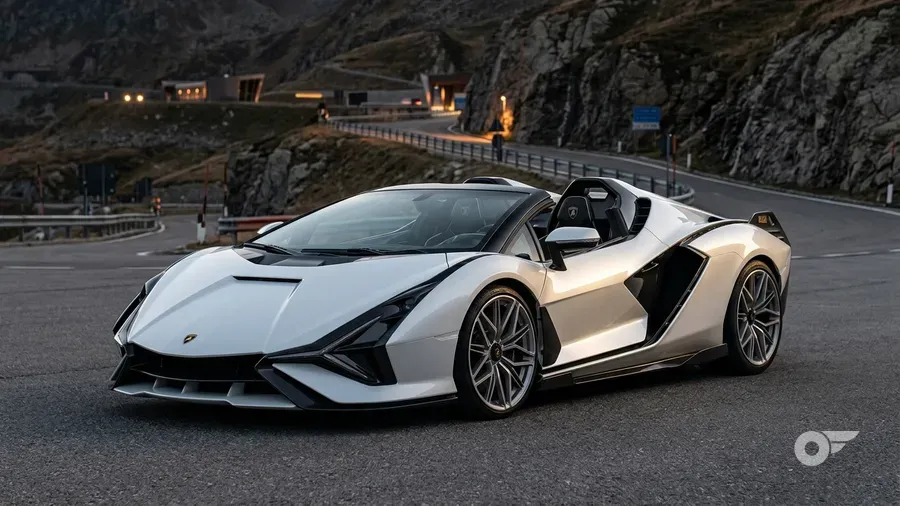
Filippo Perini drew the coupé and Mitja Borkert the roadster, at the point where Centro Stile was transitioning between the two, and the car reads as a bridge between the Aventador's language and the sharper one Lamborghini adopted afterwards. Most of the forty cars wear visible carbon rather than paint across the body, which sets the surfacing off in a way colour cannot: the Y-shaped light signatures, the hexagonal motifs, the deep side intakes and the aggressive front splitter all read as structure. The tail is the most distinctive part, with an exposed engine bay, a large diffuser and the three exhaust outlets exiting high and centrally, the first Lamborghini to arrange them that way. Inside, the change is bigger than it looks: the Centenario introduced the 10.1-inch portrait touchscreen that records telemetry and brought Apple CarPlay to the marque for the first time, which sounds mundane until you remember what the switchgear in a Murciélago felt like. It is the first Lamborghini few-off whose interior belongs to the present century rather than to a race car.

Motorsport pedigree

The Centenario never raced, and unusually for this family the reason is that it was pointed somewhere else entirely. Lamborghini's competition activity in 2016 ran through Squadra Corse with the V10 cars, the Huracán Super Trofeo one-make series and the Huracán GT3, which was winning in international GT racing at the time. The V12 flagship had no factory programme, and a forty-car run has no class to enter. What the Centenario did instead was development work. Rear-wheel steering appeared on this car first and went into the Aventador S within months, and the chassis electronics that manage it became part of Lamborghini's standard toolkit, eventually reaching the cars Squadra Corse does race. That is a more useful contribution than a class win in a GT4 field would have been. If you want the competition connection for this engine, it belongs further back, to the Murciélago R-GT of the mid-2000s, and further forward, to the hybrid prototypes Lamborghini took racing at the end of the following decade.

In culture

The Centenario reached more people than any other car in this family and it did it through a games console. It was announced as the cover car of Forza Horizon 3 in 2016, shown at E3 in Los Angeles alongside the game, and went on to appear on the box art and in the hands of millions of players, which is a scale of exposure forty physical cars could never generate. That timing was not accidental: Geneva in March, E3 in June, the game in September, and a car that had already sold out to forty people who would rarely drive it in public. Beyond that its life has been the usual one for scarce modern Lamborghinis, split between private collections, occasional concours appearances and a small number of auction catalogues. The name has done quiet cultural work too, because it puts Ferruccio's own centenary in front of an audience that mostly knows the brand through the badge rather than the man. For a company that spent decades selling posters, selling box art was the logical next step.

Rivals

Cars from other manufacturers that competed for the same buyers when new.
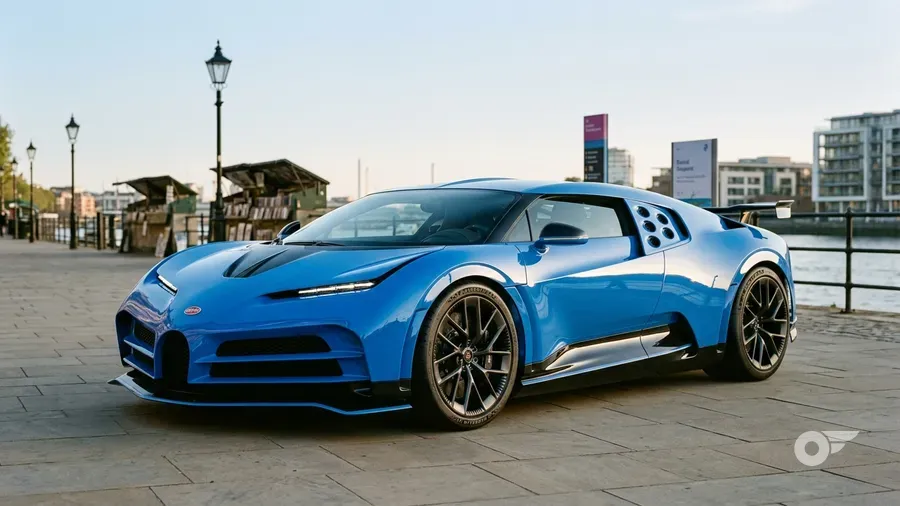
Bugatti Centodieci

Bugatti Centodieci

France·Exotic·2022–2022
Koenigsegg Regera

Koenigsegg Regera

Sweden·Exotic·2016–2022

Owning One

Why collectors want it

Forty cars is the headline, but the Centenario earns its place for a less obvious reason: it is the few-off that changed the production cars. Rear-wheel steering appeared here first and reached the Aventador S within months, and the chassis and electronics work done for these forty cars is why the Aventador aged as well as it did. Buying one is buying the prototype rather than the tribute. The occasion helps, and it is the best occasion in the family. The Reventón marked nothing, the Veneno marked a company anniversary, and this one marks the hundredth birthday of the man whose name is on the badge, which is the kind of provenance that does not fade. The split between twenty coupés and twenty roadsters is unusually even, so neither body style is meaningfully rarer, and the market has priced them within a few percent of each other. What holds values back is liquidity rather than desire: cars come up rarely and fail to sell more often than they trade, which is a feature of a forty-car run rather than a verdict on the car.

Which one to look for

Twenty coupés and twenty roadsters, mechanically identical, so this is a body-style decision rather than a hierarchy. Both use the 770 PS V12, the seven-speed ISR gearbox, the carbon monocoque with aluminium subframes at each end, and the rear-wheel steering that gives the car its technical significance. The coupé came first, at Geneva in March 2016, and is the version most people picture; the roadster followed later that year with no fixed roof at all, a dry weight fifty kilograms higher and a shape that shows off the engine cover and the three-outlet exhaust. Because the run splits exactly in half, neither is the scarce one, and public sales have landed within a few percent of each other. The real variation is specification. All forty were configured individually through Ad Personam, with visible carbon over most of the body on most cars and a wide range of accent colours and interiors, and registries record more than a dozen exterior finishes across the run. The one to look for is the one with the most convincing original specification and the cleanest history.

Coupé · 2016–2017

Shown at the 2016 Geneva Motor Show for the centenary of Ferruccio Lamborghini's birth. Aventador SV-era running gear with the 6.5-litre V12 at 770 PS, a seven-speed ISR gearbox and a carbon monocoque with aluminium subframes. The first Lamborghini with rear-wheel steering and the first with three exhaust outlets. Dry weight 1,520 kg.

Roadster · 2016–2017

Open version with no fixed roof, revealed later in 2016 and mechanically identical to the coupé at 770 PS. Dry weight 1,570 kg, 50 kg more than the coupé. Because the run splits exactly twenty and twenty, neither body style is the scarce one, and public results have landed within a few percent of each other.

What owning one is like

Underneath the carbon, this is an Aventador of the SV era, and that is genuinely good news for an owner. The V12 and the seven-speed ISR gearbox have been in production since 2011, the dealer network and independent specialists know both, and nothing about the powertrain is experimental. The single-clutch ISR is the item that defines the ownership experience: crisp when driven hard, hesitant and shuddery at crawling speed, and expensive when the clutch reaches the end of its life, which arrives sooner on cars used mostly in town. Lamborghini also issued a recall covering Aventadors built between 2011 and 2017 for engine-control software that could downshift and stall the V12, so confirming that update is worthwhile. The rear-wheel steering is the one system with no long history behind it, and while there is no pattern of failures, it is worth having exercised and inspected by somebody who has seen one. Bodywork is the expensive unknown: exposed structural carbon across most of the body means cosmetic damage is a specialist repair rather than a respray.

Upkeep & parts

Servicing is straightforward by the standards of this group because the mechanical parts are shared with a production car. Annual servicing regardless of mileage, carbon-ceramic brakes, bespoke tyres and an eventual clutch are the predictable costs, and the clutch is the one to set money aside for, with US quotes for Aventador-family replacement running into five figures. Lamborghini's dealer network covers the car properly and there is a mature independent sector for anything out of warranty. Where the Centenario stops being an Aventador is everything you can see. Every exterior panel is specific to forty cars, most of it is exposed structural carbon rather than painted composite, and the weave has to be matched rather than repainted, so a repair goes back towards Sant'Agata. Interior trim specified once through Ad Personam in 2016 has the same problem a decade on. Plan for enclosed transport and controlled storage, and use the car enough to keep the fluids, batteries and tyres honest. The marque clubs, registries and the Lamborghini Talk forum carry the owner-level knowledge.

Country of origin
Italy
Class
Exotic
Production years
2016–2017
Units built
40
Model
Centenario
Nickname
No nickname
Body
Coupe, Roadster
Layout
Mid-engine, AWD
Engine
6.5-litre (6,498 cc) L539 V12, 770 PS (759 hp) at 8,500 rpm, 690 Nm at 5,500 rpm
Transmission
7-speed ISR automated manual
Designer
Filippo Perini (coupé) and Mitja Borkert (roadster), Centro Stile Lamborghini