Octane Files
Browse CarsJeep CJ-5

Jeep CJ-5

Overview

Twenty-nine years is not one vehicle, and treating the CJ-5 as one is the fastest way to buy the wrong one. It arrived in 1954 as the civilian version of the military M38A1, the first Willys jeep with rounded fenders and a rounded bonnet, and it left in 1983 with a General Motors four-cylinder under that same bonnet. In between it was built by Willys, then by Kaiser, then by American Motors, and each owner changed it. Kaiser bought in Buick's 225ci Dauntless V6 for 1965, which took the CJ from slow to genuinely quick and accounted for three quarters of sales by 1968. AMC replaced the whole engine range with its own sixes and a 304 V8 for 1972, stretched the wheelbase to 83.5 inches and the bonnet by five, and turned a farm implement into a recreational vehicle. Then a December 1980 television broadcast questioned its stability, and the CJ-5 was gone after 1983 while the longer CJ-7 carried on. 603,303 were built. An early Hurricane-engined car and a late V8 are barely the same proposition, and the market prices them accordingly.

Distinctions

The defining attributes and collector status that make this car garage-worthy.

Octane Files Select
Renowned for its history, engineering, or cultural weight.

Collectibility scorecard

Rated 1 to 10 on the traits that matter for owning, driving, and holding on to a car like this.

Desirability
7/10
Rarity
3/10
Driving thrill
5/10
Investment trajectory
6/10
Usability
4/10
Ease of restoration
8/10
Cultural impact
8/10
Electronic dependence
Fully analogHeavily electronic

Sits at 2 rather than 1 because the twenty-nine year span covers two quite different specifications. A 1950s or 1960s CJ-5 is entirely mechanical: carburettor, points ignition, mechanical fuel pump, unassisted steering and drum brakes, and no sensor anywhere on the vehicle. The AMC-era cars from 1972 add electronic ignition, emissions plumbing and, on later cars, a computerised emission control system managing the carburettor, plus optional power steering and power front discs from 1977. Even at the end there is no engine management computer in any meaningful sense, no fuel injection and no electronic driver aid of any kind. Throttle, clutch, gearbox and transfer case remain direct linkages throughout.

Market data

Demand tier, price trend, and typical values by condition, based on recent sales data.

Demand tier
EntrySolidHighBlue-chip

A dependable market. Well-kept cars hold their value and find ready buyers.

Value trajectory
AppreciatingStableCooling

Values are climbing. The market wants more of these than exist.

Price by condition
Driver
$12k
Excellent
$27k
Concours
$48k

A market that has been quietly climbing for a decade as unmodified examples thin out. Early Willys and Kaiser cars, Tuxedo Parks and V6 cars lead it; ordinary 1970s AMC cars remain the affordable way in and are the volume the band describes. Restomod and lifted builds trade on their own terms and are not part of this band. Band figures are editorial estimates only, because no market data source was reachable during research.

Values as of August 2026.

Buyer's guide

What anyone seriously considering this car should know first.

Why it's worth it
The round-fender shape that every Jeep since 1954 has been drawn from
Callout
The Buick-sourced Dauntless V6 accounted for three quarters of CJ-5 sales by 1968
What to watch for
The single most useful thing you can do is decide which CJ-5 you are buying before you look at any of them, because the 1954 to 1971 cars and the 1972 to 1983 cars are different vehicles that happen to share a name. Then check the frame. Rust at the rear spring hangers, the shock mounts and the crossmember is the deal-breaker, and pre-1977 frames are not boxed, so they crack as well as corrode. Body tubs rot at the floors, the rear corners, the seams under the tailgate and around the body mounts, and previous owners have almost always welded something. Look hard at the bulkhead. On 1972-on cars, examine the AMC 20 rear axle, whose housing is the weak part of the vehicle, and expect to find it either replaced or reinforced on anything that has worked. Modification is nearly universal, so establish what has been cut: flared arches, lift kits, engine swaps and non-original axles all cost value even when well done. Finally, drive it and be honest with yourself about the short wheelbase, because it needs attention on a fast road and always has.

The Story

Driving character

Short wheelbase, tall body, live axles on leaf springs, and a steering box that talks to you about everything except where the front wheels are pointing. A CJ-5 is a vehicle you drive deliberately, and once you accept that it is enormous fun. The Hurricane four is willing and slow. The Dauntless V6 is the transformation: 155hp in something this light turns the CJ into a vehicle that will surprise people, with a hard, uneven bark from a V6 that never sounds like anything else. The AMC 258 six replaces that with a broad wave of low-down torque, which suits the gearing better than it suits the ego, and the 304 V8 makes it properly quick in a straight line and gives it a proper thump at idle. Everything about the controls is heavy and honest. Off road the short wheelbase is the whole point, letting the vehicle climb and turn where longer machinery has to shuffle, and on the road the same dimension asks you to stay awake. Wind noise, a folding windscreen and doors that are optional in every sense complete it.

Design

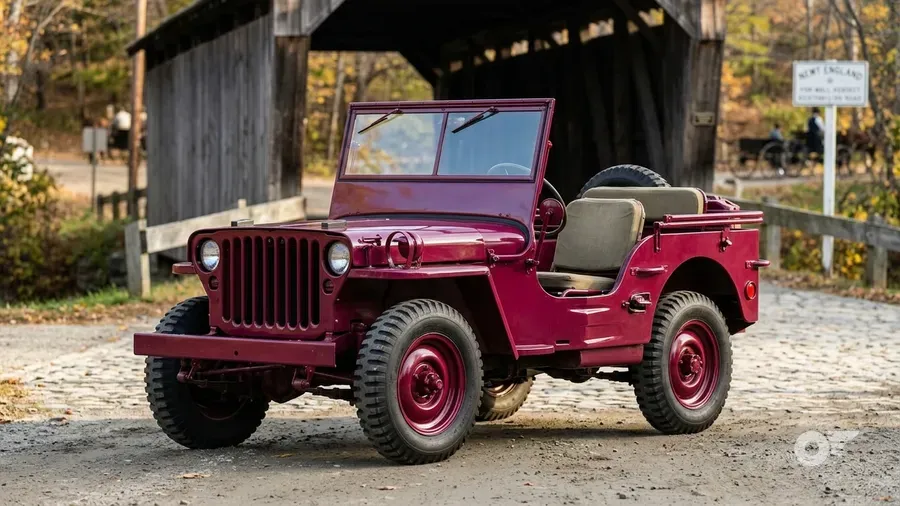
The round fender starts here. The CJ-5 took its body from the military M38A1 of 1952, the first Willys jeep to abandon the flat wartime wings for a rounded fender and bonnet, and that shape has now outlived every other idea in the company. The proportions changed twice in a way that is easy to spot. Cars up to 1971 sit on an 81 inch wheelbase and look compact and slightly stubby. From 1972 AMC stretched the wheelbase by two and a half inches and the bonnet and fenders by five, widening the track at the same time, which gave the later cars their planted stance and room for the bigger engines. The seven-slot grille carries through unchanged, along with the folding windscreen, exposed hinges and bolt-on body panels. What arrives during the run is decoration rather than design: Tuxedo Park chrome in the early 1960s, then the Golden Eagle bonnet decal, tape stripes and painted steel wheels of the late 1970s that now read as period costume and are half the reason people want a late one.

Motorsport pedigree

No factory competition programme ever existed for the CJ-5, and Jeep never pretended otherwise: through Willys, Kaiser and AMC ownership the vehicle was sold as equipment first and recreation second, and there was no series in American motorsport that a 60mph four-wheel-drive utility could sensibly contest. Its competition life is entirely amateur, and it is substantial. The CJ-5 was the default machinery for the off-road clubs that formed through the 1950s and 1960s, and it became the standard vehicle at organised trials, hillclimbs and mud events across the United States and Australia. The short wheelbase that made it awkward on a fast road made it the class benchmark on anything technical, and jeep-based classes at rockcrawling and trials competitions still exist in a direct line from those cars. The Dauntless V6 gave the vehicle a second competitive life in desert racing in the late 1960s in privateer hands. None of this is factory history and none of it produced championships in the usual sense, but the CJ-5 shaped what off-road competition looks like more than any purpose-built racer did.

In culture

The CJ-5 is the shape the word Jeep summons for anyone who grew up between the 1950s and the 1980s, and it earned that by being everywhere: on farms, at fire stations, in national parks, on beaches, and in the background of an enormous amount of American television. Its most consequential moment on screen was not a flattering one. In December 1980 a 60 Minutes segment carried an Insurance Institute for Highway Safety demonstration presenting the CJ-5 as liable to roll over in routine driving at relatively low speeds. It was later established that the testers had achieved eight rollovers in 435 runs through a corner, and that the IIHS had asked for weights to be hung inside the body at the corners, out of the camera's view, to produce worst-case conditions. The CJ-5's end after 1983 has been widely attributed to the broadcast, though the longer-wheelbase CJ-7 continued for three more years. The episode is now studied as much for what it says about televised safety testing as for what it says about the vehicle, and it remains part of any honest account of the CJ-5.

Owning One

Why collectors want it

The CJ-5 is where the modern Jeep look begins, and unlike the flatfenders it is a vehicle you can genuinely use. That combination has been pulling money toward it steadily. The market splits along ownership lines. Early Willys and Kaiser cars from 1954 to 1971, on the 81 inch wheelbase with the Hurricane four or the Dauntless V6, are the ones collectors chase, and unmolested ones are getting hard to find because these were working vehicles that got modified, cut and lifted for fifty years. Tuxedo Park cars from the early 1960s are the connoisseur's pick and by some distance the rarest thing here in original condition. The 1972-on AMC cars are more usable, faster and cheaper, and a 304 V8 CJ-5 is the one to have if you actually want to drive it far. The 1979 Silver Anniversary, 1,000 cars, and the Golden Eagle and Renegade packages give a late CJ-5 a collectability the base cars lack. Originality is the scarce commodity across all of it: modification was the norm, so anything genuinely stock commands a premium that grows every year.

Which one to look for

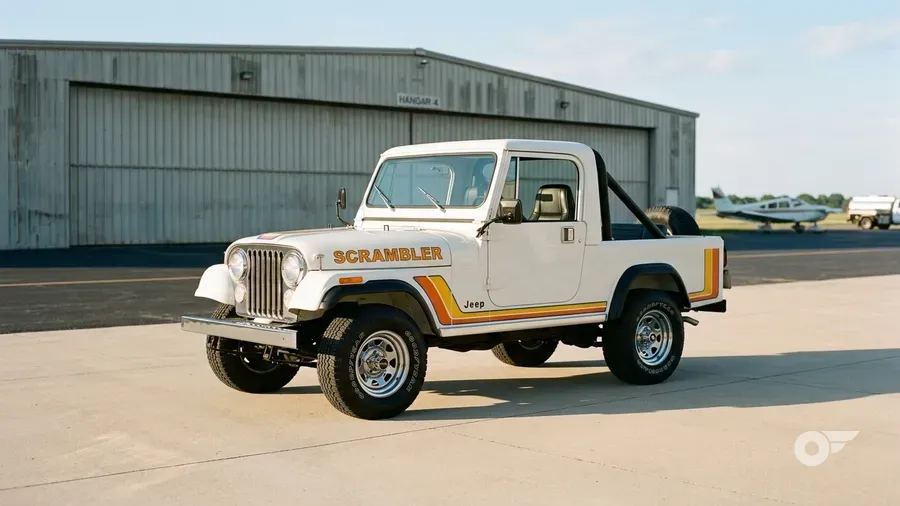
The Tuxedo Park is the one to know. Launched in 1961 as a trim package and running through the Mark II, Mark III and Mark IV cars of the early 1960s, it was Jeep's first attempt at selling a CJ as something other than equipment, and original examples are genuinely scarce. The Dauntless V6 cars from 1965 onward are the sweet spot of the Kaiser era, with 155hp in a vehicle designed around 75, and they are the reason so many 1960s CJ-5s were bought for fun rather than work. From 1972 the AMC engines change the character again: the 258 six is the sensible choice and the 304 V8 the entertaining one. Late-run packages give the 1970s and 1980s cars their collectability. Renegade ran from 1970 and is the best known, Golden Eagle from 1977 brought the hood decal that defines the era, Laredo from 1980 added chrome and a better interior, and the 1979 Silver Anniversary was capped at 1,000 cars. Worth knowing too: the CJ-6 is a CJ-5 stretched twenty inches, only 50,172 built, mostly exported, and now the rarer thing by a wide margin.

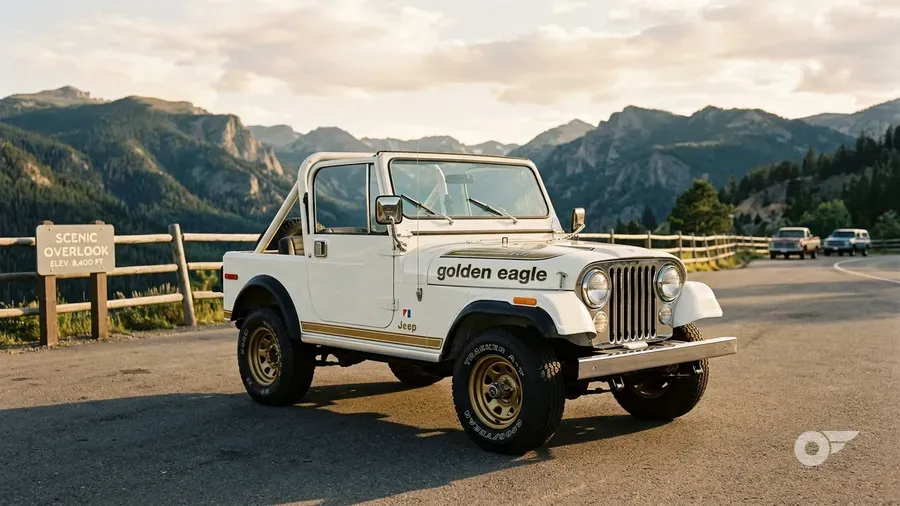
Golden Eagle · 1977–1983

The late-1970s decor package, defined by the large eagle hood decal, gold-painted wheels and tan interior trim. Now the most period-specific thing you can buy from the AMC era.

Laredo · 1980–1983

The upmarket end of the final years: chrome bumpers and grille surround, better seats and interior trim, and a more finished feel than any earlier CJ-5.

Renegade · 1970–1983

The longest-running CJ-5 package and the best known. Started as a limited run and became the sporting trim, with wider wheels, roll bar and distinct graphics.

Silver Anniversary · 1979

Marked twenty-five years of the CJ-5 with silver paint, unique badging and trim.

Tuxedo Park · 1961–1965

Jeep's first attempt at selling a CJ as something other than farm equipment. Chrome bumpers, hood hinges and mirrors, plus brighter trim, on the 81 inch wheelbase car. Ran through Mark II, Mark III and Mark IV revisions across 1962, 1963 and 1964.
What owning one is like

A CJ-5 asks for attention rather than money. The frame is the thing that decides whether an owner is happy: pre-1977 rails are unboxed and crack as well as rust, and the rear spring hangers and shock mounts are where it happens. Body tubs rot at the floors, the rear corners and the body mounts, and almost every survivor has been welded somewhere. On AMC-era cars the rear axle housing is the known weak point and gets replaced or braced by anyone who uses the vehicle properly. Leaks are a fact of life with a soft top, doors are optional equipment on many cars, and the short wheelbase means it wanders on a crowned road and does not enjoy motorway speeds. The steering box will develop play and want rebuilding. None of this is unusual for the type and none of it is expensive to put right, which is why so many have survived rough lives. What owners actually report is that the vehicle is almost impossible to strand you in, and that fixing it is part of the appeal rather than a tax on it.

Upkeep & parts

Parts are effectively unlimited and cheap, which is one of the great advantages of buying anything from this family. Body panels, frames, tubs, suspension, brakes and complete interiors are all reproduced, and the Willys, Buick and AMC engines are all conventional, understood by any machine shop and inexpensive to rebuild. The AMC 258 six in particular is one of the least demanding engines ever fitted to anything. Budget for the frame first, because rail repair or replacement is the one job that changes the economics of a project, and for the rear axle on later cars if you intend to work it. Beyond that the running costs are trivial by classic-vehicle standards: fuel consumption is poor, everything else is not. The community is unusually good. earlyCJ5 is the deep technical resource for the Willys and Kaiser cars, eWillys covers the whole early family daily, and Jeep specialist suppliers stock parts off the shelf rather than to order. Very little about maintaining one needs a professional.

Country of origin
USA
Class
Off-Road
Production years
1954–1983
Units built
603,303
Marque
Model
CJ-5
Nickname
No nickname (round fender describes the CJ-5, CJ-7 and CJ-8 as a group, not this model specifically)
Body
SUV, Convertible
Layout
Front-engine, 4WD
Engine
134ci Willys Hurricane F-head I4, 192ci Perkins 4.192 diesel I4 (1961-1965, 62hp), 225ci Buick Dauntless V6 (from 1965, 155hp), 232ci AMC I6 (from 1972), 258ci AMC I6 (from 1972), 304ci AMC V8 (from 1972), 151ci GM Iron Duke I4 (standard 1980-1983)
Transmission
3-speed Borg-Warner T-90 manual, 3-speed Borg-Warner T-14 manual, 4-speed Borg-Warner T-18 manual
Designer
Delmar G. Roos (Willys-Overland chief engineer)