Octane Files
Browse CarsInternational Harvester Scout II

International Harvester Scout II

Overview

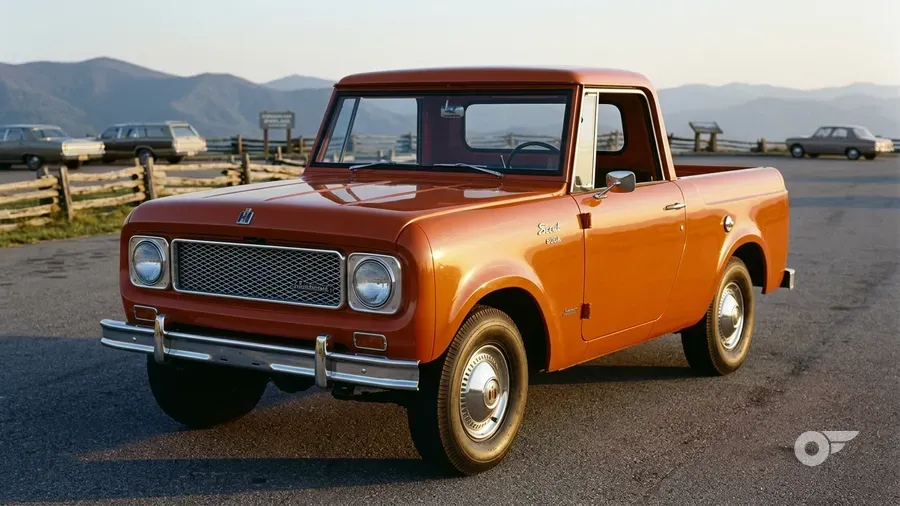
The Scout II is the last vehicle International Harvester ever designed for private buyers, and it is much better than a dying company had any right to build. The shape was signed off internally in December 1967, more than three years before it went on sale in April 1971, and it answered the Blazer directly: a proper 100-inch wheelbase, a full-width body, IH's own 304 and 345 V8s, and later a pair of Nissan diesels because International had no small diesel of its own. In 1976 it grew a family, the 118-inch Traveler wagon and Terra pickup, and in February 1977 it grew teeth, with the stripped SSII aimed straight at the Jeep CJ. It never had a chance to grow old. International dropped its pickups and Travelall in 1975, leaving the Scout as the only thing it still sold to private buyers, and when the UAW struck in November 1979 the company had no money left to fight with. The last Scout was built on 21 October 1980.

Distinctions

The defining attributes and collector status that make this car garage-worthy.

Octane Files Select
Renowned for its history, engineering, or cultural weight.

Collectibility scorecard

Rated 1 to 10 on the traits that matter for owning, driving, and holding on to a car like this.

Desirability
8/10
Rarity
5/10
Driving thrill
5/10
Investment trajectory
8/10
Usability
5/10
Ease of restoration
5/10
Cultural impact
6/10
Electronic dependence
Fully analogHeavily electronic

Nothing on a Scout II makes a decision for the driver. Fuelling is by carburettor on every petrol engine, the diesels use a purely mechanical Nissan injection pump that will run with the battery disconnected, the throttle and clutch are cables and rods, and four-wheel drive is selected by hand. What lifts it a point above the earlier Scouts is the emissions hardware that arrived across the 1970s and the fact that power-assisted disc brakes became standard from late 1974, so there is more plumbing and more assistance to keep working than on a 1961 car. There is still no engine management, no sensor that can strand you, and nothing on the vehicle that needs a laptop.

Market data

Demand tier, price trend, and typical values by condition, based on recent sales data.

Demand tier
EntrySolidHighBlue-chip

Strong, sustained collector demand. Good examples never wait long for a buyer.

Value trajectory
AppreciatingStableCooling

Values are climbing. The market wants more of these than exist.

Price by condition
Driver
$20k
Excellent
$42k
Concours
$78k

The Scout II has been the fastest-moving vehicle in this family over the last decade, pulled up by early Bronco money and by the realisation that there is no factory support behind it and never will be. Condition and originality carry more weight here than in any rival, because a Chevrolet V8 swap is common and an all-International drivetrain is not. The band describes a 1977-1979 345 V8 Scout II; the SSII, the Traveler and the documented special editions sit above it.

Values as of August 2026.

Buyer's guide

What anyone seriously considering this car should know first.

Why it's worth it
Won production four-wheel-drive honours at the 1977 Baja 1000, almost two hours clear
Callout
The last vehicle International Harvester ever designed for private buyers
What to watch for
Identify the vehicle before anything else, because this row covers four related machines. A 100-inch Scout II, a 118-inch Traveler, a 118-inch Terra and an SSII share running gear but almost no body panels, and parts prices differ accordingly. The build tag tells you what you have: 1971 to 1976 cars carry it under the hood on the cowl cover panel, 1977 to 1980 cars on the inside of the glovebox door. Then look for rust in the usual Scout places, the rear quarters and wheel arches, the floors, the sills, the tailgate and the seams around the removable top, plus the front fender bottoms and the battery tray. Mechanically the news is good. Power disc brakes were standard from late 1974, the IH V8s are strong and the axles are Dana. The Nissan diesels are durable but slow, and parts for them need a specialist rather than a catalogue. Above all, judge how much of the vehicle is still International, because a Chevrolet V8 swap is the single most common modification and it changes what you are buying.

The Story

Driving character

The Scout II drives like a serious tool rather than a toy, which is the difference between it and a CJ. The 100-inch wheelbase makes it steadier at speed than anything shorter, and the wide track and low-set body give it a planted feel that the taller Blazer never quite manages. The 345 V8 is the engine that defines it: an International truck engine, unstressed, long-legged and torquey from very low down, with a deeper and less busy note than a small-block Chevrolet. The 258 six is slower and perfectly happy. The diesels change the vehicle completely, turning it into something that clatters along at its own pace and refuses to be hurried, which suits it better than you would think. Steering is heavy and slow, the turning circle is large for the size, and the brakes on a post-1974 car are genuinely good for the era. Off pavement it is unflappable, and the long-wheelbase Traveler is the one that will still be comfortable after four hours of dirt.

Design

Ted Ornas ran International's design studio for the Scout II as he had for the original, and the family resemblance is deliberate: flat glass, minimal ornament, a body with almost nothing on it that does not do a job. The difference is proportion. The Scout II is wider and lower over its 100-inch wheelbase, the shoulders are squared off, and the whole thing reads as a scaled-down truck rather than a scaled-up utility vehicle. International changed the grille almost every year, which is the fastest way to date one, and applied trim and stripe packages with enthusiasm as the decade went on. The Traveler of 1976 is the most successfully resolved of the family, adding eighteen inches of wheelbase and a full fibreglass roof without looking stretched. What the Scout II never got, and never needed, was styling for its own sake; a shape approved in December 1967 was still selling in 1980 and had aged better than most of what it competed with.

Motorsport pedigree

This is the family's one real competition result and it belongs entirely to a privateer. In 1977 a Super Scout II driven by Jerry Boone of Parker, Arizona finished first among production four-wheel-drive vehicles in the Baja 1000, completing the course in 19 hours 58 minutes and finishing almost two hours ahead of his closest competitor. Only 9 of the 21 vehicles that started made it to the end. That is a class result rather than an outright win, and the honest reading is that a production 4x4 finishing at all in that year's attrition was the achievement. There was no factory behind it. International Harvester was an agricultural and truck manufacturer with no motorsport arm, no racing budget and, by 1977, no money for one, so nothing about the SSII's Baja record was planned in Fort Wayne. What the result did prove is the thing the Scout II's owners already believed: that IH built the sturdier vehicle, and that a stripped one with a roll bar could outlast machinery designed for exactly this.

In culture

For most of its life the Scout II was invisible to popular culture, sold through dealers that also sold combines, to people who needed it. Its cultural moment came afterwards, and in two waves. The first is the collector rediscovery of the last decade, in which the Scout II became the knowing alternative to an early Bronco: the same era, the same idea, better engines, a fraction of the attention. The Midas conversions of 1977 to 1980, with their swivel bucket seats, shag carpet and dual sunroofs, have become period artefacts in their own right. The second wave is genuinely strange. Volkswagen acquired the Scout name along with International in 2021 and revived it as an American vehicle brand, so a badge that ended in a strike-bound Indiana plant in 1980 is now the front of a new company. That has pulled the original into a wider conversation, and it has made the National International Harvester Collectors club, which keeps the actual history, more useful than ever.

Owning One

Why collectors want it

The Scout II is the connoisseur's alternative to an early Bronco, and the gap between the two in price is larger than the gap in ability. It has the better engines, since IH built its own 304 and 345 V8s rather than buying them in, and the wider body makes it more usable inside than anything else in the class. It has genuine variety: a short wagon, a long-wheelbase Traveler, a Terra pickup and the soft-topped SSII, all inside a nine-year run. And it has the only motorsport result in the family that International can claim, a production four-wheel-drive win in the 1977 Baja 1000. What holds it back is what makes it interesting. International built 532,674 Scouts of all kinds in twenty years and then went out of the private-vehicle business entirely, so there is no factory, no heritage department and no reissued parts programme. Everything you buy has survived a company failure. The SSII is the sharp end of the market and the diesels are the curiosity, but even an ordinary V8 Scout II is a rarer thing than any Blazer.

Which one to look for

The SSII is the one enthusiasts chase. Introduced in February 1977 and built until 1979, it is a stripped soft-door, roll-bar Scout meant to take on the Jeep CJ, and it is the version with a competition result attached. Next in interest are the long-wheelbase cars from 1976: the Traveler, a 118-inch wagon with a full fibreglass top, a hatchback liftgate and optional third-row seating, and the Terra, the same wheelbase as a half-cab pickup. Both are properly useful and both are covered by this entry rather than sitting somewhere else in the catalog. For engines, the 345 V8 is the one to have and the 258 six is the sensible one; the Nissan SD33 diesel of 1976 and the SD33T turbo of 1979 are the curiosities and are slow enough to need a sense of humour. Among the special editions, the Rallye package is the good-looking one, the Midas conversions of 1977 to 1980 are pure period excess, and the bicentennial Spirit ran to 384 cars by International's own data.

Midas · 1977-1980

Luxury conversions by the Midas Van Conversion Co. of Elkhart, Indiana: swivel bucket seats, shag carpet, dual sunroofs and fender flares. Pure period excess and now genuinely collected.

Nissan Diesel · 1976-1980

The naturally aspirated Nissan SD33 from 1976 and the turbocharged SD33T for the final 1979-1980 cars. International had no small diesel of its own and contracted Nissan's.

Scout II · 1971-1980

The 100-inch-wheelbase two-door with a removable top. The core vehicle, on sale from April 1971, with a grille that changed almost every year.

Spirit of '76 · 1976

A bicentennial edition with a blue soft top and side appliques, sold alongside a Patriot version.

SSII · 1977-1979

Super Scout II. A stripped off-road version with soft doors, a soft top and a roll bar, built to take on the Jeep CJ, and the version that took production four-wheel-drive honours in the 1977 Baja 1000.

Terra · 1976-1980

The 118-inch chassis as a half-cab pickup. A working Scout, and now the scarcer of the two long-wheelbase bodies.

Traveler · 1976-1980

A 118-inch wheelbase, a full fibreglass top and a hatchback liftgate, with optional third-row seating. The most usable Scout and the best resolved of the long-wheelbase cars.
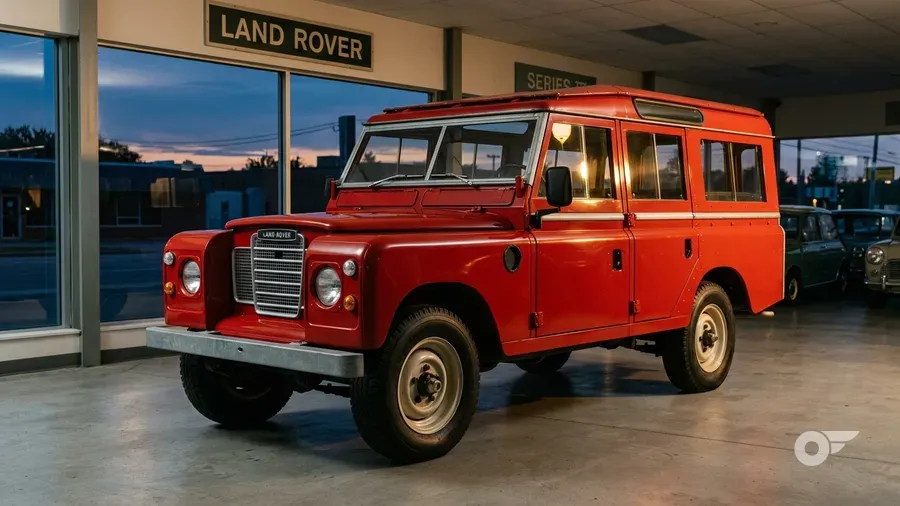
What owning one is like

A Scout II asks for commitment rather than money. Rust is the recurring theme, in the rear quarters and arches, the floors, the sills, the tailgate, the front fender bottoms and everywhere the removable top meets the body, and on a Traveler the fibreglass roof hides its own set of leaks. The IH V8s are strong and long-lived but they are not Chevrolet engines, so a machine shop needs to be found rather than assumed. The Nissan diesels are tough and slow and depend on injection pumps that only a specialist should touch. Electrics are simple and forty-five-year-old wiring behaves accordingly. Cooling systems need to be right, because a 345 working hard in summer will find any weakness. What owners report is a vehicle that repays effort with unusual loyalty: it does not break in a hurry, the community is small and generous, and the fact that nobody else on the road has one is part of the point rather than a complication.

Upkeep & parts

Support is a private industry rather than a manufacturer programme, and that is the single most important thing to understand before buying. International left the private-vehicle business in 1980 and sold the Scout and light-truck parts operation to Scout and Light Line Distributors in 1991, so what exists today is a network of specialists, reproduction suppliers and a well-organised owner community rather than a parts counter. In practice, common service and mechanical items are readily available, reproduction sheet metal covers most of what rots, and the hard parts are trim, glass, correct tops and anything specific to the Traveler, Terra or SSII. Nissan diesel components need a diesel specialist. Binder Books reprints the original operator, service and parts manuals, which is worth doing early because the Scout II changed detail almost every year. The National International Harvester Collectors club, with its chapters and its magazine, is the fastest route to someone who has already solved the problem in front of you.

Country of origin
USA
Class
Off-Road
Production years
1971–1980
Units built
~258,000
Model
Scout II
Nickname
No nickname ("SSII" names the 1977-1979 Super Scout II specifically, not the generation)
Body
SUV, Pickup
Layout
Front-engine, 4WD / RWD
Engine
196ci I4, AMC 232ci I6, AMC 258ci I6, IH 304ci V8, IH 345ci V8, Nissan SD33 diesel I6 (1976-1979), Nissan SD33T turbodiesel I6 (1979-1980)
Transmission
3-speed Borg-Warner T-14/T-15 manual, 4-speed Borg-Warner T-18/T-19/T-45 manual, 3-speed Borg-Warner T-39/T-49 automatic, 3-speed Chrysler A727 automatic
Designer
Ted Ornas (chief designer, International Harvester)