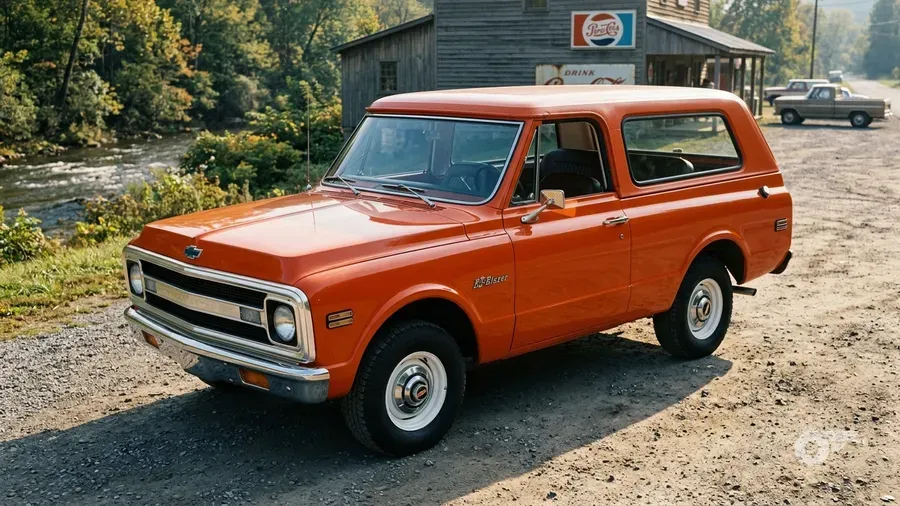
Chevrolet K5 Blazer 1st Gen
USA·Off-Road·1969–1972

The defining attributes and collector status that make this car garage-worthy.

Rated 1 to 10 on the traits that matter for owning, driving, and holding on to a car like this.
Demand tier, price trend, and typical values by condition, based on recent sales data.
Values as of August 2026.
What anyone seriously considering this car should know first.
Cars from the same manufacturer family, like platform siblings or shared-era relatives.
Cars from other manufacturers that competed for the same buyers when new.
The largest engine offered in any American full-size two-door 4x4 wagon of the period, against a 400 maximum in the Blazer, 345 in the Scout II and 302 in the Bronco.
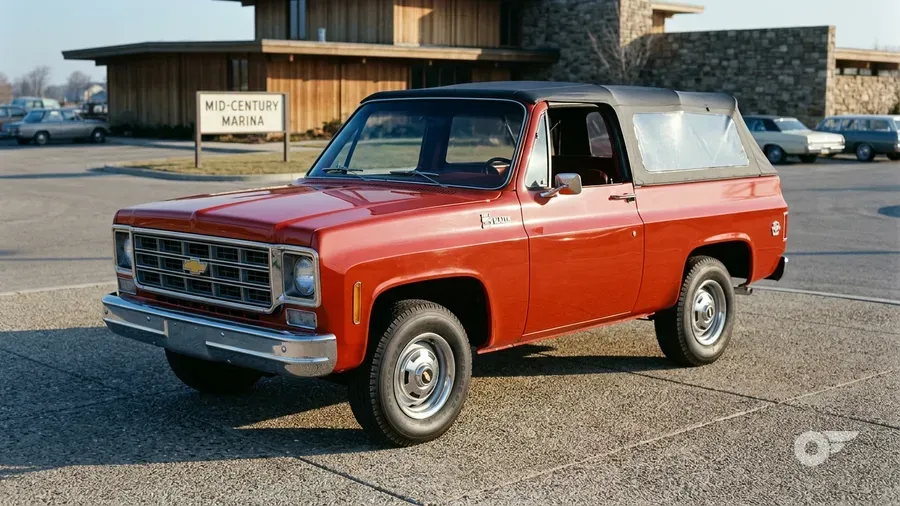
The earliest cars, whose door pillars are attached to the removable roof, so lifting the top off leaves half doors and no upper structure at all. The collector's target inside the generation.
The optional full steel top with a flip-up rear tailgate window. Buyers could also take a dealer-installed fabric top or no roof at all. Welded shut for the 1981 second generation.
The rear-drive Ramcharger, added for 1975. The same body without the transfer case, and worth identifying rather than seeking out.