Octane Files
Browse CarsLand Rover Series II/IIA

Land Rover Series II/IIA

Overview

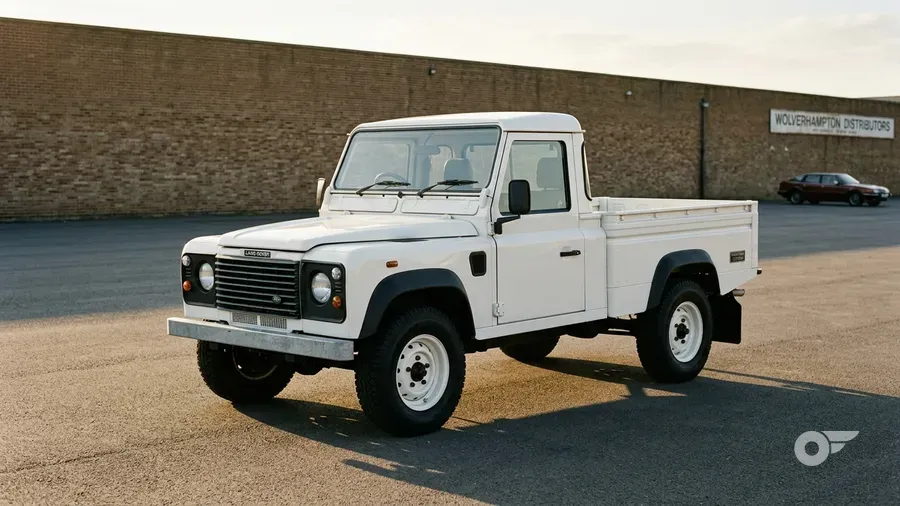
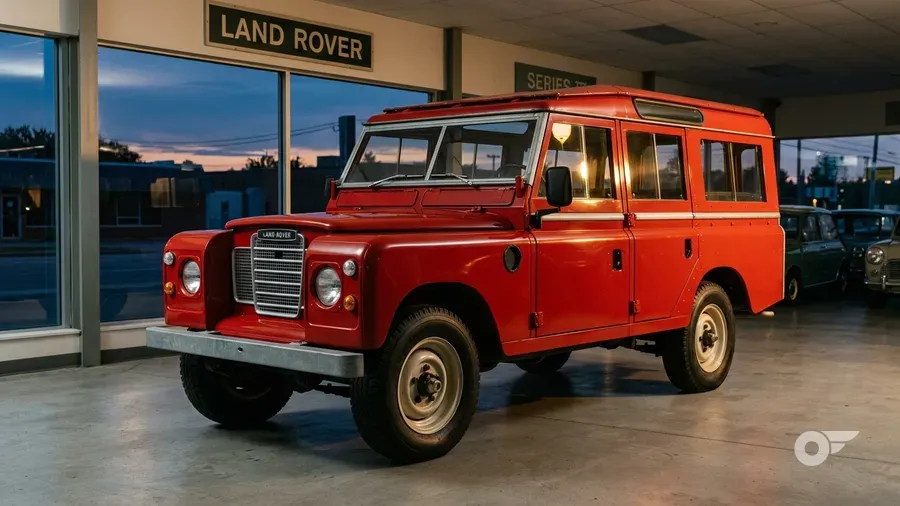
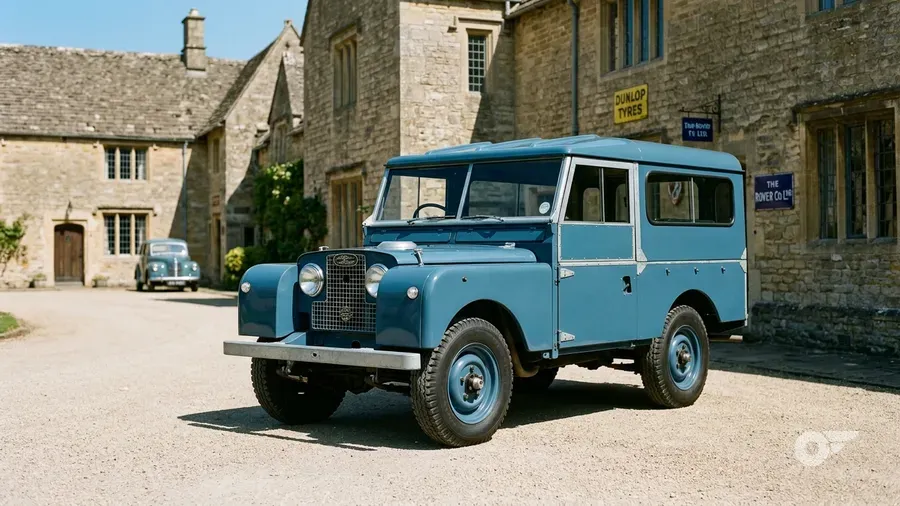
This is where the Land Rover stopped being farm equipment and became a shape. David Bache, Rover's staff stylist, was told to make the 1948 vehicle look deliberate. He did it with two moves: he curved the sides outward so the body stood proud of the frame, and he added the cill panels underneath that hide the chassis rails. Land Rover called them modesty panels. The result went on sale on 16 April 1958, and in silhouette it is the vehicle Solihull was still building in 2016.

Underneath sat the change that mattered more. The 2286cc petrol four arrived with the Series II and went on powering Land Rovers for the next quarter century. The axles moved further apart, the turning circle improved, and a 2052cc diesel joined the list.

September 1961 brought the Series IIA, and that is the one owners rate. The diesel was redesigned and enlarged to 2.25 litres, a 2.6-litre six became available on the 109 from May 1967, and the detail changes piled up year by year. This was Land Rover's high-water mark. Sales passed 60,000 a year in 1969 and 1970, and by February 1968 total production since 1948 stood just short of 600,000.

Distinctions

The defining attributes and collector status that make this car garage-worthy.

Octane Files Select
Renowned for its history, engineering, or cultural weight.

Collectibility scorecard

Rated 1 to 10 on the traits that matter for owning, driving, and holding on to a car like this.

Desirability
6/10
Rarity
4/10
Driving thrill
3/10
Investment trajectory
6/10
Usability
4/10
Ease of restoration
8/10
Cultural impact
7/10
Electronic dependence
Fully analogHeavily electronic

There is nothing electronic on a Series II or IIA. Ignition is coil and contact-breaker points with a distributor you can rebuild on a bench, charging is a dynamo through a mechanical control box, and fuelling is a single carburettor or, on the diesel, a mechanical injection pump that needs no electricity at all once the engine has fired. The wiring is a single loom with a handful of fuses, colour-coded and printed in the workshop manual, and a competent owner can trace a fault with a test lamp rather than a scan tool. Four-wheel drive, high and low range, the handbrake on the transmission and the throttle are all rods and levers. The most complicated electrical item fitted is the heater blower.

Market data

Demand tier, price trend, and typical values by condition, based on recent sales data.

Demand tier
EntrySolidHighBlue-chip

A dependable market. Well-kept cars hold their value and find ready buyers.

Value trajectory
AppreciatingStableCooling

Values are climbing. The market wants more of these than exist.

Price by condition
Driver
$18k
Excellent
$34k
Concours
$60k

This is the affordable end of the Series market and the one where a buyer still has choice. Short soft-tops sit at the bottom, 109 Station Wagons and the six-cylinder cars at the top, and the three-year Series II carries a scarcity premium over the IIA. Values have climbed steadily rather than spiked, largely because supply is decent and most survivors have been modified or rebuilt at some point, which caps the ceiling for anything that is not demonstrably original. No auction comparables were reachable this session and no sterling guide exists for this generation, so the band is an editorial judgment placed below the published Series I guide and above the Series III.

Values as of August 2026.

Buyer's guide

What anyone seriously considering this car should know first.

Why it's worth it
Bache's curved body, drawn in 1958 and still in production fifty-eight years later
Callout
By February 1968 Land Rover had built almost 600,000 vehicles, more than seventy per cent of them exported
What to watch for
Buy the chassis and the bulkhead, then look at everything else. The frame is box-section steel and it rots from the inside, so press hard at the rear crossmember, the outriggers and the spring hangers, and assume a repair has already happened somewhere. Galvanised replacement chassis are a normal purchase, and a documented one is a plus rather than a warning. The bulkhead is the expensive one. It carries the doors, the windscreen and the pedal box, and it goes at the footwells, the door pillars and the top corners. Open the doors and look at how they hang before you look at anything cosmetic. Then check where alloy meets steel: door bottoms, hinge pillars, cappings and the screen surround, where the Birmabright turns to white powder against steel fittings. Series II and IIA are widely mixed. A IIA with a Series II grille or a rebuilt truck carrying parts from three decades is common and not automatically bad, but it should be priced as what it is. The clearest dating check is the headlamps: in the wings means late, in the grille panel means early, and the change came to export vehicles first and to the home market from February 1969.

The Story

Driving character

The 2.25-litre four is the reason people keep these. It is a long-stroke engine with modest power and useful torque low down, and it will pull a loaded 109 up a field in second-low without complaint or drama. It also refuses to be hurried: 50 to 55mph is a comfortable cruise and everything above that is noise and vibration you feel through the floor. The gearbox is the part that separates owners from visitors. On most of these there is no synchromesh on first or second, so you double-declutch on the way down and you learn to time the change rather than force it. Late Station Wagons and the final 1971 109s got an all-synchromesh box and are much easier company. Steering is unassisted and slow, with a deliberate looseness around the straight ahead that feels alarming for ten minutes and then simply becomes how you drive. Brakes are drums and need planning. The best of it happens off the road, where the low range, the short overhangs and the visibility over that flat bonnet make the vehicle feel far more capable than its power suggests.

Design

Bache's job was cosmetic on the surface and structural in effect. The Series I's body sat inside the chassis width and looked it. Bache pushed the sides out into a shallow barrel curve so the body appeared to sit over the frame, then closed the gap underneath with cill panels. The vehicle stopped looking like a chassis with a box on top. The rest of the family kept it. Those curved sides, that shoulder line and the proportions of the door aperture survived through the Series III, the Ninety and One Ten and every Defender to 2016, which makes this one of the longest-lived body designs in the industry. The Series IIA is where the details settled. The instrument panel went black, the chrome headlamp bezels disappeared, the flat front apron gained a curve, and the headlamps eventually moved out of the grille panel and into the wings to meet overseas lighting rules, export vehicles first and the home market from February 1969. That last change is the single most reliable way to date one at fifty paces, and it is also the moment the front of a Land Rover took the form it kept for the next forty-seven years.

Motorsport pedigree

No factory competition programme existed, and by this point that was a deliberate position rather than a lack of money. Rover was selling every Land Rover it could build, more than seventy per cent of them overseas, and after the Leyland merger of 1967 the utility vehicle was the profitable corner of a company with much bigger problems. There was nothing to prove and no series to prove it in: off-road racing had not yet organised itself into championships, and the Camel Trophy, which would eventually make Land Rover a competition brand, did not begin until 1980 and ran its first event on licence-built Jeeps. What the IIA has instead is the harder kind of record. In 1971 and 1972 the British Trans-Americas Expedition drove north to south through both American continents and forced a way through the Darién Gap, the stretch of Panamanian and Colombian rainforest with no road through it at all. Two Range Rovers did the headline work and a Series IIA went with them. Getting through the Darién at all put those vehicles among the first ever to do it, and no stage win has aged half as well.

In culture

The Series II and IIA are the Land Rovers that went everywhere, and the numbers say why: through the 1960s this was one of Britain's most successful exports, sold into farms, mines, plantations, army units and aid convoys across Africa, Asia, Australia and the Middle East. In large parts of the world the shape simply became what a vehicle looks like, and it is still the default image of a Land Rover in countries that never had a dealer. At home it acquired a specific social meaning: the vehicle of the estate, the vet, the mountain rescue team, the coastguard. Owners call any of them a Landy, a word that belongs to the marque rather than to this generation. It also became the standard-issue prop for a certain kind of documentary and safari film, which is how a vehicle designed for two or three years of production ended up as visual shorthand for expedition itself. That association is worth more to Land Rover than any advertising campaign it ever ran, and it was earned by IIAs doing ordinary work in difficult places rather than by anything staged.

Owning One

Why collectors want it

The IIA is the sweet spot of the whole Series family and the market has worked that out. It has the 2.25-litre engines that everybody understands, a body that has aged better than the Series I's flat panels, and enough of them survive that you can buy a good one rather than the least bad one. The 109 Station Wagon is the connoisseur's choice, particularly a late one with the all-synchromesh gearbox and the Salisbury rear axle, and the 2.6-litre six-cylinder 109 is the variant most people underweight: smoother, thirstier, and produced in far smaller numbers than the four.

The three-year Series II is scarcer and increasingly wanted for it, especially an early 88 still carrying the 1997cc engine it was launched with.

The real argument for this generation is that it is the last one you can buy without a purity tax. A Series I is now a collector's object with a collector's obligations. A IIA is still a vehicle. Values have moved up steadily rather than sharply, and the ceiling belongs to original Station Wagons rather than to short soft-tops.

Which one to look for

The Series II ran only from April 1958 to September 1961, which makes it the scarce one. Early 88s kept the 1997cc petrol engine until the new 2286cc four reached them in September 1958, so a genuine early short-wheelbase Series II is a specific and checkable thing. The 109 had the 2.25 from the start. The Series IIA from September 1961 is the volume car and the one to buy. Its own hierarchy runs: 88 soft-top at the bottom, 88 hardtop above it, then the 109 pick-up, then the 109 Station Wagon, which is the one people actually chase. A February to September 1971 109 is the pick of those, with an all-synchromesh gearbox and a Salisbury rear axle. The variant most buyers overlook is the 2.6-litre six-cylinder 109, offered from May 1967. It is smoother and noticeably thirstier than the four, and there are far fewer of them. Two rarities worth knowing exist mainly as trivia and as very expensive purchases. The Forward Control, cab over engine, ran to fewer than 2,500 across the IIA and IIB. And only 170 IIA 1-Tons were built for the home market.

Series II 109-inch · 1958–1961

The long chassis, and the first Land Rover to get the 2286cc petrol four from launch. Station Wagon body available from September 1958.

Series II 88-inch · 1958–1961

The short-wheelbase launch car, on sale from 16 April 1958 with Bache's curved body and cill panels. Kept the older 1997cc petrol four until the new 2286cc engine reached it in September 1958.

Series IIA 1-Ton

A heavy-duty 109 with lower gearing, larger tyres and the six-cylinder engine, sold mainly to utilities and the services.

Series IIA 109-inch six-cylinder · 1967–1971

The 2625cc IOE petrol six, offered on the 109 from May 1967. Smoother and markedly thirstier than the four, and built in far smaller numbers. The variant most buyers overlook.

Series IIA 109-inch Station Wagon · 1961–1971

The one collectors chase. Ten seats, five doors and the safari roof. The February to September 1971 cars are the pick, with all-synchromesh gearboxes and Salisbury rear axles.

Series IIA 88-inch · 1961–1971

The volume car of the whole Series family from September 1961. The 2.25-litre petrol and the redesigned 2.25-litre diesel, and the vehicle most people picture when they think Series Land Rover.

Series IIA Forward Control · 1962–1966

Cab over engine on a modified 109 chassis, built for load volume rather than agility. Replaced by the Series IIB Forward Control, which ran from 1966 to 1974.
What owning one is like

Living with one is a slow accumulation of small jobs and almost no surprises. The chassis and the bulkhead are the two things that decide whether the vehicle has a future: both are steel, both rot from the inside, and both are curable with money. The bulkhead is the one that hurts, because reaching it means taking the front of the vehicle apart before any welding starts. The alloy body does not rust but it corrodes where it touches steel, so door bottoms, hinge pillars, cappings and the windscreen surround all bubble and powder. It is cosmetic until it reaches a hinge mounting, at which point it is not. Mechanically the 2.25 engines are famously long-lived and slightly incontinent. Expect a film of oil under the swivel balls, the transfer case and the rear main. Expect the steering box to need adjustment. Expect to change points and clean plugs on a schedule that would horrify a modern owner and takes ten minutes. Nothing about it is fragile. The vehicle asks for attention rather than money, which is a fair trade at this end of the market.

Upkeep & parts

Almost every part is available new, and the ones that are not are being remanufactured by somebody. Chassis, bulkheads, panels, axle components, engine internals and complete looms are all off-the-shelf items, and because the body bolts rather than welds together, a competent owner can replace a damaged panel in an afternoon without a workshop.

Budget for the two jobs that need a specialist: a galvanised replacement chassis and a bulkhead repair or replacement. Everything else is realistically a home task with a manual and a socket set.

The Land Rover Series 2 Club is the marque authority for 1958 to 1971 and holds a vehicle timeline, parts and owners manuals and the original Land Rover Service Newsletters. The Dunsfold Collection is the reference for what correct looks like, and LandyZone carries the day-to-day questions.

Running costs are low by classic standards and the pace is steady. Fuel consumption on the 2.25 petrol is the real ongoing expense, and the 2.6 six is worse. The diesel is slower, noisier and cheaper to run, and plenty of owners consider that a good trade.

Country of origin
UK
Class
Off-Road
Production years
1958–1971
Units built
~600,000
Model
Series
Nickname
No nickname (Landy names the whole Land Rover utility line, not this generation)
Body
SUV, Pickup, Wagon
Layout
Front-engine, 4WD
Engine
1997cc petrol I4 (early 88in Series II), 2286cc petrol I4, 2052cc diesel I4 (Series II), 2286cc diesel I4 (Series IIA), 2625cc IOE petrol I6 (109in, from May 1967)
Transmission
4-speed manual with two-speed transfer case; all-synchromesh 4-speed on late Station Wagons and on the final 1971 109in models
Designer
David Bache (styling)