Octane Files
Explore CarsPagani Zonda

Pagani Zonda

Overview

Horacio Pagani ran Lamborghini's composites department through the 1980s and spent years trying to get the company to buy an autoclave. The answer was no, on the reasoning that Ferrari did not have one either. He borrowed the money and bought one himself in 1987, founded Pagani Composite Research the following year, and by 1991 had left Sant'Agata entirely for a firm called Modena Design that made carbon parts for Formula 1 teams, for Daimler and for Ferrari.

The car that arrived at Geneva in 1999 was that argument built at full size. The Zonda was a carbon-fibre road car finished to a standard nobody outside racing had attempted, with a naturally aspirated Mercedes-AMG V12 hung behind the seats and a cabin machined and stitched like a piece of instrumentation.

It was meant to be called Fangio F1. Pagani had the Argentine champion's blessing and dropped the name after Fangio died in 1995, choosing a hot wind off the Andes instead.

Wikipedia dates production 1999 to 2019, and even that undersells it. The official replacement arrived in 2011. The Zonda simply carried on being built, one commission at a time.

Distinctions

The defining attributes and collector status that make this car garage-worthy.

Legend
A car that transcended the hobby, known far beyond the people who drive them.
Poster Car
The car on the bedroom wall, the one people dreamed about before they could drive.
Octane Files Select
Renowned for its history, engineering, or cultural weight.

Collectibility scorecard

Rated 1 to 10 on the traits that matter for owning, driving, and holding on to a car like this.

Desirability
10/10
Rarity
10/10
Driving thrill
10/10
Investment trajectory
9/10
Usability
3/10
Ease of restoration
3/10
Cultural impact
8/10
Electronic dependence
Fully analogHeavily electronic

Engine management is electronic throughout, and ABS and traction control became standard with the S 7.3 in 2002. Beyond that the Zonda gives a driver very little to argue with. Most cars have a six-speed CIMA manual with an exposed linkage, the steering is hydraulic, the dampers are passive, and there is no stability control that will steer for you. Only the Cinque and the cars that followed it moved to an automated manual with selectable programmes. Nothing on the bodywork moves by itself, which is exactly what changed when the Huayra arrived.

Market data

Demand tier, price trend, and typical values by condition. Our own assessment, not a quoted valuation.

Demand tier
EntrySolidHighBlue-chip

The proven elite. Values are established, liquid, and defended at every auction.

Value trajectory
AppreciatingStableCooling

Values are climbing. The market wants more of these than exist.

Price by condition
Driver
Excellent
Concours

No price band, because there is no volume car to describe. Every verified public Zonda sale is a one-off or close to it: 11,086,250 dollars for the 760 LM Roadster at RM Sotheby's Dubai in December 2024, an outright marque record; 6.1 million euros for the Zonda Aether in 2019; 5.5 million dollars for the Riviera at Riyadh. A band built from those would describe cars that do not exist twice. Dealer asking prices for S and F cars circulate freely and are not sales. The direction is not in doubt: the record has roughly doubled in five years against a supply fixed at fewer than 150 cars, some of which are rebuilds of each other.

Buyer's guide

What anyone seriously considering this car should know first.

Why it's worth it
The car that turned Lamborghini's refusal to buy an autoclave into a marque
Callout
Officially replaced in 2011 and still being built as one-offs a decade later
What to watch for
Establish what the chassis started life as before anything else. Pagani runs a factory programme called Unico that re-specifies and redesigns pre-owned Zondas and Huayras, explicitly reversibly, and it is the mechanism behind a great many of the one-offs. Registry entries routinely read "originally a Zonda F". A car wearing a 760-series body and a unique name may be a new chassis or a rebuilt older one, and the two are not worth the same money. The document that settles it is a Pagani Puro certificate. Puro is the factory's own authentication programme: more than 400 checks run against the company database holding the build record of every car made in Modena, a warranty extension, and a book carrying a certificate signed by Horacio Pagani. It is offered on any Pagani regardless of model or year, which makes its absence on an expensive car a question worth asking. American buyers have a separate problem. The Zonda was never federalised. US cars are here on Show or Display approval, with the annual mileage cap that carries. The exception is the 1999 and 2000 C12s, now past the 25-year rule and usable without restriction.

The Story

Driving character

The gearlever tells you what this is before the engine does. It sits in the open on a machined linkage you can watch working, and on most Zondas it operates a six-speed manual, which by the standards of anything else built after 2005 with this much power is close to unreasonable. The 7.3-litre AMG V12 is the reason the car has a reputation rather than just a following. It is naturally aspirated, so throttle and torque arrive together with nothing intervening, and evo's description holds up: a growl at low revs that turns into something closer to a race engine when you commit to it. There is no forced-induction pause anywhere. What surprises people is the precision. The Zonda is 2,055 mm wide and looks intimidating from outside, and yet reviewers consistently report being able to place it to the centimetre. The steering is meaty rather than heavy, the car can be adjusted on the throttle as much as on the wheel, and at 1,250 kg dry it changes direction like something a class smaller.

Design

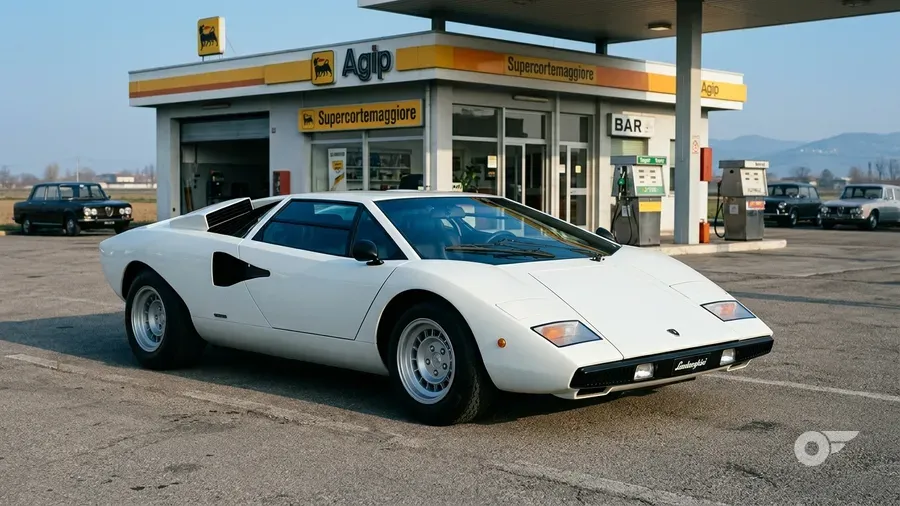
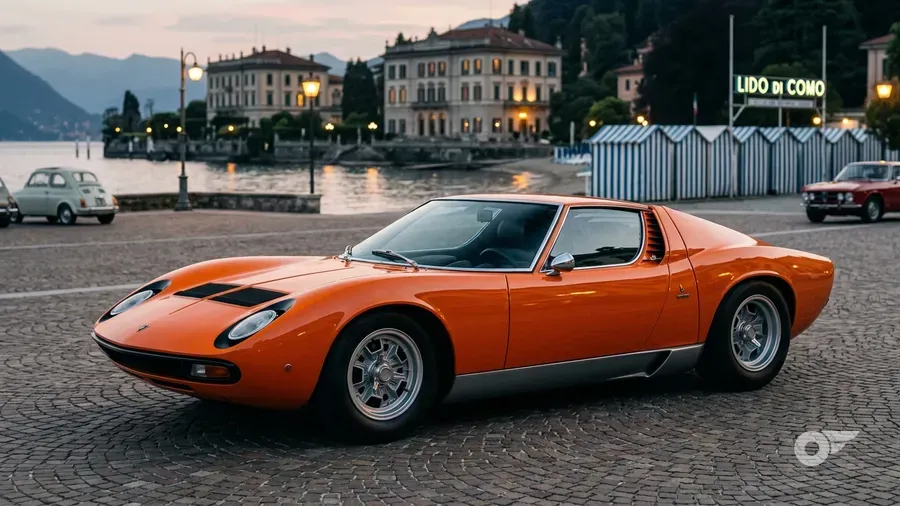
The Zonda's proportions came out of a wind tunnel and its details came out of a machine shop, and the tension between the two is the whole look. The canopy is narrow and tapered, the tail is short, and the four exhaust pipes exit together in the centre of the rear, clustered like the business end of something that was never going to be quiet. Inside is where the argument gets made. Switchgear is milled from solid aluminium, the instruments read like aircraft dials, the leather is stitched in patterns that change from car to car, and none of it hides behind trim. Pagani's stated influences are Bertone, the Miura and the Countach, the last of which he restyled himself in 1988 for the 25th Anniversary car, using composites for the air dam, sills and intakes. Carbon fibre is treated as a finish rather than a substrate. Later cars added carbo-titanium, with titanium woven into the cloth, and Pagani leaves the weave visible because the weave is the point. The 2017 HP Barchetta took its rear wheel covers from Group C sports racers.

Motorsport pedigree

Pagani has never run a works racing programme, and the one serious attempt to race a Zonda was somebody else's. In 2002 Tom Weickardt, Toine Hezemans and Paul Kumpen formed a company that secured exclusive rights from Horacio Pagani to build and sell competition Zondas, and produced the Zonda GR: the same carbon tub as the S, widened to the two metres FIA and ACO rules allowed, cut to 1,100 kg and restricted to around 600 hp. It went to Sebring in March 2003 and retired with an engine failure. It went to Le Mans in June and retired inside the first hour with a broken gearbox, Mike Hezemans, Anthony Kumpen and David Hart sharing it. Later entries under other teams were mostly tests and no-shows, and at Brno in September 2007 the car was simply not used because the homologation papers were missing. The Zonda R settled the question another way. Fifteen cars, track-only, built to no series' rulebook at all, and in 2010 Marc Basseng took one round the Nordschleife in 6:47, then the fastest lap by a car derived from a road car.

In culture

British television did most of the work. Top Gear tested a Zonda F Clubsport against a Bugatti Veyron 16.4 in the same episode, and the Zonda took the test track in 1:17.8, quicker than the Veyron, before losing the quarter mile to it by nearly two and a half seconds. That pairing, a small Italian firm beating Volkswagen's engineering budget through the corners and losing to it in a straight line, is more or less the Zonda's public identity. Richard Hammond went further and named it his favourite supercar of all time, which from a presenter who had driven everything was not a small statement. The rest is games. The Zonda C12S appeared in Gran Turismo 3: A-Spec and stayed in the series through GT6, and the Zonda R arrived in GT5 as the thing you unlocked and then could barely hold onto. A generation met this car with a controller before they ever heard one, which for a marque that has built a few hundred cars in total is how the name travelled at all.

Rivals

Cars from other manufacturers that competed for the same buyers when new.
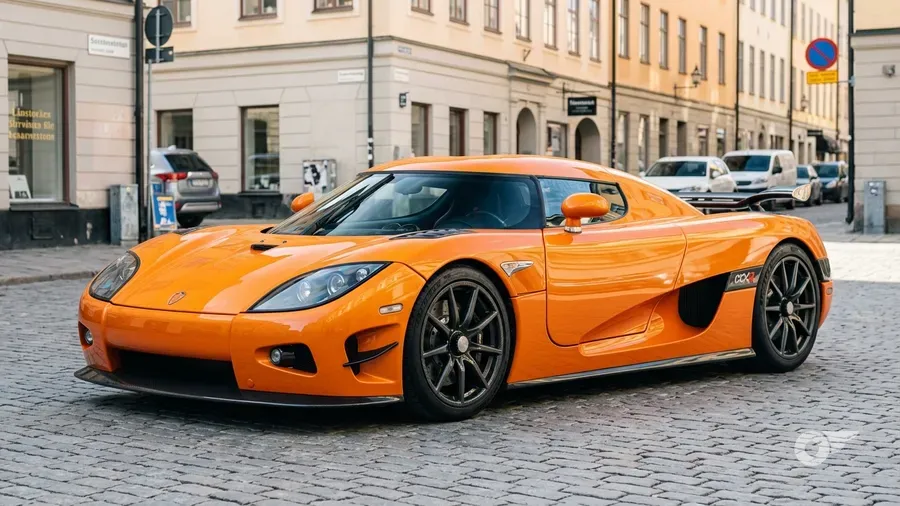
Koenigsegg CCX

Koenigsegg CCX

Sweden·Exotic·2006–2010
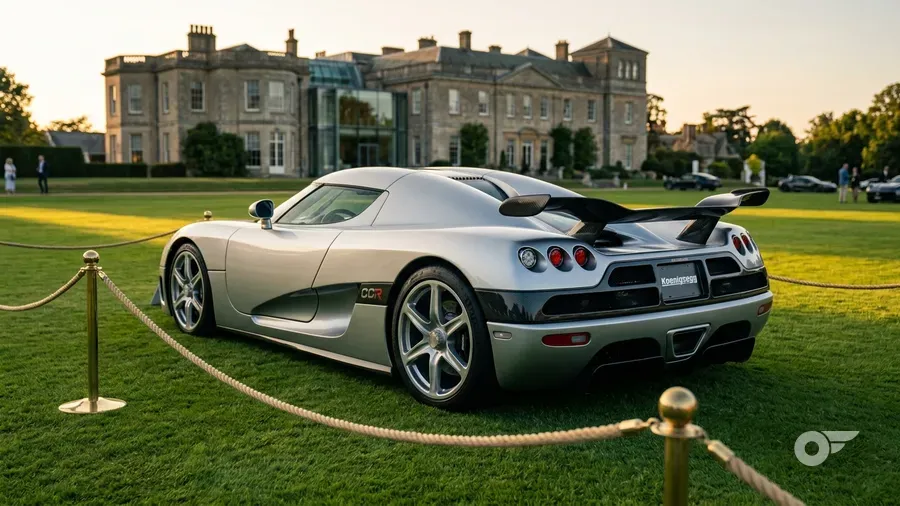
Koenigsegg CCR

Koenigsegg CCR

Sweden·Exotic·2004–2006

Mercedes-Benz SLR McLaren

We haven’t profiled this car yet. Request to add
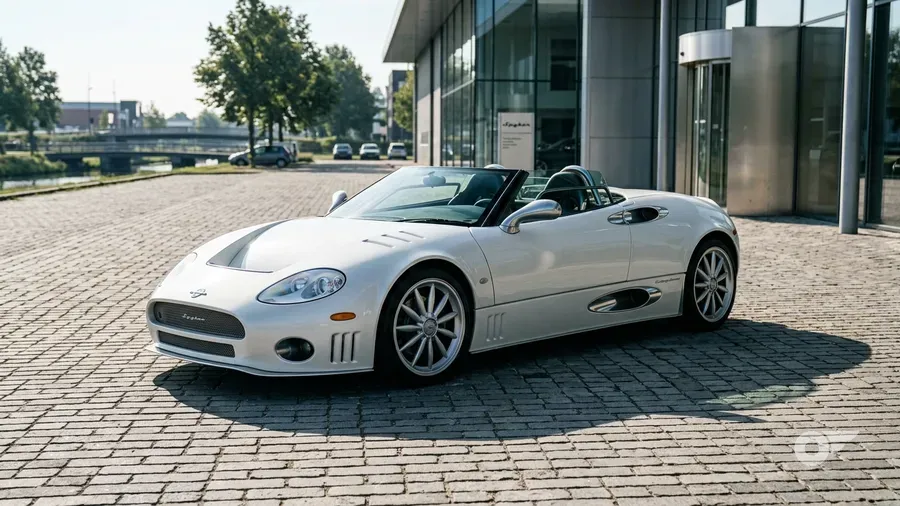
Spyker C8 1st Gen

Spyker C8 1st Gen

Other·Exotic·2000–2012
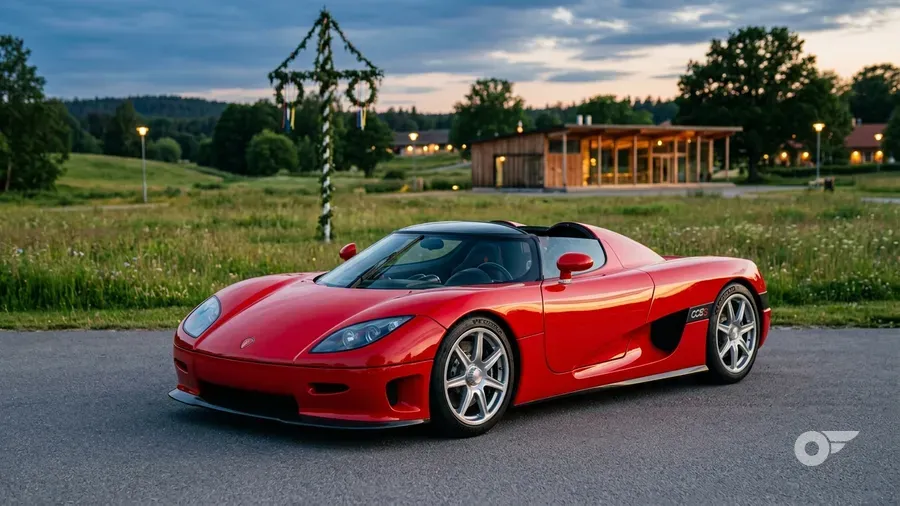
Koenigsegg CC8S

Koenigsegg CC8S

Sweden·Exotic·2002–2003
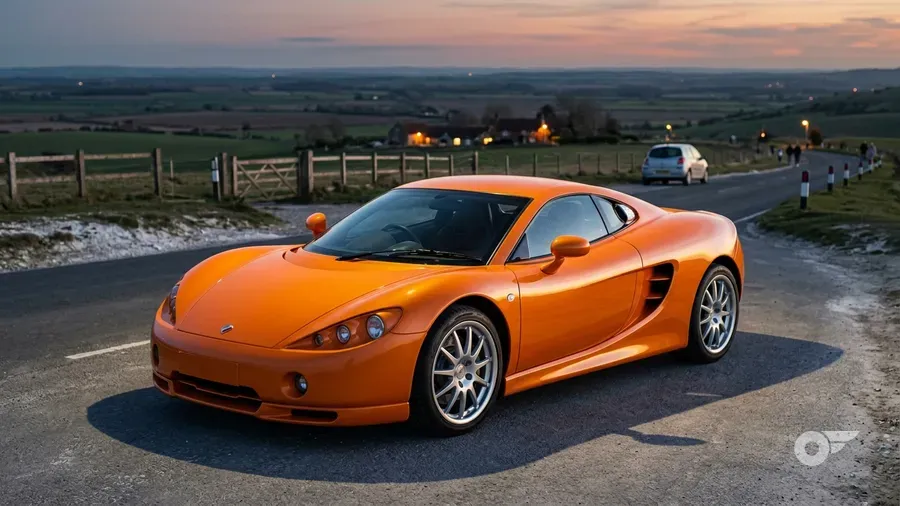
Ascari A10

Ascari A10

UK·Exotic·2006–2006
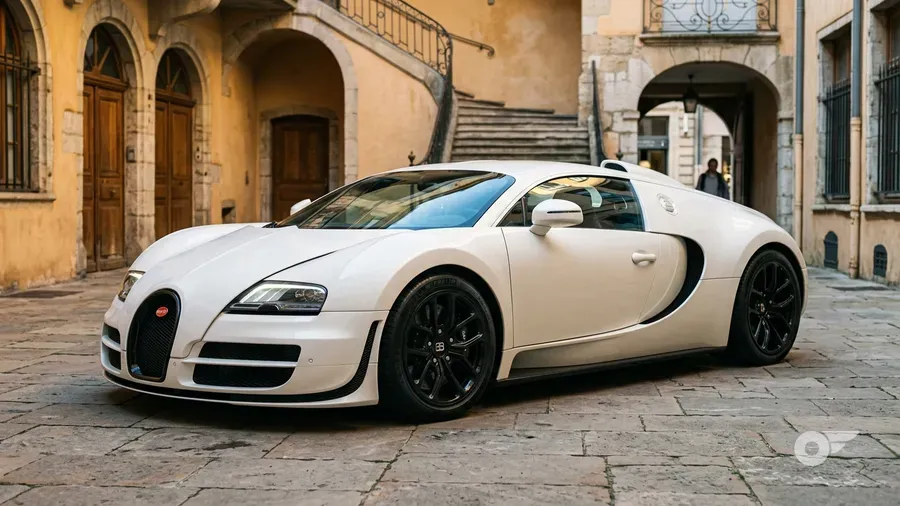
Bugatti Veyron

Bugatti Veyron

France·Exotic·2005–2015

Owning One

Why collectors want it

The Zonda market has a shape almost no other car's does: there is no ordinary example. Five C12s were built with the 6.0 engine, one of which was crash-tested. Forty roadsters followed on the 7.3, then 25 Zonda Fs and 25 Roadster Fs, five Cinques and five Cinque Roadsters, three Tricolores and three HP Barchettas. Around all of them sit more than thirty-five documented one-offs, most carrying the 760 engine package, each specified to a single owner and most of them the only one of their kind.

That structure is why the money behaves the way it does. In December 2024 a 2014 Zonda 760 LM Roadster made 11,086,250 dollars at RM Sotheby's in Dubai, an outright record for the marque, beating a Zonda Aether that had taken 6.1 million euros in 2019. Neither is a comparable in the usual sense, because neither has a twin.

The connoisseur's pick is the Cinque, the road-legal translation of the track-only R and the first Zonda built in carbo-titanium. Five coupes, five roadsters, and the point at which Pagani stopped being a curiosity.

Which one to look for

The C12 is the historical bookend rather than the driver's choice: five cars on the 6.0 M120, one of them the crash-test and homologation car, chassis 001, which the factory later restored and displayed at Geneva in 2019. The nearest thing to a volume car is the 7.3-litre S and the 40 roadsters built on it. The Zonda F of 2005 is where the car became fully itself. New M297 engine at 602 PS, reworked aerodynamics, an extra headlight, an Inconel exhaust and a redesigned weave in the crash structure. Twenty-five coupes and 25 Roadster Fs. The F Clubsport is the lighter one, and the one that lapped the Nordschleife in 7:24.7. The Cinque is the grail. Five coupes and five roadsters, developed at the request of a Hong Kong dealer, using carbo-titanium for the first time and making 678 PS. The three Tricolores and three HP Barchettas are rarer still, and the Barchetta's 800 PS makes it the most powerful road Zonda built. The track cars, 15 Zonda Rs and five Revolucions, are a separate argument: quicker than any of it, legal nowhere.

C12 · 1999–2002

The original. 6.0-litre Mercedes-Benz M120 V12 at 408 or 450 PS, five-speed manual, 1,250 kg dry. Debuted at the 1999 Geneva Motor Show and set the template for everything that followed: carbon tub, AMG V12, machined switchgear.

C12-S · 2000–2002

M120 enlarged to 7,010cc and tuned by AMG to 550 PS, with a new CIMA six-speed manual specified to handle it. 0 to 100 km/h in 3.7 seconds, 335 km/h.

Cinque · 2009

Road-legal translation of the R, built at the request of a Pagani dealer in Hong Kong. First use of carbo-titanium, 678 PS, a six-speed automated manual shifting in under 100 milliseconds with Comfort, Sport and Race modes, and 750 kg of downforce at 355 km/h.

Cinque Roadster · 2009

Open Cinque to identical specification, including the carbo-titanium tub and the 678 PS engine.

F · 2005–2006

Zonda Fangio. The most thoroughly re-engineered Zonda: new Mercedes-AMG M297 7.3-litre V12 at 602 PS, revised front end and rear spoiler, extra headlight, Inconel exhaust, hydroformed aluminium plenum, optional 380 mm Brembo carbon-ceramics and a redesigned Z-preg weave in the crash structure. 345 km/h.

HP Barchetta · 2017

A 60th birthday present from the company to Horacio Pagani, and the last production Zonda. Barchetta body, rear wheel covers taken from Group C sports racers, spoiler and lights from the 760 series, seats and suspension from the Huayra BC. 800 PS from the naturally aspirated M297, the most powerful road-legal Zonda built.

One-off series · 2009–present

Custom commissions built to individual order, most using the 760 engine package: 7.3-litre M297 at 760 PS and 780 Nm. More than 35 are documented, including the 760 LM, Aether, Riviera, Kiryu, Fantasma, Revo Barchetta and Arrivederci.

R · 2009–2011

Track-only. 6.0-litre Mercedes-Benz GT 112 race V12 at 750 PS, six-speed Xtrac 672 sequential, 1,070 kg dry, carbon-titanium monocoque. Homologated for no series whatsoever.

Revolucion · 2013

Evolution of the Zonda R. 800 PS from the 6.0-litre race V12, 1,070 kg, six-speed magnesium transversal sequential gearbox shifting in 20 milliseconds. Track use only.

Roadster · 2003–2006

Open-top version of the S 7.3 with no claimed performance loss and only 30 kg of added weight. The closest thing the Zonda range ever had to a volume model.

Roadster F · 2006–2009

Open F with a removable carbon roof and canvas side curtains, 650 PS and 780 Nm, and only 5 kg heavier than the coupe. Pagani declined to reinforce the sills, strengthening the firewall and adding billet alloy braces instead, saving over 35 kg.

S 7.3 · 2002–2005

The 7,291cc naturally aspirated M120, designed and built by Mercedes-AMG, at 555 PS and 750 Nm. ABS and traction control became standard here, the first meaningful electronics on the car.

Tricolore · 2010

Tribute to the Frecce Tricolori, Italy's aerobatic team. Cinque bodywork, unpainted under clear blue lacquer with the Italian tricolour running the length of the car, and a small wing behind the cockpit echoing the tail of the team's Aermacchi MB-339 PAN. 670 PS.
What owning one is like

The mechanical package is the reassuring part. The V12 is a Mercedes-AMG unit rather than a bespoke exotic engine, and it is understood, robust and unbothered by being used. The gearbox on the manual cars is a CIMA unit specified to handle the torque. Nothing about the powertrain is fragile in the way the price tag implies. Everything around it is where ownership gets specific. The bodywork is carbon fibre finished as a visible surface, so damage is not a paint job, it is a lay-up and finishing job, and realistically that means Modena. Interiors were individually specified, so matching a worn or damaged trim piece is a factory conversation rather than a parts order. Cars built to racing practice carry racing consumables. The compensation is that Pagani never let go of any of them. The factory holds the build record of every car it has made, will authenticate any of them through Puro and restore any of them through Rinascimento, and proved the point by rebuilding chassis 001, the original crash-test car, for the Zonda's twentieth anniversary.

Upkeep & parts

There is no independent Zonda specialist network to speak of, and Pagani has arranged things so that there does not need to be. Service happens at San Cesario sul Panaro or at a certified dealer centre where Pagani-trained mechanics work, and the factory's own programmes cover the rest.

Puro is the certification and warranty service: more than 400 checks against the company's build database, a warranty extension covering every component, and a Puro Book with a certificate signed by Horacio Pagani. Rinascimento is full restoration, using original drawings and materials and remanufacturing anything that cannot be sourced. Unico re-specifies a pre-owned car, reversibly. All three are open to any Pagani regardless of model year, which is unusual for a firm this small and is a real part of what the money buys.

Budget for shipping. The most involved work happens in Modena, and getting a car there and back is a line item rather than an afterthought. The owner community is largely the factory's own Raduno gathering, invitation-only and in a different country each year.

Country of origin
Italy
Class
Exotic
Production years
1999–2019
Units built
~140
Model
Zonda
Nickname
No nickname
Body
Coupe, Roadster
Layout
Mid-engine, RWD
Engine
6.0L Mercedes-Benz M120 V12 (408 or 450 PS, C12), 7.0L M120 V12 AMG-tuned (550 PS, C12-S), 7.3L M120 V12 AMG (555 PS, S 7.3 and Roadster), 7.3L Mercedes-AMG M297 V12 (602 PS, F), 7.3L M297 (650 PS, F Clubsport and Roadster F), 7.3L M297 (678 PS, Cinque and Cinque Roadster), 7.3L M297 (670 PS, Tricolore), 7.3L M297 (800 PS, HP Barchetta), 6.0L Mercedes-Benz GT 112 race V12 (750 PS, Zonda R; 800 PS, Revolucion)
Transmission
5-speed manual, 6-speed CIMA manual, 6-speed automated manual, 7-speed automated manual, 6-speed Xtrac 672 sequential (R and Revolucion)
Designer
Horacio Pagani