Octane Files
Explore CarsKoenigsegg CCX

Koenigsegg CCX

Overview

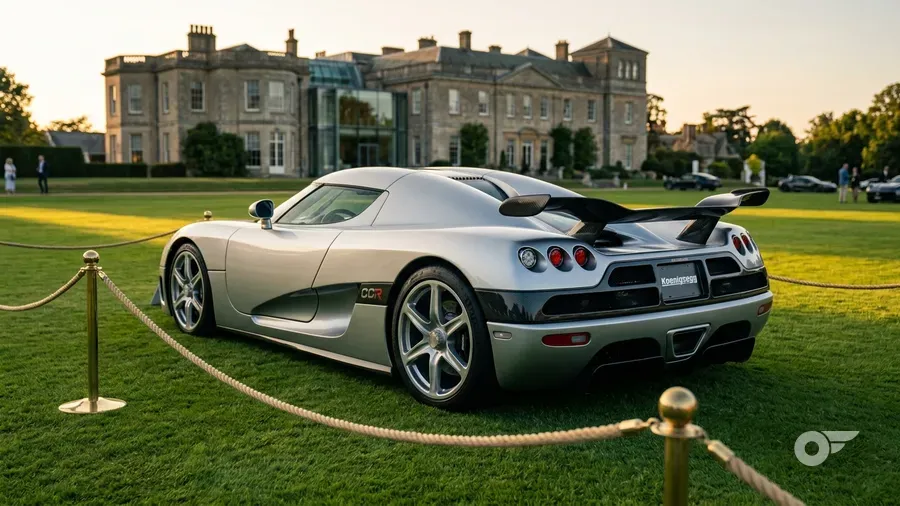
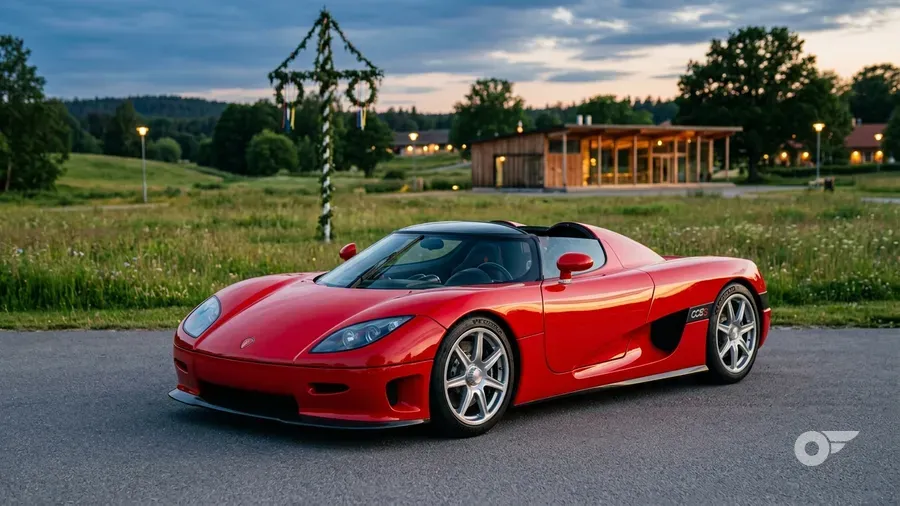
The CCX is the car that turned a Swedish curiosity into a manufacturer. Koenigsegg wanted to sell in the United States, and American rules do not negotiate: the car had to survive federal crash testing, meet Californian emissions and run on the 91-octane pump fuel that is the best most of the country offers. The answer was Koenigsegg's own engine, the first the company designed rather than adapted, a 4.7 litre twin-supercharged V8 making 806 PS with blocks cast by Grainger and Worrall, the British foundry that also cast for the Veyron. The body grew 88 mm longer to satisfy a US rear-impact requirement and gained 50 mm of headroom for taller drivers. The name marks the anniversary: Competition Coupe X, ten years after the original CC prototype first ran in public in 1996. Forty-nine cars were built between 2006 and 2010 across the whole family, including the flex-fuel CCXR making 1,018 PS on E85, a handful of Edition cars, and two Trevitas with white diamond-weave carbon bodywork. It is also the Koenigsegg most people met first, because Top Gear crashed one.

Distinctions

The defining attributes and collector status that make this car garage-worthy.

Poster Car
The car on the bedroom wall, the one people dreamed about before they could drive.
Octane Files Select
Renowned for its history, engineering, or cultural weight.

Collectibility scorecard

Rated 1 to 10 on the traits that matter for owning, driving, and holding on to a car like this.

Desirability
8/10
Rarity
9/10
Driving thrill
9/10
Investment trajectory
7/10
Usability
3/10
Ease of restoration
3/10
Cultural impact
8/10
Electronic dependence
Fully analogHeavily electronic

The CCX carries a fully electronically managed engine, including flex-fuel sensing on the CCXR that adjusts for anything between petrol and E85, plus ABS and a hydraulically assisted rack. Almost everything else is mechanical. The gearbox is a hand-shifted six-speed for most of the run, with a paddle-shift arriving only on the last Edition cars, and the chassis has no adaptive damping, no torque vectoring and no electronic stability net to interrupt 806 PS heading for the rear tyres. It sits mid-scale because the engine electronics are genuinely modern for 2006, while the driving experience is closer to a 1990s supercar than to the Agera that replaced it four years later.

Market data

Demand tier, price trend, and typical values by condition. Our own assessment, not a quoted valuation.

Demand tier
EntrySolidHighBlue-chip

Strong, sustained collector demand. Good examples never wait long for a buyer.

Value trajectory
AppreciatingStableCooling

Values are climbing. The market wants more of these than exist.

Price by condition
Driver
$1.5M
Excellent
$2.2M
Concours
$3M

The CCX is the first Koenigsegg with enough cars in circulation to produce a public record, and the record is still thin. Two have sold at auction: one at RM Sotheby's Monterey in August 2021 for the equivalent of about 1.2 million dollars, and one in the United Kingdom in 2012 for 246,400 pounds. Several others have been offered and failed to sell, including cars at Bonhams in 2020 and RM Sotheby's in 2019 and 2025. Meanwhile dealer asking prices in mid-2026 run between roughly 2.5 and 3.7 million dollars for a CCX and higher for a CCXR. That gap between asks and results is the single most important thing to understand about this market, and the band below is pitched between the two rather than at the top of it. The Trevitas and Special Editions sit well outside this band and trade privately when they trade at all.

Values as of August 2026.

Buyer's guide

What anyone seriously considering this car should know first.

Why it's worth it
The car that made Koenigsegg legal in America, then famous on television
Callout
Koenigsegg's first in-house engine, designed to make 806 PS on American 91 octane pump gas
What to watch for
Start with which of the 49 you are looking at, because the spread between a base CCX and a Trevita is enormous and the cars can look similar in photographs. Verify the specification against the factory records and the unofficial registry rather than against the seller's description. Most CCXs now wear the rear wing that appeared after the Top Gear episode, either from new or retrofitted, so establish which and whether the associated chassis and suspension settings came with it. The hydraulic power steering deserves specific attention: the system's failure is the documented cause of the car's famous television accident, and its condition and service history are worth more scrutiny than the mileage. On a CCXR or Edition car, ask what fuel it has been running and when the flex-fuel system was last flushed, because ethanol hardware left standing full is where the money goes. Check the carbon wheels if fitted, since they were an option rather than standard and are neither cheap nor quick to replace. Then check use. A car that has covered a few hundred kilometres in ten years needs belts, hoses, fluids and tyres before it is driven properly, and an official dealer inspection before purchase is not optional.

The Story

Driving character

The CCX drives smaller than its reputation. Kerb weight is 1,456 kg, the cabin is roomier than the CC8S because of the 50 mm of extra headroom the Americans effectively forced, and the visibility is good enough that the car feels usable at ordinary speeds. Then the superchargers wind up and it is unmistakably a Koenigsegg: 806 PS arriving without turbo lag, boost swelling with revs, and a whine layered over the V8 all the way to the top of the range. The manual gearbox is heavy and mechanical and completely at odds with how hypercars would be built five years later. Aerodynamically the car changed during its life. Early cars ran clean, and the rear wing that arrived after the Top Gear episode alters both the look and the high-speed balance, though Koenigsegg maintained that revised chassis and suspension settings did more for the lap time than the wing did. A CCXR on E85 is a different proposition again, with over 1,000 PS in a car with no stability control, which is a combination that rewards respect and punishes bravado.

Design

Every visible change from the CCR traces to a rule or a driver. The body is 88 mm longer because a US rear-impact requirement demanded it, and the roof gained 50 mm of headroom so that taller American customers could get in, both of which quietly improved the proportions. Drag came out at 0.32, an effective drag area of 0.56 square metres, and the dihedral synchro-helix doors and detachable hardtop carried over untouched. The rear wing that most people picture on a CCX is not original to it. It appeared after Top Gear's test, and although the company later said the improvement in lap time came from chassis and suspension changes rather than from downforce, the wing has been credited with it ever since and is now part of the car's identity. Koenigsegg also offered carbon fibre wheels here, a first for a production car. The most striking version is the Trevita, whose bodywork uses a coated carbon weave that reads as white and glitters in sunlight, a finish so slow to produce that the company gave up on the third car it had planned.

Motorsport pedigree

Koenigsegg's one serious attempt at motor racing lived and died alongside the CCX. In 2007 the company built the CCGT, a GT1 car derived from this platform, at a time when the rules asked for 20 road cars over several years, a bar a firm building CCXs could clear. Two months after its first tests the ACO and the FIA rewrote the regulations: carbon fibre monocoques were banned and homologation now required 350 road cars a year. For a manufacturer whose entire output over five years was 49 cars, that was the end of it. One CCGT was built, it never started a race, and it went to a private collection. Koenigsegg has never entered a series since, and the company's competitive record is measured against clocks instead: top speed runs, standing kilometre times and acceleration records. The name did resurface in 2026, when Koenigsegg revealed the CCGT1, a road car built as a tribute to the race car that was never allowed to race.

In culture

The CCX is the Koenigsegg the general public learned first, and television did it. In series 8 of Top Gear in 2006 Jeremy Clarkson drove the car and rated it, then the Stig took it out and spun off at around 130 mph when the power steering failed, putting it into the tyre wall. A rear wing appeared for the return visit and the lap fell from 1:20.4 to 1:17.6, which was enough to top the board briefly before the Ascari A10 took it back at 1:17.3. Koenigsegg has always maintained that the improvement came mostly from chassis and suspension settings rather than the wing, but the story is too good to correct and the wing became a permanent part of the car's look. Video games did the rest of the work. The CCX and the CCXR both appear in Need for Speed Hot Pursuit, and the CCX turns up again in Shift 2 Unleashed, which put a Swedish hypercar in front of an audience that would never see one in a showroom. That combination, a televised crash and a games console, is why a 49-car manufacturer became a household name.

Rivals

Cars from other manufacturers that competed for the same buyers when new.
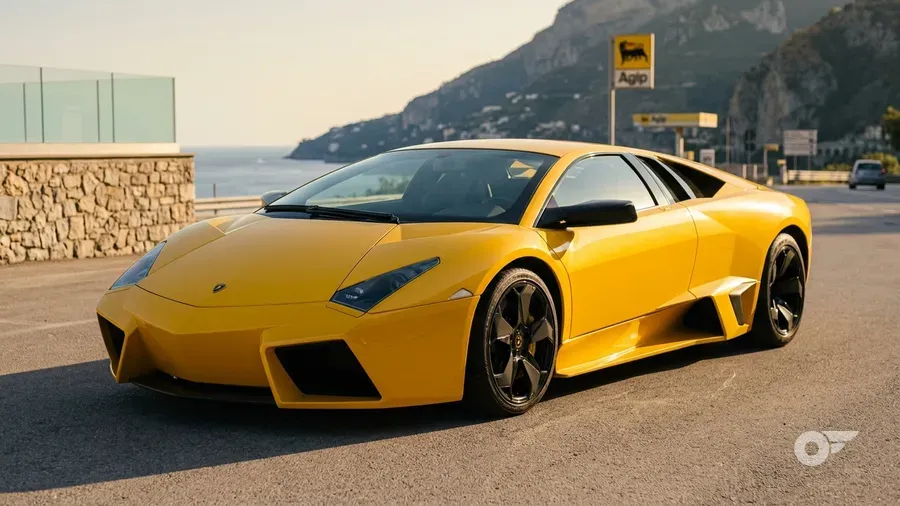
Lamborghini Reventón

Lamborghini Reventón

Italy·Exotic·2007–2009

Owning One

Why collectors want it

Forty-nine cars over five years does not sound like volume until you set it against six CC8S and fourteen CCRs. The CCX is the first Koenigsegg that exists in enough numbers to have a market, and it is the generation where the engineering became the company's own: its engine is the first Koenigsegg designed from a blank sheet, and the architecture it established carried through to the Agera. Two of the 49 never reached a customer, a CCX crash test car and a CCXR factory development car, so the population in private hands is smaller than the total suggests. The internal hierarchy is steep. Thirty base CCXs sit at the bottom, then nine CCXRs on flex-fuel, then six Edition cars, then two CCXR Special Editions, and at the top the two Trevitas, whose white-coated carbon weave took so long to produce that a planned third car was abandoned. This is also the last generation to offer a true manual gearbox alongside the paddle-shift that arrived at the end of it, which is not a small detail in a market that increasingly values the third pedal.

Which one to look for

Six factory versions, and the ranking is unusually clear. At the top are the two CCXR Trevitas, bodied in a white-coated diamond-weave carbon that was so difficult to produce that a planned third car was cancelled. Below them sit the two CCXR Special Editions, significant beyond their rarity because they introduced Koenigsegg's first paddle-shift gearbox. The Edition cars come next, two CCX Editions and four CCXR Editions, running a 4.8 litre engine and a serious aero package that generates around 350 kg of downforce at 250 km/h. Then the nine CCXRs, whose flex-fuel engine makes 1,018 PS on E85 and reverts to standard output on petrol, which makes them the connoisseur's choice for anyone with access to good ethanol. The thirty base CCXs are the entry point and are far from a consolation, since they carry the same in-house engine and the same manual gearbox. Two of the 49 were factory cars and never sold. Anything called a CCX that turns up with a CCXR badge and no paperwork should be treated with suspicion; the registry knows which chassis is which.

CCX · 2006–2010

The base car and the reason the model exists: Koenigsegg's first in-house engine, a 4.7 litre twin-supercharged V8 making 806 PS on 91-octane American pump fuel, in a body lengthened 88 mm and raised 50 mm inside to meet US rules. Six-speed manual.

CCX Edition · 2008

A hardcore aero and chassis package on the petrol car, using a 4.8 litre version of the engine remapped to 900 PS. The Edition aero generates around 350 kg of downforce at 250 km/h, which changes the car's high-speed behaviour rather than just its appearance.

CCXR · 2006–2010

The flex-fuel branch. The same engine recalibrated to run on E85 as well as petrol, making 1,018 PS and 1,060 Nm on ethanol and reverting to standard output on pump fuel. Visually near-identical to a CCX, which is why chassis verification matters.

CCXR Edition · 2008

The Edition treatment applied to the flex-fuel car: 4.8 litre engine, 1,018 PS on E85, and the same downforce-heavy bodywork. The most aggressive of the volume CCX variants and the one most often mistaken for a standard CCXR.

CCXR Special Edition

Significant beyond its rarity because it introduced Koenigsegg's first Formula 1 style paddle-shift gearbox, ending the marque's manual-only era and pointing directly at the Agera's dual-clutch.

CCXR Trevita

The top of the family. Bodywork in a coated diamond-weave carbon that reads white and glitters in daylight, a material so slow and difficult to produce that Koenigsegg abandoned the third car it had planned.
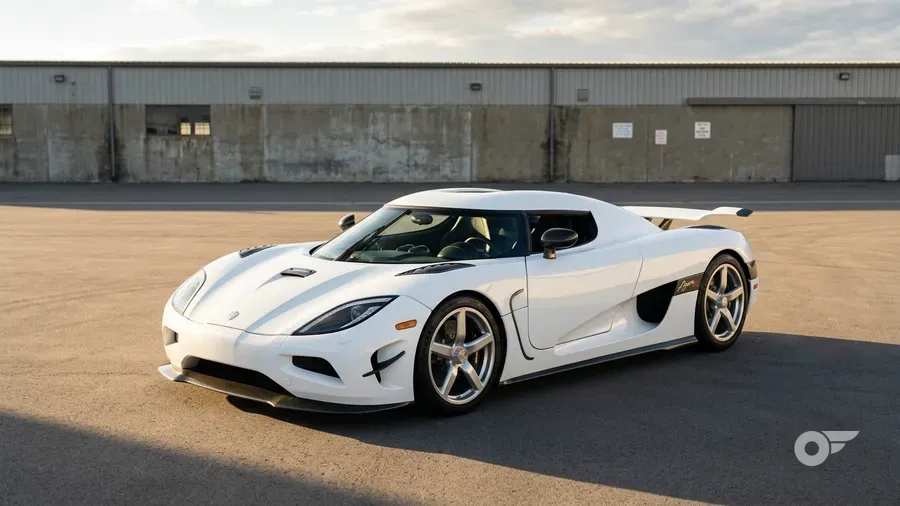
What owning one is like

Running a CCX is mostly a matter of keeping ahead of the things that suffer from standing still. The engine is Koenigsegg's own and it is a robust piece of work, deliberately engineered to survive poor American fuel, so it is rarely the problem. The hydraulic power steering is the system with a public failure record, thanks to a very well documented afternoon at a British airfield, and it deserves a proper inspection rather than a glance. Flex-fuel cars want attention paid to their fuel systems if ethanol has been sitting in them; that is maintenance rather than a defect, but it is expensive maintenance when ignored. Bodywork is carbon, so it does not corrode, though repairs after even minor contact are specialist work with long lead times. Electrical components, switchgear and trim were produced in tiny batches and are made to order today. None of this is unusual for the class, and the reassuring part is that Koenigsegg still supports the car fully, holds the build record for every chassis and will still take one in for work seventeen years later.

Upkeep & parts

Support is genuinely good for a car this rare, provided you accept that everything routes through the factory. Koenigsegg-trained technicians work through official dealers across Europe and the United States, and remote cars are usually serviced by flying a technician to the car. Parts are made to order in Angelholm. The upgrade programme is unusually generous with this model: official dealers list a paddle-shift gearbox conversion for the CCX, an Agera-style steering wheel, a carbon air-core wheel set and parking sensors, so a 2007 car can be brought a long way forward if that is what the owner wants. Whether it should be is a separate question, since originality is starting to matter in this market. Budget for bespoke tyres, for fluids and belts on a car that gets little use, and for the fact that any significant job is scheduled around Sweden. There is no owners club worth the name at this population, so the unofficial Koenigsegg Registry is the reference for chassis histories and specification, and reading it before buying is the cheapest due diligence available.

Country of origin
Sweden
Class
Exotic
Production years
2006–2010
Units built
49
Model
CCX
Nickname
No nickname ("Trevita" names the two diamond-weave CCXRs specifically, not the generation)
Body
Targa
Layout
Mid-engine, RWD
Engine
4.7 L twin-supercharged Koenigsegg V8 (806 PS at 6900-7000 rpm), 4.7 L flex-fuel V8 for the CCXR (1,018 PS on E85), 4.8 L V8 for the Edition cars (900 PS on petrol, 1,018 PS on E85)
Transmission
6-speed manual (CIMA), 6-speed paddle-shift (from the CCXR Special Edition)
Designer
Christian von Koenigsegg, David Crafoord, Sven-Harry Akesson