Octane Files
Explore CarsLamborghini Gallardo

Lamborghini Gallardo

Overview

Lamborghini had built a junior car twice before, and both times it nearly finished the company. The Urraco and the Jalpa were small, cheap and indifferently made at exactly the moment Sant'Agata could afford none of those things. The Gallardo was the third attempt, and it worked because Audi had bought the company in 1998 and was willing to spend properly.

It arrived in February 2003 with a 4,961 cc V10 mounted longitudinally behind the seats, an aluminium spaceframe engineered jointly by Ingolstadt and Sant'Agata, permanent four-wheel drive, and a standard of assembly no previous Lamborghini had approached. Volkswagen Group's own brand history puts the outcome plainly: the Gallardo is the car that steered Lamborghini to profitability.

Sant'Agata built 933 in the first year and 14,022 by the time the last one left on 25 November 2013. That is more than the Miura, Countach and Diablo put together, from a company that had spent forty years selling cars in the hundreds. It is also a ten year run across two quite different engines, which is a long life for a car that was only ever meant to be the cheap one.

Distinctions

The defining attributes and collector status that make this car garage-worthy.

Octane Files Select
Renowned for its history, engineering, or cultural weight.

Collectibility scorecard

Rated 1 to 10 on the traits that matter for owning, driving, and holding on to a car like this.

Desirability
7/10
Rarity
6/10
Driving thrill
8/10
Investment trajectory
7/10
Usability
6/10
Ease of restoration
4/10
Cultural impact
6/10
Electronic dependence
Fully analogHeavily electronic

Drive-by-wire throttle, full ECU engine management, ABS and stability control, and on all but the rear-drive cars an electronically supervised four-wheel-drive system. The e-gear transmission is electro-hydraulically actuated, so on most cars even the gearshift is a computer's decision. What keeps it off the top of the scale is what the Gallardo does not have: no active aerodynamics, no drive-mode-configurable dampers as standard, hydraulic power steering throughout, and a gated six-speed manual on the options list right to the end for anyone who wanted the clutch back.

Market data

Demand tier, price trend, and typical values by condition. Our own assessment, not a quoted valuation.

Demand tier
EntrySolidHighBlue-chip

A dependable market. Well-kept cars hold their value and find ready buyers.

Value trajectory
AppreciatingStableCooling

Values are climbing. The market wants more of these than exist.

Price by condition
Driver
$85k
Excellent
$125k
Concours
$180k

Values found their floor and have started back up. The Classic Valuer records 173 sales from 239 offerings, a 72 percent sell-through and a median of £76,660, with the model's highest recorded result, £204,702, set at Gooding and Christie's in March 2026. The movement is concentrated in manual, Superleggera and Balboni cars; ordinary e-gear coupes are flat to firm rather than climbing.

Values as of August 2026.

Buyer's guide

What anyone seriously considering this car should know first.

Why it's worth it
The Lamborghini that sold in volume and steered the company into profit
Callout
14,022 built in ten years, more than the Miura, Countach and Diablo combined
What to watch for
Start with the gearbox, because it decides everything else. E-gear is a conventional manual with hydraulic actuation, and it wears clutches at a rate set almost entirely by the previous owner's driving. Ask for a clutch-wear reading before anything else. A tired actuator is the expensive failure and can run past twenty thousand dollars, so a car with recent hydraulic work and paperwork to prove it is worth paying for. Manual cars are not immune either: early ones could want a clutch every ten thousand miles. Then the exhaust. Factory bypass valves seize on cars that never get exercised, and the original catalytic converters cook themselves over time, particularly on cars driven hard or run with aftermarket headers. Replacements at list price are eye-watering. A stored engine warning light is usually coil packs, or a lambda, exhaust-temperature or catalyst sensor, rather than anything internal. The V10 itself is stout. There is no rust question at all, which removes the single biggest worry on any older Italian car. What is left is service history, clutch condition and whether the last owner used a specialist. Buy the paperwork.

The Story

Driving character

The V10 is the event, and it wants revs. Not much happens below four thousand, and then it climbs to eight with a hard flat shove that never quite tails off, which is why Gallardo owners talk about the top third of the tachometer the way other people talk about a favourite corner. The chassis is the surprise. Four-wheel drive and a wide track make it far less intimidating than a Lamborghini is supposed to be. It understeers gently on the way into a corner, hooks up early on the way out, and generally flatters. The rear-drive cars, the Balboni and the LP 550-2, undo that deliberately and are the ones that move around under you. Then there is the gearbox, and it is a period piece. E-gear at full throttle in Corsa is fine, one decisive shove between ratios. At walking pace in traffic it lurches, hesitates and has to be driven around. The gated manual removes all of that and replaces it with an open metal gate and a heavy clutch, which is precisely why the manual cars now cost more than the fast ones.

Design

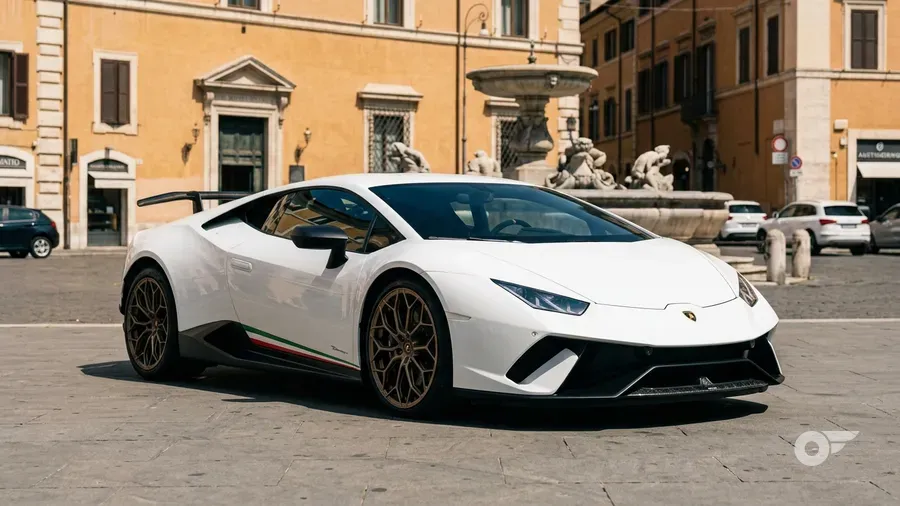
The shape began as an Italdesign proposal from Fabrizio Giugiaro and was finished in-house by Luc Donckerwolke, who had run Lamborghini design since 1998. What he did was take the Countach's language, hard creases, flat planes, a wedge with no curves anywhere in it, and shrink it without softening it. There is almost no radius on the car. That discipline is what makes it read as a Lamborghini at a glance despite being the small one. The hexagonal theme runs through the side intakes, the wheels and the tail lights. The rear deck is a flat glass shelf over the engine. There are no scissor doors, and there never were: those stayed with the V12 cars. Walter de Silva reworked it for the 2008 LP 560-4 and the changes are all at the ends. The nose gains Y-shaped daytime running lights and sharper intake blades, the tail a wider diffuser, and the whole car looks considerably angrier for very little actual change. The Superleggera versions add visible carbon, drop the ride height and take weight out of everything you touch.

Motorsport pedigree

Lamborghini spent forty years refusing to go racing, and the Gallardo is where that ends. In 2009 the factory launched the Lamborghini Blancpain Super Trofeo, a one-make series built around a stripped 570 hp Gallardo LP 560-4 at roughly 1,300 kg, running European weekends alongside FIA GT, the DTM and the WTCC. It was marketed as the fastest one-make series in the world and it was the only one running four-wheel drive. It is also the direct ancestor of everything Squadra Corse does now, including the Huracán Super Trofeo and the STO and STJ road cars that borrow its name. The customer racing came from outside. Reiter Engineering in Bavaria built the Gallardo GT3 privately before Lamborghini formally contracted them, then developed three further cars between 2011 and 2013. Reiter Gallardos made Lamborghini the most successful marque in the ADAC GT Masters, with 21 wins from 2007, including nine from twelve races and both titles in the series' first season with Christopher Haase. Gallardos also ran in FIA GT3, Super GT, the American Le Mans Series and Speed World Challenge.

In culture

The Gallardo's most durable public role is the least likely one. In December 2004 Lamborghini gave two of them to the Polizia di Stato for the force's 152nd anniversary, and the Polizia Stradale put them to work on the Salerno to Reggio Calabria motorway, largely carrying donor organs to transplant surgeons. That partnership is now more than twenty years old and has run over two hundred organ-transport missions, with an LP 560-4 replacing the early cars and two Huracáns following in 2014 and 2017. A police supercar that spends its life delivering transplant organs is a better story than any film role. Two more went to London's Metropolitan Police for a brief period in 2005 and 2006, and one ended up in Panamanian police service after being seized. Beyond that, the Gallardo is the Lamborghini of the video-game generation, the shape that turns up in everything from Gran Turismo onward and the one a lot of people under forty picture when someone says Lamborghini. It never had the Countach's poster, but it had the controller.

Owning One

Why collectors want it

The Gallardo is the cheapest way into a proper Lamborghini, and for a long time the market treated it as exactly that and nothing more. That has changed, and the reason is the gearbox.

Almost every Gallardo left the factory with e-gear, the single-clutch automated manual that was state of the art in 2003 and is nobody's favourite now. A minority went out with a gated six-speed, and those are the cars the money has found. Lamborghini stopped offering a clutch pedal when the Gallardo ended in 2013 and has not offered one since, so an open metal gate with a V10 behind it is a finished story rather than a passing preference.

Above that sit the light cars. The 2007 Superleggera (618 built) and the LP 570-4 Superleggera are the driver's picks, the 250 rear-drive Valentino Balboni cars are the connoisseur's, and the 150 Super Trofeo Stradales and 50 Squadra Corses are the collector's. Ordinary e-gear coupes remain the bargain, and they are still a naturally aspirated ten-cylinder Italian supercar you can actually use, which is a rarer thing every year.

Which one to look for

The dividing line is 2008. Cars built up to then use the 4,961 cc V10 with 500 PS, rising to 520 PS for 2006, and that engine has split crankpins that give it even firing intervals and a smooth, hard, faintly turbine-like noise. The LP 560-4 that replaced it uses the 5,204 cc direct-injection engine, 560 PS, sharing its architecture with Audi's own 5.2, and non-split crankpins that make it fire unevenly. It is faster (3.7 seconds to 100 km/h, 325 km/h) and it sounds coarser and angrier. Which you prefer is a matter of taste, not of era. The ones that matter beyond that: the 2007 Superleggera, 618 cars, 100 kg lighter through carbon panels, titanium wheel nuts and carbon seats. The LP 570-4 Superleggera at 1,340 kg, the lightest road Lamborghini of its day. The LP 550-2 Valentino Balboni, 250 cars, rear-drive with a 45 percent limited-slip differential and named for the factory test driver. The 150 Super Trofeo Stradales and 50 Squadra Corses. And the LP 560-2 50° Anniversario of 2013, the last rear-drive manual Lamborghini of any kind.

Gallardo (500 PS) · 2003–2005

The launch car. 4,961 cc V10 with 18-degree split crankpins giving even 72-degree firing intervals, 500 PS, permanent four-wheel drive, aluminium spaceframe. Six-speed gated manual or six-speed e-gear. 0-100 km/h in 4.2 seconds, 309 km/h.

Gallardo (520 PS) · 2006–2008

Mid-life update to the 5.0 car: 520 PS at 8,000 rpm, revised suspension and calibration. The last of the even-firing engine.

Gallardo SE · 2005

Two-tone special edition with a contrasting roof and engine cover, sports seats and a numbered plaque.

Gallardo Spyder · 2006–2008

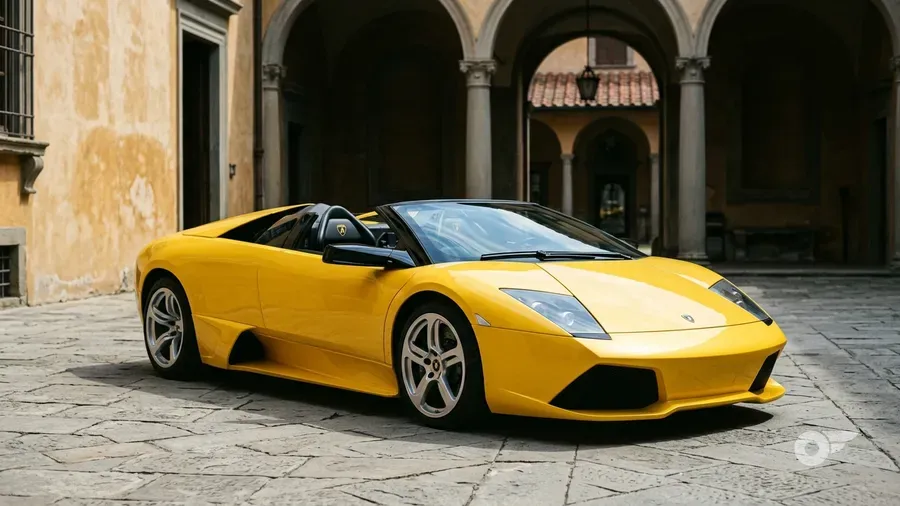
The first open Gallardo. Fully retractable fabric roof, 520 PS, a raked rear deck and its own rear bodywork rather than a cut-down coupe.

LP 550-2 · 2011–2013

The Balboni idea made a catalogue model: 550 PS, rear-wheel drive, available as coupe and Spyder and with the gated manual to the end.

LP 550-2 Tricolore · 2011–2012

Rear-drive special marking 150 years of Italian unification, with an Italian flag stripe over matte white bodywork.

LP 550-2 Valentino Balboni · 2009–2010

Rear-drive Gallardo named for Lamborghini's long-serving factory test driver. 550 PS, a 45 percent limited-slip differential, a longitudinal racing stripe and a numbered plaque. The connoisseur's Gallardo.

LP 560-2 50° Anniversario · 2013

Rear-drive send-off for Lamborghini's fiftieth year, combining the LP 550-2 chassis with late 560-series bodywork and interior. The last Lamborghini of any kind offered with a gated manual gearbox.

LP 560-4 · 2008–2013

The big change. New 5,204 cc direct-injection V10 with non-split crankpins and uneven firing, 560 PS, 40 PS more than the car it replaced, with fuel consumption and emissions down 18 percent. 0-100 km/h in 3.7 seconds, 325 km/h. Walter de Silva restyled the nose and tail.

LP 560-4 Spyder · 2008–2013

Open version of the 5.2 car, same 560 PS and four-wheel drive.

LP 570-4 Spyder Performante · 2011–2013

The Superleggera treatment applied to the Spyder. 570 PS, carbon bodywork and a lower kerb weight than the standard open car.

LP 570-4 Squadra Corse · 2013

Named for Lamborghini's factory motorsport division and derived from the Super Trofeo Stradale. 570 PS, quick-release engine cover, carbon wing, aluminium fuel cap.

LP 570-4 Super Trofeo Stradale · 2011–2013

Road version of the Super Trofeo one-make racer. 570 PS, 1,340 kg, and a fixed carbon rear wing that is impossible to miss.

LP 570-4 Superleggera · 2010–2013

Carbon fibre inside and out brings it to 1,340 kg, the lightest road-going Lamborghini of its day. 570 PS, 0-100 km/h in 3.2 seconds, 329 km/h.

Nera · 2006–2007

Black-on-black special edition with a bicolour Nero Serapis and Nero Perseus interior, unique wheels and stitching.

Superleggera · 2007–2008

The light one. 530 PS and 100 kg saved through carbon-fibre rear diffuser, undertray, mirror housings, door panels, centre tunnel and engine cover, plus titanium wheel nuts and carbon-fibre seats.

What owning one is like

A Gallardo is a far more ordinary car to live with than its shape suggests, and the things that go wrong are a short, well-known list. The clutch is first, and it is a consumable rather than a fault: e-gear cars go through them, and how fast depends entirely on whether the previous owner crawled it through cities or drove it properly. Budget for one and be pleasantly surprised if you never need it. The e-gear hydraulics are the item that hurts. A failed actuator is a serious bill, and the warning is usually slurred or slow shifts rather than a sudden stop. Exhaust valves seize on cars that sit. Catalytic converters degrade. Coil packs fail and light the dash. Suspension bushes and dampers wear out at ordinary road-car mileages and are ordinary road-car jobs. What is absent matters more than what is present. There is no rust, no fragile engine, no structural mystery and no shortage of independent specialists who know the car inside out. The V10 is genuinely long-lived, and plenty have covered serious distance.

Upkeep & parts

The Gallardo is cheap to run by supercar standards right up until the moment it is not, and the difference is almost always the gearbox. Annual servicing at an independent Lamborghini specialist is a normal exotic-car number. A clutch and, worse, an e-gear actuator are the entries that need a reserve fund rather than a monthly budget.

Parts are the good news. This is a Volkswagen Group car underneath, sharing hardware with the Audi R8, and a great deal of what wears out is either shared or has a proper aftermarket behind it. Trim and body panels are the exception and are priced as Lamborghini parts.

For support, Lamborghini Club USA and Lamborghini Club UK both run active memberships, the International Lamborghini Registry handles chassis records, and Lamborghini Talk's Gallardo board is where owners actually compare invoices. Polo Storico, the factory's own classic department, now reaches cars of this era. No free public workshop-manual archive exists for the car, so a good specialist relationship is worth more than any PDF.

Country of origin
Italy
Class
Exotic
Production years
2003–2013
Units built
14,022
Model
Gallardo
Nickname
Baby Lambo
Body
Coupe, Spider
Layout
Mid-engine, AWD / RWD
Engine
4,961 cc V10 (500 PS, 2003-2005), 4,961 cc V10 (520 PS, 2006-2008), 4,961 cc V10 (530 PS, Superleggera), 5,204 cc direct-injection V10 (550 PS, LP 550-2), 5,204 cc direct-injection V10 (560 PS, LP 560-4), 5,204 cc direct-injection V10 (570 PS, LP 570-4)
Transmission
6-speed gated manual, 6-speed e-gear automated manual
Designer
Fabrizio Giugiaro (Italdesign, initial proposal), Luc Donckerwolke (production design), Walter de Silva (2008 facelift)