Octane Files
Explore CarsLamborghini Huracán

Lamborghini Huracán

Overview

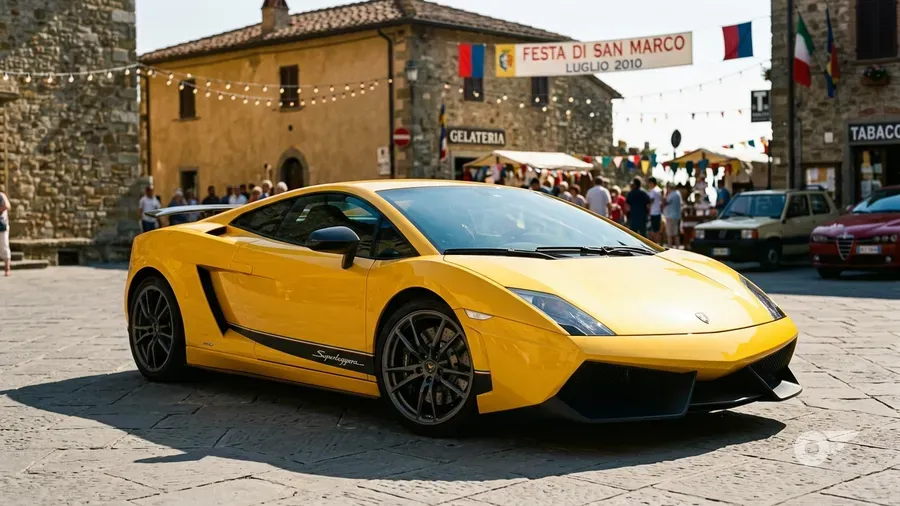
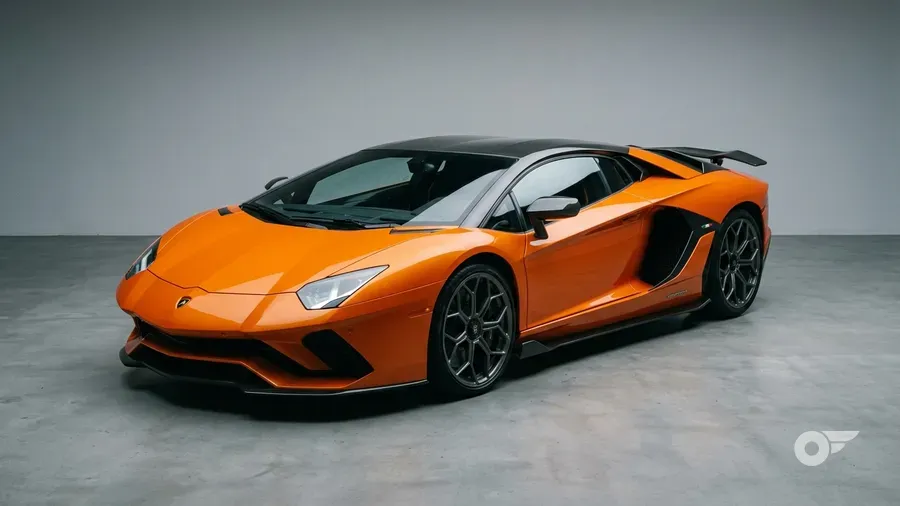
The Huracán had one job, which was to do what the Gallardo did, only more so. It managed that in half the time. Lamborghini needed ten years to build 14,022 Gallardos and passed the same number of Huracáns in five, in October 2019, then reached twenty thousand cars in April 2022. Nothing Sant'Agata had made before sold like it.

The engineering moved on. The Gallardo's aluminium spaceframe gave way to a hybrid structure of aluminium and carbon fibre, riveted and bonded together, ten percent lighter and fifty percent stiffer. The 5.2 litre V10 carried over, still naturally aspirated and still revving past 8,000, but the gated manual did not. Every Huracán ever built has a seven-speed dual clutch and no alternative.

What nobody knew in 2014 was that this was the end of a species. The Huracán and its Audi R8 cousin took the naturally aspirated V10 road car with them when both lines closed in 2024, and Lamborghini's replacement, the Temerario, is a twin-turbocharged hybrid V8. The last one out of Sant'Agata was a ten-car run called the STJ.

Distinctions

The defining attributes and collector status that make this car garage-worthy.

Octane Files Select
Renowned for its history, engineering, or cultural weight.

Collectibility scorecard

Rated 1 to 10 on the traits that matter for owning, driving, and holding on to a car like this.

Desirability
7/10
Rarity
5/10
Driving thrill
8/10
Investment trajectory
6/10
Usability
8/10
Ease of restoration
5/10
Cultural impact
7/10
Electronic dependence
Fully analogHeavily electronic

About as electronic as a combustion supercar gets. There is no manual gearbox, no mechanical throttle linkage and no hydraulic steering rack: the Huracán uses electric assistance, and the EVO added a variable-ratio system and rear-wheel steering on top. The ANIMA selector rewires throttle, gearbox, exhaust, damping, stability control and, on four-wheel-drive cars, the torque split. The EVO's LDVI reads sensor data to predict what the driver is about to do next. The Performante and STO add electrically actuated active aerodynamics. The instrument pack is one TFT panel with no physical dials at all.

Market data

Demand tier, price trend, and typical values by condition. Our own assessment, not a quoted valuation.

Demand tier
EntrySolidHighBlue-chip

A dependable market. Well-kept cars hold their value and find ready buyers.

Value trajectory
AppreciatingStableCooling

Values are holding steady. What you pay today is what it's worth tomorrow.

Price by condition
Driver
$155k
Excellent
$200k
Concours
$265k

The range is pulling apart rather than moving as one. The Classic Valuer records 45 sales at a 71 percent sell-through and a £152,379 median; classic.com puts the LP 610-4 average at $195,256. Base cars have eased around eight percent in line with the wider market, the Performante has held at roughly £218,872 in average condition, and the STO is climbing, with a $485,000 result in July 2026.

Values as of August 2026.

Buyer's guide

What anyone seriously considering this car should know first.

Why it's worth it
Passed the Gallardo's entire ten-year production total in five years
Callout
The last naturally aspirated V10 road car anyone built
What to watch for
This is the easiest supercar to buy that has ever worn this badge, which changes what you should be looking for. Owners routinely report thirty to fifty thousand miles without a serious failure, so mileage on a Huracán is not the warning it would be on an older Italian car. A well-used one with full history is a better buy than a garage queen with flat spots in its tyres. The dual clutch is the thing to test. Early cars, roughly 2014 to 2016, can shudder at parking speeds as the friction material wears. That is the clutch talking, not a fault, and a replacement is several thousand dollars rather than a catastrophe. Drive it slowly in traffic before you drive it fast. If the car has the nose lift, cycle it and watch it hold. The seals seep slowly on higher-mileage cars. A stored misfire code is usually plugs, an injector or an ignition component. Carbon-ceramic brakes are standard and last a very long time, but a full set is a five-figure conversation, so read the pad and disc measurements. Beyond that, buy on history and specification.

The Story

Driving character

The noise is the whole point, and it is worth being specific about why. This V10 has non-split crankpins, which means it fires unevenly, at ninety degrees and then fifty-four. That is what produces the hard metallic wail rather than the smooth turbine note of the earlier 5.0 litre engine, and it is why a Huracán at 8,000 rpm sounds like nothing else that has been on sale this century. Underneath the theatre it is remarkably civil. The dual clutch shifts cleanly at any speed, which the Gallardo's single clutch never managed. The chassis is stiff, the steering quick and light, and the four-wheel-drive cars will flatter almost anyone. Visibility is decent, the ride on the adaptive dampers is genuinely usable, and it starts every morning. This is a supercar you can commute in, which was the design brief. The rear-drive cars are the ones to seek out if you want it to talk back. The EVO RWD, the Tecnica and the STO give up the safety net and get looser, louder and considerably more interesting. The STO in particular is a race car wearing number plates.

Design

Filippo Perini's Huracán is a hexagon exercise. The theme is everywhere once you see it: the side intakes, the wheel spokes, the fuel filler, the vents in the rear deck, the pattern stitched into the seats. Lamborghini's own line is that the design starts from something as essential as a carbon atom, which is a marketing sentence covering a real geometric discipline. Against the Gallardo it is smoother and better resolved. The creases are still there but the surfaces between them are tauter, and the Y-shaped lighting front and rear pulls it into line with the Aventador. There are still no scissor doors, which remains a V12 privilege. The variants change the character sharply. The Performante wears its ALA ducting openly, with a fixed carbon wing and a rear deck full of exit vents. The STO goes further, replacing the entire front end with a single hinged cofango clamshell in the manner of a GT3 car, then adding a shark fin and a manually adjustable wing. The Sterrato adds arch cladding, roof-mounted lights and a snorkel, and looks entirely deliberate rather than dressed up.

Motorsport pedigree

This is the most raced Lamborghini ever built, and it is not close. The Super Trofeo one-make series had started on the Gallardo in 2009; from 2015 it ran Huracáns, through Super Trofeo, Super Trofeo EVO and the 620 CV EVO2 of 2022, across three continental championships and an annual World Final. By March 2021 Sant'Agata had built its 400th Huracán race car. The GT3 is the serious one. It won on debut, at Monza on 14 April 2015, with Grasser Racing and Jeroen Mul, Fabio Babini and Andrew Palmer. Over ten years it took 96 championship titles and 187 race wins. It won the GTD class of the Daytona 24 Hours three years running, in 2018, 2019 and 2020, and the Sebring 12 Hours in 2018 and 2019, making Lamborghini the first manufacturer to take both in the same season. In 2019 the EVO swept every title in GT World Challenge Europe. The EVO2 won the 2024 DTM, the first Italian marque to do so in thirty-one years, and on 29 June 2025 it took Lamborghini's first outright win at the Spa 24 Hours.

In culture

The Huracán's biggest screen moment is also its most consequential. In Doctor Strange, Stephen Strange crashes a grey LP 610-4 off a coast road, and the injuries to his hands are what set the entire film in motion. Lamborghini sent Marvel six cars for the shoot and at least one of them was destroyed. It is a rare case of product placement that had to be wrecked to do its job. Off screen, the car inherited the Gallardo's strangest duty. The Polizia di Stato took delivery of Huracáns in 2014 and 2017, continuing a partnership that began in 2004 and has now run more than two hundred organ-transport missions on Italian motorways. Then there is the sheer ubiquity. The Huracán is the default supercar of the last decade in games, in toy aisles, in phone wallpapers and in the background of a great many music videos. It is the car a generation of children can draw from memory, which is exactly the job the Countach used to do.

Rivals

Cars from other manufacturers that competed for the same buyers when new.
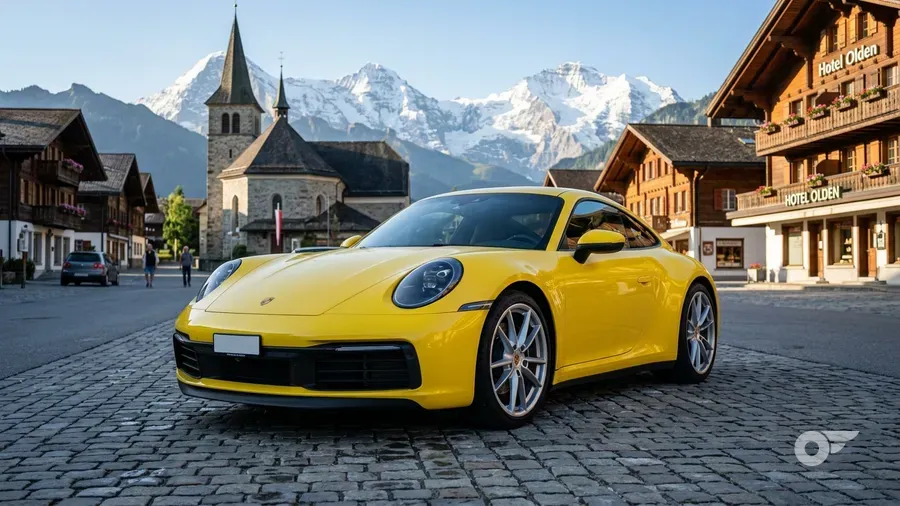
Porsche 911 992

Porsche 911 992

Germany·Sports·2019–present
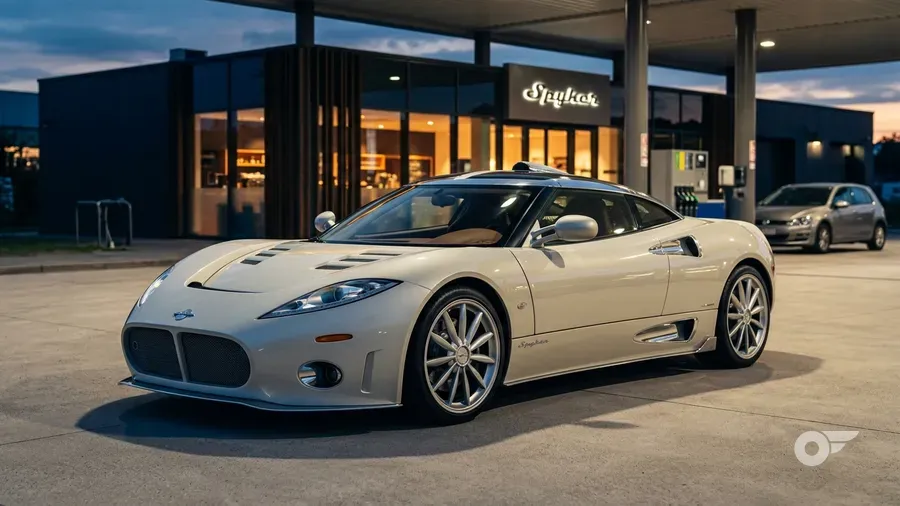
Spyker C8 3rd Gen

Spyker C8 3rd Gen

Other·Exotic·2016–2024
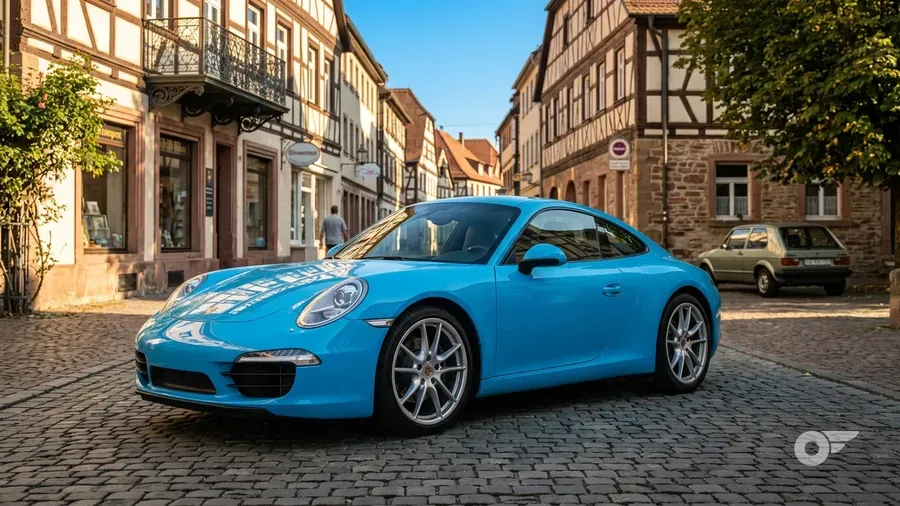
Porsche 911 991

Porsche 911 991

Germany·Sports·2012–2019
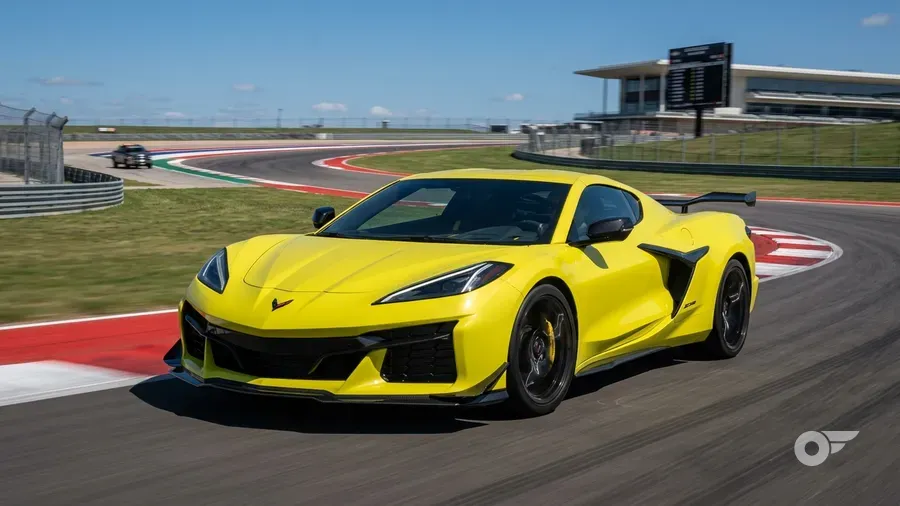
Chevrolet Corvette C8

Chevrolet Corvette C8

USA·Sports·2020–present

Owning One

Why collectors want it

Collectibility usually attaches to scarcity, and there is no scarcity here. Roughly thirty thousand Huracáns exist. What the car has instead is a closed door behind it.

The naturally aspirated V10 is finished. Not detuned, not turbocharged, finished, and it went out with a fourteen-year record of being one of the most dependable engines ever put in a supercar. Everything that follows at this price makes its noise with turbochargers or electric motors. That is the argument, and the market is already sorting the range accordingly.

The base LP 610-4 and EVO are the value entries and are still easing, which makes them the cheapest naturally aspirated V10 supercar in existence. The Performante is the one that stopped falling first: active aerodynamics, forged composite, and the Nürburgring lap that made it famous. The STO is the range's genuine climber, a road-registered interpretation of a GT3 car with Formula 1 derived brakes. The Sterrato is the odd one, and being odd is precisely the point. Ten STJs close the whole thing out and will never trade normally.

Which one to look for

The range splits three ways: four-wheel-drive cars, rear-drive cars, and the specials. Four-wheel drive is where it started. The LP 610-4 of 2014 and the EVO of 2019 are the volume cars, the EVO adding rear-wheel steering, torque vectoring and the LDVI system that anticipates driver inputs. Rear drive began with the 580 PS LP 580-2 and continued as the 610 PS EVO RWD, which Lamborghini deliberately calibrated for about thirty percent more oversteer than the AWD car. The specials are why anyone will remember it. The Performante of 2017 introduced ALA, an active aerodynamic system with electrically actuated flaps claimed to add 750 percent more downforce, plus forged composite bodywork worth 40 kg. The STO of 2021 is the sharp one: rear drive, more than three quarters of its body in carbon fibre, 43 kg lighter than a Performante, and the first production car with Formula 1 derived CCM-R brakes. The Tecnica is the STO calmed down for roads. The Sterrato, 1,499 cars, is raised 44 mm and rides on gravel tyres. Ten STJs ended it.

EVO · 2019–2024

Mid-life rework rather than a facelift. Performante's 640 PS engine, plus rear-wheel steering, torque vectoring, LDS variable-ratio steering and LDVI, which reads sensor data to anticipate what the driver is about to do.

EVO RWD · 2020–2024

Rear-drive EVO at 610 PS, with the P-TCS traction control system calibrated for roughly thirty percent more oversteer than the four-wheel-drive car. The keen driver's cheap Huracán.

EVO RWD Spyder · 2020–2024

Open rear-drive EVO, revealed May 2020.

EVO Spyder · 2019–2024

Open EVO, introduced February 2019.

LP 580-2 · 2016–2019

The first rear-drive Huracán. 580 PS, revised steering and suspension calibration, and a distinct front and rear treatment. Cheaper, lighter at the nose and deliberately more playful.

LP 580-2 Spyder · 2016–2019

Rear-drive Spyder, revealed at the Los Angeles show in November 2016.

LP 610-4 · 2014–2019

The launch car, shown at the 2014 Geneva show. 5,204 cc naturally aspirated V10, 610 PS at 8,250 rpm, four-wheel drive, seven-speed dual clutch, and a hybrid aluminium and carbon-fibre chassis ten percent lighter and fifty percent stiffer than the Gallardo's spaceframe.

LP 610-4 Avio · 2017

Aviation-themed limited edition in five military-inspired colours, with a tricolour flash on the flanks and a numbered cockpit plaque.

LP 610-4 Spyder · 2016–2019

Open version of the launch car, revealed at Frankfurt in September 2015. Same 610 PS and four-wheel drive, with a fabric roof that folds in 17 seconds.

Performante · 2017–2019

640 PS, forged composite bodywork worth 40 kg, and ALA (Aerodinamica Lamborghini Attiva), an active aerodynamic system of electrically actuated flaps claimed to add 750 percent more downforce with aero vectoring side to side. Set a 6:52.01 Nürburgring lap on 5 October 2016 with Marco Mapelli driving.

Performante Spyder · 2018–2019

Open Performante, shown at Geneva in 2018, with the full ALA system carried over.

Sterrato · 2023–2024

The strange one, and a genuinely significant car: a supercar raised 44 mm on bespoke Bridgestone gravel-and-tarmac tyres, with arch cladding, aluminium underbody protection, roof-mounted lights, a roof-mounted air intake and a dedicated Rally driving mode. 610 PS, four-wheel drive with a rear mechanical self-locking differential.

STJ · 2024

Super Trofeo Jota, the send-off. Built on the STO with an added carbon cofango flick pack and a rear wing angled three degrees further for ten percent more load. 640 PS at 8,000 rpm. The last naturally aspirated V10 Lamborghini.

STO · 2021–2024

Super Trofeo Omologata: a road-registered interpretation of the Huracán GT3 and Super Trofeo EVO. Rear drive, 640 PS, more than three quarters of the body in carbon fibre, 43 kg lighter than a Performante, a single hinged cofango front clamshell, and the first production car fitted with Formula 1 derived CCM-R brakes. 0-100 km/h in 3.0 seconds, 310 km/h.

Tecnica · 2022–2024

Unveiled 12 April 2022 and positioned between the EVO RWD and the STO. Rear drive, 640 PS, rear-wheel steering up to 3 degrees, its own nose and tail, and a carbon and glass engine cover.

What owning one is like

Owning a Huracán is an unusually undramatic experience, and that is the headline rather than a footnote. This is Volkswagen Group engineering with an Italian body on it, assembled to a standard no earlier Lamborghini reached, and owners regularly take them past thirty and fifty thousand miles without anything serious happening. The clutch is the wear item. Early cars can shudder at low speed once the friction material has gone, and it announces itself long before it strands anyone. Replacement is four figures at a good independent, low five at a dealer. Nose-lift seals seep on higher-mileage cars, which shows up as the front end settling overnight. Misfire codes trace to plugs, injectors or coils. Coolant needs doing on schedule, because the V10 will run hot if it is neglected. Carbon-ceramic brakes last a very long time and cost a great deal when they finally do not. Tyres are the honest running cost, particularly on an STO or a Sterrato. Nothing here rusts, nothing here is unobtainable, and nothing here needs a specialist to interpret.

Upkeep & parts

Running costs are supercar-normal rather than supercar-frightening. Annual service, due every twelve months or ten thousand miles, runs roughly $850 to $1,500 at a dealer, and a realistic five-year all-in figure including tyres, brakes and surprises is $15,000 to $25,000. That is a fast Porsche with expensive tyres, not an old Italian money pit.

Parts availability is the quiet advantage. The car is recent enough to be fully dealer supported and shares enough with the Audi R8 that a great deal of the mechanical hardware carries a Volkswagen Group part number. Bodywork and trim are Lamborghini prices and always will be.

For community, Lamborghini Talk runs a dedicated Huracán board and is where owners compare real invoices, Lamborghini Club USA and Lamborghini Club UK both hold events, and the International Lamborghini Registry keeps chassis records. There is no free public workshop-manual archive for the car and every service manual located is a paid download, so budget for a specialist rather than a PDF.

Country of origin
Italy
Class
Exotic
Production years
2014–2024
Units built
~29,881
Model
Huracán
Nickname
No nickname (Baby Lambo names Lamborghini's junior model line rather than this car alone)
Body
Coupe, Spider
Layout
Mid-engine, AWD / RWD
Engine
5,204 cc V10 (580 PS, LP 580-2), 5,204 cc V10 (610 PS, LP 610-4 / EVO RWD / Sterrato), 5,204 cc V10 (640 PS, Performante / EVO / STO / Tecnica / STJ)
Transmission
7-speed LDF dual-clutch automatic
Designer
Filippo Perini (Centro Stile Lamborghini), Mitja Borkert (later variants)