Octane Files
Explore CarsPorsche 911 991

Porsche 911 991

Overview

The 991 is where the 911 stopped being a small car. The wheelbase went out by 100mm to 2,450mm, the body grew 70mm longer, and Porsche moved the rear wheels 76mm rearward relative to the engine, which is the most significant thing anyone had done about the 911's weight distribution in fifty years. A mixed aluminium and steel body took 80 kilos out of the shell. Almost 90 per cent of the components were new or redeveloped. What came out was faster, calmer, more usable and more comfortable than any 911 before it, along with two changes enthusiasts have argued about ever since: the steering went electromechanical at launch in 2011, and the ordinary Carreras went turbocharged in 2016. The second of those is a real historical line rather than a spec change. After the 991, the only naturally aspirated 911s Porsche sold wore GT badges. It was also the most successful 911 ever built, 233,540 cars, and the generation that produced the millionth 911 on 11 May 2017.

Distinctions

The defining attributes and collector status that make this car garage-worthy.

Legend
A car that transcended the hobby, known far beyond the people who drive them.
Octane Files Select
Renowned for its history, engineering, or cultural weight.

Collectibility scorecard

Rated 1 to 10 on the traits that matter for owning, driving, and holding on to a car like this.

Desirability
7/10
Rarity
3/10
Driving thrill
8/10
Investment trajectory
6/10
Usability
9/10
Ease of restoration
5/10
Cultural impact
6/10
Electronic dependence
Fully analogHeavily electronic

Electromechanical power steering, a drive-by-wire throttle, stability and traction control, adaptive dampers, active engine mounts, an electronically deployed multi-position rear spoiler and brake-based torque vectoring. Higher models add rear-axle steering, and every PDK car has launch control. The instrument cluster is part dial and part screen. Even the manual gearbox is electronically supervised, with rev-matching built into the seven-speed. What holds it just short of the top of the scale is that Porsche kept a real manual, a conventional hydraulic brake pedal and a mechanically driven naturally aspirated engine in the GT models. This is a fully modern car and it reads as one from the driver's seat.

Market data

Demand tier, price trend, and typical values by condition. Our own assessment, not a quoted valuation.

Demand tier
EntrySolidHighBlue-chip

Strong, sustained collector demand. Good examples never wait long for a buyer.

Value trajectory
AppreciatingStableCooling

Values are holding steady. What you pay today is what it's worth tomorrow.

Price by condition
Driver
$68k
Excellent
$95k
Concours
$130k

Tracked sale averages sit near $84,000 for a 991.1 Carrera S and $99,000 for a 991.2, a gap that owes as much to the later cars simply being newer as to anything mechanical. Naturally aspirated 991.1 cars with the seven-speed manual are the ones to watch, because their position as the last non-GT 911 without turbochargers is fixed and finite. The band below describes a Carrera or Carrera S coupe. The GT cars sit far above it, with the 911 R, GT3 RS, GT2 RS and Speedster all trading well beyond their original list prices. Cabriolets and high-mileage PDK cars sit under the band.

Values as of August 2026.

Buyer's guide

What anyone seriously considering this car should know first.

Why it's worth it
The last 911 with a naturally aspirated Carrera engine, and the best-selling of them all
Callout
The millionth Porsche 911, built on 11 May 2017, was a 991 Carrera S
What to watch for
This is the easiest 911 to buy since the 993, and most of the checks are modern-car checks. The 9A1 engine has no intermediate shaft and a strong record, so the anxiety that governs a 996 or an early 997 simply does not apply here. Concentrate on the front of the car instead. The radiators and air-conditioning condensers sit low and open, fill with leaves and grit and corrode from the inside, and a car that has never had them cleaned is a bill waiting to happen. Coolant changeover valves and their vacuum lines are the usual cause of a low-coolant warning that comes and goes. On PDK cars look for output-seal weeps, ask about fluid changes, and treat a car that has lived on launch control as one with clutch-pack wear ahead of it, typically between 80,000 and 100,000 miles. Sport exhaust solenoids stick. Some interior door cards warp for no clear reason, a quality irritation rather than a risk. On a 991.1 GT3, confirm the 2014 recall was carried out: all 785 cars built to that point received new engines after loose connecting-rod bolts holed crankcases and started fires.

The Story

Driving character

The 991 is the first 911 that feels big, and the compensations are real. The longer wheelbase and rearward-shifted rear wheels take most of the old pendulum out of the car, so it is stable in a way no earlier 911 is, and fast over distance rather than merely fast. The naturally aspirated cars are the ones enthusiasts hang on to: the 3.4 and 3.8 are flat and unhurried below 4,000rpm and then climb hard towards 8,000 with a metallic edge that turbocharging cannot reproduce. The 3.0 twin-turbo that replaced them in 2016 is a better everyday engine by every measure, with torque everywhere and no lag worth the name, and it is quieter and less thrilling at the top, which is the trade nobody was consulted about. The electric steering is the other argument. It is accurate, well weighted and utterly dependable, and it filters out the fine texture a 997 delivers. What comes back is a car that will cross a continent, tolerate a track day and never once feel close to letting go. The GT3 is the one that still shouts, and it shouts loudly enough for the whole range.

Design

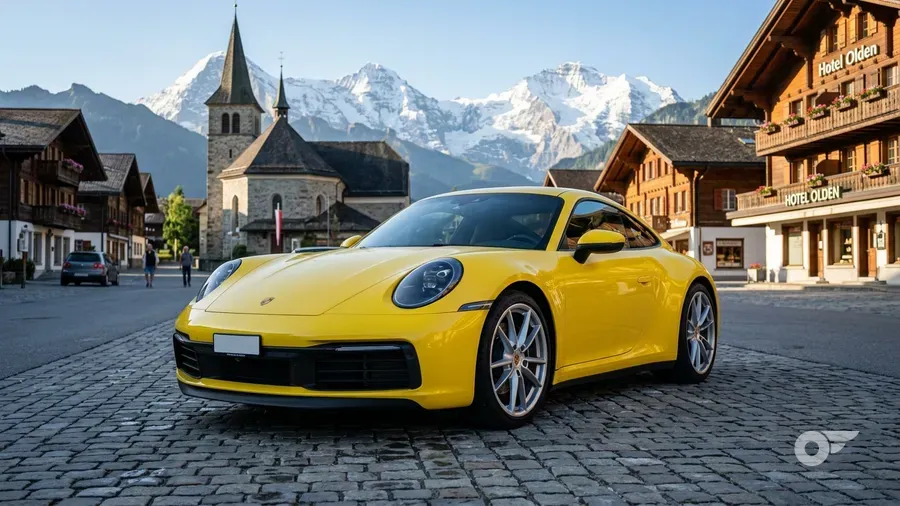
Michael Mauer froze the 991's design in 2008 and took on the hardest possible version of the job: make the 911 bigger without letting anyone see it. The wheelbase grew 100mm and the body 70mm, and yet the car reads as a tidier, better-resolved 997 rather than a larger one. The tricks are visible once you look. The windscreen is more steeply raked with its base pushed forward, the roofline is lower and flatter, the mirrors move off the A-pillar onto the door skin, and the rear lamps become slim horizontal units that stretch the tail sideways. The recessed door-handle cups disappear. Aerodynamics went active, with a rear spoiler that deploys to more than one position. Inside, the cabin takes its layout from the Carrera GT, with a high rising centre console and the gear lever set close to the wheel, the most obvious break with every 911 interior before it. The Targa is the set piece: the hoop and wraparound glass of the 1967 car reproduced faithfully, over a roof that folds itself away at the touch of a button.

Motorsport pedigree

The 991 is when Porsche went back to Le Mans as a factory. Two works 911 RSRs run by Manthey entered GTE Pro in 2013 and finished first and second in class on debut, Romain Dumas, Marc Lieb and Richard Lietz ahead of Jörg Bergmeister, Patrick Pilet and Timo Bernhard. The 911 RSR won GTE Pro at Le Mans again in 2018 and 2019, by which point the racing car had moved its engine ahead of the rear axle, something no road-going 911 has ever done. On the Nordschleife, Manthey's 991 GT3 R won the Nürburgring 24 Hours in 2018 with Frédéric Makowiecki, Patrick Pilet, Richard Lietz and Nick Tandy, Porsche's first outright win there since 2011. The road cars set their own marker: on 20 September 2017 Lars Kern lapped the Nordschleife in a standard GT2 RS in 6:47.3, taking the production-car record from the Lamborghini Huracán Performante's 6:52.01 and putting a rear-wheel-drive 911 at the top of a list it had no business leading.

In culture

The 991 got caught in the speculation era, and the 911 R is the case study. Porsche built 991 of them in 2016 with the GT3 RS engine, a six-speed manual and no rear wing, aimed squarely at the people who had spent a decade complaining that the GT3 had gone paddle-only. Within weeks cars were being offered at several times the $184,900 list price, the wildest asking sums approaching a million dollars, and Porsche's own GT boss Andreas Preuninger said plainly that he disliked people buying the company's cars to make money on them, and that the purpose of limiting a car was never to make it appreciate. Porsche's answer was to build the thing again in volume as the wingless, manual GT3 Touring, which punctured the trade almost at once. That whole sequence, from complaint to limited edition to bubble to production model, is the clearest picture anyone has of how modern enthusiast cars actually get made. The rest of the 991's cultural life is quieter and largely digital, lived out in racing games and online lap-time arguments rather than on film.

Rivals

Cars from other manufacturers that competed for the same buyers when new.
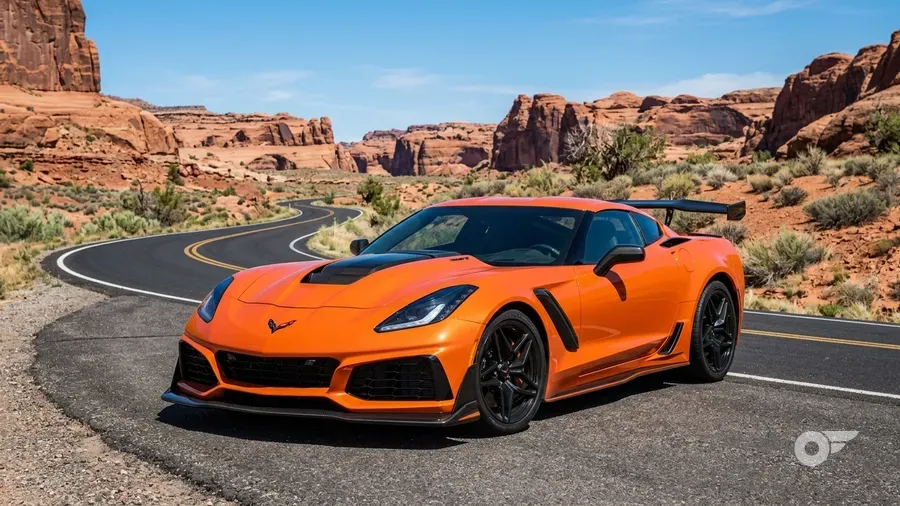
Chevrolet Corvette C7

Chevrolet Corvette C7

USA·Sports·2014–2019
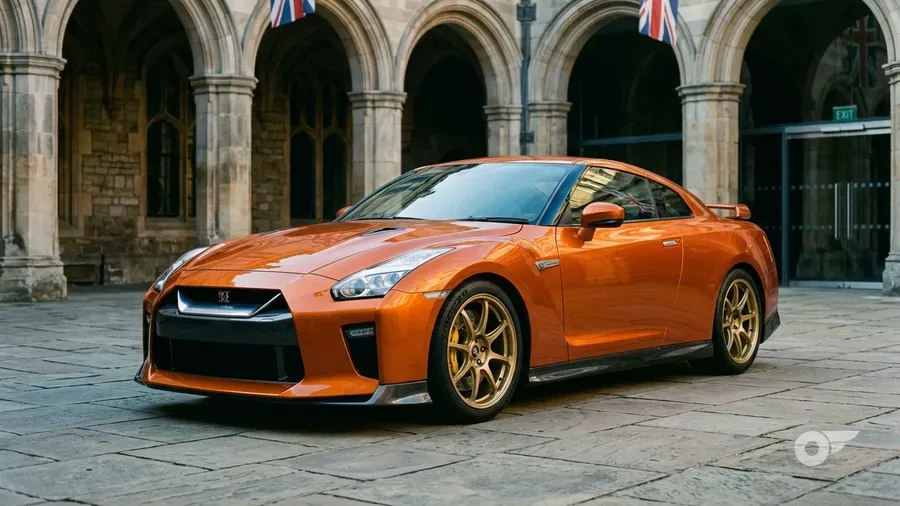
Nissan GT-R R35

Nissan GT-R R35

Japan·Sports·2007–2025
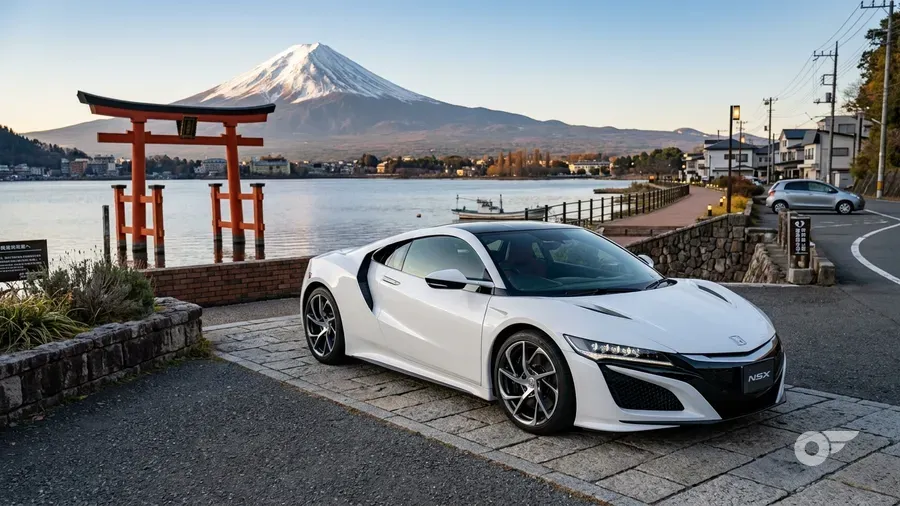
Honda NSX NC1/NC2

Honda NSX NC1/NC2

Japan·Exotic·2016–2022

Owning One

Why collectors want it

The 991 is not yet collected the way a 993 is, and the parts of it that will be are already obvious. The 991.1 Carrera and Carrera S, built to 2016, are the last naturally aspirated 911s that are not GT cars: 350 and 400 PS, revving close to 8,000, and available with a seven-speed manual. Everything since is turbocharged unless it carries a GT badge. That is a hard boundary and the market has begun to price it. Above them sit the GT cars, where the money is and always was. The 911 R of 2016, 991 cars with the GT3 RS engine, a six-speed manual and no rear wing, became the most notorious speculative object in modern Porsche history within weeks of launch. The 991.2 GT3 with the manual restored, the 4,880-car GT3 RS and the 700 PS GT2 RS all trade well above their list prices, and the 1,948-car Speedster closed the generation on the same note. For a driver rather than an investor, the 991 is the sweet spot of pace and usability in the whole 911 line, and the ordinary cars remain sensibly priced.

Which one to look for

The 2016 model year is the fault line. Before it, the Carrera has a 3.4 at 350 PS and the Carrera S a 3.8 at 400, both naturally aspirated. After it, both use a 3.0 twin-turbo at 370 and 420 PS, with the GTS at 450. Every ordinary 991 comes as Carrera, S, four-wheel-drive 4 and 4S, Targa or Cabriolet, and the Targa deserves singling out: Porsche revived the wraparound hoop and curved rear screen of the 1967 car and made the whole roof stow itself. Two transmissions matter, the world's first seven-speed manual and the PDK that most buyers actually took. The GT cars are what the generation will be remembered for. The 991.1 GT3 arrived at 475 PS as a PDK-only car and drew complaints; the 991.2 GT3 answered with 500 PS from a 4.0 litre engine and the manual put back. The GT3 RS ran 500 then 520 PS. The GT2 RS made 700 PS and took the Nordschleife production record. And the 911 R, 991 cars with the RS engine, a manual and no wing, is the one everybody wanted.

911 R · 2016

The GT3 RS engine at 500 PS in a stripped, wingless body with a six-speed manual and no PDK option. Built for the people who had been asking for exactly this.

Carrera · 2011–2019

3.4-litre naturally aspirated flat six at 350 PS to 2016, then a 3.0-litre twin-turbo at 370 PS. Seven-speed manual or seven-speed PDK. Carrera 4 adds four-wheel drive.

Carrera GTS · 2014–2019

430 PS naturally aspirated, then 450 PS turbocharged. Wide body, centre-lock wheels, sports exhaust and lowered suspension as standard.

Carrera S · 2011–2019

3.8 litres and 400 PS naturally aspirated, then a 3.0 twin-turbo at 420 PS from 2016. Carrera 4S adds four-wheel drive and the wider body.

Carrera T · 2017–2019

Lightweight rear-drive Carrera with a shorter final drive, a manual gearbox and reduced sound deadening. The enthusiast's answer to the base car.

GT2 RS · 2017–2019

700 PS from a 3.8-litre twin-turbo, rear-wheel drive, water-sprayed intercoolers and carbon panels. The most powerful 911 made to that point.

GT3 · 2013–2019

475 PS from a 3.8 with PDK only in the first phase, which drew complaints; the 2017 car answers with a 4.0-litre at 500 PS and the six-speed manual restored.

GT3 RS · 2015–2019

4.0 litres, 500 PS and then 520 PS, wide body, huge fixed wing and a chassis aimed squarely at the Nordschleife.

Speedster · 2019

Chopped screen, twin-bubble tonneau, GT3 running gear at 510 PS and a manual gearbox. The car that closed the generation.

Targa 4 · 2014–2019

The reinvented Targa: the wraparound hoop and curved rear screen of the 1967 car, over a powered folding roof. Four-wheel drive only.

Turbo · 2013–2019

3.8-litre twin-turbo at 520 PS, then 540 PS from 2016. Turbo S at 560 PS and later 580 PS. Four-wheel drive and PDK only, with rear-axle steering as standard.

What owning one is like

Owning a 991 is closer to owning a modern car than anything else in this family, and the fault list reflects that. The 9A1 engine has no intermediate shaft and is widely regarded as the most reliable 911 engine built to that point; these cars carry high mileages without drama. What needs attention is at the front: radiators and condensers packed with leaves and corroding from the inside, which is the single most common expensive discovery on a neglected car. Coolant changeover valves and their vacuum lines cause intermittent low-coolant warnings. PDK gearboxes weep at the output seal, and their clutch packs wear on cars used hard with launch control. Sport exhaust solenoids stick. Some interior door cards warp with no obvious cause, which is an irritation rather than a mechanical risk. The 991.1 GT3's 2014 engine recall is closed history: all 785 affected cars received new engines and a ten-year, 120,000-mile engine warranty with them. Everything else is tyres, brakes and the ordinary consumables of a fast car being used properly.

Upkeep & parts

A 991 is still close enough to current that servicing it is an ordinary transaction. Dealer networks cover the whole generation, the independent trade is deep, and parts supply is not in question. Intervals are long and the routine work is genuinely routine. Where the money goes is the front cooling package, so clean the radiators and condensers before they need replacing rather than after, and do the whole set in one visit with the bumper off. PDK fluid and filter changes are proper maintenance rather than an upsell, and a car with them documented is worth more than one without. Brakes are the running cost that surprises people, particularly on cars fitted with carbon-ceramic discs, where a set is a five-figure decision and the only cheap answer is fitting iron discs instead. Tyres are wide, staggered and expensive. Some body panels are aluminium, which means a good repairer rather than any repairer after a knock. Rennlist and the Porsche club networks hold the accumulated knowledge, and very little on this generation is still a mystery.

Country of origin
Germany
Class
Sports
Production years
2012–2019
Units built
233,540
Model
911
Nickname
No nickname
Body
Convertible, Coupe, Targa
Layout
Rear-engine, AWD / RWD
Engine
3.4L flat-six (Carrera, 350 PS, 2011-2016), 3.8L flat-six (Carrera S 400 PS, Carrera GTS 430 PS, 2011-2016), 3.0L twin-turbocharged flat-six (Carrera 370 PS, Carrera S 420 PS, Carrera GTS 450 PS, 2016-2019), 3.8L flat-six (GT3, 475 PS), 4.0L flat-six (GT3 500 PS, GT3 RS 500 then 520 PS, 911 R 500 PS, Speedster 510 PS), 3.8L twin-turbocharged flat-six (Turbo 520 then 540 PS, Turbo S 560 then 580 PS, GT2 RS 700 PS)
Transmission
7-speed manual, 6-speed manual (GT3, 911 R, Speedster), 7-speed PDK dual-clutch
Designer
Michael Mauer (design direction)