Octane Files
Explore CarsNissan GT-R R35

Nissan GT-R R35

Overview

The R35 is the GT-R that stopped being a Skyline. Nissan showed it at the Tokyo Motor Show in October 2007 and began Japanese deliveries that December, on a platform built for nothing else. Nissan called it Premium Midship: the 3.8-litre VR38DETT twin-turbo V6 carries its mass behind the front axle line, and the dual-clutch gearbox, transfer case and final drive are bolted together at the rear axle. No four-wheel-drive road car had used an independent transaxle before.

American sales opened on 7 July 2008 at $69,850, which is the number that did the damage, because Edmunds had already run one to 60 mph in 3.3 seconds.

Then it simply kept going. US output climbed from 480 hp to 485, then 530, 545 and finally 565. The body was stiffened for 2012, the nose and cabin redrawn for 2017, and Nismo built a 600 PS version. Eighteen years and roughly 48,000 cars later the last R35 left the Tochigi plant in August 2025, a Midnight Purple Premium edition T-spec built for a customer in Japan. One generation, no direct replacement, and a specification at the end that shares almost nothing with the one at the start.

Distinctions

The defining attributes and collector status that make this car garage-worthy.

Legend
A car that transcended the hobby, known far beyond the people who drive them.
Poster Car
The car on the bedroom wall, the one people dreamed about before they could drive.
Octane Files Select
Renowned for its history, engineering, or cultural weight.

Collectibility scorecard

Rated 1 to 10 on the traits that matter for owning, driving, and holding on to a car like this.

Desirability
8/10
Rarity
4/10
Driving thrill
8/10
Investment trajectory
7/10
Usability
8/10
Ease of restoration
5/10
Cultural impact
8/10
Electronic dependence
Fully analogHeavily electronic

Drive-by-wire throttle, ECU engine management with individually controlled ignition timing per cylinder from 2017, a dual-clutch gearbox with no manual alternative ever offered, ATTESA E-TS computing the front-to-rear torque split from wheel-speed and lateral-g data, VDC-R stability control, Bilstein DampTronic adaptive dampers, and three console switches that reconfigure gearbox, dampers and stability control independently of each other. Launch control is a factory function with its own procedure. The car also carries an event data recorder, which Nissan read when adjudicating early warranty claims. The driver still steers, brakes and chooses gears; almost everything about how the power reaches the road is computed.

Market data

Demand tier, price trend, and typical values by condition. Our own assessment, not a quoted valuation.

Demand tier
EntrySolidHighBlue-chip

Strong, sustained collector demand. Good examples never wait long for a buyer.

Value trajectory
AppreciatingStableCooling

Values are climbing. The market wants more of these than exist.

Price by condition
Driver
$55k
Excellent
$85k
Concours
$130k

Production ended in August 2025 and the market noticed. Early CBA cars had already bottomed out and stopped falling, and low-mileage unmodified examples of any year now carry a premium over what the same car brought two years ago. This is a floor forming rather than a boom: roughly 48,000 were built, a great many have been modified, and the unmolested ones are what the money is chasing. The band below describes a standard or Premium car. Nismos, T-specs and the final American editions trade well above it.

Values as of August 2026.

Buyer's guide

What anyone seriously considering this car should know first.

Why it's worth it
Launched in America at $69,850 and ran with cars costing three times as much
Callout
Every VR38DETT engine was hand-assembled by a single takumi craftsman, whose name is plated onto it
What to watch for
Buy the history before you buy the car. The R35 records what its driver does and the dealer network can read it, so a car with a clean data log and stamped services is worth a long drive to inspect. Ask what has been flashed, and remember that a returned-to-stock ECU is not the same thing as a car that was never tuned. A season at 700 hp is not something a bellhousing forgets. Listen at idle and at walking pace. A rattle from the front of the car under acceleration and deceleration is the bellhousing bearing, the R35's best-known weak point, and it turns up on every model year, usually between 40,000 and 80,000 km. Ask when the transmission fluid was last changed and by whom. Solenoid and pressure-sensor faults, which drop the car into limp mode with slurred or wrong shifts, cluster on cars past 60,000 km and on cars whose fluid was never touched. Then choose an era. CBA cars from 2007 to 2011 are cheapest and firmest, DBA cars from 2012 are stronger and better braked, and 4BA cars from 2017 are the ones you can hold a conversation in.

The Story

Driving character

The first thing you notice is not the speed. It is the noise the driveline makes: gear whine from the rear transaxle, the dual clutch clattering at parking speeds on early cars, pumps and shafts audible in a way no European rival would have allowed out of the factory. It sounds like machinery, and that turns out to be the point. Then you use it. Edmunds ran a launch-control start to 60 mph in 3.3 seconds and through the quarter mile in 11.6 at 120.9 mph, which at the time made it the quickest car they had tested. The launch itself was a ritual: both switches to R, stability control off, left foot hard on the brake, right foot down, the ECU holding 4,500 rpm until you lifted. The familiar complaint is that the computer does the driving. What actually happens is narrower than that. ATTESA decides how much torque the front axle receives, and it decides faster and better than you would, but nothing helps you with the brake pedal, the steering or the 1,750 kg you are carrying into a corner. The car flatters your traction, not your judgement.

Design

Shiro Nakamura, Nissan's design director, set the brief that the car could not look like a European sports car wearing Japanese badges, and he meant it literally. The aero-blade front fenders, the blacked-out A-pillars and the way the roofline runs down into the rear haunches were drawn from the giant robots of the Gundam series. Samurai armour and musical notation were also on the reference wall. Hiroshi Hasegawa was chief designer, and roughly fifty proposals reached Nakamura before one was chosen. Exactly one element was inherited outright, and Nakamura treated it as non-negotiable: four round tail lamps, the signature every GT-R has worn since 1969. None of it was shaped for the wind tunnel first, though the numbers arrived anyway, 0.27 drag at launch and 0.26 from 2010. The 2017 facelift is easy to spot once you know it: a larger V-motion grille, the vertical louvers under the splitter straightened up, a reworked bonnet, and vents alongside the four exhaust tips. Inside, that same year, the paddles finally moved from the steering column onto the wheel.

Motorsport pedigree

The R35's competition record is better than most people assume, and almost none of it involves the road car's mechanicals. The headline is 2011, when Michael Krumm and Lucas Luhr took the FIA GT1 World Championship drivers' title in the JR Motorsports GT-R with four wins. It was Nissan's first world championship of any kind, and the first world circuit-racing title won by a Japanese car. The teams' title slipped away after a first-lap incident in the Argentine finale. At home the GT-R took the Super GT GT500 championship in 2008 with Satoshi Motoyama and Benoît Tréluyer, in 2011 and 2012 with Masataka Yanagida and Ronnie Quintarelli, and again in 2014 and 2015 with Tsugio Matsuda and Quintarelli. Those were silhouette racers wearing the shape rather than developed road cars. The one that closed a circle was the customer GT3 car at the 2015 Bathurst 12 Hour. Katsumasa Chiyo passed two cars on the final lap to win it, sharing with Wolfgang Reip and Florian Strauss, both graduates of Nissan's GT Academy. It was the first Bathurst victory for a GT-R since the R32 in 1992.

In culture

No car is more thoroughly entangled with a video game. Nissan hired Polyphony Digital, the studio behind Gran Turismo, to design the R35's multi-function display, the screen reporting g-force, throttle position, brake pressure and steering angle, and Kazunori Yamauchi was given a GT-R for the work. The car appeared in Gran Turismo 5 Prologue in 2007, the year it was unveiled. The pipeline ran both ways. GT Academy took gamers off the console and put them in race cars, and two of its graduates were aboard the GT-R that won Bathurst in 2015. In Britain it arrived through Top Gear, when Jeremy Clarkson drove one across Japan against Richard Hammond and James May on the Shinkansen in July 2008. And it inherited a name it never earned. Godzilla was coined by Australia's Wheels magazine in July 1989 for the R32. Owners and the press attach it to the R35 as a matter of course, while purists insist it belongs to one car and one car only, and they have a point worth hearing.

Owning One

Why collectors want it

Start with what the R35 is not. Unlike the Skyline GT-Rs, nobody had to wait twenty-five years for one, because Nissan sold it new in America from July 2008, so no forbidden-fruit premium is holding the market up. What is holding it up instead is the end of production and the shrinking supply of cars nobody has flashed, boosted or tracked into the ground.

Early CBA cars found their floor and stopped falling. Hagerty puts a 2009 Premium at $49,500 in good condition and $61,800 in excellent, while clean 2009 to 2011 examples trade in the sixties and seventies. From there the hierarchy is legible: DBA cars from 2012 to 2016 average into the nineties, 2017-on Premiums average well past a hundred thousand, and the Nismo occupies a market of its own, with a 2024 car recorded at $499,975 in July 2026.

The connoisseur's pick is not the quickest one. It is an unmodified, documented car with a full transmission service history, because those are the genuinely scarce ones, and the money has already worked that out.

Which one to look for

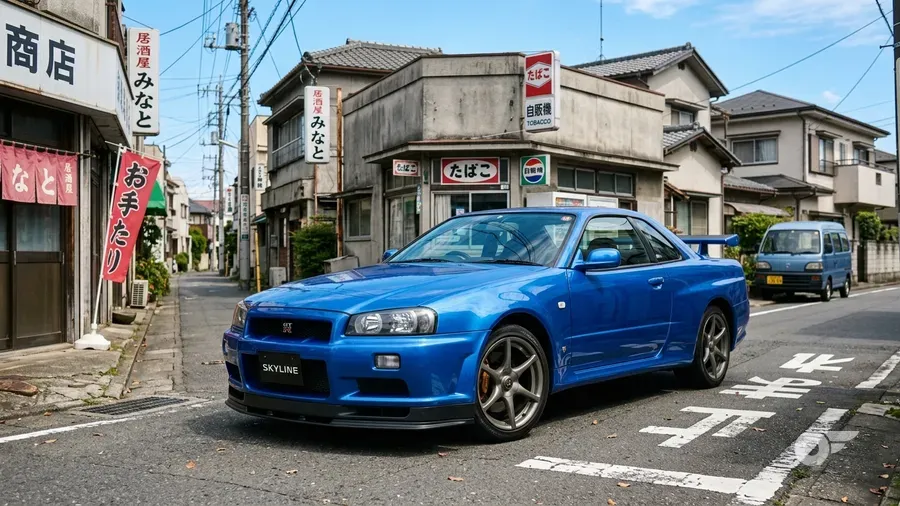
Learn the chassis codes first, because they matter more than the trim badges. CBA-R35 covers 2007 to 2011, DBA-R35 2012 to 2016 and 4BA-R35 2017 to 2025, and each step brought real change rather than a new stripe. Within that, the volume car is the Premium and it is a perfectly good answer. Black Edition adds Recaro buckets and a carbon rear spoiler. Track Edition, from 2013, deletes the rear seats and takes Nismo suspension, and from 2019 it takes the Nismo engine as well. The Nismo is the halo: 600 PS from 2014, and for 2020 the turbochargers from the GT-R Nismo GT3 race car, plus carbon front fenders, bonnet and roof worth 10.5 kg and carbon ceramic brakes. The odd ones are the interesting ones. The Japan-only SpecV of February 2009 was sold through seven selected dealers at 15,750,000 yen with carbon ceramics and no rear seats. Egoist bought a hand-finished interior. T-spec brought Midnight Purple and Millennium Jade back. America's goodbye was fewer than two hundred cars, split between the $131,090 Skyline Edition in Bayside Blue and the $151,090 T-spec Takumi Edition.

50th Anniversary · 2019

Commemorative edition marking fifty years since the first Skyline GT-R of 1969, offered in Bayside Blue with white racing stripes and matching interior trim.

Black Edition · 2012–2024

Recaro bucket seats, a carbon fibre rear spoiler and red-on-black trim, introduced with the 2012 model year revision. The enthusiast's default choice among the regular grades, and easier to find than any of the special editions.

Egoist · 2011–2012

Japan-market flagship built around a bespoke hand-finished interior, with leather chosen and fitted to individual order and a hand-assembled sound system. Mechanically the standard car of its year.

Nismo · 2014–2025

The halo car: 600 PS from larger turbochargers, carbon fibre bodywork and a wing that generates real downforce. Michael Krumm lapped the Nürburgring in 7:08.679 in a track-optioned example in September 2013. The 2020 revision took the turbochargers from the GT-R Nismo GT3 race car, added carbon front fenders, bonnet and roof worth 10.5 kg, and fitted carbon ceramic brakes.

Premium · 2008–2024

The volume grade and the one most buyers will meet. Full leather and Bose audio over the base car, with none of the weight saving or suspension changes of the track variants. It carried every power increase in turn, from 480 hp in 2009 to 565 hp from 2017.

Skyline Edition · 2024

One of two farewell editions for the United States, built on the Premium and finished in Bayside Blue with a Sora Blue interior, reviving the colour combination retired with the R34. Priced from $131,090.

SpecV · 2009–2010

Japan-only stripped variant launched on 2 February 2009 at 15,750,000 yen, sold through just seven selected Nissan dealers. Carbon ceramic brakes, carbon-backed Recaro seats, rear seats deleted, and a high-gear boost function. No extra power, roughly 60 kg less weight at 1,680 kg.

T-spec · 2021–2025

Late-run specification reviving Midnight Purple and Millennium Jade, with bronze Rays forged wheels, carbon ceramic brakes and wider fenders. The 2025 Japanese cars added weight-balanced piston rings, connecting rods and crankshafts previously exclusive to the Nismo Special Edition.

T-spec Takumi Edition · 2024

The other American farewell edition, honouring the takumi craftsmen who hand-assembled every VR38DETT. Red-etched engine builder's plate, gold VIN plate in the engine bay, T-spec running gear. Priced from $151,090.

Track Edition · 2013–2025

Rear seats deleted, Nismo-tuned suspension, additional body bonding and lighter wheels. From 2019 it also received the 600 PS Nismo engine, making it the most focused car available without paying Nismo money.

What owning one is like

The R35 is a robust car with one long-running argument attached to it. Owners used the factory launch control, which required stability control to be switched off, gearboxes broke, and Nissan initially declined warranty cover on exactly that basis. A class action followed in 2009 and was settled with a transmission software update for 2009 owners and an agreement not to deny coverage for prior stability-control-off use, Nissan denying fault throughout. For 2010 the terms hardened further: refusing a dealer access to the car's data recorder voided the warranty. Fifteen years on, the practical list is short. The bellhousing bearing rattles, usually somewhere between 40,000 and 80,000 km, on any model year. Transmission solenoids and pressure sensors collect debris and heat, and a failed sensor drops the car into limp mode. Neither is fatal and both are solved problems with known parts. The rest is consumables at supercar rates, because that is what the car is. One owner's seven-year, 48,000-mile record ran to $7,700 in tyres alone. Nothing here is fragile. The R35 is simply used hard, by people who bought it to be used hard.

Upkeep & parts

Budget for the running costs rather than the repairs. A well-kept R35 costs something like $3,500 to $6,000 a year in fluids, wear items, brakes and tyres, and early cars ran a six-month or 6,000-mile service interval. The most-quoted real-world record, seven years and 48,000 miles, came to $17,400: $7,700 on tyres, $2,700 on transmission fluid, $2,000 on shocks, $1,800 on rotors, $1,600 on oil changes and $1,400 on pads, about $2,485 a year.

Parts are not yet the problem they will eventually be. The car was in production until August 2025, Nissan dealers still stock most of it, and a deep independent specialist network in the US, UK and Japan will do the same work for less.

The job worth pricing before you buy is the bellhousing. An uprated unit runs roughly 800 to 1,200 euros for the part and 1,500 to 3,000 fitted, which is the standard fix rather than an upgrade. GTR Life, formerly NAGTROC, and the UK forums at gtr.co.uk hold the accumulated knowledge, and the GT-R Owners Club covers everything from the Prince era to the R35.

Country of origin
Japan
Class
Sports
Production years
2007–2025
Units built
~48,000
Model
GT-R
Nickname
Godzilla
Body
Coupe
Layout
Front-mid-engine, AWD
Engine
3.8L VR38DETT twin-turbo V6 (480 hp SAE, 2009-2010), 3.8L VR38DETT (485 hp, 2011), 3.8L VR38DETT (530 hp, 2012), 3.8L VR38DETT (545 hp, 2013-2016), 3.8L VR38DETT (565 hp, 2017-2024), 3.8L VR38DETT Nismo specification (600 PS, 2014-2025)
Transmission
6-speed GR6Z30A dual-clutch rear transaxle (the only transmission offered)
Designer
Hiroshi Hasegawa (chief designer, under design director Shiro Nakamura)