Octane Files
Explore CarsPorsche 911 997

Porsche 911 997

Overview

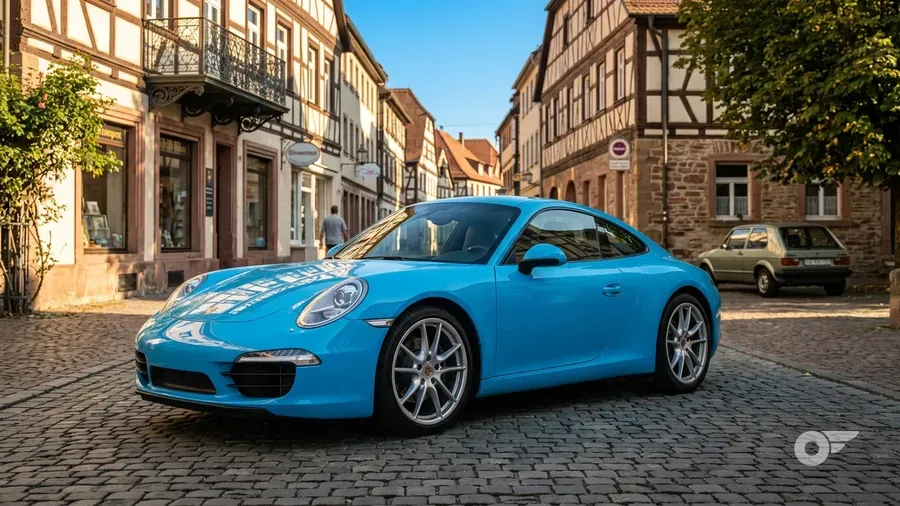
Porsche had money this time, and it spent it on the two things the 996 was criticised for. The 997 arrived in July 2004 with oval headlamps that moved the indicator down into the bumper, and with an interior built from materials that matched the price of the car. Underneath, every visible panel except the roof was new, the shell was stiffer, and adaptive damping came as standard on the Carrera S. That sounds like a facelift and it was not: 213,004 cars over eight financial years, more 911s than Porsche had ever built in that little time. The generation splits hard in 2008. The second-phase cars take direct fuel injection, a seven-speed dual-clutch PDK gearbox in place of the old five-speed automatic, and an engine family with no intermediate shaft in it at all, which quietly closed the most expensive question in modern 911 ownership. All of it happened while Porsche was trying to swallow Volkswagen, borrowing heavily to buy control of a company many times its size, and failing. The cars turned out to be a great deal better than the company's judgement.

Distinctions

The defining attributes and collector status that make this car garage-worthy.

Legend
A car that transcended the hobby, known far beyond the people who drive them.
Octane Files Select
Renowned for its history, engineering, or cultural weight.

Collectibility scorecard

Rated 1 to 10 on the traits that matter for owning, driving, and holding on to a car like this.

Desirability
8/10
Rarity
3/10
Driving thrill
8/10
Investment trajectory
7/10
Usability
9/10
Ease of restoration
6/10
Cultural impact
6/10
Electronic dependence
Fully analogHeavily electronic

Direct fuel injection from 2009, Bosch engine management throughout, a drive-by-wire throttle and Porsche Stability Management as standard. PASM adaptive damping is standard on the Carrera S and optional elsewhere, and Sport Chrono Plus lets the driver change throttle mapping, damping, engine behaviour and the stability-control threshold from the console. The 2009 cars add a seven-speed dual-clutch gearbox with launch control. What keeps the 997 off the top of the scale is the steering, which is hydraulic and is the single best reason to buy this generation, along with a manual gearbox offered on every model in the range and no electric assistance anywhere in the front end.

Market data

Demand tier, price trend, and typical values by condition. Our own assessment, not a quoted valuation.

Demand tier
EntrySolidHighBlue-chip

Strong, sustained collector demand. Good examples never wait long for a buyer.

Value trajectory
AppreciatingStableCooling

Values are climbing. The market wants more of these than exist.

Price by condition
Driver
$38k
Excellent
$58k
Concours
$85k

Tracked sale averages sit near $47,000 for a 2005-2008 Carrera S and $59,000 for a 2009-2012 car, and the gap is the engine change rather than the age. Manual coupes carry a premium over PDK and the gap is widening. The band below describes a Carrera or Carrera S coupe. Above it sit the specials: the Sport Classic and Speedster trade in six figures, the Club Coupe averages above $100,000, and the Mezger GT cars are a separate market entirely with the 600-car GT3 RS 4.0 at the top of it. Cabriolets and high-mileage Tiptronic cars sit under the band.

Values as of August 2026.

Buyer's guide

What anyone seriously considering this car should know first.

Why it's worth it
The 911 that fixed the 996's headlamps, cabin and engine, in that order
Callout
Direct injection and PDK arrive in 2008, and the intermediate shaft bearing disappears with them
What to watch for
The 997 is two cars and the split is the first thing to understand. Anything built to 2008 carries the older M96 and M97 engines and inherits the 996's questions in altered form. The intermediate shaft bearing on 2006 to 2008 engines is larger and sealed, with a failure rate reported at around one per cent during the warranty period, but it cannot be replaced without taking the engine apart, so the answer here is oil analysis and a filter inspection rather than the preventive swap a 996 owner would book. Bore scoring is the more common finding, especially on the 3.8, and it presents exactly as it does on a 996: a tick when cold, oil consumption, soot in the left tailpipe. Borescope it or walk away. From 2009 the 9A1 engine has no intermediate shaft at all and a much better record, which is most of why those cars cost more. Then the shared items. Coolant pipes along the front crossmember corrode. Front radiators pack with leaves and rot, taking the air-conditioning condensers with them. On a 997.1 Turbo the engine is untroubled but turbocharger housings corrode, and a pair is a five-figure bill.

The Story

Driving character

Two engines, two characters, and both are worth having. The pre-2008 3.6 and 3.8 are the last of the older family: softer at the bottom, sweeter and more vocal at the top, with a hard flat-six edge past 5,000rpm that the later engine trades away for torque. The direct-injection cars from 2009 pull harder everywhere and rev just as high, and they are the ones you would drive to Scotland without thinking about it. Both use hydraulic steering, and that is the reason the 997 has the following it does: weighty at speed, alive over camber, and honest about what the front tyres are doing in a way no electric rack has yet matched. The chassis is grippier and more neutral than a 996's and still moves under you, still tightens its line when you lift, still rewards being placed early. PDK is genuinely quick and genuinely good, and it also killed the manual take-up rate, which is why three pedals now cost more. A GT3 is a harder, shriller machine entirely, and the Turbo makes the quiet argument that 480 PS through four wheels can be used every day of the week.

Design

Grant Larson's body was signed off in 2001 under Harm Lagaay, and the work was corrective rather than radical. The headlamp returns to a plain clear-glass oval with the indicator moved down into the bumper, which is what the 996 should have had and what the 993 had before it. The wings gain a defined crown over each front wheel, the rear haunches are fuller, and the tail stands squarer. Porsche's own description is the useful one: apart from the roof, every visible body panel differs from the 996's. The interior is the other half of the repair. The 996's low, plain dashboard gives way to a taller centre stack, better materials and a three-dial cluster with the tachometer in the middle, and this is the first modern 911 cabin that does not feel like the cheap answer to a question. The detail work runs deep, from full underbody panelling on the Carreras to the wider bodies on the four-wheel-drive cars and the GTS and the centre-lock wheels borrowed straight from racing. It is the least dramatic 911 restyle in decades and the most obviously right.

Motorsport pedigree

The 997 is the customer racer's decade. Manthey Racing won the Nürburgring 24 Hours outright in 2007, 2008 and 2009 with the 911 GT3 RSR, Marc Lieb, Romain Dumas, Timo Bernhard and Marcel Tiemann sharing the first two, then won again in 2011: four victories in five years on the hardest circuit anyone races on. At Le Mans the 997 RSR took the LMGT2 class in 2007 with IMSA Performance's car for Richard Lietz, Patrick Long and Raymond Narac, and again in 2010 with Felbermayr-Proton, where Lieb, Lietz and Wolf Henzler finished eleventh overall having spent 38 minutes in the pits across the whole 24 hours. On the road side, Walter Röhrl lapped the Nordschleife in 7:32 in a GT2. The generation also holds the start of Porsche's hybrid racing programme: the 911 GT3 R Hybrid, with two electric motors driving the front axle and a spinning flywheel accumulator in place of batteries, led the 2010 Nürburgring 24 before retiring and won a VLN round in May 2011. Everything Porsche later did with hybrid endurance cars begins there.

In culture

The 997 is the 911 of the years when Porsche stopped being a sports car company and became something stranger. The Cayenne was already paying the bills, the Panamera arrived in 2009, and the profits went into an attempt to take over Volkswagen: shares bought quietly from 2005, control of roughly 74 per cent announced in October 2008, then a debt Porsche could not service and a reverse takeover by the company it had targeted. Wendelin Wiedeking, the man who had saved Porsche in the 1990s, resigned in July 2009. He and his finance chief stood trial for market manipulation and were acquitted in March 2016. All of that swirled around a car that was quietly going about being the best 911 yet built, which is the strange part. Culturally the 997 reads as normal in a way no other 911 does. It sits in the background of the late 2000s rather than on a poster, and its status was earned afterwards, in forum threads about Mezger engines and in the specific, well-documented regret of people who bought a PDK and wish they had bought a manual.

Rivals

Cars from other manufacturers that competed for the same buyers when new.
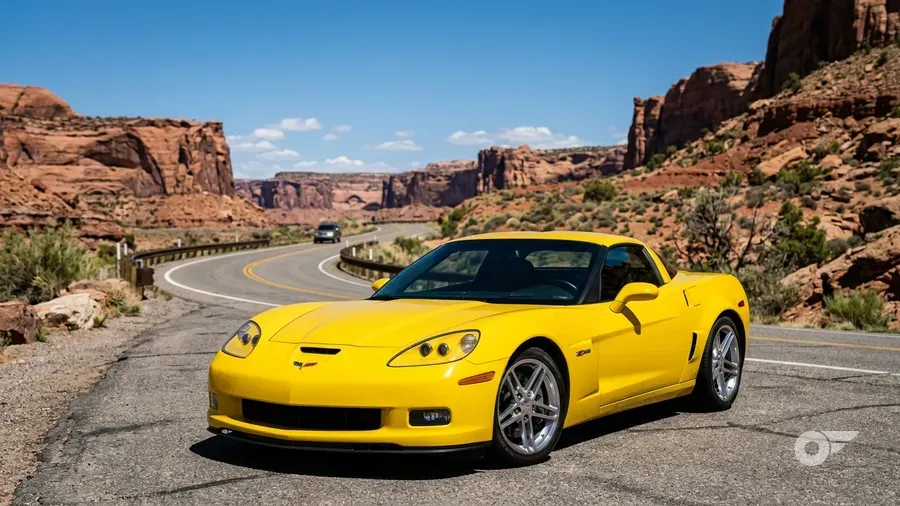
Chevrolet Corvette C6

Chevrolet Corvette C6

USA·Sports·2005–2013
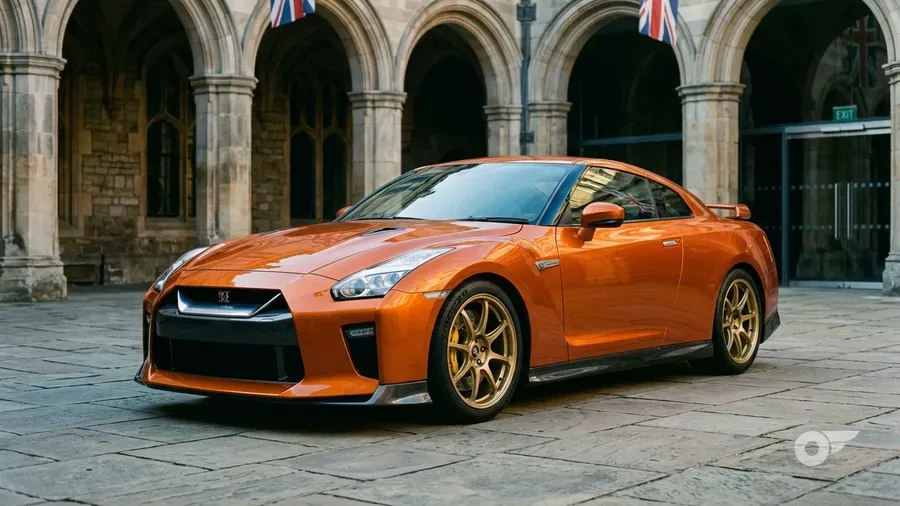
Nissan GT-R R35

Nissan GT-R R35

Japan·Sports·2007–2025
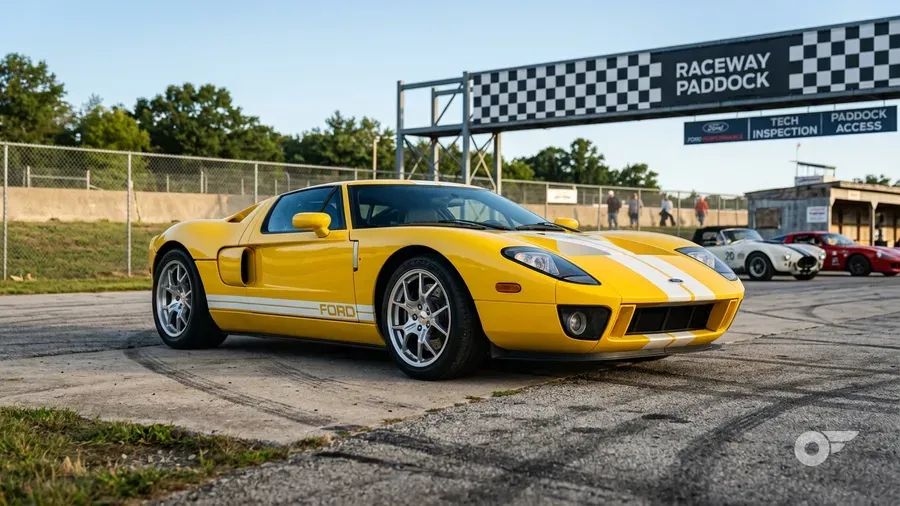
Ford GT 1st Gen

Ford GT 1st Gen

USA·Exotic·2005–2006

Lamborghini Gallardo

We haven’t profiled this car yet. Request to add

Owning One

Why collectors want it

The 997 is collected for a reason that is easy to state and hard to fake: it is the last 911 that is fully modern and still fully analogue where it counts. Hydraulic steering, a naturally aspirated Carrera engine, a manual gearbox available on every model, and a body narrow enough to place confidently on a country road. Everything after it steers electrically, and from 2016 the ordinary cars are turbocharged, so this position will not be occupied again. Inside the range the hierarchy is clear and steep. The Mezger GT cars are the blue chips: the GT3 RS 4.0, 600 built, trades in six figures well into the hundreds, the 620 PS GT2 RS was made 500 times, and every GT3 in the generation has appreciated. Beneath them sit the collectable Carreras, the 250-car Sport Classic with its ducktail and manual-only gearbox and the 356-car Speedster whose number was chosen deliberately. For everyone else the sensible object of desire is a 2009-on Carrera S with three pedals: direct injection, no intermediate shaft, and the gearbox that PDK has quietly made scarce.

Which one to look for

The 2008 line is the one that matters. Before it: a 3.6 Carrera at 325 PS, a 3.8 Carrera S at 360 PS, a six-speed manual or a five-speed Tiptronic. After it: direct injection at 345 and 385 PS, seven-speed PDK, and no intermediate shaft. Both halves offer Carrera, Carrera S, four-wheel-drive 4 and 4S, Targa and Cabriolet. Among the ordinary cars, seek out the 2011 Carrera GTS: 408 PS, the Carrera 4's 44mm wider body with rear-wheel drive, centre-lock wheels, and the last narrow-tracked moment before the 991 grew. Then the specials. The Sport Classic, 250 cars for 2009 and 2010, a ducktail spoiler, Fuchs-pattern wheels and a manual gearbox only. The Speedster, 356 cars, the number picked on purpose. And the Mezger cars above them: GT3 at 415 then 435 PS, GT3 RS at 415 then 450, the 500 PS GT3 RS 4.0 with 600 built, the Turbo at 480 then 500 PS, the 530 PS GT2 that Walter Röhrl lapped the Nordschleife in at 7:32, and the 620 PS GT2 RS, 500 built, the fastest and least forgiving 911 of its day.

Carrera · 2004–2012

The base car. 3.6 litres and 325 PS to 2008, then 345 PS with direct injection. Six-speed manual with a five-speed Tiptronic S, replaced by seven-speed PDK for 2009.

Carrera GTS · 2011–2012

408 PS, the Carrera 4's 44mm wider body over rear-wheel drive, centre-lock wheels and a standard sports exhaust. The best-resolved ordinary 997.

Carrera S · 2004–2012

3.8 litres, 360 PS to 2008 and 385 PS after, with PASM adaptive damping standard. The volume enthusiast choice and the one the market prices highest among ordinary 997s.

GT2 · 2007–2009

Rear-drive, 530 PS from the twin-turbo Mezger, manual only, ceramic brakes. Walter Röhrl lapped the Nordschleife in one in 7:32.

GT2 RS · 2010–2012

620 PS, roughly 70kg lighter than the GT2, carbon bonnet and wings, no compromises anywhere. The most extreme 911 of its generation.

GT3 · 2006–2011

3.6-litre Mezger at 415 PS to 2009, then 3.8 litres and 435 PS. Manual gearbox only throughout, which is a large part of why these cars have appreciated as they have.

GT3 RS · 2006–2011

Wider body, lighter shell, adjustable aero and a shorter final drive. 415 PS to 2009, 450 PS after.

GT3 RS 4.0 · 2011

The last of the Mezger line: 4.0 litres, 500 PS, canards, carbon panels and a chassis set up for the Nordschleife. Now the most valuable 997 of all.

Speedster · 2010–2011

Cabriolet-only special with a chopped windscreen, a twin-bubble tonneau and GTS running gear. Named for the original 356 Speedster.

Sport Classic · 2009–2010

Retro special from Porsche Exclusive: ducktail rear spoiler, double-bubble roof, Fuchs-pattern wheels, Sport Classic Grey paint, 408 PS and a manual gearbox only.

Targa 4 · 2007–2012

Four-wheel drive only, with the sliding glass roof and opening rear hatch carried over and refined from the 996 Targa.

Turbo · 2006–2012

3.6-litre twin-turbo Mezger at 480 PS to 2009, then a 3.8 at 500 PS with direct injection and PDK. Turbo S from 2010 at 530 PS.

What owning one is like

A 997 is a usable modern car with a short and knowable list of faults. The 2005 to 2008 cars carry the older engine and its two questions, and the important nuance is that their intermediate shaft bearing cannot be serviced, so the sensible approach is oil analysis, a look at the filter and a borescope rather than the preventive replacement a 996 owner would book. Bore scoring is the real risk and announces itself the same way it does on a 996. From 2009 the engine changes entirely and the pattern shifts to smaller things: PDK output seal weeps, clutch-pack wear on cars that live on launch control, and coolant changeover valves with their vacuum lines. Common to both halves are corroding coolant pipes at the front crossmember, radiators that fill with leaves and rot from the inside, air-conditioning condensers that die alongside them, and a front lid that collects stone chips because of where it sits. Turbo owners watch the turbocharger housings. Interiors wear well for the era, the body is galvanised, and high-mileage cars are common and mostly fine.

Upkeep & parts

The 997 is at the point in its life where it is cheap to run and expensive to neglect, which is the best moment to buy one. Servicing is straightforward and the intervals are long. Parts come from Porsche Classic at one end and a very deep independent trade at the other, and the shared architecture with the Boxster and Cayman keeps ordinary components sensibly priced. Budget for the front radiators, because everybody eventually does: they clog with debris, corrode from the inside out and take the condensers with them, and doing the lot at once with the bumper off costs far less than three separate visits. A clutch or a major PDK service means the drivetrain comes out, so pair the jobs. PDK fluid changes on the later cars are real maintenance, not a dealer upsell. The GT and Turbo cars use the Mezger engine, which is dearer to rebuild and much less likely to need it. Rennlist's 997 forum, Pelican's published procedures and a specialist in every major market mean almost nothing here has to be worked out from first principles.

Country of origin
Germany
Class
Sports
Production years
2004–2012
Units built
213,004
Model
911
Nickname
No nickname ("Mezger" names the GT3 and Turbo engine, not the generation)
Body
Convertible, Coupe, Targa
Layout
Rear-engine, AWD / RWD
Engine
3.6L flat-six (325 PS, 2004-2008), 3.8L flat-six (Carrera S, 360 PS, 2004-2008), 3.6L direct-injection flat-six (345 PS, 2009-2012), 3.8L direct-injection flat-six (Carrera S 385 PS, Carrera GTS 408 PS), 3.6L Mezger flat-six (GT3 and GT3 RS, 415 PS), 3.8L Mezger flat-six (GT3 435 PS, GT3 RS 450 PS), 4.0L Mezger flat-six (GT3 RS 4.0, 500 PS), 3.6L twin-turbocharged flat-six (Turbo 480 PS, GT2 530 PS, GT2 RS 620 PS), 3.8L twin-turbocharged flat-six (Turbo 500 PS, Turbo S 530 PS)
Transmission
6-speed manual, 5-speed Tiptronic S automatic (2004-2008), 7-speed PDK dual-clutch (2009-2012)
Designer
Grant Larson (styling, under design director Harm Lagaay)