Octane Files
Explore CarsLamborghini Aventador

Lamborghini Aventador

Overview

When the Aventador appeared at Geneva in February 2011 it replaced two things at once: the Murciélago, and a V12 that had been in production for forty-eight years. The new L539 shared nothing with Giotto Bizzarrini's 1963 design beyond the cylinder count and the absence of turbochargers. Around it Lamborghini built its first full carbon-fibre monocoque, cured in just eight moulds, and hung the suspension on inboard pushrods and rockers taken straight from single-seater practice. The company planned four thousand cars. It built 11,465. The five-thousandth came in 55 months and the ten-thousandth in September 2020, at which point one model had outsold every Lamborghini V12 in history put together. Across eleven years the car went from 700 PS to 780, gained four-wheel steering with the S in 2016 and active aerodynamics with the SVJ in 2018, and finished with the Ultimae, six hundred cars sold explicitly as the last naturally aspirated V12 Lamborghini before hybridisation. It is by a wide margin the most successful car Sant'Agata has ever made, and because of one component it is also the most argued about.

Distinctions

The defining attributes and collector status that make this car garage-worthy.

Legend
A car that transcended the hobby, known far beyond the people who drive them.
Poster Car
The car on the bedroom wall, the one people dreamed about before they could drive.
Octane Files Select
Renowned for its history, engineering, or cultural weight.

Collectibility scorecard

Rated 1 to 10 on the traits that matter for owning, driving, and holding on to a car like this.

Desirability
8/10
Rarity
4/10
Driving thrill
8/10
Investment trajectory
7/10
Usability
5/10
Ease of restoration
3/10
Cultural impact
8/10
Electronic dependence
Fully analogHeavily electronic

About as far up the scale as a combustion car goes. Drive-by-wire throttle, full ECU management, stability control, digital instruments, and an ISR automated gearbox with no mechanical alternative offered at any point in eleven years. From the S onwards, the LDVA control unit coordinates the four-wheel steering, the magnetorheological pushrod dampers, the all-wheel-drive split and the steering ratio through four selectable modes, and the SVJ's ALA active aerodynamics reconfigures the bodywork from inertial sensor data twice a second. Even the engine's behaviour is a software decision: the 2018 recall was a stall caused by the engine control module choosing a downshift.

Market data

Demand tier, price trend, and typical values by condition. Our own assessment, not a quoted valuation.

Demand tier
EntrySolidHighBlue-chip

Strong, sustained collector demand. Good examples never wait long for a buyer.

Value trajectory
AppreciatingStableCooling

Values are holding steady. What you pay today is what it's worth tomorrow.

Price by condition
Driver
$195k
Excellent
$250k
Concours
$330k

The band describes the LP 700-4 coupé, the volume car, whose fall has flattened at roughly forty percent off a $375,000 list rather than turning upward. The later cars are a separate market: SVJs start around $550,000 and good ones pass $900,000, and the 600 Ultimaes trade above their list price as the last naturally aspirated V12. Thirty-seven documented base-car sales, 71 percent sell-through.

Values as of August 2026.

Buyer's guide

What anyone seriously considering this car should know first.

Why it's worth it
The last naturally aspirated V12 Lamborghini, and the best-selling one ever built
Callout
11,465 built, more than every previous Lamborghini V12 combined
What to watch for
Two things matter more than anything on the specification sheet. The first is the clutch. The ISR is a single-clutch box and the clutch is a consumable: gentle use gets 15,000 to 25,000 miles, hard use rather less, and a dealer replacement runs $12,000 to $18,000. Ask for the wear percentage from a diagnostic readout rather than the seller's opinion, and treat a car with no figure as a car with a worn clutch. The second is the recall. Coupés and Roadsters built between 22 March 2011 and 14 October 2017, about 1,700 of them in the United States, could stall on a throttle lift below 2,000 rpm because of engine-control software, taking the brake booster and steering assistance with them. The fix is a free software update, so confirm it was done. After that the news is good. The carbon monocoque does not corrode and the V12 is durable, so the outgoings are servicing rather than repairs: budget $1,500 to $3,500 a year and considerably more at the major intervals. Later cars are better cars, and the S drives differently enough to justify the money.

The Story

Driving character

Start with the engine, because it is the reason to be here and it is magnificent. The L539 pulls with no lag, no step and no apparent ceiling, and above 6,000 rpm it produces a hard layered wail no turbocharged rival can imitate. Then there is the gearbox, and this page is not going to pretend. The ISR is a single-clutch automated manual, and in Strada in traffic it is jerky, slow and occasionally indecisive: it lurches on part throttle and hesitates exactly when you want it not to. In Corsa, at speed, wound out, it changes character entirely and delivers a violent single-shove upshift that suits the car perfectly. That is the whole deal, and Lamborghini lived with it for eleven years having chosen it in 2010 for compactness, weight and torque capacity. The chassis improved out of recognition across the run. The LP 700-4 washes into understeer if you carry too much speed in and feels its 1,575 kg; the S and SVJ, with rear-wheel steering and pushrod dampers, turn far more willingly and will hold a genuinely adjustable attitude on the throttle.

Design

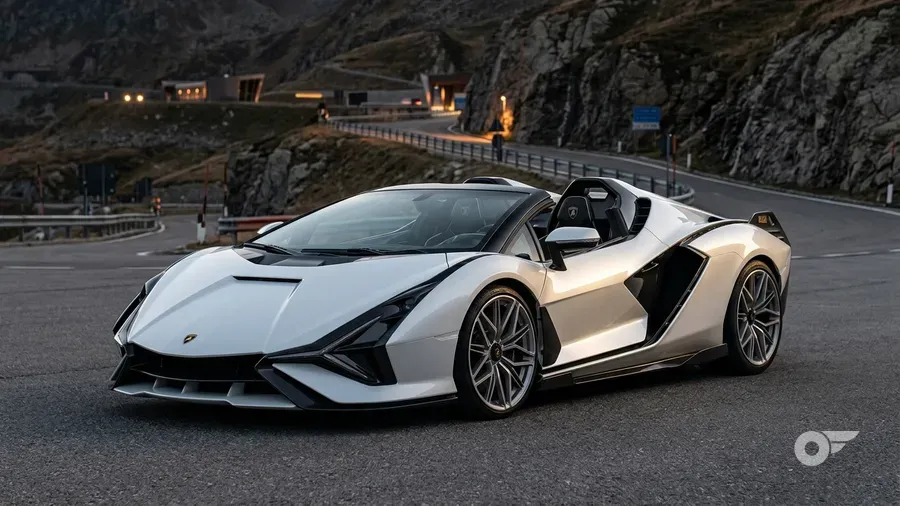
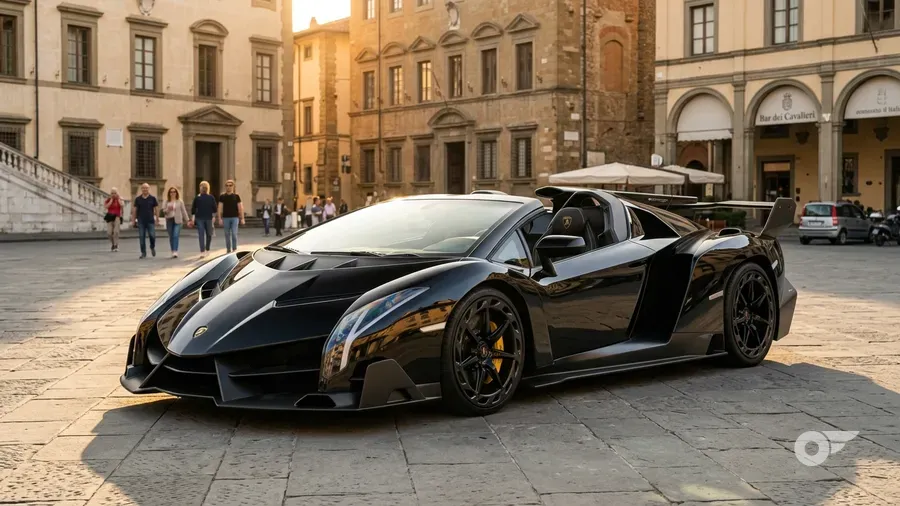
Filippo Perini is reported to have drawn the Aventador in six weeks, and it shows in the best possible way: the shape has one idea and commits to it absolutely. Everything is a facet. There is barely a curved surface on the car, and the hexagon recurs as a motif at every scale, from the tail lights to the engine cover vents to the intakes. The proportion is deliberately extreme, the cabin pushed hard forward over a 2,700 mm wheelbase, the shoulders swelling behind the doors so the whole thing reads as an arrowhead from above. Scissor doors are non-negotiable on a V12 Lamborghini and they are here. The Roadster's answer to an open roof is two carbon panels weighing under six kilos each and stowed in the front compartment, rather than any kind of folding mechanism. Mitja Borkert's 2016 Aventador S revision is the change worth knowing: a larger splitter, new front ducts, a black finned diffuser and three single exhaust exits in place of the original's stacked pair, worth 130 percent more front downforce.

Motorsport pedigree

The Aventador never raced, and the reason is structural rather than accidental. Lamborghini's competition arm, Squadra Corse, built its entire programme around the V10: the Gallardo and then Huracán Super Trofeo one-make series, and the Huracán GT3, which took class wins at Daytona and Sebring in 2018 and 2019. There was no GT category the Aventador could have been homologated into without a purpose-built car, and Lamborghini never built one. What it built instead were track specials with nowhere to go. The Essenza SCV12 of 2020 is the clearest case: 40 cars, 830 PS, a carbon monocoque homologated to FIA prototype rules without any metal in it, and a one-make series invented for it because no existing series would have it. The SC18 and SC20 are Squadra Corse one-offs built for individual customers. The closest thing to a competition result anywhere on the Aventador's record is a lap time, 6:44.97 at the Nürburgring in July 2018, set by Marco Mapelli in a camouflaged SVJ prototype and taken off the Porsche 911 GT2 RS.

In culture

The Aventador is the supercar shape of the 2010s to people who have never seen one in traffic. A decade of driving games, music videos and phone wallpapers turned the wedge and the scissor doors into shorthand, and the production volume meant the shorthand was backed by cars actually on the road, which was never true of the Countach. Christopher Nolan continued a Lamborghini habit by giving Bruce Wayne a silver LP 700-4 in The Dark Knight Rises in 2012, three films into a run that had already used two Murciélagos. It turned up in Transformers: Age of Extinction two years later. The critical reception in 2011 was unusually warm for a Lamborghini. Car and Driver headlined its road test the best Lamborghini ever, Motor Trend called it the friendliest V12 supercar in the world, and Jeremy Clarkson rated it above the Ferrari 458 Italia, which Top Gear had previously called the best supercar ever made. Richard Hammond's only real objection was that it was no longer frightening enough.

Rivals

Cars from other manufacturers that competed for the same buyers when new.
Mercedes-Benz SLS AMG

We haven’t profiled this car yet. Request to add
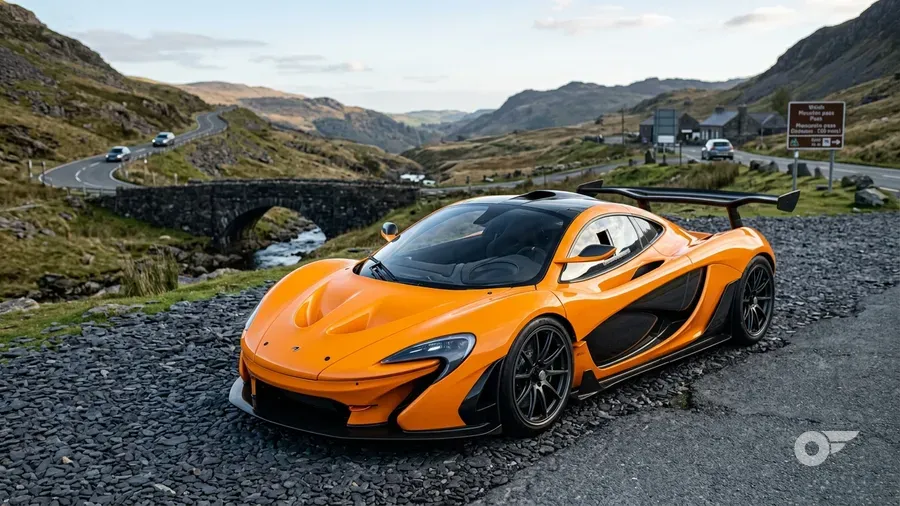
McLaren P1

McLaren P1

UK·Exotic·2013–2015
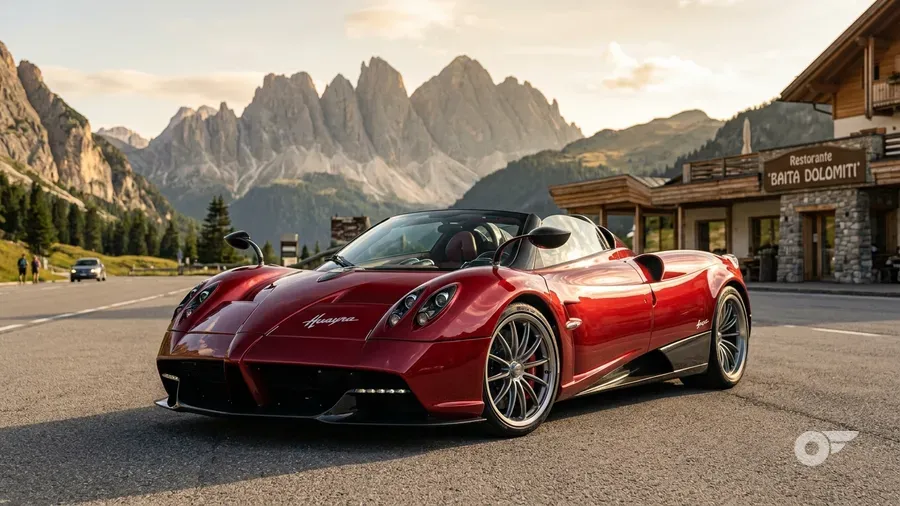
Pagani Huayra

Pagani Huayra

Italy·Exotic·2011–present
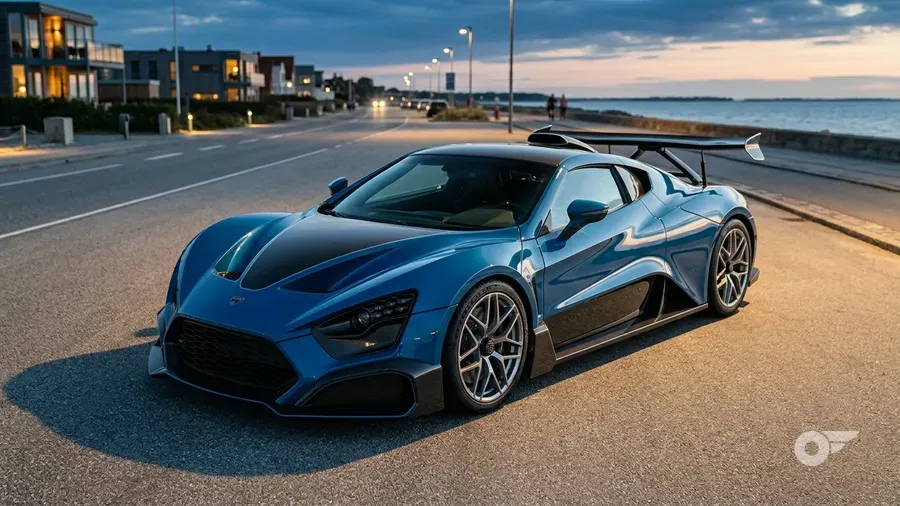
Zenvo TS1 GT

Zenvo TS1 GT

Other·Exotic·2016–2019
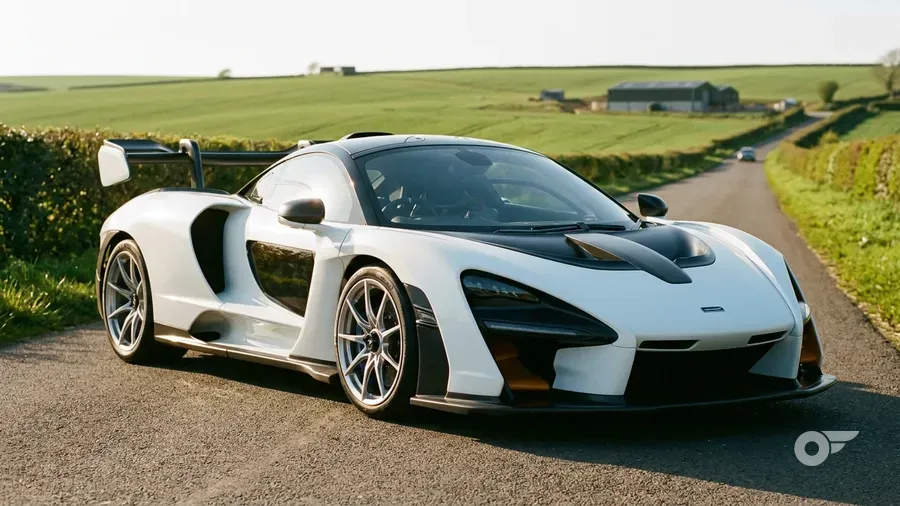
McLaren Senna

McLaren Senna

UK·Exotic·2018–2019

Owning One

Why collectors want it

The Aventador's case rests on a door closing behind it. Lamborghini's V12 is hybrid now and will stay that way, so the Ultimae ends a line that runs unbroken back to 1964. That fact is doing the work at the top of the market, where SVJs trade above their original list price and the 600 Ultimaes have been the strongest performer of the lot. Lower down the argument is different and more interesting. The LP 700-4 is the cheapest way into a naturally aspirated V12 with a carbon tub, and its depreciation has flattened at roughly forty percent off list after more than a decade, which for a modern Lamborghini is close to a floor. It is not rare. Eleven and a half thousand cars is a great many, and rarity is the one axis where this car cannot compete with anything that came before it. What it offers instead is availability: you can find the exact colour, specification and mileage you want, which is not true of a Countach and never will be. The gearbox is the price of admission, and the market has already discounted it.

Which one to look for

The line splits into three eras and the first one is the trap. The LP 700-4, from 2011, is the original and the cheapest: 700 PS, no rear-wheel steering, and the ISR gearbox at its least developed. The Aventador S of December 2016 is where the car became good. It brought 740 PS, four-wheel steering, the LDVA control unit and four driving modes, and it is a meaningfully different machine to drive rather than a trim change. The SVJ of 2018 is the one to own if the money is there: 770 PS, ALA active aerodynamics, 900 coupés and 800 roadsters, and the 6:44.97 Nürburgring lap Marco Mapelli set in a camouflaged prototype. The SV of 2015 is the pre-S hard-edged version, 600 coupés and 500 roadsters, and it is the connoisseur's pick precisely because it predates the electronics. At the end sits the Ultimae, 350 coupés and 250 roadsters at 780 PS, sold as the last of the line and priced accordingly. The 63-car SVJ 63 editions and the one-off Aventador J are footnotes with their own following.

Aventador LP 700-4 · 2011–2016

The launch car, unveiled at Geneva in February 2011 under the internal code LB834. All-new 6,498 cc L539 V12 at 700 PS, the company's first full carbon-fibre monocoque, inboard pushrod suspension and the 7-speed ISR single-clutch gearbox. 1,575 kg dry, 0-100 km/h in 2.9 seconds, 350 km/h.

Aventador LP 700-4 Roadster · 2013–2016

Announced in December 2012. Two carbon-fibre roof panels of about 6 kg each, stowable in the front compartment, with reinforced A-pillars and sills, a unique engine cover and a detachable wind deflector. 1,625 kg, 50 kg heavier than the coupé, with the coupé's performance figures.

Aventador LP 720-4 50º Anniversario · 2013

Two hundred cars for the company's fiftieth year, coupé shown at Shanghai and roadster at The Quail. 720 PS on a new engine calibration, enlarged front intakes and splitter, side flaps, a bigger rear diffuser and extra engine-bay meshwork, in an exclusive Giallo Maggio with a forged-composite anniversary badge.

Aventador LP 750-4 SuperVeloce · 2015–2017

Geneva 2015. 750 PS, 50 kg lighter, downforce up 180 percent on the standard coupé, with a fixed carbon rear wing, revised splitter and diffuser, electric steering and magnetorheological pushrod dampers. 1,525 kg dry, 0-100 km/h in 2.8 seconds. Road & Track recorded 0-200 mph in 33.5 seconds.

Aventador LP 750-4 SV Roadster · 2016–2017

The open SuperVeloce, shown at Pebble Beach in 2015 with a two-piece carbon hardtop that stows in the front boot. About 50 kg lighter than the standard Roadster.

Aventador LP 780-4 Ultimae · 2021–2022

The end of the line, announced on Lamborghini's own channels in July 2021 and combining the S's chassis with the SVJ's engine. 780 PS, the most powerful naturally aspirated V12 the company has put into a standard production car, 0-100 km/h in 2.84 seconds, 355 km/h, 1,550 kg for the coupé.

Aventador S LP 740-4 · 2016–2021

The mid-life revision, unveiled at Sant'Agata on 19 December 2016 and shown at Geneva in March 2017. 740 PS at 8,400 rpm, four-wheel steering, the LDVA control unit with Strada, Sport, Corsa and Ego modes, standard carbon-ceramic brakes, a larger splitter, new front ducts, a black finned diffuser and three exhaust exits. 130 percent more front downforce. Exterior by Mitja Borkert.

Aventador S Roadster · 2017–2021

The S in open form, shown at Frankfurt in 2017. Mechanically identical to the coupé apart from the standard Roadster engine cover, two removable carbon roof panels of under 6 kg each and reinforced structure. 50 kg heavier, 0-60 mph in 3.2 seconds.

Aventador SVJ 63 · 2018

A 63-car SVJ edition marking Lamborghini's 1963 founding, in a white livery carrying the number 63. Deliveries from the start of 2019.

Aventador SVJ 63 Roadster · 2019

Shown at Monterey in August 2019, honouring the Huracán GT3's 2018 and 2019 wins at the 24 Hours of Daytona and the 12 Hours of Sebring. Technically identical to the SVJ Roadster.

Aventador SVJ LP 770-4 · 2018–2021

Pebble Beach 2018. 770 PS at 8,500 rpm and 720 Nm, 1,525 kg dry, and the first production V12 Lamborghini with the ALA active aerodynamics system, working through LDVA 2.0 which reads inertial sensors and reconfigures the car twice a second for 40 percent more downforce than the SV.

Aventador SVJ Roadster · 2019–2021

The open SVJ, shown at Geneva in 2019 with a two-piece removable carbon hardtop and the coupé's powertrain and performance figures unchanged.

What owning one is like

Living with an Aventador is defined by the gearbox and cushioned by everything else. The ISR clutch is a wear item with a real replacement cost, $12,000 to $18,000 at a dealer, and how you drive decides whether that bill arrives at 25,000 miles or 10,000. Stop-start traffic is what kills it, which is unfortunate, because that is where a lot of these cars spend their lives. Internal transmission failures are rarer and considerably worse, running past $25,000 with weeks of downtime attached. Against that, the fundamentals are sound. The carbon monocoque does not corrode, flex or fatigue in any way an owner will ever meet. The V12 is naturally aspirated and understressed, with no turbochargers and none of the heat-soak problems that plague its rivals. Early cars, 2011 to 2013, ask for more transmission attention than later ones. The 2018 stall recall is a free software update and is close to universally done by now. Ground clearance is the daily irritation: the splitter is low, the nose lift is essential and the angles are unforgiving.

Upkeep & parts

Costs here are predictable, which is the useful thing about a car built under Audi with thousands of siblings on the road. Annual servicing runs roughly $1,500 to $3,500 at a franchised dealer, with the big intervals a different order of magnitude: the eighty-thousand-mile service is quoted at $8,000 to $15,000 and takes in a full clutch assessment, differential work and the cooling system. Transmission fluid is a twenty-thousand-mile item at $1,500 to $2,500, because of the proprietary fluid and the labour to reach it. Oil services are labour-heavy for the same reason. Treat the clutch as its own budget line rather than a surprise, and get a wear reading at every service so you can watch it coming. Parts supply is the best of any V12 Lamborghini by a distance, because 11,465 cars support a real aftermarket and a real independent specialist network. Bodywork is where the volume stops helping, since carbon panels are factory items at factory prices. The owner infrastructure is strong, with Lamborghini Talk, Lamborghini Club UK and Lamborghini Club USA all active.

Country of origin
Italy
Class
Exotic
Production years
2011–2022
Units built
11,465
Model
Aventador
Nickname
No nickname ("Jota" names the SVJ and the one-off Aventador J specifically, not the generation)
Body
Coupe, Roadster
Layout
Mid-engine, AWD
Engine
6.5 L (6,498 cc) L539 V12, 700 PS (LP 700-4), 720 PS (LP 720-4 50º Anniversario), 740 PS (S LP 740-4), 750 PS (SV LP 750-4), 770 PS (SVJ LP 770-4), 780 PS (LP 780-4 Ultimae)
Transmission
7-speed Graziano ISR automated single-clutch manual
Designer
Filippo Perini (original design), Mitja Borkert (Aventador S onward, Centro Stile Lamborghini)