Octane Files
Explore CarsLamborghini Murciélago

Lamborghini Murciélago

Overview

Audi bought Lamborghini in 1998 and inherited a company that had launched one genuinely new car in eleven years. The Murciélago was the answer, and the brief was blunt: replace the Diablo, and prove Sant'Agata could build something that worked. It arrived in 2001 on a tubular steel spaceframe stiffened by a carbon-fibre honeycomb centre section, reputedly 60 percent stiffer than the Diablo's structure, with shoulder air intakes and a rear wing that deployed themselves at speed. Underneath sat the last chapter of a very old story. The 6.2-litre V12 was a direct descendant of the quad-cam engine Giotto Bizzarrini drew for Ferruccio in 1963, stretched across four decades from 3.5 litres to 6.2 and finally 6.5. None of that made the car tame. What changed was that the switches worked, the cooling worked, and you could drive one across a country without a flatbed following. Production closed on 5 November 2010 at 4,099 cars, more than twice what the Countach managed in sixteen years. The Murciélago is the hinge in Lamborghini's history: the last one you could buy with a gated manual, and the first one built to a standard.

Distinctions

The defining attributes and collector status that make this car garage-worthy.

Poster Car
The car on the bedroom wall, the one people dreamed about before they could drive.
Octane Files Select
Renowned for its history, engineering, or cultural weight.

Collectibility scorecard

Rated 1 to 10 on the traits that matter for owning, driving, and holding on to a car like this.

Desirability
8/10
Rarity
7/10
Driving thrill
9/10
Investment trajectory
8/10
Usability
4/10
Ease of restoration
3/10
Cultural impact
7/10
Electronic dependence
Fully analogHeavily electronic

Drive-by-wire throttle, full ECU engine management, ABS and stability control, and shoulder air intakes and a rear wing that deploy themselves on electric motors. That is a long way from a Countach. What holds the score below the top is what is absent: no adaptive dampers, no drive-mode selector on the early cars, hydraulic power steering, and a genuine open-gate six-speed manual available throughout the run, which no Lamborghini V12 has offered since. The e-gear option adds an electrohydraulic layer, but the gearbox it operates is the same mechanical one.

Market data

Demand tier, price trend, and typical values by condition. Our own assessment, not a quoted valuation.

Demand tier
EntrySolidHighBlue-chip

Strong, sustained collector demand. Good examples never wait long for a buyer.

Value trajectory
AppreciatingStableCooling

Values are climbing. The market wants more of these than exist.

Price by condition
Driver
$190k
Excellent
$290k
Concours
$450k

The band covers the volume car, meaning an e-gear coupé. Manuals are a separate market: roughly 200 were built and a gated LP 640 has cleared a million dollars at auction. The SuperVeloce is separate again, with a 791-mile car taking $3,140,000 at RM Sotheby's Monterey in August 2026. Across 107 documented sales the median has roughly doubled off its 2020 low, with a 75 percent sell-through rate.

Values as of August 2026.

Buyer's guide

What anyone seriously considering this car should know first.

Why it's worth it
The first all-new Lamborghini built under Audi, and the last with a manual V12
Callout
The last Lamborghini sold with a gated manual gearbox
What to watch for
Start with the gearbox, because it sets the price and most of the running costs. The e-gear automated manual is a single clutch operating a conventional gated box, and it eats clutches. Replacement is an engine-out job: the clutch alone is around £5,000, and if the hydraulic actuator has failed with it you are closer to £15,000. Lamborghini improved the e-gear software from 2009, so a late car behaves noticeably better than an early one. A manual car avoids all of it and costs a great deal more to buy. Ask for the clutch-wear reading and the date of the last change before you ask anything else. Then check the service history against real intervals rather than years. HR Owen quote annual work from £1,145 and a major from £4,300; independents such as Supercar Clinic start at £650. Owners report oil consumption of about a litre per 1,000 miles, which is normal here rather than alarming. A faulty brake switch can freeze the gearbox and lock the car out of gear, which sounds catastrophic and is a cheap fix. Rust is not the story on this car. Paperwork is.

The Story

Driving character

The V12 is the event and everything else arranges itself around it. At idle it clatters and whirrs like a machine shop. Past 5,000 rpm it turns metallic and hard-edged and simply keeps going. There is no lag to wait out and no flat spot to drive around, just a long linear climb that makes the car feel far lighter than its 1,800 kg. The gated manual is the reason people chase these cars. It is heavy, deliberate and slow by any modern measure, and every shift is an audible mechanical event, which is exactly the point. E-gear cars trade that for a single-clutch shove that is fine at pace and clumsy in traffic. The steering is heavy at parking speed and honest once you are moving, and the all-wheel drive sends 70 percent rearward, so the car turns rather than ploughs. Then there is the width. It is over two metres across, the rear three-quarter view is theoretical and there is no reversing camera. You do not thread a Murciélago through a town so much as negotiate with it.

Design

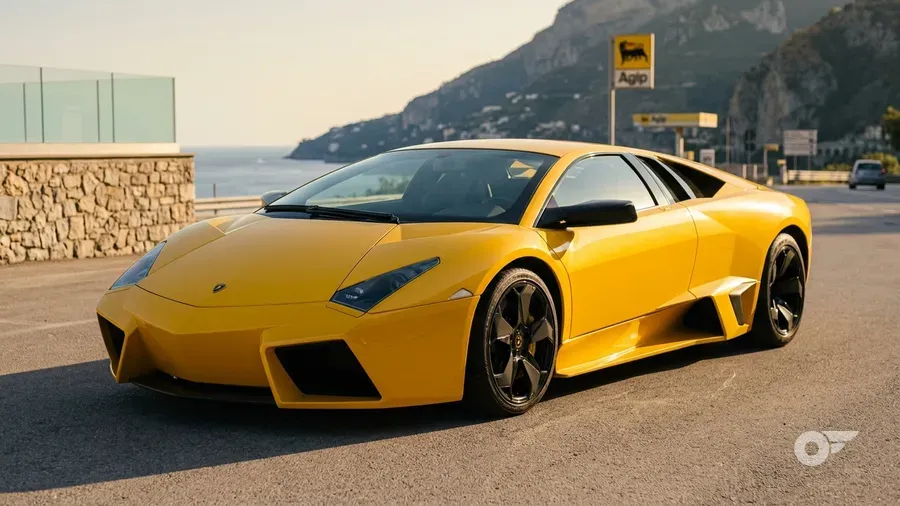
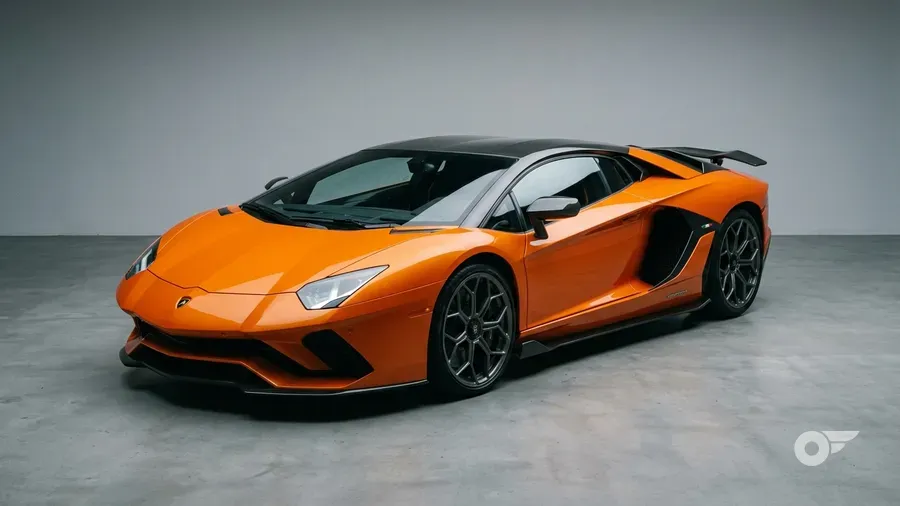
Luc Donckerwolke had a difficult job: follow the Countach and the Diablo without copying either, and do it under new German owners. What he drew is the flattest and most rigorously geometric Lamborghini of them all, a single wedge with almost no decoration, its roofline barely a metre and a bit off the ground. The theatre is functional. The shoulder intakes rise on electric motors when the engine wants air, the rear wing lifts in stages, and both sit flush the rest of the time, so the car looks calm parked and hostile at speed. Scissor doors carry over from the Countach, as they have on every V12 flagship since. For the 2004 Roadster, Donckerwolke cited the B-2 stealth bomber, the Wally 118 WallyPower yacht and Calatrava's Ciutat de les Arts i les Ciències in Valencia for the reworked buttresses and engine cover, and it is a rare case where a designer's references are visible in the result. Filippo Perini's 2006 LP 640 facelift added asymmetric side intakes, the left one feeding an oil cooler, and a single exhaust outlet through the diffuser.

Motorsport pedigree

Lamborghini still would not go racing, so somebody else did it for them. Reiter Engineering, with Audi's backing, turned the Murciélago into the R-GT: the V12 cut to six litres and restricted, all-wheel drive thrown away for rear drive, carbon bodywork, 1,100 kg. It was shown at Frankfurt in 2003 and offered to customer teams at €500,000. Rinaldo Capello and Tom Kristensen qualified the first one at Monza that autumn and did not start. Oliver Gavin and Peter Kox took third on the car's actual debut at Valencia in 2004, and then it spent two seasons breaking. The revised 2007 car finally delivered: Christophe Bouchut and Stefan Mücke won the FIA GT season opener at Zhuhai outright, the R-GT's only victory. Le Mans was crueller. JLOC finished unclassified in 2006 after failing to complete the final lap, and IPB Spartak came home in 2008 exactly one lap short of being classified. Real results did come elsewhere, including fifth in class at the 2008 Spa 24 Hours and the GT1 title in the first Asian Le Mans Series in 2009. The separate RG-1, built for JLOC, won the GT300 class at Suzuka in March 2006.

In culture

Murciélago means bat, which is the kind of coincidence a film studio does not waste. Christopher Nolan put a Murciélago Roadster under Bruce Wayne in Batman Begins in 2005 and an LP 640 in The Dark Knight three years later, where the car is deliberately wrecked to save a life. Lamborghini lent the production three LP 640s for that sequence and got two of them back. That is the Murciélago's cultural high-water mark, and it is a good one, because it fixed the car in the public mind as what a billionaire drives when he wants to look frivolous. Beyond the cinema it did the ordinary supercar work: every driving game of the decade, every bedroom wall, every schoolboy argument about pronunciation. The car also carries one unglamorous record. The EPA rated the manual LP 640 at 8 mpg in town and 13 on the highway, making it the least efficient car on sale in the United States in 2008, a fact the internet has never allowed it to live down.

Rivals

Cars from other manufacturers that competed for the same buyers when new.
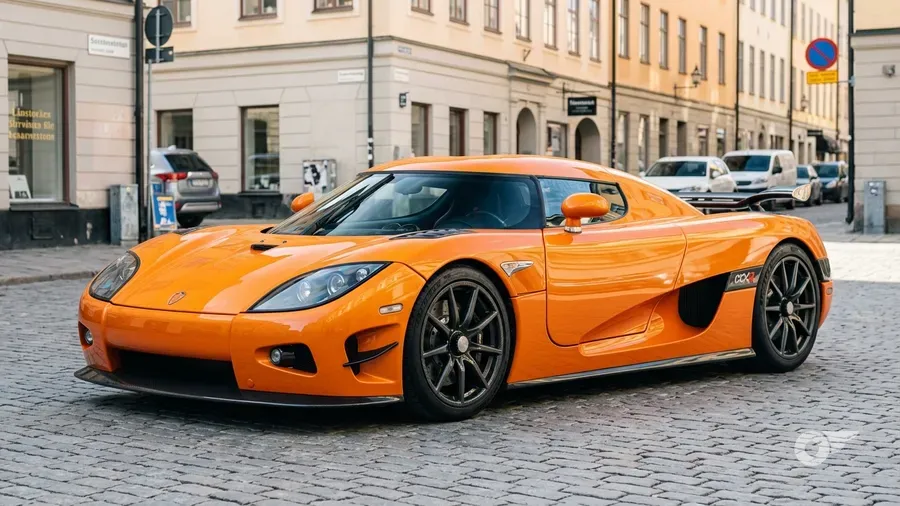
Koenigsegg CCX

Koenigsegg CCX

Sweden·Exotic·2006–2010

Mercedes-Benz SLR McLaren

We haven’t profiled this car yet. Request to add
Noble M600

Noble M600

UK·Exotic·2010–2018
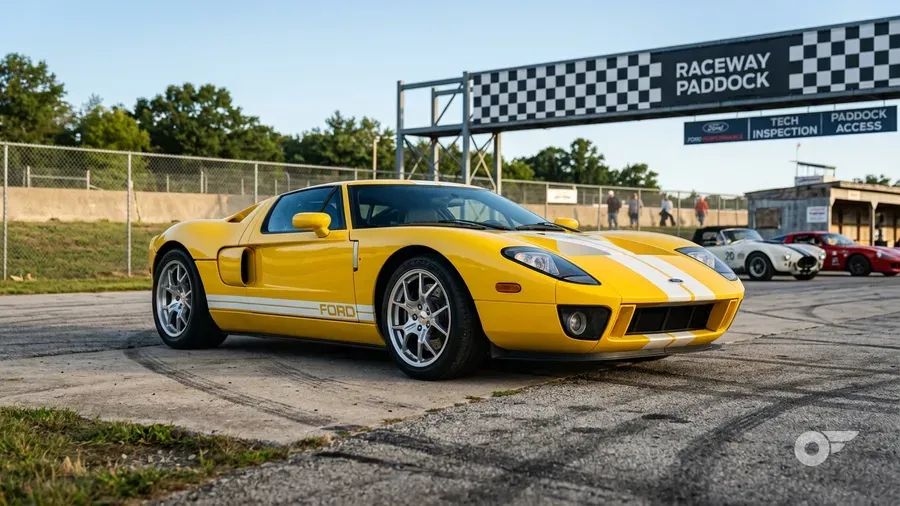
Ford GT 1st Gen

Ford GT 1st Gen

USA·Exotic·2005–2006
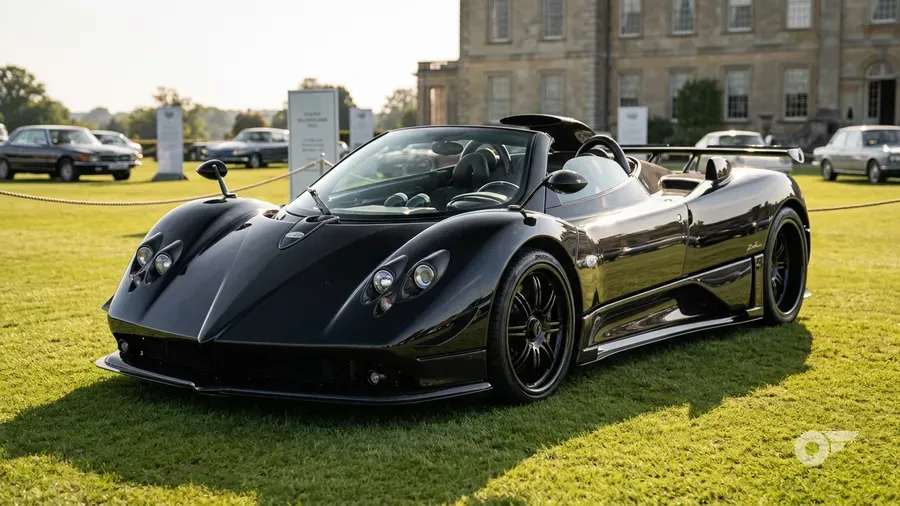
Pagani Zonda

Pagani Zonda

Italy·Exotic·1999–2019

Aston Martin Vanquish 1st Gen

We haven’t profiled this car yet. Request to add

Ferrari 575M Maranello

We haven’t profiled this car yet. Request to add

Owning One

Why collectors want it

Two arguments carry the Murciélago, and only one of them is about Audi. The first is that it works. Every V12 Lamborghini before it asked the owner to accept something, and this one largely does not, which is why people actually drive them and why the mileage on the market is real mileage. The second is the gearbox. Roughly 200 of the 4,099 cars left the factory with the open-gate six-speed, and that number is the whole market in a sentence: a gated LP 640 has cleared a million dollars at auction while a good e-gear car of the same year sits at a fraction of it. There is a hierarchy underneath. The LP 670-4 SuperVeloce is the top of it, and a 791-mile car took $3,140,000 at RM Sotheby's Monterey in August 2026. Below that sit the LP 650-4 Roadster, the LP 640 coupé, and the early 6.2 cars, which are the entry point and no longer cheap. Holding it all up is the engine, the last of the Bizzarrini line, and there will not be another one.

Which one to look for

The grail is a manual, and the money knows it. Roughly 200 of the 4,099 cars were built with the open-gate six-speed. Only 88 LP 640 coupés had it, of which 26 came to the United States, and about five LP 670-4 SuperVeloces. Chassis 4015, an SV, is widely believed to be the last manual V12 Lamborghini ever built. Above everything sits the SuperVeloce itself: 670 PS, 100 kg lighter, a run planned at 350 and cut short when the Aventador needed the assembly hall. Lamborghini never published how many were finished, and the estimates in circulation run from about 165 to over 260, so treat any single figure you are quoted with suspicion. The LP 650-4 Roadster is the connoisseur's pick at 50 cars, all in Grigio Telesto with orange detailing. The LP 640, from 2006, is the sweet spot for a car you intend to use: 6.5 litres, 640 PS, better brakes and a far better cabin. The early 6.2 cars are the cheapest way in and the purest version of the shape. Ten China Limited Edition SVs and fifty 40th Anniversary cars round out the list.

40th Anniversary Edition · 2003

Fifty cars marking the company's fortieth year, in a bespoke colour called Verde Artemis with carbon-fibre exterior detailing, revised wheels, a reworked exhaust and unique leather trim. A numbered plaque sits inside the rear window.

Murciélago · 2001–2006

The original car and the first all-new Lamborghini under Audi. 6,192 cc V12, 580 PS at 7,500 rpm, 650 Nm, 0-100 km/h in 3.8 seconds, 332 km/h. Tubular steel spaceframe with a carbon-fibre honeycomb centre section, electromechanical shoulder intakes and rear wing, AWD split 70 percent rearward. Gated six-speed manual standard, e-gear optional. Never officially called the LP 580.

Murciélago LP 640 · 2006–2010

The facelift and the volume car of the second half of the run. Displacement up to 6,496 cc and 640 PS at 8,000 rpm, revised front and rear fascias, asymmetric side intakes with the left feeding an oil cooler, a single exhaust outlet through the diffuser, a stiffer clutch and launch control for e-gear, more headroom and a much better cabin. Carbon-ceramic brakes optional.

Murciélago LP 640 Roadster · 2006–2010

The Roadster brought up to LP 640 specification, announced at the 2006 Los Angeles show. Same 6.5-litre 640 PS engine and revised bodywork as the coupé, with the fabric roof arrangement carried over.

Murciélago LP 650-4 Roadster · 2009

A fifty-car run announced at Geneva in 2009 with the V12 lifted to 650 PS and 660 Nm, 0-100 km/h in 3.4 seconds and 330 km/h. Offered in one colour only, Grigio Telesto with Arancio highlights, carried through to the interior.

Murciélago LP 670-4 SuperVeloce · 2009–2010

The last and hardest Murciélago, and the last car powered by the largest evolution of the Bizzarrini V12. 670 PS at 8,000 rpm, around 100 kg lighter than the LP 640, revised aerodynamics with an optional Aeropack wing, and steering tuned by Maurizio Reggiani's team for high-speed response. 342 km/h, or 337 with the wing.

Murciélago LP 670-4 SV China Limited Edition · 2010

A ten-car SV variant shown at the Beijing Auto Show and distinguished by a central stripe. 670 hp and 661 Nm, 0-100 km/h in 3.2 seconds and 345 km/h.

Murciélago Roadster · 2004–2006

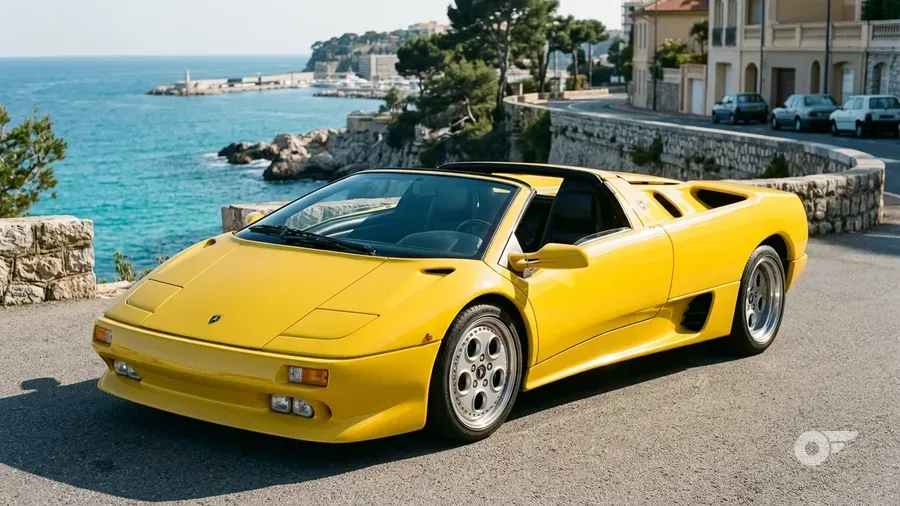
Shown as the Barchetta concept at Detroit in 2003 and sold from 2004. A manually fitted fabric roof, stowed in a bag in the front compartment, with a warning printed on the windscreen header not to exceed 100 mph with it in place. Around 30 kg heavier than the coupé because of chassis reinforcement. Donckerwolke reworked the buttresses and engine cover for it.

What owning one is like

The Murciélago is the first Lamborghini you can own without a support vehicle, and owners are generally cheerful about it. The V12 is understressed and durable, the structure does not rot, and the electrics do what Audi's sign-off demanded of them. What costs money is the clutch, and on an e-gear car it costs money often. The engine has to come out, so the labour dwarfs the part. Early e-gear software was harsh, particularly pulling away on a hill, and shift quality improved measurably with the 2009 update. The hydraulic actuator can fail internally and simply refuse to select a gear, which is the expensive version of the same problem. Everything else is short and mostly cheap: a brake switch that reports a pedal press that never happened and freezes the gearbox, occasional valve-timing faults that show up as a misfire, and oil consumption around a litre per 1,000 miles that alarms new owners and worries nobody who has run one. Tyres, brakes and fuel are exactly as expensive as the car looks.

Upkeep & parts

Budget is the whole conversation here, and the numbers are knowable rather than mysterious. In the UK, HR Owen quote annual servicing from £1,145 and a major service from £4,300; independent specialists such as Supercar Clinic start around £650 and £1,400 for the same two jobs. That gap is the single biggest lever an owner has. Treat the clutch as its own budget line rather than a surprise: it is engine-out work, the part is a few thousand and the labour is most of the bill, and an e-gear car used in traffic will want one sooner than you expect. Parts supply is genuinely good by exotic standards, because Audi ownership brought a real parts system with it and the car shares far more with the wider group than a Diablo ever did. Bodywork is the exception, as on any low-volume carbon car. The support network is deep: the International Lamborghini Registry, Lamborghini Club UK and Lamborghini Club USA, an active owner board in Lamborghini Talk, and Polo Storico at the factory for documentation.

Country of origin
Italy
Class
Exotic
Production years
2001–2010
Units built
4,099
Model
Murciélago
Nickname
Murci
Body
Coupe, Roadster
Layout
Mid-engine, AWD
Engine
6.2 L (6,192 cc) V12, 580 PS (2001-2006), 6.5 L (6,496 cc) V12, 640 PS (LP 640, 2006-2010), 6.5 L V12, 650 PS (LP 650-4 Roadster), 6.5 L V12, 670 PS (LP 670-4 SuperVeloce)
Transmission
6-speed gated manual, 6-speed e-gear automated manual
Designer
Luc Donckerwolke (original design), Filippo Perini (LP 640 facelift, Centro Stile Lamborghini)