Octane Files
Explore CarsNoble M600

Noble M600

Overview

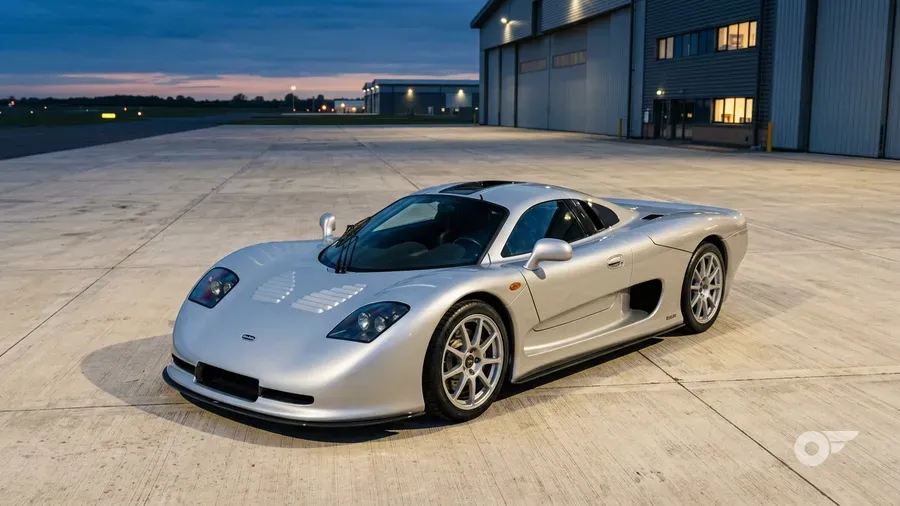
Noble built the M600 in Leicestershire between 2010 and 2018, by hand, with a team of about twenty people, and made almost no concession to the decade it was sold in. Every rival at the price had moved to paddle shifts, stability control and a central screen. The M600 has a six-speed manual, no anti-lock brakes, and a knob on the dashboard that sets turbocharger boost to Road, Track or Race, which is to say 450, 550 or 650hp from the same engine.

That engine is a 4,414cc V8 that began as the Yamaha-built Volvo B8444S, reworked with twin Garrett turbochargers running variable boost, MoTeC engine management and Injector Dynamics injectors. It sits behind the cabin in a steel backbone and aluminium chassis under bodywork offered in glassfibre or, on the CarbonSport, carbon fibre. At about 1,250kg with 650hp, that is 558hp per tonne.

Lee Noble had already left the company he founded by the time the car reached production, and Peter Dyson saw it through. The M600 is one of the last supercars designed on the assumption that the driver is the safety system.

Distinctions

The defining attributes and collector status that make this car garage-worthy.

Octane Files Select
Renowned for its history, engineering, or cultural weight.

Collectibility scorecard

Rated 1 to 10 on the traits that matter for owning, driving, and holding on to a car like this.

Desirability
8/10
Rarity
9/10
Driving thrill
9/10
Investment trajectory
6/10
Usability
4/10
Ease of restoration
4/10
Cultural impact
6/10
Electronic dependence
Fully analogHeavily electronic

The M600 is a modern fuel-injected turbocharged car with a MoTeC M190 ECU, so it is not analogue at engine level. Above that there is almost nothing. There is no anti-lock braking system, Noble having decided it would compromise pedal feel, and no stability control. The one electronic aid is traction control, switched on a toggle protected by a flip-up guard taken from a Tornado fighter jet so it cannot be knocked accidentally. Boost is selected between three fixed levels by a dashboard knob. Climate control and infotainment were left out deliberately.

Market data

Demand tier, price trend, and typical values by condition. Our own assessment, not a quoted valuation.

Demand tier
EntrySolidHighBlue-chip

Strong, sustained collector demand. Good examples never wait long for a buyer.

Value trajectory
AppreciatingStableCooling

Values are holding steady. What you pay today is what it's worth tomorrow.

Price by condition
Driver
$180k
Excellent
$215k
Concours
$270k

The band comes from three verified public results and one no-sale. Silverstone Auctions sold a 2013 Carbon Sport for GBP 148,000 in November 2019; PistonHeads recorded GBP 207,250 in September 2023, the highest result on file; and a 2011 car made GBP 143,648 through PistonHeads in July 2025. RM Sotheby's failed to sell a 2016 CarbonSport in London in October 2019 against a GBP 170,000 to 220,000 estimate. That is a thin, lumpy record rather than a trend, which is why the trajectory here is stable rather than appreciating: values have moved sideways with specification, not upward with time. The car listed at around GBP 200,000 new. Cars appear for sale perhaps once or twice a year, so patience matters more than budget.

Values as of August 2026.

Buyer's guide

What anyone seriously considering this car should know first.

Why it's worth it
A 650hp manual supercar with no ABS, sold through the decade everything else went digital
Callout
The traction control switch sits under a flip-up guard taken from a Tornado fighter jet
What to watch for
Provenance is the whole job on a car this scarce. Noble never published a build total, so establishing which specification a car left the factory in matters more than usual: glassfibre or CarbonSport body, coupe or Speedster, manual or the semi-automatic transaxle the Speedster could be ordered with. The manual is the one the market wants. Check the electronics history rather than assuming there are none. The car runs a MoTeC M190 engine management system with Injector Dynamics injectors, and boost is switched between three published levels from the cabin, so a full history from Noble or a specialist who knows the mapping is worth more than a thick folder of general invoices. Braking deserves attention because there is no ABS to hide anything. The system is steel discs with Alcon calipers, six pistons at the front and four at the rear, and Noble's stated reason for leaving the anti-lock system off was that it would spoil the pedal. That makes disc, pad and tyre condition a driving matter, not a tidiness matter. Ask about clutch history too: the Top Gear car failed one in Italy and damaged the gearbox with it.

The Story

Driving character

This is a fast car by any measure and a violently fast one on the top boost setting. Noble quoted 3.0 seconds to 60mph, 8.9 seconds to 120mph and 29.8 seconds to 200mph, with a standing quarter mile in 10.9. Top Gear's tester recorded 215mph, against a claimed 225. The Stig lapped the programme's test track in 1:17.7, at the time the fourth fastest time it had recorded and quicker than both a Bugatti Veyron and a Pagani Zonda F Roadster. What the numbers miss is the delivery. The boost knob genuinely changes the car's temperament rather than sharpening a throttle map, and at 450hp on the road setting the M600 is an easier thing to drive quickly than its reputation suggests. evo, which placed it third at its 2009 Car of the Year behind a Lotus Evora and a Porsche 911 GT3, singled out the steering, and called it one of the most driveable and exploitable supercars ever built. With no ABS, the brakes ask for a trained foot and give back a pedal almost nothing else at this level still offers.

Design

The M600 is a function-first shape and makes no attempt at drama. It is low, 1,120mm tall, 4,360mm long on a 2,540mm wheelbase, with a wide track and none of the sculptural theatre that Italian rivals were using to justify their prices. Lee Noble drew it and the priority is visible: air in, air out, cooling packages fed, downforce made without a wing that dominates the car. The interior is where the argument is made. Noble cited the Ferrari F40 as the reference and then followed through, deleting climate control and infotainment entirely. What remains is twin hide upholstery and gloss carbon fibre trim as standard, with leather, suede or Alcantara and knurled wood or carbon as choices. The rotary boost selector sits in the middle of it, a deliberate echo of Ferrari's manettino but doing something more consequential. The signature detail is the traction control switch under its fighter-jet guard, a piece of hardware that tells you more about the car's intent than any styling line does.

Motorsport pedigree

The M600 has no factory competition record, and the reason is structural rather than a matter of ambition. GT racing by 2010 ran on homologated packages that required a manufacturer to build road cars in numbers, supply customer teams and fund a season of development. Noble was about twenty people building perhaps thirty cars, and a homologation route was never realistically available. The proving happened in the press instead, which for a car of this era is an honest substitute. evo ran the M600 at its 2009 Car of the Year and placed it third, behind the Lotus Evora and the Porsche 911 GT3 and ahead of a Lamborghini Murcielago LP670-4, having recorded 205mph at Bruntingthorpe. The Stig's 1:17.7 around the Top Gear circuit put it fourth on that board at the time, above cars with entire racing departments behind them. Noble's own engineering lineage runs through kit and track cars rather than circuit programmes, and the M600 is best read as the endpoint of that tradition: a road car built to racing priorities that never needed a race entry to prove the point.

In culture

For a car built in tiny numbers by a company most people cannot name, the M600 has an unusually solid television record. It appeared twice on Top Gear in the UK. In series 14 Jeremy Clarkson drove it and reported back approvingly, and the Stig's 1:17.7 power lap put it among the fastest cars the programme had timed. In series 18 Richard Hammond took a left-hand drive car through Italy, suffered a clutch failure that damaged the gearbox, and praised the car anyway, which is the sort of endorsement money cannot buy. The American version of the programme later recorded 215mph in one. It has a second life in games. The M600 features in Forza Motorsport 7, where it was the required car for a 2018 Forzathon event, and in Forza Horizon 4 as the subject of a weekly challenge built around hand-built supercars. Beyond that its fame is enthusiast-deep rather than public-wide. The M600 is a car people who care about cars know about, and almost nobody else does.

Rivals

Cars from other manufacturers that competed for the same buyers when new.
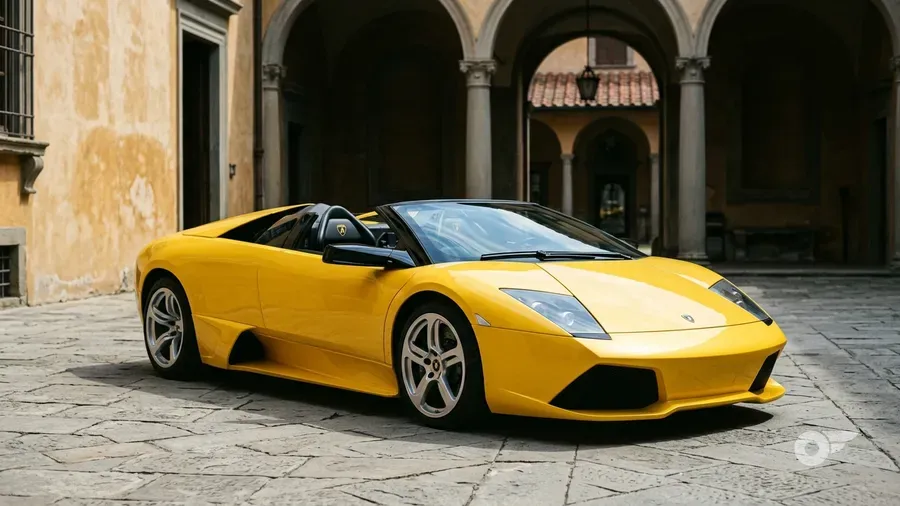
Lamborghini Murciélago

Lamborghini Murciélago

Italy·Exotic·2001–2010
Porsche 911 997

Porsche 911 997

Germany·Sports·2004–2012

Owning One

Why collectors want it

The M600 is collectible for exactly the reasons it was commercially difficult. It arrived in 2010 with no anti-lock brakes, no stability control, no launch control and a clutch pedal, into a market where the Ferrari 458 and the McLaren MP4-12C were competing on how well their electronics could flatter a driver. Fifteen years on, that stubbornness reads as foresight, and the analogue supercar has become a category collectors actively hunt.

Rarity does the rest. Noble has never published a production total and the figure most often quoted by specialists is around thirty cars against a fifty-car plan, which puts the M600 in the same bracket as cars costing several times as much.

The hierarchy inside the model is simple. The CarbonSport, with a carbon body rather than glassfibre, is the one buyers ask for first and the one that has set the highest public results. The Speedster targa is the rarest sight. A standard glassfibre coupe with the manual gearbox is the value entry, and mechanically it is the same car.

Which one to look for

Three bodies were offered and the differences are worth understanding before shopping. The standard car uses a glassfibre body over the steel backbone and aluminium chassis. It is the entry point and mechanically identical to everything above it, which makes it the sensible buy for anyone who intends to drive rather than trade. The CarbonSport substitutes a carbon fibre body. It is the version most people mean when they say M600, it carries the strongest public results, and it is what both cars offered by major auction houses have been. The Speedster is the targa, and it is also the only version that could be specified with the six-speed semi-automatic transaxle instead of the manual. Rarest of the three by a distance, though the semi-automatic is the one specification that argues against the car's own philosophy. Across all three, the engine is unchanged and the dashboard knob does the work: 450hp on Road, 550 on Track, 650 on Race. There is no separate high-output model to hunt, which is unusual at this level and quietly one of the M600's best features.

CarbonSport

The carbon fibre bodied version, and the specification most people mean when they say M600. Both cars offered by major auction houses have been CarbonSports, and the model's highest public results attach to it.

M600

The standard car, with a glassfibre body over the steel backbone and aluminium chassis. Mechanically identical to the carbon-bodied version: the same 4,414cc twin-turbo V8, the same six-speed Graziano manual and the same dashboard knob selecting 450, 550 or 650hp. The sensible buy for a driver rather than a trader.

Speedster

The targa-topped car, and the only version that could be ordered with the six-speed semi-automatic transaxle in place of the manual. Rarely seen, and the semi-automatic gearbox is the one specification that sits awkwardly against the car's deliberately unassisted character.

What owning one is like

The M600 rewards an owner who understands what was deliberately left out. There is no ABS and no stability control, so wet roads and cold tyres are managed by the driver rather than by software, and most owners treat the Road setting as the default for exactly that reason. That is the car working as designed, not a fault. The engine's origins help. The block traces to the Yamaha-built Volvo V8 used in the XC90 and S80, so the architecture is understood, but the Noble installation is heavily reworked with its own turbochargers, injectors and MoTeC management, and it is that calibration rather than the hardware that needs a specialist. Clutches are the known wear item, and the Top Gear failure in Italy is the famous example. Everything else is a small-volume car problem. Body panels, glass and trim were made in batches of a few dozen. Noble Automotive still trades and now builds the M500, so the factory that made the parts is still answering the phone, which is more than owners of most thirty-car supercars can say.

Upkeep & parts

Upkeep is more approachable than the car's rarity suggests. Servicing is mechanical rather than diagnostic: fluids, plugs, belts, brakes and the turbo plumbing, all reachable because the car was designed by people who expected to work on it. MoTeC systems are supported worldwide and any competent motorsport electronics shop can read one, though the M600 map itself is Noble's.

Consumables are mostly catalogue items. Alcon calipers and steel discs are standard motorsport parts, the Oerlikon Graziano gearbox is a known unit, and the V8's Volvo and Yamaha ancestry means some engine internals are not exotic. What is exotic is the bodywork. Glassfibre panels can be repaired by a competent composites shop; CarbonSport panels are a factory order.

The support picture is unusually good for a car this scarce. Noble Automotive still operates from Leicestershire and still builds cars, and the owner community across the M10, M12, M400 and M600 keeps a running knowledge base. Budget as you would for a mid-engined supercar of the same era and expect fewer surprises, not more.

Country of origin
UK
Class
Exotic
Production years
2010–2018
Units built
~30
Model
M600
Nickname
No nickname
Body
Coupe, Targa
Layout
Mid-engine, RWD
Engine
4,414cc twin-turbocharged Yamaha-built Volvo B8444S V8, variable boost (450hp Road, 550hp Track, 650hp Race)
Transmission
6-speed Oerlikon Graziano manual, 6-speed semi-automatic (Speedster)
Designer
Lee Noble