Octane Files
Browse CarsSpyker C8 3rd Gen

Spyker C8 3rd Gen

Overview

Spyker built the Preliator to save itself. The third-generation C8 arrived at Geneva in March 2016 with a supercharger added to the familiar Audi 4.2 V8, 525 PS against the outgoing Aileron's 400, and a promise of 50 cars from 324,900 euros before tax. The show car was real work rather than a mock-up. Coventry Metalcraft hand-formed 84 separate panels and assemblies over formers, trimmed and painted the body, and shipped it road-ready to Switzerland six weeks after starting. Underneath sat the Aileron's aluminium spaceframe, stiffened by a further ten percent, with a new Lotus-specified double-wishbone layout at both ends and AP Racing brakes behind 19-inch Turbofin wheels. Then the plan came apart. Coupe production slipped from 2016 to the fourth quarter of 2017. A deal to fit Koenigsegg's naturally aspirated 5.0 V8, announced alongside the Preliator Spyder at Geneva in 2017, was called off in 2018. Spyker was declared bankrupt in January 2021 with the car still not in series production. Preliator is Latin for warrior, chosen for the fighter aircraft Spyker built between 1914 and 1918 and, the company said at the time, for the uphill battles it had already won.

Distinctions

The defining attributes and collector status that make this car garage-worthy.

Octane Files Select
Renowned for its history, engineering, or cultural weight.

Collectibility scorecard

Rated 1 to 10 on the traits that matter for owning, driving, and holding on to a car like this.

Desirability
6/10
Rarity
10/10
Driving thrill
7/10
Investment trajectory
5/10
Usability
4/10
Ease of restoration
2/10
Cultural impact
3/10
Electronic dependence
Fully analogHeavily electronic

The heart of it is a current Audi V8 under electronic engine management, with a supercharger and its plumbing added by Spyker, so fuelling and ignition are a sealed box rather than something to adjust with a spanner. The chassis is the opposite. Lotus specified passive hardware throughout: double wishbones at both ends, steel coil springs, vertically mounted monotube dampers, anti-roll bars front and rear, no adaptive damping and no drive-mode menu. Braking is AP Racing four-piston calipers on cross-drilled discs, with carbon ceramics optional. The gearchange is a mechanical linkage Spyker deliberately left uncovered on the console, and the optional ZF automatic keeps the same exposed mechanism with paddles behind the wheel. Electronic where the engine supplier required it, mechanical everywhere the driver touches.

Market data

Demand tier, price trend, and typical values by condition, based on recent sales data.

Demand tier
EntrySolidHighBlue-chip

Strong, sustained collector demand. Good examples never wait long for a buyer.

Value trajectory
AppreciatingStableCooling

Values are holding steady. What you pay today is what it's worth tomorrow.

Price by condition
Driver
$350k
Excellent
$450k
Concours
$600k

No public sale of a Preliator has been recorded, so this band is inferred rather than observed. It starts from the verified 354,990 dollar United States list price and is bracketed by the wider C8 market, where classic.com's average sits around 386,000 dollars and the marque's highest recorded sale is the 670,000 dollars paid for a 2006 C8 Laviolette in June 2026. The tier reflects rarity and the C8's own price level. The trajectory is called stable because there is no trading history to read a direction from.

Values as of August 2026.

Buyer's guide

What anyone seriously considering this car should know first.

Why it's worth it
The supercharged C8 built to save Spyker, overtaken by the company's own collapse.
Callout
Announced as a run of 50 cars; Spyker was bankrupt before series production began.
What to watch for
Start by establishing what the car actually is. The Aileron was still listed into 2018 and the Preliator started in 2016, so the two overlap on paper and share the same aluminium spaceframe. The Preliator's tells are the supercharger, the NACA ducts in the flanks, the ailerons along the front splitter and side skirts, the honeycomb grille mesh and the 19-inch Turbofin wheels. Read the chassis number against Spyker's own sequence rather than trusting a badge. No customer car ever received the Koenigsegg 5.0 V8. That engine was announced with the Spyder at Geneva in 2017 and the deal was called off in 2018, so treat any car offered with one as a claim to be proved rather than a specification to admire. Two gearboxes were listed: the Getrag six-speed manual at 324,900 euros and the ZF six-speed automatic at 330,990, both keeping the exposed linkage. Standard brakes are AP Racing four-piston calipers on 350 mm front and 332 mm rear cross-drilled discs, with carbon ceramics optional. The body is where money hides. Eighty-four panels were hand-formed for each car and there is no panel stock anywhere, so read gaps, previous repairs and paint carefully. The drivetrain is the reassuring part.

The Story

Driving character

Published road tests of a Preliator are close to nonexistent, which tells you most of what you need to know about how many reached a road. What is documented is the hardware, and the hardware is specific. At 1,390 kg with 525 PS and 600 Nm, this is the C8 with its long-standing deficit finally closed. Evo's complaint about the Aileron was that 400 bhp did not feel quick enough for the drama of the body. The Preliator adds 125 PS in the same package and quotes 3.7 seconds to 100 km/h and 322 km/h flat out. The chassis was worked in the same direction: ten percent more torsional rigidity than the Aileron, which was itself roughly two and a half times stiffer than the original C8, plus a fresh Lotus kinematic layout on double wishbones, monotube dampers and steel coil springs. The signature is the gearchange. Spyker leaves the linkage uncovered on the console, rods and joints working in front of you, and the throws are short enough that reviewers reach for the word switch. Order the ZF automatic and the mechanism is still there, moving itself while you use the paddles.

Design

Simon Koop drew this one. He had done the Aileron before it, and the Preliator is what happens when a designer gets a second pass at his own car: the same fuselage profile, sharpened everywhere the air touches it. Almost every change is aerodynamic, and almost every one of them is named after a wing. NACA ducts, the flush inlet shape lifted from aircraft skin, sit in the flanks. Small ailerons run along the front splitter and the side skirts. The nose went to a cleaner honeycomb grille mesh, and the wheels are 19-inch Turbofins, spokes cut to read as a jet's first-stage blades. Inside, Koop changed almost nothing, which was the right call. The engine-turned aluminium, the machined toggle switches, the pedals cut from solid and the gear linkage left in the open are the reason anyone wanted a C8 in the first place, and the Preliator inherits them intact. The body is the deepest piece of craft here. Coventry Metalcraft made it from 84 separate hand-formed panels and assemblies, and delivered the first complete, painted, road-ready shell to Geneva six weeks after starting work.

Motorsport pedigree

The Preliator never raced, and the reason is a date. Spyker Squadron, the works team, ran its last Le Mans in 2010 with the Laviolette GT2-R and folded the following year when its sponsor went bankrupt. That was five years before this car existed, and the Spyker that unveiled the Preliator in 2016 barely had the money to build road cars, let alone campaign them. Nothing about the car was aimed at a rulebook either: no homologation version, no stripped variant, no class it was shaped to fit. What it does carry is the authority racing left behind. The Squadron programme had put a Spyker on the Le Mans grid in eight of the nine years from 2002 to 2010, and its best result, fifth in class in 2009 with Tom Coronel, Jeroen Bleekemolen and Jaroslav Janis, was still the freshest competition fact the company owned when the Preliator was launched. The ailerons on the splitter and the ducts in the flanks are borrowing from that record rather than adding to it. Spyker's other motorsport chapter closed even earlier. It owned a Formula 1 team for a single season, running the 2007 championship before selling to the group that became Force India.

In culture

Spyker's public profile was never built by its cars. Most people who know the name know it from Formula 1 in 2007 or from the two years the company owned Saab, not from a C8 seen in traffic, and the Preliator did nothing to change that because so few people ever saw one move. What it has instead is a screen life. Asphalt 8 added it in the 2019 spring update as a high-end Class B car, which for a while made a phone the most likely place to drive one. Louis Vuitton built a bespoke five-piece luggage set for it, the sort of partnership that says more about the intended buyer than any specification line. The rest of its cultural weight is the comeback story, which the motoring press has now run three times. In June 2026 Spyker relaunched with new backing, and the car it is taking to Quail Lodge in August carries the Preliator name and chassis number 270.

Rivals

Cars from other manufacturers that competed for the same buyers when new.
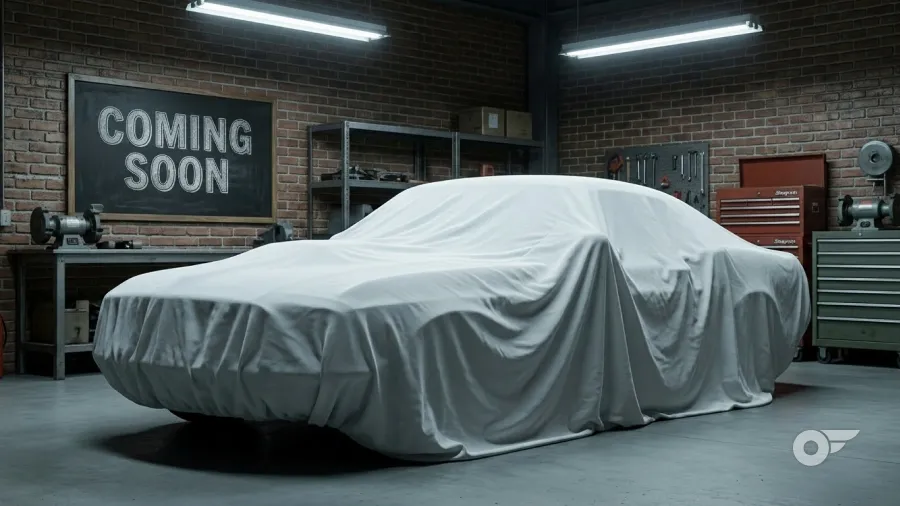
Ford GT 2nd Gen

Ford GT 2nd Gen

USA·Exotic·2017–2022

Owning One

Why collectors want it

The Preliator is collectible for the opposite of the usual reason. It is not that a few were made. It is that so little of the plan survived contact with Spyker's finances. Fifty were announced, production slipped twice, and the company was declared bankrupt in January 2021 with the model still not in series build. Against a marque whose best year ever was 94 cars, the arithmetic of what is left is severe.

What you are buying, if you find one, is the most developed version of a shape that has been in production since 2000: a stiffer chassis, Lotus suspension, 125 PS more than the Aileron, and the same exposed gear linkage that made the C8 famous in the first place. The hierarchy is short. A completed, documented coupe with the Getrag manual sits at the top. The ZF automatic is the softer choice. The Spyder is the rarer body and the harder car to authenticate, because its headline Koenigsegg engine was cancelled before a customer ever saw one. The relaunch of the marque in 2026 under new ownership has put attention back on what this car was supposed to be.

Which one to look for

Two cars carry this generation. The Preliator coupe was shown at Geneva in March 2016. The Preliator Spyder followed at Geneva in March 2017 and reached New York that April. The engine question separates them in the record but not on the road. The Spyder was launched on a naturally aspirated 5.0 V8 from Koenigsegg, quoted at 600 hp and 442 lb-ft, at 430,000 dollars in the United States before the bespoke five-piece Louis Vuitton luggage set. That deal was called off in 2018 and both bodies were left with the supercharged Audi 4.2 at 525 PS. A Preliator with a Koenigsegg engine is not a variant to look for. It is a specification that never shipped. The rest of the choosing is straightforward. Getrag manual or ZF automatic, the automatic about 6,000 euros dearer and keeping the same exposed linkage with paddles. Carbon-ceramic AP Racing brakes were optional over the standard cross-drilled steel. Turbofin 19s were the signature wheel. The one to look for is a finished, documented manual coupe. The announced run of 50 was a ceiling Spyker set, not a number it reached, so completeness and paperwork matter here more than trim.

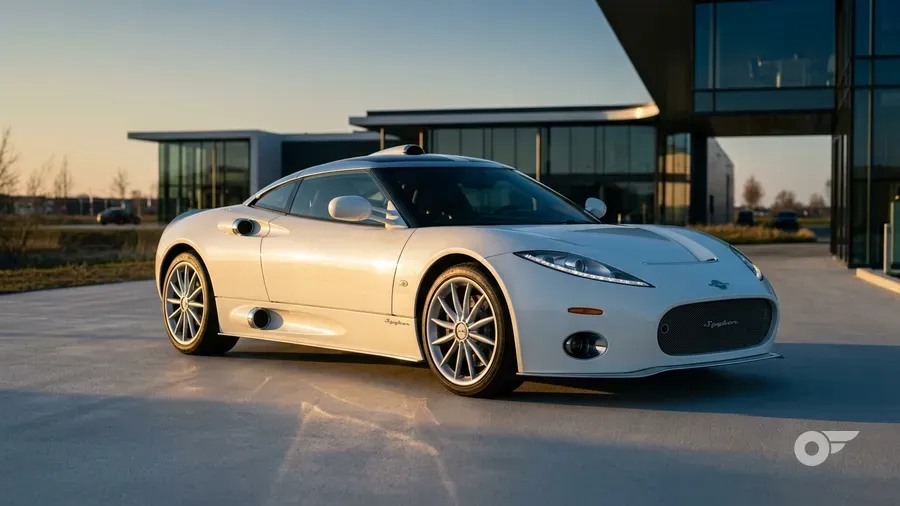
C8 Preliator

The coupe, shown at the Geneva Motor Show in March 2016. Supercharged 4.2 Audi V8 with 525 PS and 600 Nm, 1,390 kg, 3.7 seconds to 100 km/h, 322 km/h. Getrag six-speed manual at 324,900 euros before tax, ZF six-speed automatic at 330,990, both with Spyker's exposed gear linkage. United States list was 354,990 dollars manual and 362,990 automatic. AP Racing four-piston brakes on 350 mm front and 332 mm rear cross-drilled discs, carbon ceramics optional, 19-inch Turbofin wheels.

C8 Preliator Spyder

The open car, shown at Geneva in March 2017 and in New York that April. Launched on a naturally aspirated 5.0 V8 supplied by Koenigsegg, quoted at 600 hp and 442 lb-ft, priced at 430,000 dollars in the United States before the bespoke five-piece Louis Vuitton luggage set. The Koenigsegg agreement was called off in 2018, leaving the Spyder on the same supercharged Audi 4.2 as the coupe.
What owning one is like

The defining fact of owning one is that the company that made it went bankrupt in January 2021, having already been declared bankrupt once in 2014 before winning that ruling back on appeal. There is no warranty behind the car and no dealer network. Support is a short list of independents and an owner community that has kept these cars going for two decades. The good news is where you would want it. The engine is an Audi 4.2 V8 with a supercharger added, so the block, heads, ancillaries and service intervals are shared with cars Audi sold by the thousand. The Getrag manual and the ZF automatic are known units with a parts trail behind them. Everything Spyker made itself is the other story. Body panels were hand-formed 84 to a car, so a damaged wing is a fabrication job rather than an order number. Lighting, glass, switchgear and the machined interior are one-offs. The exposed gear linkage is a delight and also a mechanism living in the open, wanting cleaning and adjustment rather than neglect. None of it is mysterious. It is a car that expects its owner to be as deliberate as the people who built it.

Upkeep & parts

Split the car in two and the budgeting gets simple. The Audi-derived driveline is ordinary to keep: filters, plugs, coils, oil and coolant come from Audi's own catalogue or the aftermarket that serves it, and any competent independent who knows the 4.2 V8 can handle routine work. The supercharger and its plumbing are Spyker's own addition, so belts and intercooler hardware need a specialist's parts book rather than a Volkswagen Group one. AP Racing brakes are a catalogue item, pads and discs are available, and the optional carbon ceramics are the expensive end of that decision.

Everything carrying a Spyker part number is where the money and the waiting go. Assume fabrication for bodywork and assume months for trim. Budget for a specialist inspection before purchase rather than after.

The knowledge base is the owner community. The Official Spyker Owner Forum and its unofficial register are where chassis histories, fixes and parts sources actually live, and classic.com is the honest place to watch what the marque trades for. With Spyker relaunched in 2026 under new ownership, factory-side support may return, but nobody should buy on that assumption.

Country of origin
Other
Class
Exotic
Production years
2016–2024
Units built
Not recorded
Model
C8
Nickname
No nickname (Preliator is Spyker's own model name for this generation, not a nickname)
Body
Coupe, Roadster
Layout
Mid-engine, RWD
Engine
4.2 L supercharged Audi V8 (525 PS, 600 Nm)
Transmission
Getrag 6-speed manual, ZF 6-speed automatic
Designer
Simon Koop