Octane Files
Browse CarsSpyker C8 2nd Gen

Spyker C8 2nd Gen

Overview

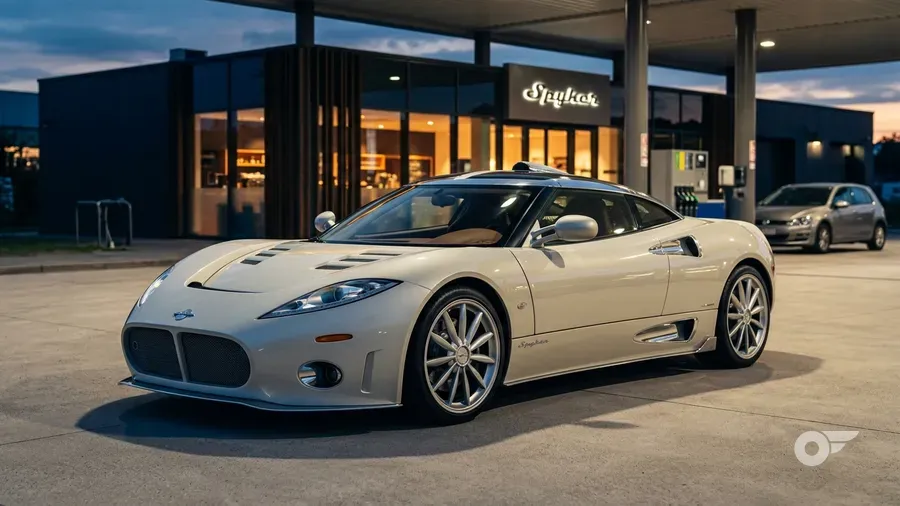
The Aileron is the C8 that had to grow up. Spyker showed it at Geneva in March 2009 as the second generation of the only car it made, and the company was blunt about the job: replace the Laviolette. Where the original C8 sat on a 2,575mm wheelbase, this one stretched to 2,725mm and went wider, its aluminium spaceframe reworked and its suspension handed to Lotus. For the first time a C8 could be ordered with an automatic, a six-speed ZF with paddles, which tells you exactly which customer Spyker had gone looking for. In the United States it listed at $214,990 with the Getrag manual and $224,990 with the ZF.

Then the company got interesting. Spyker bought Saab from General Motors in early 2010 and announced it was shifting Aileron production to Whitley in Coventry, alongside CPP, the coachbuilder that had been supplying its chassis and bodies for years. Saab filed for bankruptcy in December 2011. Spyker sued GM for $3 billion, then lost CPP to administration in early 2013 and bought its own tooling and part-built bodies back from the administrators. It went bankrupt itself that December and came out of restructuring in July 2015. Ailerons kept being finished throughout. Three LM85s in 2018 closed the book.

Distinctions

The defining attributes and collector status that make this car garage-worthy.

Octane Files Select
Renowned for its history, engineering, or cultural weight.

Collectibility scorecard

Rated 1 to 10 on the traits that matter for owning, driving, and holding on to a car like this.

Desirability
7/10
Rarity
9/10
Driving thrill
7/10
Investment trajectory
6/10
Usability
5/10
Ease of restoration
3/10
Cultural impact
5/10
Electronic dependence
Fully analogHeavily electronic

The chassis is essentially unassisted. Bosch ABS with electronic brake distribution is the entire driver-aid list: no traction control, no stability control, no adaptive dampers, no electronically controlled differential. The Bilstein mono-tube dampers and Eibach springs are set once and left alone. What pulls the score up to the middle is everything Audi and ZF brought with them. The 4.2 V8 runs modern engine management, the optional six-speed automatic is electronically controlled with wheel paddles, the exhaust carries actuated bypass valves for its quiet mode, and there is an LCD panel in the instrument binnacle plus a Kharma audio system with Bluetooth and navigation.

Market data

Demand tier, price trend, and typical values by condition, based on recent sales data.

Demand tier
EntrySolidHighBlue-chip

Strong, sustained collector demand. Good examples never wait long for a buyer.

Value trajectory
AppreciatingStableCooling

Values are holding steady. What you pay today is what it's worth tomorrow.

Price by condition
Driver
$250k
Excellent
$375k
Concours
$500k

The public record on Ailerons is one car. Artcurial sold a 22,500km two-owner example in June 2023 for 452,960 euros including premium, against a 375,000 to 450,000 euro estimate, and it was a heavily specified car. Everything else is marque-wide: C8 auction results average under $400,000, with the strongest first-generation cars making $505,000 at Bring a Trailer in 2022 and $582,500 at RM Sotheby's in 2024. The band below is deliberately wide because the sample is that small.

Values as of August 2026.

Buyer's guide

What anyone seriously considering this car should know first.

Why it's worth it
The Spyker on sale while its maker bought Saab, sued GM and went bankrupt
Callout
Sold with ABS and nothing else: no traction control, no stability control
What to watch for
Every Aileron was configured by its first owner, and on a car like this the specification is most of the value. Look for the turned aluminium dashboard, the forged Rotorblade wheels, Chronoswiss dials, carbon ceramic brakes, and diamond-quilted Hulshof leather in a colour someone chose rather than settled for. A dull car and a spectacular one cost the same to build and do not cost the same to buy. The drivetrain is the reassuring part. The naturally aspirated 4.2 Audi V8 and the Getrag and ZF gearboxes are known quantities that a good independent can service without inventing anything. The bodywork is the opposite. Panels are hand-formed aluminium, and the firm that made them, CPP in Coventry, went into administration in early 2013, with Spyker buying tooling and part-built bodies out of the administration to keep going. Accident damage is a fabrication job, so inspect panel gaps, door fit and the scissor door hinges closely. Chase the paperwork harder than usual. Ask for the chassis number, the build records, and continuous service history from someone who has worked on a Spyker before. Ownership records survived two bankruptcies unevenly.

The Story

Driving character

Four hundred PS and 480Nm in something weighing 1,425kg, with 45 percent of that over the front wheels, is quick without being frightening: 4.5 seconds to 60mph, 300km/h if you find the room. The V8 is naturally aspirated and wants revs, and the stainless exhaust carries bypass valves so you can choose between a hard-edged V8 and Spyker's Whisper Mode for leaving home early. The chassis is the surprise. Lotus did the suspension work, with forged aluminium double wishbones and coil-over dampers that are close relatives of the Evora's, and evo's testers found a car that felt rigid yet rode bumps far better than the first-generation C8 ever managed. The steering goes quiet around the straight ahead and wakes up once you turn in. The brakes are strong but take learning at low speed. Then there is the theatre. On a manual car the gear linkage is exposed in the console, so you watch the rods swing as you change gear, and there is no traction control standing by to catch you. The car is asking you to pay attention, and it is honest about it.

Design

Simon Koop drew it, and the brief was to keep what people loved about the first C8 while making the car bigger, calmer and easier to live with. The aviation language survives intact. An aileron is a control surface on a wing. The badge is a propeller crossed over a spoked wheel, inherited from the Spyker that built aircraft a century ago. The optional Rotorblade wheels are ten forged blades copied from a jet turbine, the cabin air vents are turbines too, and NACA-profile ducts appear in the bodywork. Inside is where Spyker made its argument. Machine-turned aluminium across the dash, Chronoswiss watch dials as instruments if you wanted them, diamond-quilted leather from the Dutch Royal Tannery Hulshof in fourteen standard colours, and the gear linkage deliberately left visible. Sixteen standard paint colours were offered, Dutch Orange among them, and almost nobody stopped at the standard list. The cost of growing was proportion. The longer wheelbase and wider body gave the Aileron room and manners the first car never had, and took away some of the compact, slightly feral look that made the original C8 so arresting.

Motorsport pedigree

No Aileron ever started a race, and the reason is worth knowing. Spyker Squadron, the factory team, spent 2008 to 2010 racing the first-generation C8 Laviolette GT2-R, and 2009 was the good year: car number 85, Jeroen Bleekemolen, Tom Coronel and Jaroslav Janis, 319 laps at Le Mans, 25th overall and fifth in LMGT2. That is still the best result any Spyker has recorded at Le Mans. They came back in 2010 with Bleekemolen, Coronel and Peter Dumbreck and finished 27th, ninth in class, the last classified car on the road. The plan for 2012 was an Aileron built to the new GTE regulations, and the team sat out 2011 to develop it. Then Snoras, the Lithuanian bank behind the effort, collapsed, the deal with its owner Vladimir Antonov fell apart, and Spyker Squadron folded before the car reached a grid. What survives is a name. The three run-out cars are called LM85 after Le Mans and after the number the Squadron always carried, which makes them a road car commemorating a racing programme it never got to join.

In culture

The strange thing about the Aileron is that its most famous years had almost nothing to do with the car. Through 2010 and 2011 Spyker was on the front of business sections worldwide because Victor Muller had bought Saab from General Motors, and most people who learned the name Spyker then never saw the two-seater it belonged to. The road car was the smallest part of the story it was funding. Where the Aileron reached people directly was on screens it could be driven on. It appears in Forza Motorsport 4, Test Drive Unlimited 2, Driveclub, The Crew and The Crew 2, with the Spyder in Test Drive Unlimited 2 as well. One ran the Goodwood hillclimb in 2009, the year it launched. Film work belongs to the older car, not this one. The Laviolette is the Spyker in Basic Instinct 2, War and Fast and Furious 6, and the C8 Spyder is the one Jeremy Clarkson drove on Top Gear. The Aileron arrived after the marque's brief moment of screen fashion had passed.

Rivals

Cars from other manufacturers that competed for the same buyers when new.

Lamborghini Gallardo

We haven’t profiled this car yet. Request to add

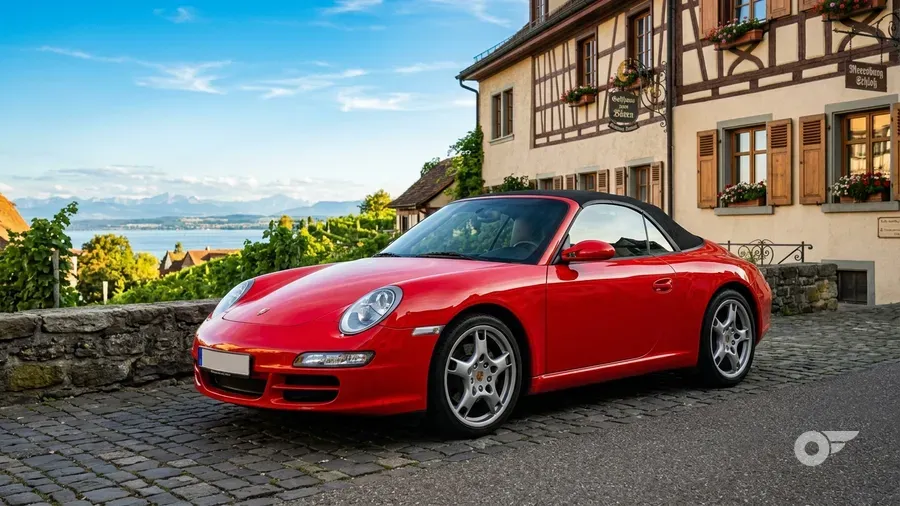
Porsche 911 997

Porsche 911 997

Germany·Sports·2004–2012

Owning One

Why collectors want it

Rarity is the easy part. Spyker never built cars in numbers anyone would call production, and the Aileron came from the years when the company was fighting for its life, so the run was thinner still.

What makes it interesting is the combination underneath. Nobody else was selling a hand-built aluminium two-seater with a machine-turned dashboard, Chronoswiss instruments and an exposed gear linkage, then bolting a production Audi V8 and a ZF automatic behind it. You get the craft without the cottage-industry drivetrain.

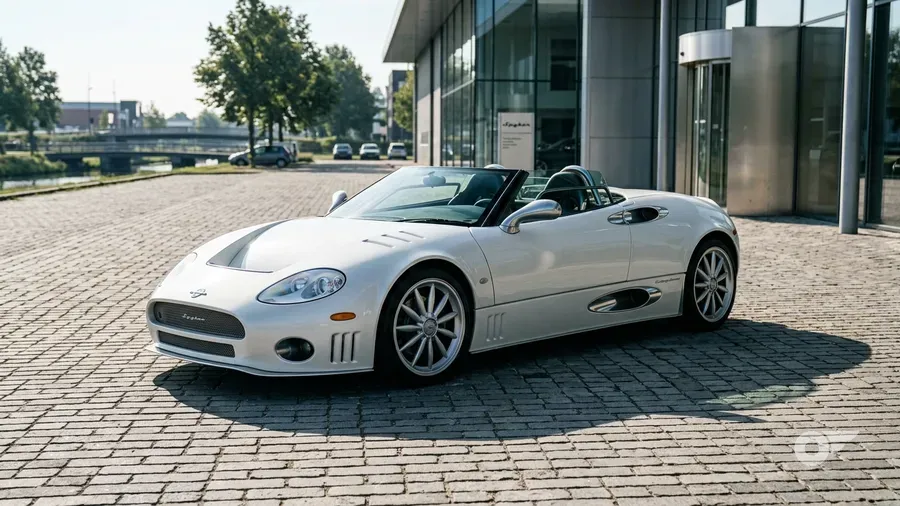
The hierarchy inside the generation is short and clear. Three Aileron LM85s were built in 2018 as the run-out cars, each in its own colour scheme and each with the supercharged 525PS engine no other Aileron got. That is the grail and it always will be. The Spyder is the scarcer body, announced at Pebble Beach in 2009 as a run of 99. The coupe is the car most buyers will actually find, and it is the one to judge on specification and condition rather than badge.

Whatever Spyker becomes next, this chapter is closed. The last three cars were finished in 2018, and everything the company has done since has been about survival and revival rather than building more of these.

Which one to look for

Three cars to know, and they rank cleanly. The Aileron LM85 sits on top. Three were built in 2018 to end the generation, styled on Spyker's racing livery with a different colour scheme on each, and they are the only Ailerons with the supercharged 4.2 V8: 525PS, 600Nm, 322km/h. The name is LM for Le Mans and 85 for the number Spyker Squadron always raced. Do not confuse it with the first-generation Laviolette LM85, of which 24 were built. The Aileron Spyder is next. Victor Muller unveiled it at Pebble Beach in August 2009 and announced it as a run of 99. Dimensions and powertrain match the coupe exactly; the roof folds under an aluminium tonneau between two buttresses trimmed in the same quilted leather as the cabin. The coupe is the volume car and the one worth buying on merit. One car is none of these: the C8 Aileron shown at Geneva in 2008. That was a single non-running show car built on a leftover long-wheelbase Double 12S chassis, later converted into a right-hand-drive road car. The production Aileron that followed in 2009 was a different and far more heavily reengineered machine.

Aileron · 2009–2016

The coupe, and the car the generation is built around. Shown at Geneva in March 2009 to replace the Laviolette, on a longer 2,725mm wheelbase with a wider body, a reworked aluminium spaceframe and Lotus-developed forged aluminium double wishbones. The 4.2 Audi V8 gives 400PS and 480Nm, and the Aileron was the first C8 offered with an automatic: a six-speed ZF with paddles, alongside the exposed-linkage Getrag manual.

Aileron LM85 · 2018

The run-out car and the connoisseur's pick. Three were built to close the generation as the Preliator arrived, each finished in its own colour scheme derived from Spyker's racing livery. The only Aileron fitted with the supercharged 4.2 Audi V8: 525PS, 600Nm, 0-100km/h in 3.7 seconds and 322km/h. LM stands for Le Mans, 85 for the race number Spyker Squadron always carried.

Aileron Spyder · 2009–2016

The convertible, unveiled by Victor Muller at Pebble Beach in August 2009 to replace the original C8 Spyder that had been in production since 2000. Dimensions and powertrain are identical to the coupe. The roof stows under an aluminium tonneau flanked by two buttresses trimmed in the same diamond-quilted Hulshof leather as the cabin.

What owning one is like

Owning one splits cleanly into the half that behaves like a car and the half that behaves like furniture built by twenty people. The mechanical half is fine. The Audi V8, the Getrag manual and the ZF automatic are ordinary German production hardware, and a competent independent who knows Audi V8s will not be frightened by any of it. Parts for that side of the car are on a shelf somewhere. The other half is where the money goes. Body panels are hand-formed aluminium with no press tooling in circulation, so a car park scrape is a fabricator's job rather than a bodyshop's. Switches, dials and trim came from small specialist suppliers in tiny quantities, and matching a Hulshof leather colour a decade later takes patience. The exposed gear linkage looks fragile, is not, and simply wants keeping clean and correctly adjusted. There is no factory behind any of it. Spyker went bankrupt in December 2014, restructured, and filed again in January 2021. Victor Muller settled with the trustee and got the brand back in October 2025, but a revived Spyker building a new car does not put a parts counter behind a 2012 Aileron. What keeps these running is a very small number of people who know them, and they are findable.

Upkeep & parts

Budget in two currencies: normal supercar money for everything Audi supplied, and specialist money for everything Spyker did.

Servicing, fluids, brake pads and tyres are unremarkable. It runs 235/35 ZR19 at the front and 265/30 ZR19 at the rear, so rubber is available off the shelf. Carbon ceramic discs, if the first owner ticked that box, are the one consumable that will make you wince.

Bodywork and trim need a plan before you need them. CPP in Coventry supplied Spyker's chassis and bodies for roughly a decade and went into administration in early 2013, with Spyker buying tooling, work in progress and body parts out of the administration. There is no production line to reorder from now. The practical answer is the specialists: SpykerEnthusiast in the Netherlands runs a workshop doing service, restoration, parts and consultancy on these cars specifically, and the Spyker Owner forum is where owners, cars and knowledge actually sit.

The audio head unit and the LCD instrument panel are period electronics and will age like period electronics. Most owners learn to live with them rather than fight them.

Country of origin
Other
Class
Exotic
Production years
2009–2018
Units built
Not recorded
Model
C8
Nickname
No nickname (Aileron is Spyker's own model name for this generation, not a nickname)
Body
Coupe, Convertible
Layout
Mid-engine, RWD
Engine
4.2L Audi V8 (400PS), 4.2L supercharged Audi V8 (525PS, Aileron LM85 only)
Transmission
6-speed Getrag manual, 6-speed ZF automatic
Designer
Simon Koop