Octane Files
Browse CarsJeep Wrangler YJ

Jeep Wrangler YJ

Overview

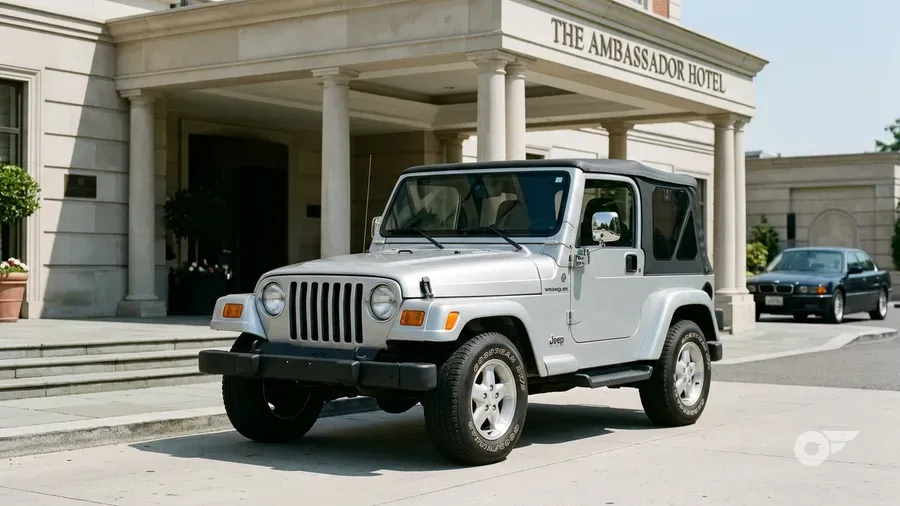
The rectangular headlights are the first thing anybody says about the YJ and they have been saying it since 13 May 1986. Jeep replaced a round-headlight vehicle people loved with a square-headlight one they did not, and no amount of engineering argument has ever unwound that. What gets said less often is that the YJ was a better vehicle than the CJ-7 in most measurable ways. The track is wider, the leaf springs are wider, and it gained trackbar links and anti-roll bars that the CJ never had, which is why it behaves on a road in a way no CJ manages. The 2.5 four arrived fuel-injected. From 1991 the 4.0 straight six replaced the carburetted 4.2 and turned the Wrangler into something genuinely quick. And the buying public agreed comprehensively: 685,071 YJs were built against 379,299 CJ-7s. It was developed by American Motors under Renault control, launched under AMC, and finished under Chrysler, which bought AMC in August 1987. It is the cheapest way into this family and it is not the compromise its reputation suggests.

Distinctions

The defining attributes and collector status that make this car garage-worthy.

Octane Files Select
Renowned for its history, engineering, or cultural weight.

Collectibility scorecard

Rated 1 to 10 on the traits that matter for owning, driving, and holding on to a car like this.

Desirability
5/10
Rarity
2/10
Driving thrill
5/10
Investment trajectory
5/10
Usability
6/10
Ease of restoration
8/10
Cultural impact
6/10
Electronic dependence
Fully analogHeavily electronic

Sits in the middle because the YJ is where engine management arrives in this family without anything else following it. The 2.5 four was fuel-injected from launch, the 4.2 six kept a carburettor until 1990, and the 4.0 six from 1991 runs Chrysler multi-port injection under a proper engine control unit with oxygen sensor feedback. Everything else stays resolutely mechanical. The throttle is a cable, the clutch is hydraulic, the gearbox and transfer case are levers, the steering is a hydraulically assisted recirculating ball box, and there is no anti-lock braking on most cars, no traction control, no stability system and no electronic differential of any kind. Later cars add an airbag. Diagnosis on pre-1996 vehicles predates the OBD-II standard, so a generic modern scan tool will not talk to one.

Market data

Demand tier, price trend, and typical values by condition, based on recent sales data.

Demand tier
EntrySolidHighBlue-chip

The accessible way in. Prices still forgive mistakes, and the upside is real.

Value trajectory
AppreciatingStableCooling

Values are climbing. The market wants more of these than exist.

Price by condition
Driver
$8k
Excellent
$20k
Concours
$34k

The cheapest way into an open leaf-sprung Jeep and the last one still trading at usable-vehicle money rather than classic money. The 4.0 cars from 1991 onward carry a clear premium and are the ones moving; four-cylinder base cars remain flat. Unmodified survivors are becoming the constraint, exactly as happened to the CJ-7 a decade earlier. Band figures are editorial estimates only, because no market data source was reachable during research.

Values as of August 2026.

Buyer's guide

What anyone seriously considering this car should know first.

Why it's worth it
The Wrangler that made the Jeep behave on a road
Callout
685,071 built, nearly twice the CJ-7's total, from the least loved Jeep design
What to watch for
Frame rust is the whole inspection, and on a YJ it hides. Check the rails above the rear leaf spring hangers, the skid plate mounts, the crossmembers and the area around the body mounts, and be suspicious of undersealing that looks fresher than the vehicle. Body tubs rot at the floors, the footwells, the rear corners and around the tailgate seal, and the windscreen frame corrodes where water sits along the bottom edge. Establish which engine you are looking at, because a 1987 to 1990 carburetted 4.2 and a 1991 to 1995 fuel-injected 4.0 are different vehicles to own and the later one is worth the extra money. Find out which gearbox is fitted: the Aisin AX-5 and AX-15 and the Peugeot BA-10/5 were all used, and knowing which one you have matters for parts and rebuild cost. The Dana 35 rear axle is fine on the road and unhappy when worked hard, so on a vehicle that has been off road, inspect it properly. Finally, assess the modifications honestly, because lifts and oversized tyres are close to universal and a badly set up one drives worse than standard.

The Story

Driving character

The wider track and the anti-roll bars do exactly what they were fitted to do. A YJ holds a lane, corners without the alarming lean a CJ-7 delivers, and covers distance in a way that made the Wrangler a viable only car for the first time. It is still leaf-sprung and still tall, so nobody is going to mistake it for a road car, but the constant small corrections a CJ demands are largely gone. The engines define the two halves of the run. The carburetted 4.2 is all torque and no urgency, pleasant at low speed and hard work above 55. The 4.0 from 1991 is the transformation: smooth, deep-chested, willing to rev further than it needs to, and quick enough to make the vehicle genuinely fun rather than merely capable. It sounds like nothing else, a hard metallic six-cylinder note with a slight industrial edge. Off road the wider track costs a little agility against a CJ-5 and gives back stability on side slopes. Roof and doors come off in minutes, which remains the whole point.

Design

This is the most criticised styling decision in Jeep's history and it comes down to two rectangles. The YJ kept the seven-slot grille, the round wheel arches, the flat bonnet, the folding windscreen and the bolt-on wings, and then set the headlights into the grille as rectangles instead of circles. Nothing else about the vehicle looks unlike a Jeep, and yet the change was enough that owners have argued about it for four decades. Chuck Mashigan's team began the design in 1982 and froze it in the autumn of 1983, and the other visual tell of their work is smaller and easier to miss: the wipers park down on the windscreen glass rather than at the base, which no Wrangler has done since. Underneath, the design work that mattered was invisible. The springs are wider than a CJ's, the track is wider, and the addition of trackbar links and anti-roll bars was a serious response to the criticism the CJ-5 had attracted. Round headlights returned with the TJ in 1996, and the market has treated that as an admission ever since.

Motorsport pedigree

Jeep ran no factory competition programme for the YJ, and the reason is corporate rather than technical: the vehicle was launched by an American Motors that was months from being sold and then inherited by a Chrysler with no appetite for putting a leaf-sprung utility into competition when its performance budget was going elsewhere. There was no series for it either. Its record is therefore entirely amateur, and it is substantial, because the YJ arrived exactly as organised recreational off-roading was professionalising. It became standard equipment at club trials, at rockcrawling events, and on the Rubicon Trail, and the enormous aftermarket that grew up around it in the 1990s exists precisely because so many were being competed in and broken. The wider track that made it better on a road also made it a more stable base for serious trail machinery than a CJ. The 4.0 six went on to have a competition life of its own in buggies and specials long after the vehicles it came in were scrapped. No championships, no works team, and a great many trophies won by people who paid for their own vehicles.

In culture

The YJ is the Jeep of the 1990s and its most durable cultural moment involves dinosaurs. Two 1992 Saharas, in the film's own green and yellow livery with the InGen markings, appear in Jurassic Park in 1993, and they have been inseparable from the vehicle ever since. Owners still build tribute cars, the paint scheme is instantly readable to people who have never thought about Jeeps, and a generation formed its idea of what a Wrangler is from those two vehicles moving through a fence. Beyond that, the YJ is the vehicle that made the Wrangler mainstream. It sold 685,071 units and put an open four-wheel drive in suburban driveways across America, ski towns, beach towns and university car parks, and it did so while enthusiasts were still complaining about the headlights. That tension is the interesting part of its cultural position: it is simultaneously the least respected Jeep and the one that carried the brand into the mass market. The people who mocked it in 1987 are now buying them, which is how these things usually go.

Owning One

Why collectors want it

The YJ is the value proposition in this family, and the reasons it is cheap are reasons that are steadily expiring. The square headlights kept it out of favour for thirty years while the CJ-7 above it and the TJ below it both climbed, and that gap is now wide enough that buyers who want an open leaf-sprung Jeep are working out that this one costs half as much. Inside the generation the hierarchy is unambiguous. The 1991 to 1995 cars with the 4.0 six are the ones to buy and the only ones with a serious future, because the engine is the best thing Jeep fitted to anything in the period and the later cars also got the better NP231 transfer case and the AX-15 gearbox. Sahara and Renegade cars carry the period identity and a premium to match. The 1995 Rio Grande is the one-year curiosity. Four-cylinder base cars remain genuinely cheap and probably always will. Originality is becoming the differentiator here as it did on the CJ-7 a decade earlier: almost every YJ was lifted, and a stock one is now the unusual find.

Which one to look for

Buy a 1991 to 1995 car if you possibly can, because that is when the 4.0 straight six arrived and it is the single change that most affects how good a YJ is to own. Rated between 177 and 190hp depending on the year against the outgoing carburetted 4.2's 112, it transformed the vehicle, and it is the engine with the reputation for going a very long way without attention. Cars from 1988 also gained the better NP231 transfer case in place of the launch NP207. Among the trims, Sahara is the one people want, with its distinctive colours, spare tyre cover and the specific 1990s outdoors identity that has aged into charm. Islander, offered from 1988 to 1993, is the other package with real personality. The Renegade Decor Group ran from October 1990 to 1994 and brought moulded bodyside cladding that is either the best or worst thing here depending on your view. The Rio Grande was a 1995-only package built to enliven the four-cylinder base car and is the one-year oddity collectors will eventually chase. A Dana 44 rear axle is a worthwhile option to find.

Base / S

The entry car, vinyl seats until cloth arrived for 1988, and usually the 2.5 four. Still the cheapest way into a Wrangler of any kind.

Islander · 1988–1993

An options package with its own graphics and colour palette, and one of the two YJ trims with real personality.

Laredo

The upmarket YJ, with chrome exterior brightwork and a considerably better interior than the base car.

Renegade Decor Group · 1990–1994

Introduced October 1990. Moulded bodyside cladding and wide arches, the most divisive YJ appearance package.

Rio Grande · 1995

A final-year package built to enliven the four-cylinder base car, with its own colours and graphics.

Sahara

The trim people actually want: distinctive earth-tone paint, matching spare cover and a specific late-1980s outdoors identity. Two 1992 Saharas appeared in Jurassic Park.

Sport

The mid-range trim, and from 1991 the one most commonly found with the 4.0 straight six.
What owning one is like

A YJ is cheap to buy and honest about what it wants. Frame rust is the one thing that decides whether an owner is happy, and it concentrates above the rear spring hangers, at the skid plate mounts and around the body mounts, often under fresh underseal. Body tubs rot at the footwells, floors, rear corners and along the bottom of the windscreen frame. The soft top leaks, the doors never sealed properly, and wind noise at motorway speed is a permanent feature rather than a fault. The Dana 35 rear axle is dependable on the road and much less so when worked hard, so an off-road life shows up there first. Carburetted 4.2 cars can be fussy to set up correctly, which is one more reason to want a 1991 or later car. Pre-1996 vehicles predate OBD-II so diagnosis needs the right equipment. None of it is expensive and none of it is mysterious, and because the vehicle has been in continuous enthusiast use for decades every fault has a well-documented fix.

Upkeep & parts

Parts availability is close to absolute and prices are low, because the Wrangler aftermarket is one of the largest in the world and the YJ shares an enormous amount with the TJ and the XJ Cherokee. Complete frames, tubs, floors, panels, tops, glass, interiors and every service item are all in production, and the 4.0 six in particular is supported to a degree that borders on absurd, with rebuild parts cheap and any competent shop familiar with it. The AX-5 and AX-15 gearboxes are well understood; the Peugeot BA-10/5 is the one to identify early since parts for it are a narrower market. Budget for the frame above all else, because rail repair is the job that decides whether a cheap YJ stays cheap, and for suspension bushes and steering components if the vehicle has been lifted. Running costs are modest apart from fuel. The online community is vast, well organised and unusually good at documenting repairs, and the same specialist suppliers that serve the CJ world stock most of what a YJ needs.

Country of origin
USA
Class
Off-Road
Production years
1986–1995
Units built
685,071
Marque
Model
Wrangler
Nickname
No nickname (YJ is the factory chassis code, and square-headlight Wrangler is a description rather than a name)
Body
SUV, Convertible
Layout
Front-engine, 4WD
Engine
150ci (2.5L) AMC I4 (1987-1995, 117hp), 258ci (4.2L) AMC I6 (1987-1990, 112hp, 210 lb-ft), 242ci (4.0L) AMC I6 (1991-1995, 177-190hp, 224 lb-ft)
Transmission
5-speed Aisin AX-5 manual, 5-speed Aisin AX-15 manual, 5-speed Peugeot BA-10/5 manual, 3-speed TorqueFlite TF904 automatic, 3-speed TorqueFlite TF999 automatic
Designer
Chuck Mashigan (American Motors styling)