Octane Files
Browse CarsJeep Wrangler TJ

Jeep Wrangler TJ

Overview

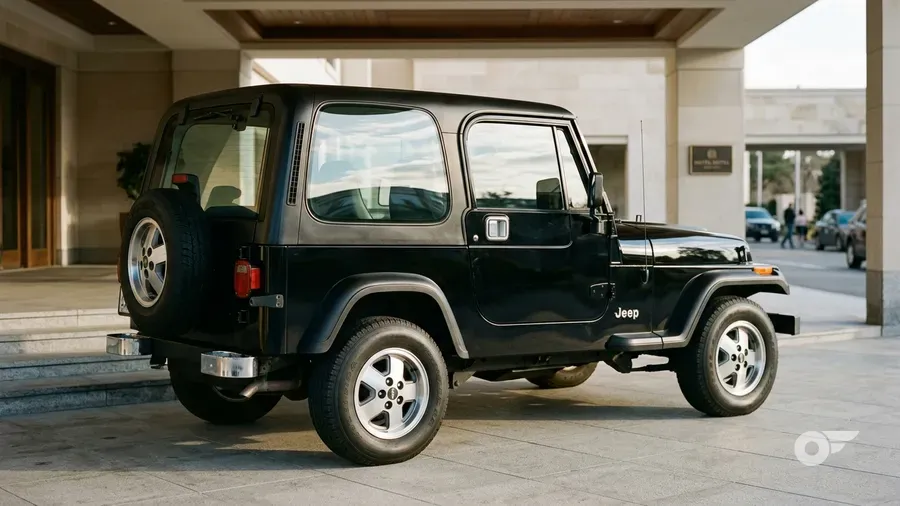
Two decisions define the TJ and both were corrections. The round headlights came back, which everybody noticed and which mattered less than it seemed. And the leaf springs went, which almost nobody outside the company noticed at launch and which changed the vehicle completely. Chrysler put coil springs on all four corners of a Wrangler for the first time, marketed as Quadra-Coil, while keeping the solid axles front and rear that make a Jeep a Jeep. The result rides better, articulates further off road, and behaves on a motorway in a way no leaf-sprung Wrangler ever did, without giving up anything that made the old ones capable. Underneath it all sat the 4.0 straight six for the entire ten-year run, 190hp and 235 lb-ft, an engine with a reputation for passing 300,000 miles without being opened. Production ran from January 1996 to July 2006 as model years 1997 to 2006, and along the way the TJ produced the factory-locked Rubicon and brought back a long-wheelbase Wrangler for the first time since the Scrambler. It is the one enthusiasts buy.

Distinctions

The defining attributes and collector status that make this car garage-worthy.

Octane Files Select
Renowned for its history, engineering, or cultural weight.

Collectibility scorecard

Rated 1 to 10 on the traits that matter for owning, driving, and holding on to a car like this.

Desirability
8/10
Rarity
2/10
Driving thrill
6/10
Investment trajectory
7/10
Usability
7/10
Ease of restoration
8/10
Cultural impact
7/10
Electronic dependence
Fully analogHeavily electronic

Modern engine management on a fundamentally mechanical vehicle. The 4.0 six and both fours run Chrysler multi-port fuel injection under a proper engine control unit, and every TJ from the 1997 model year is OBD-II compliant, so a generic scan tool talks to it. Airbags are standard and anti-lock brakes were available. Beyond that the electronics stop. The throttle is a cable rather than drive-by-wire, the clutch is hydraulic, the gearbox and transfer case are levers, the steering is hydraulically assisted recirculating ball, and there is no stability control, no traction control and no electronic terrain management of any sort. Even the Rubicon's differential lockers are air-actuated and switch-operated rather than computer-controlled. Nothing on a TJ requires a dealer tool to diagnose.

Market data

Demand tier, price trend, and typical values by condition, based on recent sales data.

Demand tier
EntrySolidHighBlue-chip

A dependable market. Well-kept cars hold their value and find ready buyers.

Value trajectory
AppreciatingStableCooling

Values are climbing. The market wants more of these than exist.

Price by condition
Driver
$12k
Excellent
$26k
Concours
$44k

The TJ has crossed from used vehicle to collectable and prices have stopped tracking mileage the way they used to. Rubicons trade well clear of the band, Unlimited LJs above standard cars, and four-cylinder examples below. Unmodified low-mileage 4.0 cars are the scarce commodity, since almost every TJ was lifted at some point. Band figures are editorial estimates only, because no market data source was reachable during research.

Values as of August 2026.

Buyer's guide

What anyone seriously considering this car should know first.

Why it's worth it
The Wrangler that got coil springs without losing its axles
Callout
Coil springs front and rear on a Wrangler for the first time, with the solid axles kept
What to watch for
Frame rust decides everything, and on a TJ it concentrates in specific places. Check the rails where the rear control arms and track bar mount, the area around the skid plate and transmission crossmember, the rear spring perches, and the front frame horns. Vehicles from salted regions can look perfect above and be structurally finished below, and a repaired or plated frame is common enough to warrant crawling underneath with a torch and a screwdriver. Body rust is a smaller worry but the floors, the seat mounts, the tailgate and the bottom of the windscreen frame all catch it. Confirm the engine: the 4.0 six is the one worth having and a 2.5 or 2.4 four-cylinder car is a different and much cheaper proposition. Establish whether the vehicle has been lifted, because a poorly set up lift on a solid front axle produces a steering shimmy that owners spend a great deal of time chasing through track bars, ball joints, steering dampers and tie rod ends. Verify a Rubicon is genuinely a Rubicon, since badges and diamond plate are easy to buy and Dana 44 axles are not.

The Story

Driving character

Coil springs change the vehicle more than the round headlights ever did. A TJ rides where a YJ jolts, settles instead of pitching, and holds a motorway speed with a composure that makes it a genuinely usable everyday vehicle rather than something you commit to. That does not make it soft. The solid axles are still there, the roll is still substantial, and the recirculating ball steering still reports the road surface rather than the front wheels, so you drive it with your hands wide and your expectations calibrated. Off road the coils are a straightforward upgrade, letting the axles articulate further and keeping tyres on the ground over ground that would have a leaf-sprung Jeep lifting a wheel. The 4.0 is the character: a deep, hard-edged six-cylinder note, torque available everywhere, no interest in revving and no need to. A Rubicon in low range with both differentials locked crawls at a walking pace with an unhurried competence that is genuinely addictive. Roof and doors still come off in minutes, and the windscreen still folds.

Design

Michael Santoro's 1992 proposal did the obvious thing and did it well: it took the YJ's proportions and put round headlights back into the seven-slot grille, which is all most people register and all Jeep needed. Look closer and the changes are more considered. The wings are fuller and more sculpted than a YJ's, the grille sits fractionally more upright, the wipers park at the base of the screen rather than on the glass, and the whole vehicle reads as tighter and less rectangular without abandoning a single Jeep signature. The windscreen still folds, the doors still come off, the panels still bolt on. Trevor Creed's 2003 revision refreshed the interior and produced the Unlimited, which stretched the wheelbase to 103.4 inches, within an inch of the CJ-8 Scrambler eighteen years earlier, and lengthened the body by around fifteen inches with an extra frame crossmember. The Rubicon added its own visual language of diamond plate rockers and aggressive tyres that the aftermarket has been imitating ever since. It is the last Wrangler that reads as small.

Motorsport pedigree

Jeep ran no works competition programme with the TJ, which is unsurprising for a vehicle sold on capability rather than speed, and there was no series a road-going four-wheel-drive utility could contest in the period. What Chrysler did instead was more interesting: it built the Rubicon and named it after a trail rather than a race. Introducing a factory vehicle with locking differentials at both ends and a 4:1 transfer case was an explicit statement that the company expected owners to compete on the Rubicon Trail and at rockcrawling events, and it was the first time a manufacturer had equipped a showroom vehicle for that world rather than leaving it to the aftermarket. The result is a competition record entirely in private hands and an enormous one, with TJs forming the backbone of club trials, rockcrawling and off-road racing classes for two decades. Purpose-built competition machinery of the period frequently used TJ axles, transfer cases and the 4.0 engine even when the body was long gone. No championships to Jeep's name, and a factory product that shaped an entire branch of amateur sport.

In culture

The TJ is the Wrangler that turned Jeep ownership into an identity rather than a purchase. It arrived as the outdoor recreation market was expanding fast, and the vehicle became shorthand for a certain kind of life in advertising, film and television for a decade: doors off, roof stowed, somewhere with trees. The Rubicon did something rarer, taking the name of a stretch of trail in the Sierra Nevada and making it a consumer badge understood by people who will never drive it. Jeep leaned into the connection, and a factory model named after a trail remains an unusual thing in the car industry. The TJ also produced the marketing curiosity of a Tomb Raider edition in 2003 tied to the film, and a Willys Edition in 2004 and 2005 that reached back sixty years to the vehicle at the start of this whole lineage. What has grown since is quieter and more durable: an owner culture that treats the TJ as the last real Wrangler, keeps them running past 200,000 miles, and passes them down rather than trading them in.

Rivals

Cars from other manufacturers that competed for the same buyers when new.

Owning One

Why collectors want it

The TJ is the collector's Wrangler and the market has known it for a while. It is the last one with the 4.0 straight six, the first with coil springs, the last before the Wrangler grew into the larger four-door vehicle it is now, and the only generation that combines those things. Values have stopped falling like used cars and started behaving like classics, and clean unmodified examples have become the constraint. The hierarchy is clear and steep. The Rubicon, introduced in the summer of 2002 with air-actuated locking Dana 44 axles front and rear and a 4:1 transfer case, is the one to want and trades well above everything else, because factory-locked differentials on a showroom vehicle were genuinely unusual in 2003 and remain the thing that separates a TJ from every rival. Below it, any 4.0 car with a manual gearbox is desirable. The Unlimited LJ from 2004, with ten inches of extra wheelbase, has developed its own following and now often outsells the standard car on value. Four-cylinder cars remain the cheap entry and always will.

Which one to look for

The Rubicon is the one, and it is not close. Introduced in the summer of 2002, it brought air-actuated locking Dana 44 axles front and rear, the Rock-Trac NV241 transfer case with a 4:1 low range, diamond plate rocker protection, sixteen inch alloys and Goodyear MTR tyres. Nothing else on sale offered locked differentials at both ends from the factory, and it remains the single most valuable specification in the TJ market. After that, look for the 4.0 six, which was fitted throughout the run at 190hp and 235 lb-ft and is the engine the vehicle deserves; the 2.5 four ran to 2002 and the 2.4 PowerTech from 2003, and both are honest but slow. Gearbox matters: the six-speed NSG370 arrived for 2005 and is the best manual offered. The Unlimited, or LJ, arrived in April 2004 with ten inches of extra wheelbase and one more frame crossmember, the first long Wrangler since the Scrambler, and the Rubicon Unlimited of 2005 and 2006 combines both and is the connoisseur's TJ. Sahara ran to 2004, and short-run packages including Tomb Raider, Willys Edition and Golden Eagle have their own followings.

60th Anniversary Edition · 2001

Marked sixty years since the wartime jeep, with unique badging and trim.

65th Anniversary Edition · 2006

The last-year commemorative, marking sixty-five years since the wartime jeep.

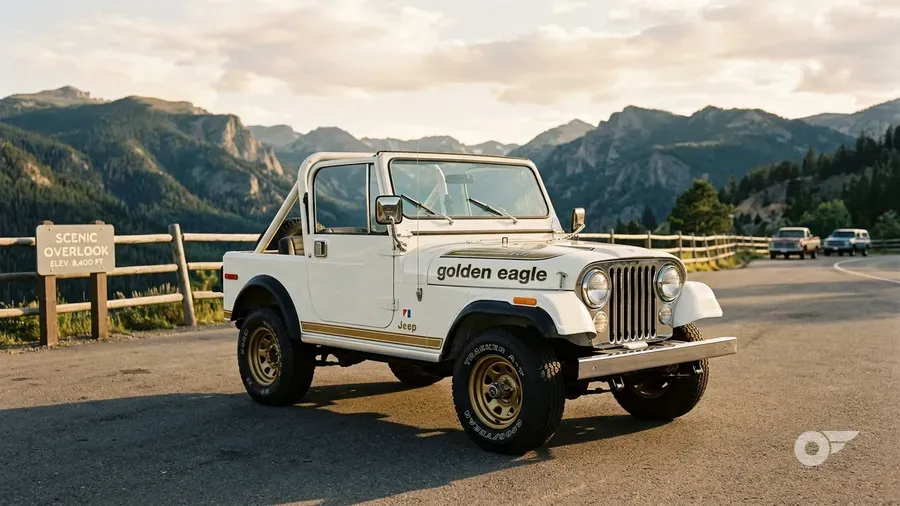
Golden Eagle · 2006

A final-year revival of the 1970s CJ decor name, complete with a bonnet decal.

Rubicon · 2002–2006

The one to have. Front and rear air-actuated locking Dana 44 axles, Rock-Trac NV241 transfer case with a 4:1 low range, diamond plate rocker panels, sixteen inch alloys and Goodyear MTR tyres. Factory-locked differentials at both ends were genuinely unusual on a showroom vehicle.

Rubicon Unlimited · 2005–2006

The connoisseur's TJ: the locked Rubicon drivetrain in the long-wheelbase Unlimited body.

Sahara · 1997–2004

The equipped, road-biased TJ, with its own paint palette, wheels and a considerably better interior.

SE · 1997–2006

The entry car, four-cylinder and lightly equipped. The cheapest TJ then and now.

Sport · 1997–2006

The volume trim and the one most commonly found with the 4.0 straight six.

Tomb Raider Edition · 2003

A film tie-in package with its own wheels, lamps and badging.

Unlimited (LJ) · 2004–2006

Arrived April 2004 after an eighteen-year gap in long-wheelbase Wranglers. Ten inches more wheelbase at 103.4in, one extra frame crossmember, and around fifteen inches more overall length. First use of the Unlimited nameplate.

Willys Edition · 2004–2005

A deliberate callback to the 1940s vehicle at the start of the line, with subdued paint, steel wheels and minimal brightwork.

X · 2002–2006

Slotted between SE and Sport from 2002, offering the 4.0 in a lightly trimmed body.
What owning one is like

A TJ is the easiest vehicle in this family to live with and it has one serious weakness. Frame rust is the thing that ends them, concentrating at the rear control arm and track bar mounts, the skid plate and transmission crossmember area and the front frame horns, and a vehicle from a salted climate can be immaculate above and structurally finished below. Inspect it properly and then keep inspecting it. Beyond that the ownership experience is genuinely good. The 4.0 six is close to indestructible and regularly passes 200,000 miles with nothing more than routine servicing. The Dana 35 rear axle is dependable on the road and much less happy worked hard, so a heavily used vehicle may need attention there. Solid front axles are prone to a steering shimmy at speed when bushes, ball joints, the track bar or the steering damper wear, or when a lift kit is poorly set up, and owners chase it methodically rather than mysteriously. Soft tops wear and leak, wind noise is permanent, and fuel consumption is what a brick with four-wheel drive delivers.

Upkeep & parts

Support is effectively unlimited and cheap, which is one of the reasons the TJ has held up so well. Chrysler built these in huge numbers, the aftermarket is one of the largest in the world, and there is almost nothing on the vehicle you cannot buy new, from complete replacement frames to body tubs, floors, tops, glass, interiors and every mechanical component. The 4.0 six is supported to an unusual degree, rebuild parts are inexpensive, and any competent workshop knows it. Budget for the frame first, because rail repair is the one job that changes the maths on a cheap TJ, and for suspension and steering components if the vehicle has been lifted, since worn bushes and joints cause most of the handling complaints owners report. Everything else is routine and affordable. Being OBD-II compliant from the 1997 model year means diagnosis needs nothing more than an ordinary scan tool. The owner community is enormous, well documented and generous with repair information, and dedicated TJ forums carry detailed procedures for essentially every job on the vehicle.

Country of origin
USA
Class
Off-Road
Production years
1996–2006
Units built
~800,000
Marque
Model
Wrangler
Nickname
No nickname (TJ is the factory chassis code, and Rubicon names a trim rather than the generation)
Body
SUV, Convertible
Layout
Front-engine, 4WD
Engine
150ci (2.5L) AMC I4 (1997-2002), 2.4L Chrysler PowerTech I4 (2003-2006, 147hp, 165 lb-ft), 242ci (4.0L) AMC I6 (1997-2006, 190hp, 235 lb-ft)
Transmission
5-speed Aisin AX-5 manual, 5-speed Aisin AX-15 manual, 5-speed NV3550 manual, 5-speed NV1500 manual, 6-speed Chrysler NSG370 manual, 3-speed TorqueFlite 30RH automatic, 3-speed TorqueFlite 32RH automatic, 4-speed 42RLE automatic
Designer
Michael Santoro (original 1992 proposal), Trevor Creed (2003 facelift and Unlimited)