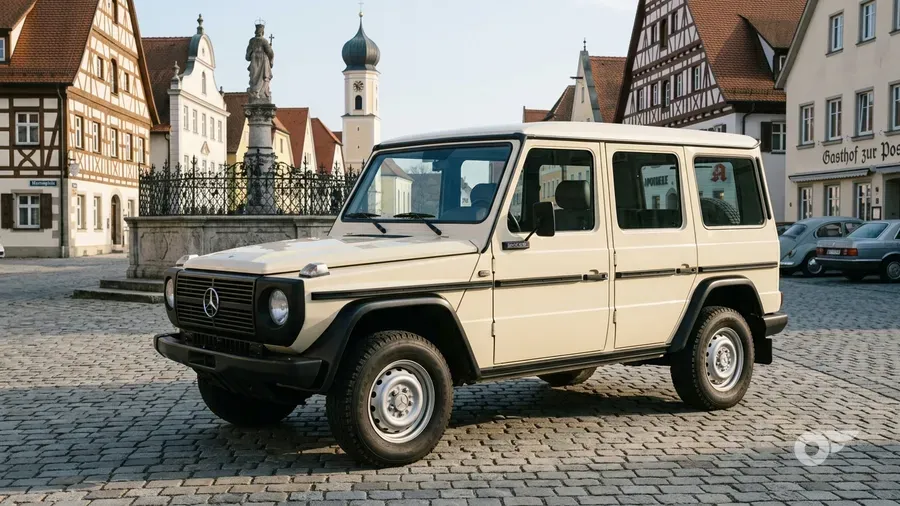
Mercedes-Benz G-Class W460
Germany·Off-Road·1979–1991

The defining attributes and collector status that make this car garage-worthy.


Rated 1 to 10 on the traits that matter for owning, driving, and holding on to a car like this.
Demand tier, price trend, and typical values by condition, based on recent sales data.
Values as of August 2026.
What anyone seriously considering this car should know first.
Cars from the same manufacturer family, like platform siblings or shared-era relatives.
Cars from other manufacturers that competed for the same buyers when new.
Two-door hard-cab version aimed at commercial and fleet buyers rather than private ones. Rare in private hands and worth chasing on scarcity alone.
Two-door cab with an open bed. The most utilitarian H1 configuration and among the least common.
The slantback hard top. Sharper-looking than the wagon, with the rear roofline cut down, and the shape closest to the military hard-top HMMWV.
Soft-top four-door, the configuration that looks most like the military vehicle and the one that photographs best. Least weatherproof and the least likely to have survived unmodified.
The four-door SUV body and the most common H1. Enclosed rear compartment, the most usable of the configurations, and the one most buyers will be offered. Pre-2003 wagons stand 75 inches tall against 77 or 79 for the other bodies.
The run-out car and the grail. A 6.6-litre Duramax turbo-diesel making 300hp and 520 lb-ft, a five-speed Allison 1000 automatic, and the geared hubs redesigned with helical gears to cut noise. Around 10mpg, which counted as a real improvement. Listed at nearly $129,000.