Octane Files
Browse CarsJeep Grand Wagoneer SJ

Jeep Grand Wagoneer SJ

Overview

For 1984 AMC moved the Wagoneer name onto its new compact XJ and renamed the full-size car the Grand Wagoneer. What had been the Limited trim became the entire model line, and from 1985 this was the only full-size Wagoneer Jeep sold. It was already twenty-one years old.

There was one specification and you chose very little of it: the 360 V8, Selec-Trac four-wheel drive with a Trac-Lok limited-slip differential, air conditioning, power bucket seats, a roof rack, whitewall radials and simulated woodgrain down both flanks. Paint and interior colour were most of the decision.

It should not have worked. AMC was in bad enough shape to be sold to Chrysler in 1987, the body had been drawn by Brooks Stevens for 1963, and buyers could have had a Range Rover or a 60-series Land Cruiser instead. It built 17,814 in 1985 and was still finding 4,253 buyers in 1991, when Chrysler made the last one on 21 June and offered a gold Final Edition badge to anyone who bought one after that date. The luxury 4x4 that now underwrites the entire industry ended its first run here.

Distinctions

The defining attributes and collector status that make this car garage-worthy.

Legend
A car that transcended the hobby, known far beyond the people who drive them.
Octane Files Select
Renowned for its history, engineering, or cultural weight.

Collectibility scorecard

Rated 1 to 10 on the traits that matter for owning, driving, and holding on to a car like this.

Desirability
8/10
Rarity
5/10
Driving thrill
4/10
Investment trajectory
8/10
Usability
6/10
Ease of restoration
5/10
Cultural impact
8/10
Electronic dependence
Fully analogHeavily electronic

The Grand Wagoneer is a carburetted V8 with electronic ignition and no engine management computer at all, in a model year as late as 1991. There is emissions plumbing, there is a distributor, and that is the extent of it. Selec-Trac's full-time four-wheel drive is mechanical, the limited-slip differential is mechanical, and the power windows, locks, seats and mirrors are motors and relays rather than modules. It sits at 2 instead of 1 only because the late emissions wiring and the power accessories give a fault somewhere to hide, not because anything on the truck thinks for itself.

Market data

Demand tier, price trend, and typical values by condition, based on recent sales data.

Demand tier
EntrySolidHighBlue-chip

Strong, sustained collector demand. Good examples never wait long for a buyer.

Value trajectory
AppreciatingStableCooling

Values are climbing. The market wants more of these than exist.

Price by condition
Driver
$18k
Excellent
$45k
Concours
$85k

The band describes a sound, unrestored late-1980s Grand Wagoneer with good wood, a straight body and a usable interior. Restored cars are a separate market: a full specialist rebuild trades well above the concours figure here and is priced on the restorer rather than on the year. Values rose sharply through the 2010s as the restoration trade turned these into status objects again, and the 1989 to 1991 cars and the 1991 Final Edition badge cars carry a premium within the run. Interior condition, not mileage, is what moves a Grand Wagoneer between bands.

Values as of August 2026.

Buyer's guide

What anyone seriously considering this car should know first.

Why it's worth it
A twenty-one-year-old design relaunched in 1984 as a luxury flagship, and it worked
Callout
Built on a 1963 body until 21 June 1991
What to watch for
Buy the body and the interior. Everything under a Grand Wagoneer is cheap, shared with pickups and CJs, and understood by any competent shop; everything you can see is model-specific, expensive and increasingly hard to find. Start with the woodgrain. The applique holds moisture against the steel underneath, so the flanks that look best in photographs are often the worst news, and a lifted edge or a bubble at the bottom of a panel means the panel. Then the tailgate, the rear wheel arches, the floors and the frame around the rear spring hangers. Inside, the leather, the door cards, the woodgrain dash trim and the headliner are what separate a $20,000 truck from a $60,000 one, and reproduction coverage is patchy. Sit in it before you fall for the paint. Mechanically, run the Selec-Trac in both modes and confirm the front axle engages and disengages cleanly. Expect the 360 to drink; it did when new. And avoid the middle of the market. A good original or a finished restoration both make sense. A half-done one is where people lose money.

The Story

Driving character

This is a 4,514-pound truck on a 110-inch wheelbase with leaf springs at both ends, and it makes no attempt to hide any of that, which after ten minutes stops being a criticism. The 360 does the work. It is a torque engine rather than a powerful one, so the Grand Wagoneer leaves a junction on a whiff of throttle and then settles into a long-legged amble that it will hold all day. The three-speed automatic shifts once or twice and then leaves you alone. Steering is recirculating-ball and low-geared, so you aim rather than place it and learn to start turns early. Selec-Trac's full-time four-wheel drive means there is nothing to engage on a wet road, which is exactly why 1980s buyers with expensive driveways liked it. Off pavement the low range and the Trac-Lok differential make it far more capable than its buyers ever asked it to be. The best part is the view. Flat glass, thin pillars, a high seat and a bonnet you can see the ends of. Nothing built since has this much window.

Design

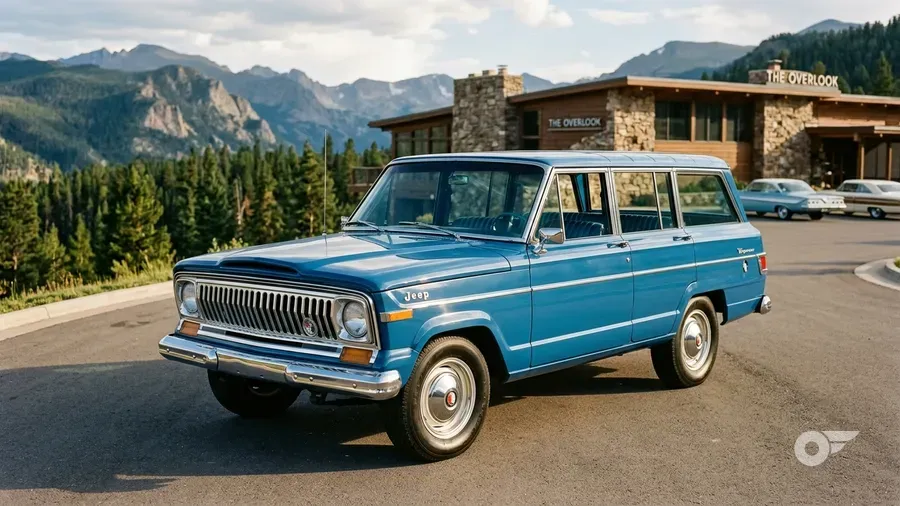
The Grand Wagoneer looks like this because Brooks Stevens drew it for 1963 and nobody was ever given the money to replace it. That is not a criticism of the design. Flat glass, upright pillars, a horizontal beltline and a body that behaves like a box on purpose gave the shape nowhere to date to, and by the mid-1980s, surrounded by aerodynamic wedges, it read as deliberate rather than old. Everything that changed happened at the ends and on the flanks. The 1979 restyle under AMC brought one-piece aluminium bumpers and a one-piece chrome plastic grille, the nose owners call the pig nose, which ran through 1985 before the last cars took a revised face. Simulated woodgrain had gone on in 1971 and stayed to the end, framed in bright trim, and it is the single detail people picture when they hear the name. Inside, the late trucks are pure 1980s American luxury: button-tufted leather, power everything, a roof rack with rails, and whitewalls on 15-inch wheels as standard equipment.

Motorsport pedigree

The Grand Wagoneer has no competition record and there was never a plausible route to one. It weighed two and a quarter tons, cost luxury-car money, and was sold on quiet, wood and a limited-slip differential rather than on capability. AMC spent the mid-1980s fighting for its own survival and had no budget for anything that did not sell trucks; after Chrysler took over in 1987 the money went into the XJ Cherokee and the coming Grand Cherokee, not into campaigning a vehicle already a quarter of a century old. Where Jeep did compete in this period it did it with light vehicles, which is what desert racing rewards, and the CJ and Wrangler pages carry that story. The one genuine motorsport thread in the Wagoneer line belongs to the beginning rather than the end: the Tornado overhead-cam six that launched the 1963 car went to Argentina and raced at the Nurburgring. That is told on the Jeep Wagoneer SJ page.

In culture

No vehicle says American 1980s money quite like a woodgrained Grand Wagoneer, and the association was earned rather than invented. It was the wagon in the ski-town car park and on the coastal driveway, the last mass-market descendant of the wood-bodied station wagon, and the thing people bought when a station wagon no longer said enough and a Cadillac would not tow. Jeep understood what it had almost immediately. The name came back in 1993 on the ZJ Grand Cherokee for a single year, 6,378 built and then dropped, and returned properly in 2022 as the Wagoneer and Grand Wagoneer flagships, marketed on the memory of exactly this truck. The strongest evidence is commercial. Wagonmaster in Texas has been rebuilding and reselling Grand Wagoneers since 1991, the year the last one was built, and the restored-Grand-Wagoneer trade has since become an industry of its own. Very few discontinued vehicles support a specialist business for three decades after the factory stopped.

Rivals

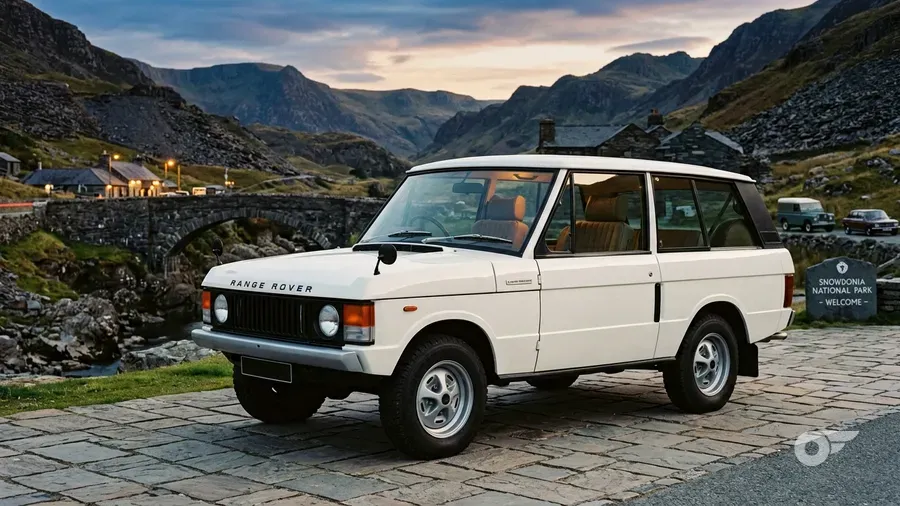
Cars from other manufacturers that competed for the same buyers when new.
Owning One

Why collectors want it

Two things make the Grand Wagoneer collectible and only one of them is nostalgia. The first is that it is the last full-size Jeep on Brooks Stevens's 1963 body, so buying one is buying the end of the longest single-body run in American motoring. The second is that it is the vehicle every current luxury SUV is descended from, sold in an era when it had almost no direct competition in an American showroom.

Inside the eight years the hierarchy is narrow, because the specification barely moved. The 1989 to 1991 cars are the best built and best equipped and the market treats them accordingly. The final 1991 model year is the scarcest at 4,253 and the gold Final Edition badge on late cars is a genuine and checkable distinction. Below them, an honest AMC-built 1985 or 1986 with sound wood and a straight body is the value play and drives no differently.

What has really moved values is the restoration trade. Once specialists began delivering rebuilt Grand Wagoneers to order, the ceiling lifted and pulled every good original up with it.

Which one to look for

There is only one model, which is the point, so the choice is by year and by paperwork rather than by badge. The 1984 cars are transitional and the most interesting of them is the one nobody wanted: the mid-year Wagoneer Custom, a full-size Wagoneer with the woodgrain deleted, launched at $15,995 and dropped after a single season. A plain-sided 1984 is the oddity of the whole run. The 1985 and 1986 AMC cars, 17,814 and 17,254 respectively, are the volume and the value. The 1987 model year straddles the sale of AMC to Chrysler, with 14,265 built by the two companies between them, which makes it a nice piece of corporate history to own. 1988 was the first full Chrysler year at 14,117. The 1989 to 1991 trucks are the best of the breed and the ones to buy if the budget allows: better assembled, better equipped, and the scarcest, with only 4,253 built in the last year. Late 1991 cars could be badged Final Edition in gold, which is the closest thing the model has to a limited run.

Final Edition · 1991

Not a separate model but a documented run-out distinction. Chrysler built the last SJ on 21 June 1991, and buyers taking delivery of a 1991 Grand Wagoneer after that date could have a gold Final Edition Jeep Grand Wagoneer badge fitted.

Grand Wagoneer · 1984–1991

The Wagoneer Limited renamed for 1984, and from 1985 the only full-size Wagoneer Jeep sold. One specification: 360ci V8, Selec-Trac four-wheel drive with a Trac-Lok limited-slip differential, air conditioning, dual front power bucket seats, roof rack with rails, 15-inch whitewall radials and simulated woodgrain flanks.

Wagoneer Custom · 1984

A deliberately cheaper full-size Wagoneer introduced mid-1984 with the simulated woodgrain deleted, sold alongside the newly renamed Grand Wagoneer at US$15,995, about $3,000 below it. Buyers ignored it and it was dropped after one season, which makes a plain-sided 1984 the oddity of the run.
What owning one is like

Owning one is mostly about managing water and trim. The woodgrain applique traps moisture against the body sides, the tailgate collects it, and the rear arches and floors rot from the inside out, so an SJ that has lived anywhere salted needs looking at properly rather than admiring. None of it is structurally frightening on a body-on-frame truck; it is just work, and the work is bodywork. The interior is the other running cost. Grand Wagoneer leather, door cards, dash woodgrain and headliners are model-specific and reproduction coverage is uneven, so a tired cabin is a slow and expensive thing to put right. Mechanically it is calm. The AMC 360 is understressed, the three-speed automatic is a known quantity, the Dana axles are shared with half the American truck industry, and nothing about the drivetrain requires specialist tooling. What it does require is fuel. A two-and-a-quarter-ton four-wheel-drive V8 wagon was called a gas-guzzler in period, and that has not improved. Owners budget for it and get on with driving them, which is the correct response.

Upkeep & parts

Running gear is the easy part. The AMC 360, the TorqueFlite, the Dana axles and the brake and steering hardware are shared across CJs, J-series pickups and the rest of the full-size family, so parts are catalogue items and prices are sane. Nothing needs a specialist to diagnose.

Body and interior is where a budget goes. Woodgrain kits are reproduced and are one of the better-supported items; leather, door panels, dash trim, headliners and some brightwork are not, and sourcing them is a matter of patience and the right contacts rather than a phone call.

The support network is unusually good for a discontinued 1980s truck. The International Full Size Jeep Association is the club and technical reference for the whole FSJ family, and Wagonmaster in Texas has been restoring and selling Grand Wagoneers since 1991 and effectively sets the standard for a finished car. Budget realistically for fuel and for one interior refresh, and the rest of the ownership is undramatic.

Country of origin
USA
Class
Off-Road
Production years
1984–1991
Units built
~104,000
Marque
Model
Grand Wagoneer
Nickname
FSJ
Body
SUV
Layout
Front-engine, 4WD
Engine
360ci (5.9L) AMC V8
Transmission
3-speed Chrysler A727 TorqueFlite automatic
Designer
Brooks Stevens (1963 body), Richard A. Teague (AMC design direction)