Octane Files
Explore CarsChrysler Imperial 2nd Gen

Chrysler Imperial 2nd Gen

Overview

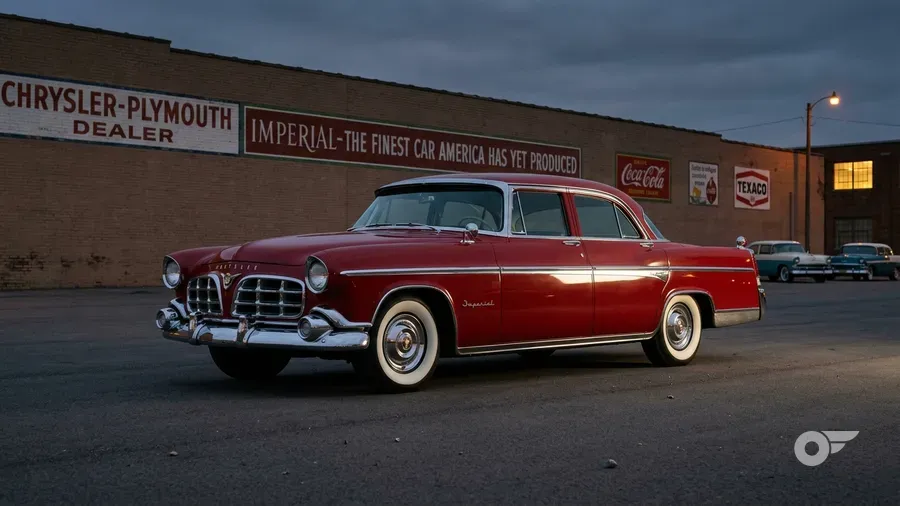
1957 was the year it worked. Imperial got a platform of its own, the Forward Look at full stretch, and 37,593 buyers, the best model year the make would ever have. Cadillac sold over 120,000 cars that year and was rattled enough to train its salespeople to say the words "Chrysler Imperial" out loud in the showroom, on the theory that a customer who heard Chrysler would decide he was being overcharged.

Whatever the cause, Imperial never came close to 37,593 again. The next nine years read 16,133, 17,710, 17,719, 12,258, 14,337, 14,121, 23,295, 18,409 and 13,752. That is 185,327 cars and a slow argument the company lost.

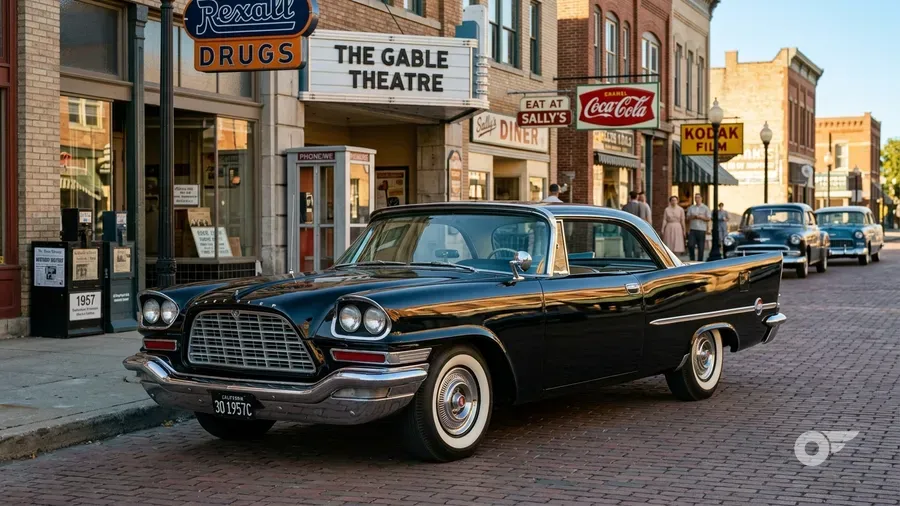
Ten years is a long time to call one generation, and the cars at either end share almost nothing you can see. A 1957 has quad headlights in a biplane bumper and fins that swallow the gunsight taillights whole. A 1966 is a slab-sided Elwood Engel design with 24-carat gold bands around glass headlight covers. What connects them is underneath: Imperial kept a separate perimeter frame right through 1966, while every other Chrysler product went unibody for 1960.

Distinctions

The defining attributes and collector status that make this car garage-worthy.

Octane Files Select
Renowned for its history, engineering, or cultural weight.

Collectibility scorecard

Rated 1 to 10 on the traits that matter for owning, driving, and holding on to a car like this.

Desirability
6/10
Rarity
5/10
Driving thrill
5/10
Investment trajectory
6/10
Usability
6/10
Ease of restoration
4/10
Cultural impact
7/10
Electronic dependence
Fully analogHeavily electronic

Carburetors and breaker points for all ten model years, with no engine management anywhere between the pedal and the intake. Three systems look like exceptions and none of them is. The push-button transmission selector fitted through 1964 works on a mechanical cable rather than solenoids, which is why Chrysler's version outlived the electrically shifted Edsel Teletouch. The Panelescent instrument lighting on 1960 to 1963 cars runs at around 200 volts AC off an inverter, but it is lighting, not control. And the 1958 Auto-Pilot cruise control holds a road speed with no processor anywhere in it.

Market data

Demand tier, price trend, and typical values by condition. Our own assessment, not a quoted valuation.

Demand tier
EntrySolidHighBlue-chip

A dependable market. Well-kept cars hold their value and find ready buyers.

Value trajectory
AppreciatingStableCooling

Values are holding steady. What you pay today is what it's worth tomorrow.

Price by condition
Driver
$12k
Excellent
$26k
Concours
$50k

The band describes a Crown hardtop, two-door or four-door, which is what almost every buyer will actually meet. conceptcarz puts the 1957 Crown hardtop median at $22,938 and the 1961 Crown hardtop median at $16,209, and Bring a Trailer's hardtop results run from $8,500 for a tired 1961 four-door to $41,000 for an exceptional 1959. Convertibles are a separate market and they have moved hard. A 1960 Crown convertible took $32,666 on Bring a Trailer in December 2022 and $110,000 on the same site in April 2026, and conceptcarz's 1961 convertible median of $127,054 sits against that same year's $16,209 hardtop. Hardtops have not followed, which is why the band is priced as stable rather than appreciating. Ghia limousines trade on their own logic entirely: $50,250 for a 1957 Crown Imperial in June 2025.

Values as of August 2026.

Buyer's guide

What anyone seriously considering this car should know first.

Why it's worth it
The widest non-limousine car America ever built, at 81.7 inches across
Callout
37,593 built for 1957, the best year Imperial ever had and never approached again
What to watch for
The most useful single question is which side of 1963 the car sits on. Before 1963 the parking brake grips the driveshaft rather than the rear drums. It is a genuine handbrake and it holds, but it is not a service brake, and a seized one becomes a driveshaft-out job. Check that it works and check what it looks like from underneath. Cars from 1960 to 1963 carry Panelescent electroluminescent instrument lighting, which runs a five-layer laminate at roughly 200 volts AC off an inverter. It glows blue-green, it hums faintly, it is the thing everybody photographs, and it is a specialist rebuild when it goes dark. 1957 is the year to be careful about. It was Chrysler's second complete redesign in two years, quality control slipped badly, and torsion bars built to the wrong specification were failing in service. A sorted 1957 is a lovely car. An unsorted one is a project. Curved side glass arrived in 1957, a first on an American production car, and the wrap-around windshield stayed until 1966. Both are hard to replace, which is why the Online Imperial Club publishes glass code lists at all. Then measure the garage. The 1961 to 1963 cars are 81.7 inches wide.

The Story

Driving character

This is the one that handles, and that is not a retrospective claim. Tom McCahill bought a new Imperial every year through 1962 and wrote in 1964 that it "cornered at speed flatter than a tournament billiard table". He meant it as a surprise, because the car weighs between 4,800 and 5,500lb. The reason is Torsion-Aire, the torsion-bar front suspension Chrysler introduced across the corporation for 1957, working with a thick front anti-roll bar and multi-leaf rear springs. It takes weight out of the suspension and pulls the centre of gravity down and back, and the car stays level through a corner instead of heaving into it. The engines change the character more than the chassis does. The 392 Hemi in the 1957 and 1958 cars is the heavy, expensive one. The 413 Wedge that replaced it for 1959 makes more power while weighing 101lb less, and it is the better engine to live with. The 350hp 440 arrives for 1966 only. Shifting is a mood of its own: buttons on the dash until 1964, then a column lever, and that one change makes a 1965 feel like it belongs to a different decade.

Design

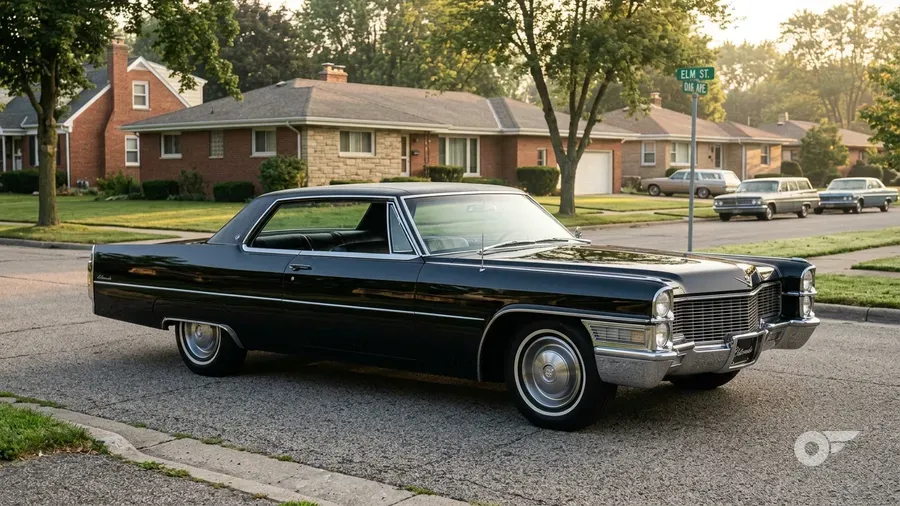
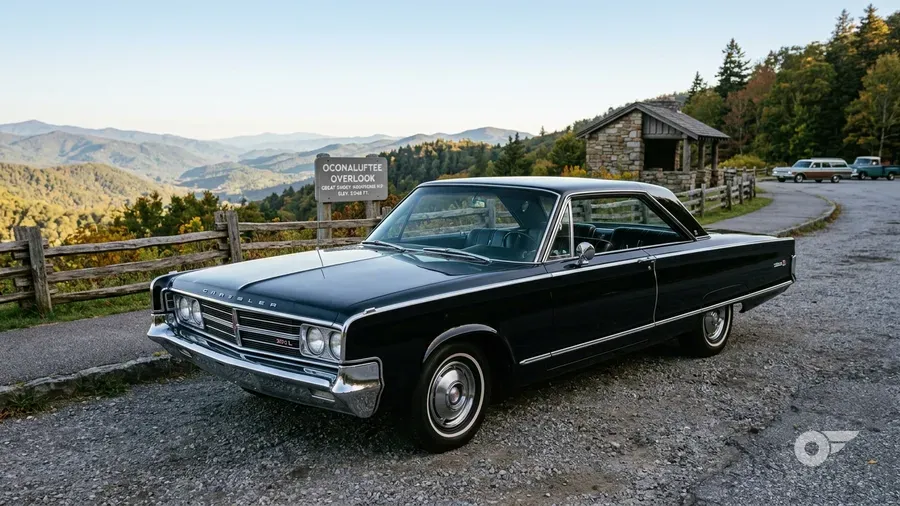
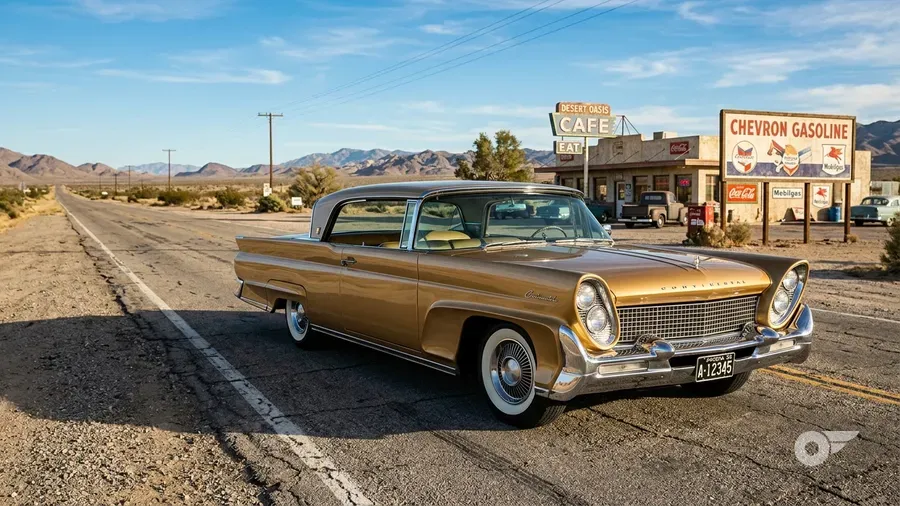
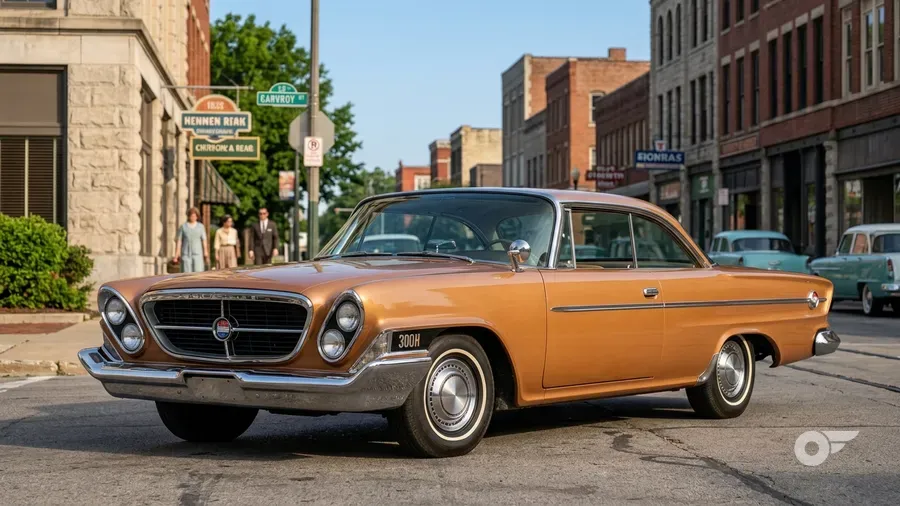
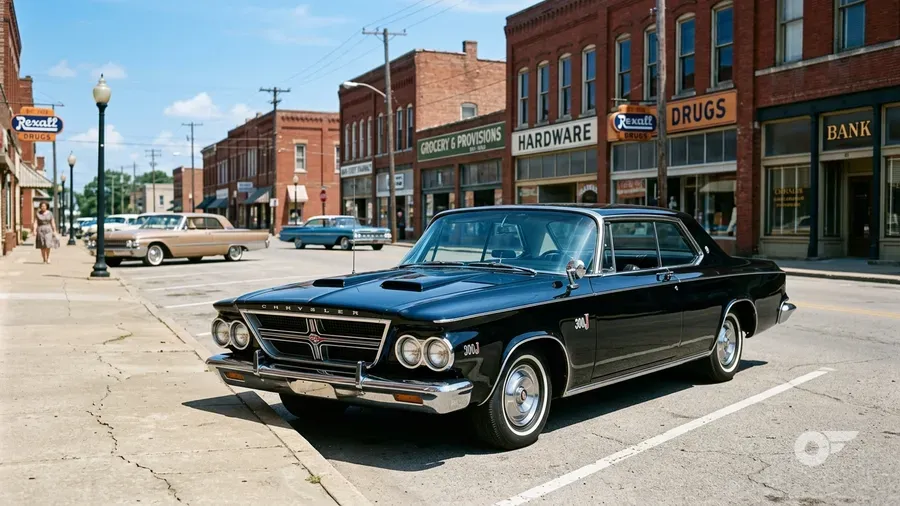
Two designers, one bodyshell, and a decade that starts baroque and ends rectilinear. Exner's 1957 car is the Forward Look at full commitment. A biplane front bumper, a full-width egg-crate grille, quad headlights wherever the law allowed them, and fins tall enough to finally swallow the gunsight taillights Imperial had worn since 1955. Curved side glass appears here for the first time on an American production car. Then it escalates. 1960 brings a gaping mesh grille and a chrome eagle. 1961 stands the headlights on short stalks in cut-away fenders, a 1930s throwback Exner loved, alongside the largest fins Imperial ever wore. 1962 truncates the fins and brings back the split grille from 1955. 1963 finally moves the taillights inside the rear fenders in the ordinary way, and is the last car Exner styled. Engel had come from Ford in 1961, where he drew the 1961 Lincoln Continental, and the 1964 Imperial is his first from a blank sheet. Slab sides, thick C-pillars, a chrome line along the top of the fender: the family resemblance is unmissable, though he used parallelogram angles where Lincoln used straight ones. 1965 hides the headlights behind glass covers. 1966 puts 24-carat gold bands around them. Southampton, on any of these cars, names the pillarless hardtop body rather than a trim level.

Motorsport pedigree

Imperial never raced, and the interesting part is that it built a performance reputation anyway. Tom McCahill did it, one car at a time. He bought a new Imperial every year through 1962 and told his readers so, and his enthusiasm is credited with giving Imperial a name as the driver's car among the big three American luxury makes. Chrysler leaned on it hard: the 1957 dealer sales film pitching the Imperial against the Cadillac Series 62 argues the case on handling rather than on power or price. The absence of a race record is structural rather than accidental. No series had a class for a two-and-a-half-ton luxury sedan, and Chrysler's competition money went to cars built to be light, which the Imperial was deliberately not. The engines raced without it. The 392 Hemi and the 413 and 440 Wedges under these hoods are the same families Chrysler campaigned elsewhere in the corporation, with different carburetion and different intentions. The car they were bolted into was built to be measured against a Cadillac instead of a stopwatch, and on its own terms it won that one more often than the sales figures suggest.

In culture

This generation has a better screen and state-car record than its sales ever justified. Jacqueline Kennedy's personal car throughout her husband's presidency was a Ghia-built 1961 Crown Imperial wearing 1960 styling. It carried her and her children near the front of the motorcade at John F. Kennedy's funeral on 25 November 1963, which is where most people have seen one without knowing what they were looking at. Nelson Rockefeller had a 1960 Ghia Crown, one of seventeen built that year and the only one with a blind rear quarter. A 1966 LeBaron was presented to Pope Paul VI at the United Nations in New York for his use. Then there is Black Beauty. Dean Jeffries turned two 1966 Crowns into rolling arsenals for ABC's The Green Hornet on roughly four weeks' notice, with Van Williams driving and Bruce Lee riding in the back. Black Beauty number one now sits in the Petersen Automotive Museum's vault. The Godfather Part II put Michael Corleone in a black 1958 Ghia Crown Imperial at the Nevada compound, which is a piece of casting as much as a prop: the most expensive American car of its year, chosen to say exactly that.

Rivals

Cars from other manufacturers that competed for the same buyers when new.
Owning One

Why collectors want it

You are buying the largest car in America and paying less than a Cadillac of the same year costs. That is the argument, and it has held for thirty years.

The hierarchy is steep and it runs on bodies rather than years. The Crown convertible is the money car and always has been. It was the only convertible Imperial sold, in the only series that ever offered one, and the annual counts run from 1,167 in 1957 down to 429 in 1961 and back up to 922 in 1964, against a generation total of 185,327 cars. Survivors trade at three to six times the equivalent hardtop.

Everything else is affordable in a way that keeps surprising people. A LeBaron four-door hardtop buys the best interior Chrysler could build, the formal roofline and the small privacy rear window, for hardtop money.

At the top sit 132 Crown Imperial limousines finished by Ghia in Italy between 1957 and 1965, each one cut apart and lengthened by 20.5 inches over about a month of work.

What keeps the rest sensible is the thing that makes the story good: nobody ever really accepted Imperial as a make, so it never grew Cadillac's collector infrastructure.

Which one to look for

Three series for most of the run, and they behave very differently in the market. Custom is the entry car, 1957 through 1963, and for the first two of those years Chrysler sold it as a plain Imperial with no series name at all. It is the way in and there is nothing wrong with it. Crown is the one to look for, because Crown is the only series that ever got a convertible. Ten model years of them, never offered as a Custom and never as a LeBaron: 1,167 in 1957, 675, 555, 618, 429, 554, 531, 922, 633, and 514 for 1966. When Custom was dropped for 1964, Crown slid down to become the entry series, which is why a 1964 to 1966 Crown is a cheaper car than the badge suggests. LeBaron is the interior. Top of the line every year, four-door only from 1961, and from 1960 it wore the smaller formal rear window that gave the back seat its privacy. The Crown Imperial limousine is not part of that ladder at all. 132 Ghia cars from 1957 to 1965, then ten built by Barreiros in Spain for 1966 that Chrysler quietly declined to advertise as its own.

Crown · 1957–1966

The mid-range series through 1963 and the entry series from 1964, and the only Imperial series that ever offered a convertible. Every drop-top Imperial built between 1957 and 1966 is a Crown. Six-way power seats were standard here where they were an option on the Custom. Not to be confused with the Crown Imperial limousine, which is a different and far more expensive car.

Crown Imperial Limousine · 1957–1966

The coachbuilt long-wheelbase car, and a separate series rather than a trim of the Crown. From 1957 to 1965 Ghia finished them in Italy: bodies were shipped across the Atlantic, cut apart, lengthened by 20.5 inches and reworked, each taking about a month. Early cars used two-door hardtop bodies on the stiffer convertible chassis; later ones started as four-doors. Trimmed to LeBaron level or better. At about 6,200 to 6,300lb these are the heaviest standard production cars an American firm has sold since the 1930s.

Custom · 1957–1963

The entry series, and for its first two years it carried no series name at all: Chrysler sold it as a plain Imperial in 1957 and 1958 and only badged it Imperial Custom from 1959. Sedan and hardtop bodies only, never a convertible. Dropped entirely for 1964, which pushed Crown down into the entry slot for the last three years of the generation.

LeBaron · 1957–1966

Top of the line for all ten years, named for LeBaron, Carrossiers. Sedan and four-door hardtop through 1960, then four-door hardtop only. From 1960 it wore a distinctive smaller formal rear window for rear-seat privacy, and it kept that roofline unchanged in 1963 when Engel resquared the Custom and Crown rooflines around it. Claro walnut interior trim, advertised as 100 years old, was added for 1965 and used more extensively for 1966.
What owning one is like

Start with the frame, because it is the best thing about owning one. Imperial kept a full box-section perimeter frame with heavy crossmembers right through 1966, and the convertibles got an X-brace with the driveshaft passing through a hole in it. Every other Chrysler product went unibody for 1960. A rusty 1962 Imperial is a repairable car in a way a rusty 1962 Chrysler is not. The pre-1963 parking brake grips the driveshaft instead of the rear drums, which is fine when it works and a driveshaft-out job when it does not. Panelescent instrument lighting on the 1960 to 1963 cars is the classic Imperial repair. Around 200 volts of AC through a phosphorescent laminate, and when it goes dark you are looking for someone who does this for a living. The 1959 to 1961 Swivel Seats are worth understanding. Chrysler tried an automatic version for 1960, cabled to the door hinges so the seat turned out as the door opened, then deleted the cables within a few months, so most cars have the manual release handle instead. And the glass. Curved side glass from 1957 and a wrap-around windshield through 1966, on a car nobody reproduces panels for.

Upkeep & parts

The running gear is cheap, which surprises people. The 413 and 440 are RB-series Chrysler big blocks shared with half the Mopar world, and the TorqueFlite A727 fitted from 1962 is one of the best-supported automatics ever built. Parts, rebuilders and knowledge are all abundant. The exception is the 392 Hemi in the 1957 and 1958 cars, a specialist engine with specialist prices.

Everything you can see is the expensive half. Imperial-specific sheetmetal, brightwork, grilles and glass were tooled in small numbers for one make and almost none of it is reproduced, so a car that needs cosmetics needs a parts car or a long wait.

The Online Imperial Club is the first stop and it costs nothing: factory literature, production tables, paint chips, replacement glass codes, body-plate decoding and a repair archive organised by system. The Imperial Registry counts survivors from 1926 onward. The Imperial Owners Club International II runs the calendar, and 2026 is the marque's centennial year, with a four-day national celebration in Chattanooga in October. The WPC Club covers the wider Chrysler parts network.

Ghia limousine owners are largely on their own. 132 cars, hand-finished in Italy, nothing off the shelf.

Country of origin
USA
Class
Luxury
Production years
1957–1966
Units built
185,327
Model
Imperial
Nickname
No nickname ("Black Beauty" names the 1966 Crown built for The Green Hornet specifically, not the generation)
Body
Sedan, Coupe, Convertible
Layout
Front-engine, RWD
Engine
392ci FirePower Hemi V8, 413ci Wedge V8, 440ci Wedge V8
Transmission
3-speed TorqueFlite A488 automatic, 3-speed TorqueFlite A727 automatic
Designer
Virgil Exner (Chrysler design chief, 1957–1963 cars), Elwood Engel (Chrysler design chief, 1964–1966 cars)