Oldsmobile 98 5th Gen
We haven’t profiled this car yet. Request to add

The defining attributes and collector status that make this car garage-worthy.

Rated 1 to 10 on the traits that matter for owning, driving, and holding on to a car like this.
Demand tier, price trend, and typical values by condition, based on recent sales data.
Values as of August 2026.
What anyone seriously considering this car should know first.
Cars from the same manufacturer family, like platform siblings or shared-era relatives.
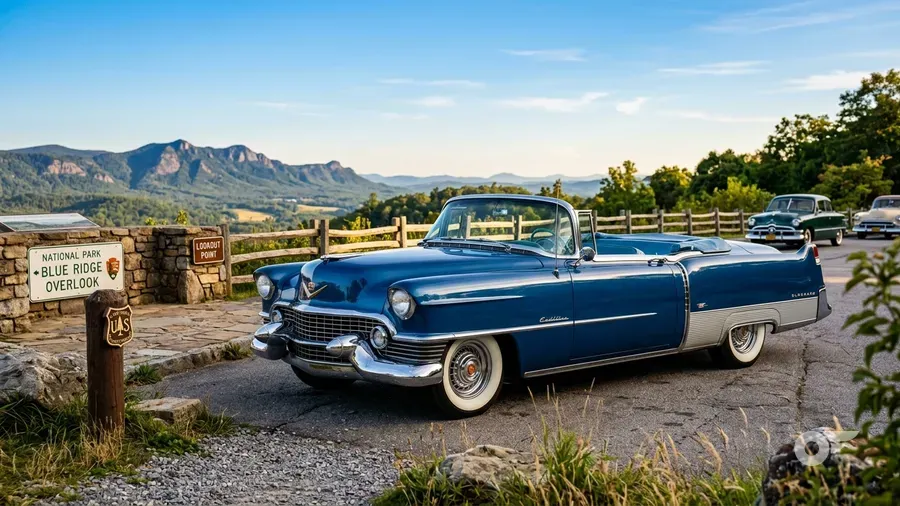
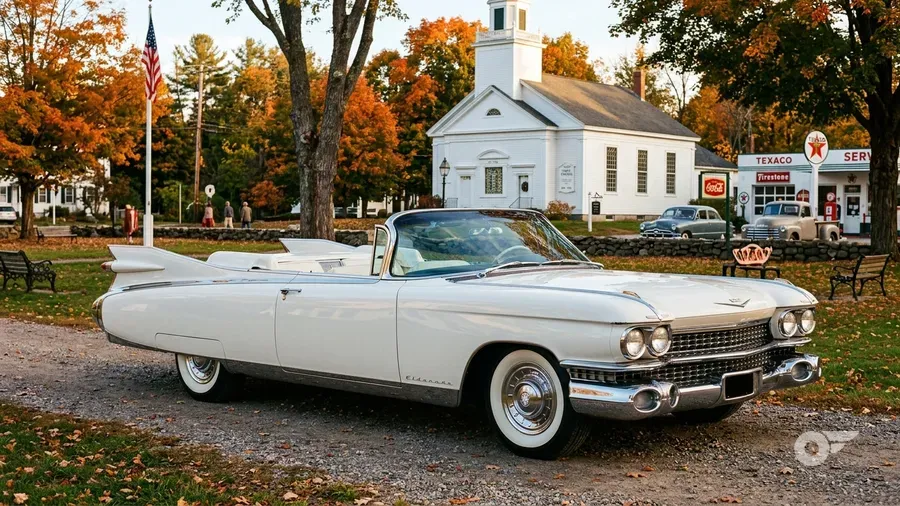
Cars from other manufacturers that competed for the same buyers when new.
The convertible, and the car the generation's market is built around. It carries the Eldorado's own rear end, a fenderline that sweeps down behind the door into pointed fins leaning inboard, with broad sculptured stainless beauty panels wrapping the lower quarters into split rear bumpers. It also carries the Eldorado's own engine: the 365 cubic inch V8 with two four-barrel carburetors and 325 horsepower for 1957, then three Rochester two-barrels and 335 horsepower for 1958, against 300 and 310 in a standard Cadillac. The 1957 car has the cleaner nose. The 1958 brought quad headlights, a full-width jewelled grille, ten vertical chrome slashes ahead of the rear wheel openings and crest medallions on the fin flanks. Cast-aluminium-centre Sabre wheels are the signature detail on both years.
Series 70, hand-built on a limousine line at Cadillac's Clark Street plant in Detroit, and closer to a separate car than a variant. Four doors and no pillar between them, the rear pair hinged at the back and latching onto a stub that stops at the beltline, under a roof of brushed stainless steel that carries structure rather than covering it. It brought the industry its first quad headlights, still illegal in parts of the United States when it launched. Self-levelling air springs replaced coils at all four corners, fed by an electrically driven Delco compressor and a reservoir behind the grille. Standard equipment ran to memory power seats, forged aluminium wheels, air conditioning, an automatic trunk closer, and the first all-transistor car radio. Buyers chose from 44 leather trim combinations and could specify mouton or Karakul carpet.
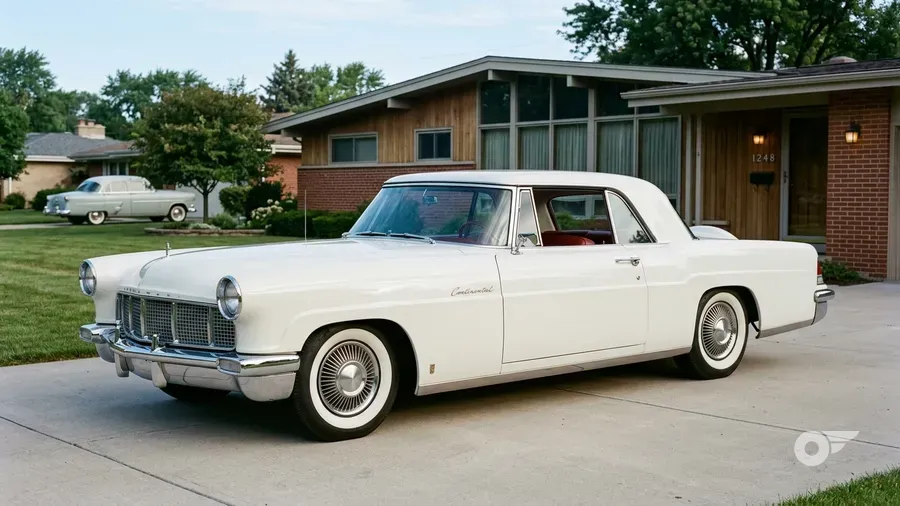
The two-door hardtop, mechanically identical to the Biarritz and sold at the same price when new, which makes it the value entry into the generation exactly as the 1956 Seville was into the one before. Same 365 V8 in Eldorado tune, same fins, same stainless quarter panels, same Sabre wheels, minus the folding roof. For 1958 the Seville took on a job of its own, standing as Cadillac's flagship in GM's fiftieth anniversary line alongside the Buick Limited Riviera, the Oldsmobile Starfire 98, the Pontiac Bonneville Catalina and the first Chevrolet Impala. It is also the body style behind the generation's strangest footnote: Cadillac built exactly four four-door hardtop Eldorado Sevilles during 1957.