Octane Files
Browse CarsCadillac Eldorado 4th Gen

Cadillac Eldorado 4th Gen

Overview

The 1959 Cadillac is the year the tailfin reached the sky and could climb no higher, and the Eldorado is the most extravagant thing Cadillac built on it. For two model years, 1959 and 1960, the Eldorado sat at the very top of the range as a limited, expensive statement above an already expensive car. The fins are the headline, twin bullet-tipped blades standing taller than any Cadillac wore before or since, but the Eldorado earned its premium underneath them too. It carried the 390 cubic inch V8 with three two-barrel carburetors as standard, 345 horsepower in years when a standard Cadillac made 325, and its own rear-deck treatment that set it apart from the Series 62 it was based on. Three body styles made up the line: the Biarritz convertible, the Seville two-door hardtop, and the Brougham, a four-door hardtop whose bodies were hand-built by Pininfarina in Turin and shipped back to Detroit. None sold in numbers. Across both years Cadillac built roughly 2,600 Biarritz convertibles, 2,050 Seville hardtops, and just 200 Broughams. This is the tailfin at its absolute zenith, and the Eldorado is its purest, rarest expression.

Distinctions

The defining attributes and collector status that make this car garage-worthy.

Legend
A car that transcended the hobby, known far beyond the people who drive them.
Octane Files Select
Renowned for its history, engineering, or cultural weight.

Collectibility scorecard

Rated 1 to 10 on the traits that matter for owning, driving, and holding on to a car like this.

Desirability
8/10
Rarity
8/10
Driving thrill
4/10
Investment trajectory
7/10
Usability
5/10
Ease of restoration
4/10
Cultural impact
9/10
Electronic dependence
Fully analogHeavily electronic

The driveline is entirely mechanical: a 390 V8 fed by three two-barrel carburetors, breaker-point ignition, and a hydraulically controlled four-speed Hydra-Matic, with no engine computer or electronic management of any kind. It sits above fully analog because of how much of the car is powered rather than manual. Power steering, power brakes, power windows, power seats, and optional air conditioning all add electric motors and vacuum circuits that a truly analog car never had, and at this price Cadillac fitted them as a matter of course. The driver still works the car through direct linkages and pedals, which is what keeps it near the analog end of the scale at a 2.

Market data

Demand tier, price trend, and typical values by condition, based on recent sales data.

Demand tier
EntrySolidHighBlue-chip

The proven elite. Values are established, liquid, and defended at every auction.

Value trajectory
AppreciatingStableCooling

Values are climbing. The market wants more of these than exist.

Price by condition
Driver
$80k
Excellent
$160k
Concours
$250k

Values are led entirely by the Biarritz convertible, which has appreciated steadily and, in top condition, strongly. Auction data shows good drivers changing hands around the six-figure mark, excellent cars well beyond it, and the best examples reaching into the mid-200s and higher, with one public sale reported at $415,000. The Seville hardtop, mechanically identical but fixed-roof, trades for roughly half to two-thirds of convertible money, which keeps the generation from being uniformly blue-chip. The Brougham is a rarity play of its own, priced on its 200-unit scarcity and Pininfarina coachwork rather than tracking the open cars. Overall the tailfin Eldorado sits at the upper end of the postwar American market and has been trending up, driven by the convertibles and by the enduring, unmistakable pull of the 1959 shape. The price band below describes the Biarritz convertible as the definitive car of the generation; Seville hardtops sit lower and the Brougham is a separate, higher tier.

Values as of July 2026.

Buyer's guide

What anyone seriously considering this car should know first.

Why it's worth it
The high-water mark of the American tailfin, worn by Cadillac's most exclusive car
Callout
Its Brougham bodies were hand-built by Pininfarina in Turin, then shipped back to Detroit for assembly
What to watch for
Buy the trim, then the car, because the brightwork is where an Eldorado is won or lost. These cars wear an enormous amount of stainless, chrome, and pot-metal, much of it specific to the Eldorado and not shared with lesser Cadillacs, and correct pieces are scarce and expensive when you can find them at all. A car missing its Eldorado-specific rear trim or a good set of the right bumper ends is a money pit waiting to happen, so a complete, honest car always beats a shinier one with holes in its inventory. Rust is the other decider: check the lower fenders, rockers, floors, trunk, and frame, because a two-and-a-half-ton car with this much bright metal is expensive to bring back once the steel goes. Mechanically there is little to fear. The 390 V8 and Hydra-Matic are tough and well understood. Confirm the power accessories work, since the power windows, seats, and optional air conditioning all rely on aging motors and vacuum lines. On the Brougham, budget seriously and verify the body number, because those are a different order of car to restore. Documentation through the Cadillac and LaSalle Club and the GM Heritage Center settles originality and pays for itself.

The Story

Driving character

Nothing about an Eldorado of this era rewards hurry, and that is entirely the point. This is two and a half tons of Cadillac riding on a soft coil-spring front end and a leaf-sprung rear axle, and it moves the way an ocean liner leaves a harbor, slowly gathering, then unstoppable. The 390 with its three two-barrel carburetors makes its 345 horsepower without drama and a great deal of torque low down, so the car leans back on its haunches and surges, the four-speed Hydra-Matic shifting so gently you feel it more than hear it. Steering is light to the point of numbness, geared to place a very long car with one finger, and the drum brakes ask you to think well ahead. Push it into a corner and it leans, floats, and understeers, and it lets you know in no uncertain terms that this is not what it is for. What it is for is covering distance in silence and isolation, the long hood and those fins filling the mirror behind you, the whole car conspiring to make speed feel like stillness. It is theater on wheels, and it drives exactly as grandly as it looks.

Design

The 1959 Cadillac is the tailfin taken as far as it could go, and the Eldorado is its showpiece. Harley Earl, who had put the first modest fins on the 1948 Cadillac and championed them for a decade, retired at the end of 1958, and these cars launched under his successor Bill Mitchell. The tallest, sharpest fins the industry ever built are generally credited to Dave Holls, twin bullet-tipped blades with dual round taillamps set into them, and no production car before or since wore them so high. Chuck Jordan had just become Cadillac's chief designer, and he and Holls were the men behind the Eldorado Brougham. The Eldorado separated itself from the standard Cadillac with its own rear-deck and lower-body brightwork, a wall of bright metal that read as unmistakably the most expensive car in the lot. It shared its basic shell with the Series 62 and the new de Ville, yet nobody mistook one for the other. This was the last full flowering of the jet-age idiom Earl had built his career on. By 1961 Cadillac had already begun toning it down, which is exactly why the 1959 and 1960 cars are the ones people remember.

Motorsport pedigree

There is no competition record here, and the easy answer, that a 5,060-pound convertible on drum brakes was never going to race anything, is only half of it. GM had signed the AMA's 1957 withdrawal from motorsport, and while Pontiac spent these exact years engineering its way around it with over-the-counter Super Duty parts and winning NASCAR races on them, Cadillac kept to the agreement completely. It had no reason not to. Nobody was buying an Eldorado on lap times. The engine is the better story, because the 390 did go drag racing, just never with a Cadillac badge on it. Dayton speed shop owner George Montgomery, known everywhere as Ohio George, built a 1933 Willys coupe around a Cadillac V8 and a GMC 6-71 supercharger, and won both his class and Little Eliminator at the NHRA Nationals at Detroit Dragway in 1959. He did it again in 1960, by then running a 390 out of a 1959 Cadillac, bored and stroked well past its original displacement. Not the Eldorado's 345 hp triple-carburetor version, and not a dollar of it Cadillac's, but the same block. He took his class again at Indianapolis in 1961, and only gave up Cadillac power when NHRA moved the weight break and a small-block Chevy started making more sense.

In culture

No single shape says 1950s America faster than the 1959 Cadillac tailfin, and the Eldorado is that shape at full volume. It arrived at the exact moment the fin became both a national obsession and a national joke, the symbol of Detroit excess that critics loved to hate and everyone else loved to stare at, and it has never lost that charge. It is the car of the jukebox and the drive-in, of rock and roll and the space race, the machine that fixes an entire decade in place the instant it rolls into frame. Filmmakers and photographers reach for it whenever they need to say wealth, optimism, or simply 1959 in a single image, and the pink Cadillac of American song and myth is very often one of these. The fins outlived the cars themselves. They became a design shorthand, studied in museums and mocked in cartoons, the high-water mark of an idiom that flared out almost as fast as it rose, walked back by Cadillac's own stylists within two years. Buy one and you are not so much buying a car as a national memory with a steering wheel.

Rivals

Cars from other manufacturers that competed for the same buyers when new.
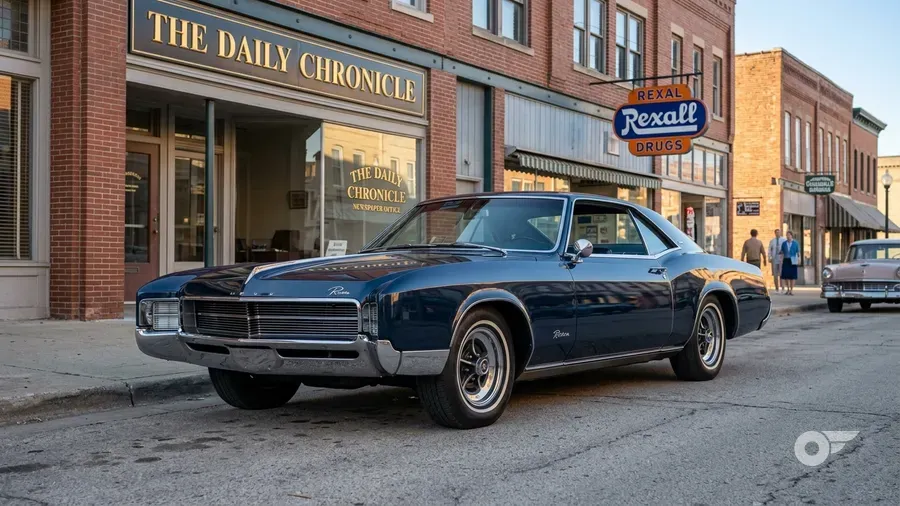
Buick Riviera 2nd Gen

Buick Riviera 2nd Gen

USA·Grand Tourer·1966–1970

Lincoln Continental Mark III (1958)

We haven’t profiled this car yet. Request to add

Chrysler Imperial 2nd Gen

We haven’t profiled this car yet. Request to add

Lincoln Continental Mark IV (1959)

We haven’t profiled this car yet. Request to add

Owning One

Why collectors want it

The 1959 and 1960 Eldorado is collectible for the same reason it existed: it is the most car Cadillac would sell you in the years the American automobile was at its most confident and least apologetic. The tailfin is the draw, and 1959 is the year everyone pictures, but the Eldorado backs the image with genuine scarcity and a clear internal hierarchy. The Biarritz convertible is the definitive car and the one the market chases hardest; good examples trade in six figures and the best have gone well past a quarter million. The Seville hardtop shares the styling and the tri-power engine for roughly half to two-thirds the money, which makes it the thinking buyer's way into the fins. Above both sits the Brougham, a Pininfarina-bodied four-door of which only 200 were made, a car that trades on rarity and coachwork rather than on the open top. What unites them is that this is a two-year-only shape, the peak of a design language Cadillac was already walking back for 1961. Values for the convertibles have climbed steadily and show no sign of cooling. You are buying the single most recognizable silhouette of the 1950s.

Which one to look for

The Eldorado line was three cars, and the choice is real. The Biarritz is the convertible and the one everyone wants, the definitive tailfin Cadillac, and it commands the strongest money by a wide margin. It is the grail of the ordinary Eldorado range and the car to buy if resale and desirability matter. The Seville is the two-door hardtop, mechanically identical, wearing the same fins and the same 345 horsepower tri-power engine, and it sells for a good deal less simply because it has a fixed roof. For a buyer who wants the look and the presence without convertible money, the Seville is the quiet value of the generation. Then there is the Brougham, and it is a different animal entirely: a four-door hardtop whose body was hand-built by Pininfarina in Turin, just 99 in 1959 and 101 in 1960. It cost $13,075 new, nearly twice a Biarritz, and today it trades on rarity and coachbuilt provenance rather than on being a convertible. It is the connoisseur's Eldorado, and the hardest of the three to restore. Year to year the cars barely changed, so condition and body style, not model year, decide value.

Biarritz · 1959-1960

The convertible and the definitive Eldorado of the generation, carrying the 345hp tri-power 390 V8 and the year's tallest fins. The car the market chases hardest and the one that sets the values.

Brougham · 1959-1960

The four-door hardtop flagship, its body hand-built by Pininfarina in Turin and shipped back to Detroit for final assembly. Trades on rarity and coachbuilt provenance rather than on the open top, and is the hardest of the three to restore.

Seville · 1959-1960

The two-door hardtop, mechanically identical to the Biarritz with the same fins and tri-power engine, but with a fixed roof. The quiet value of the generation.
What owning one is like

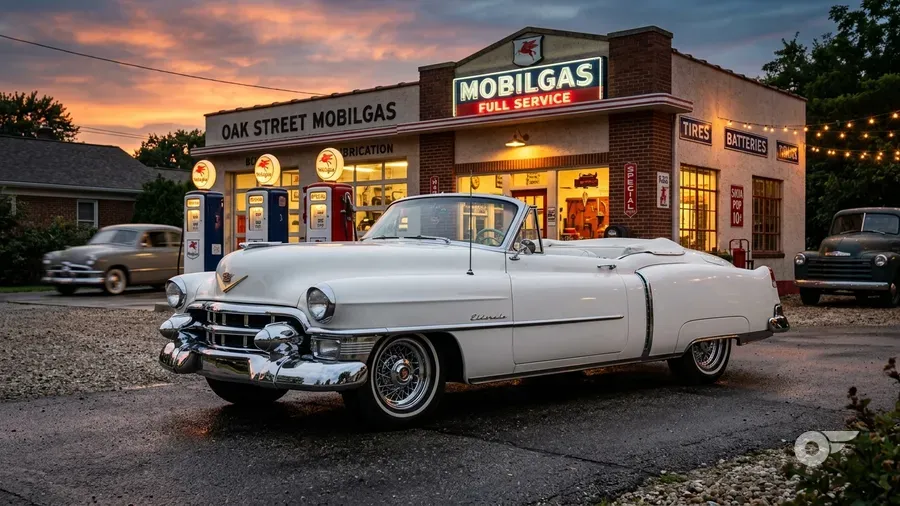
Living with a tailfin Eldorado is mostly a matter of scale and trim. The driveline is the easy part: the 390 V8 and four-speed Hydra-Matic are stout, unstressed, and happy to pile up miles with routine care, and parts for them are shared across the wider Cadillac range. What demands attention is everything bolted to the outside and wired to the inside. The brightwork is vast, much of it Eldorado-specific, and once pitting or damage sets in, correct replacements are scarce and dear. The power accessories are period-complex and now old: power windows and seats slow or stall, the optional air conditioning is its own project, and vacuum-operated systems leak with age. Rust is the real enemy on a car this large and this heavily decorated, hiding in the lower body, floors, trunk, and frame, and it is expensive to chase once it takes hold. The Brougham adds another layer of complexity, with its hand-built coachwork and trim you will not find on any other Cadillac. None of this makes the car fragile. It makes it a big, complicated, deeply satisfying thing to own, best bought already sorted rather than as a project.

Upkeep & parts

The good news for an Eldorado owner is that the hard-working parts are the cheap parts. The 390 V8, the Hydra-Matic, the brakes, the suspension, and most of the electrics are shared with the volume Cadillac line of the period, so mechanical service is straightforward and a competent classic shop can handle it. The Cadillac and LaSalle Club is the marque authority and the single best resource an owner has, with thousands of members, a research center, and decades of accumulated knowledge on exactly these cars; the GM Heritage Center can supply build records that both confirm originality and add value. Where the budget goes is trim and brightwork. Re-plating the acres of chrome on one of these cars runs into real money, and sourcing correct Eldorado-specific stainless and pot-metal takes patience and a network. Reproduction support is thinner than it is for a Chevrolet of the same era, so the clubs and specialist vendors matter more. Keep it garaged against rust, budget for the occasional accessory motor or vacuum repair, and reserve the serious money for a proper cosmetic restoration if you ever want one. Mechanically, this is one of the more forgiving cars of its size and grandeur to keep on the road.

Country of origin
USA
Class
Luxury
Production years
1959–1960
Units built
~4,855
Model
Eldorado
Nickname
No nickname
Body
Convertible, Coupe, Sedan
Layout
Front-engine, RWD
Engine
390ci OHV V8, 345hp, standard tri-power (three two-barrel carburetors)
Transmission
4-speed Hydra-Matic automatic
Designer
Harley Earl and Bill Mitchell (GM Styling leadership); Chuck Jordan (Cadillac chief designer); Dave Holls (tailfins)