Octane Files
Browse CarsRolls-Royce Silver Cloud I

Rolls-Royce Silver Cloud I

Overview

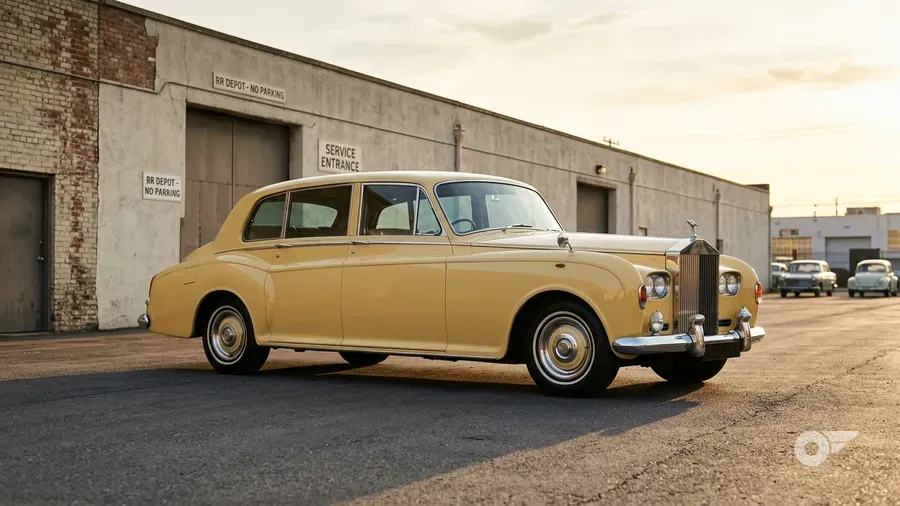
Rolls-Royce announced the Silver Cloud in April 1955, and for a company that had spent fifty years selling chassis to other people, it was a quiet revolution. The car arrived as a finished product: a full-width standard steel saloon, its shell pressed by the Pressed Steel Company, then painted and trimmed at Crewe, and designed in-house by John Blatchley. Underneath sat a new welded box-section frame, three inches longer in the wheelbase than the one it replaced and, by the factory's own account, 46 percent stiffer in torsion. The engine was the 4,887cc inlet-over-exhaust six, the last descendant of a design that went into the Rolls-Royce Twenty of 1922, and the four-speed Hydra-Matic that Crewe built under licence from General Motors was standard rather than an option for the first time. The point of all this was volume. The Silver Dawn had managed fewer than 800 cars in six years. The Cloud I built 2,238 standard saloons in under four, plus 85 long-wheelbase cars and 121 chassis sent out bare to coachbuilders, before the V8 Silver Cloud II replaced it in 1959.

Distinctions

The defining attributes and collector status that make this car garage-worthy.

Octane Files Select
Renowned for its history, engineering, or cultural weight.

Collectibility scorecard

Rated 1 to 10 on the traits that matter for owning, driving, and holding on to a car like this.

Desirability
7/10
Rarity
6/10
Driving thrill
3/10
Investment trajectory
4/10
Usability
5/10
Ease of restoration
4/10
Cultural impact
8/10
Electronic dependence
Fully analogHeavily electronic

Nothing on this car is electronic. Fuel arrives through twin SU carburettors, the spark comes from a coil and distributor, and the throttle is a rod linkage from pedal to engine. The optional power steering is hydraulic. The brake servo is a friction disc spun by the gearbox rather than anything powered. The only electrical sophistication anywhere is the adjustment for the rear dampers, and that is a switch and a motor. Everything that can go wrong can be found with a test lamp and a spanner.

Market data

Demand tier, price trend, and typical values by condition, based on recent sales data.

Demand tier
EntrySolidHighBlue-chip

A dependable market. Well-kept cars hold their value and find ready buyers.

Value trajectory
AppreciatingStableCooling

Values are holding steady. What you pay today is what it's worth tomorrow.

Price by condition
Driver
$25k
Excellent
$55k
Concours
$90k

This band describes the standard steel saloon, which is what nearly everyone buys. It is a flat market rather than a falling one: UK auction results since 2020 sit around a median of £24,000 with roughly three cars in four selling, and 2026 results have landed in the same place. Project cars go for almost nothing and then cost a fortune, which is why the spread at the bottom is so wide. Coachbuilt cars are not in this band at all. The Mulliner and Radford estate car made $583,000 at Amelia Island in 2017 and the Mulliner dropheads live in that world. The tier reflects the saloon: a genuinely significant car the market has never priced as one.

Values as of August 2026.

Buyer's guide

What anyone seriously considering this car should know first.

Why it's worth it
The last six-cylinder Rolls-Royce, and the shape most people still picture when they hear the name
Callout
The last Rolls-Royce offered both as a finished car and as a bare chassis for your own coachbuilder
What to watch for
Buy the structure and take an expert with you. The Rolls-Royce Owners' Club is blunt about the arithmetic: rebuild the coachwork on a rusty Cloud and you can spend several times the car's value before you have touched the mechanicals. Rust starts where you cannot see it. The front wing wells rot back toward the bulkhead, the rear chassis legs can go through entirely, and the body-mounting outriggers are fabricated pieces that are far easier to buy than to recreate. The sidelight pods bubble where the lamps are soldered to the wing, the sills and inner sills hide the worst of it, and the battery sits on the right-hand rear chassis leg with the consequences you would expect. Doors, bonnet and boot lid are aluminium alloy on a steel structure, so look hard at every joint between the two. The six is the trap underneath because it will run sweetly with serious problems inside it. Hagerty's guide puts the line at half a litre of oil per thousand miles; more than that points to a rebuild. Check the servo, check the rear axle, and see whether the car stands proud or squats at the back. Then order the build record from the Rolls-Royce Enthusiasts' Club, which holds them for every car Crewe made.

The Story

Driving character

The Motor got 102.9mph out of a standard saloon in 1956 and 0-60mph in 13.5 seconds, which was respectable for two tonnes and entirely beside the point. The Cloud is defined by absence: no vibration through the seat, no gearchange you can feel, no engine noise where you expect to hear it. The Hydra-Matic was built at Crewe under General Motors licence and moves between ratios without announcing itself. The steering is heavy at parking speeds unless the car has the power assistance that became optional in 1956, and light and remote once rolling, which is exactly what a chauffeur wanted. The rear dampers can be firmed up on the move by an electric control, so the car has two personalities on the same road. The brakes are the character piece. Assistance comes from a friction disc driven off the gearbox, a design Rolls-Royce licensed from Hispano-Suiza in the 1920s, so it builds with road speed instead of engine vacuum. They are strong once you are moving and need a deliberate shove when you are not. Almost nobody who has driven a properly set-up Cloud wants to convert them to discs.

Design

Blatchley began with a quarter-scale model in 1951, codenamed Siam, and what came out of it settled the argument about what a postwar Rolls-Royce should look like. Everything before it, the Silver Dawn included, was a prewar car with the running boards taken off. The Cloud is full-width, the wings folded into the body, one long unbroken flank falling slightly toward the tail. He worked under Ivan Evernden, who ran the styling department, and the discipline shows in what is missing. No fins. No chrome scallops. Nothing that pins it to a particular year of the 1950s, which is why it aged so slowly. The radiator shell and the Spirit of Ecstasy do all the identification work, and that is precisely why the Bentley S1 needed only a different grille and badges to become a different car. The detail most people miss is material. Doors, bonnet and boot lid are aluminium alloy hung on a Pressed Steel shell, a coachbuilder's habit carried into a mass-produced body. Inside, burr walnut and Connolly hide are laid out flat and horizontal, so the dashboard reads as furniture rather than instrumentation.

Motorsport pedigree

There is none, and there was never going to be. By the mid-1950s Rolls-Royce Limited was principally an aero-engine business with a car division attached, and Crewe entered nothing. The Silver Cloud was engineered to remove sensation rather than supply it: a two-tonne body-on-frame saloon on drum brakes, with an automatic gearbox and a company policy of not publishing power outputs. There was no class it could have contested and no reason to try. The badge's competition record belongs to its engines instead. The Rolls-Royce R won the Schneider Trophy in 1929 and 1931 in Supermarine seaplanes, and one of them drove Malcolm Campbell's Campbell-Railton Blue Bird to 301.337mph at Bonneville in September 1935, the first car past 300. The Bentley name on this car's identical twin carries five Le Mans wins from 1924 to 1930, all earned by a company Rolls-Royce did not own until it bought Bentley out of receivership in 1931, and Bentley quit racing after 1930 saying it had learned enough about speed and reliability. So the Cloud's natural ground is the concours lawn and the long continental tour, and its clubs are organised around exactly that.

In culture

In 1958 David Ogilvy wrote what is still the most famous car advertisement ever printed, and the car in it was this one. The headline, "At 60 miles an hour the loudest noise in this new Rolls-Royce comes from the electric clock", was not his own line. He lifted it from a road test in The Motor, which is a very Rolls-Royce way for a legend to begin. Copywriting courses still teach it. The same year Lesney issued Matchbox No. 44, a metallic blue Silver Cloud on grey metal wheels with no glazing in the windows. For a generation of British children that toy was the first Rolls-Royce they ever held, and it stayed in the range until a Phantom V took its place. The screen roles went to the cars that came after. Burke's Law ran a 1962 Cloud II as its detective's transport and Antonioni put a Cloud III drophead in Blow-Up. What the Cloud I got instead was ubiquity. It is the car in the wedding-hire fleet, the shape a cartoonist draws when the joke needs a rich man, and the reason most people believe they know what a Rolls-Royce looks like.

Rivals

Cars from other manufacturers that competed for the same buyers when new.
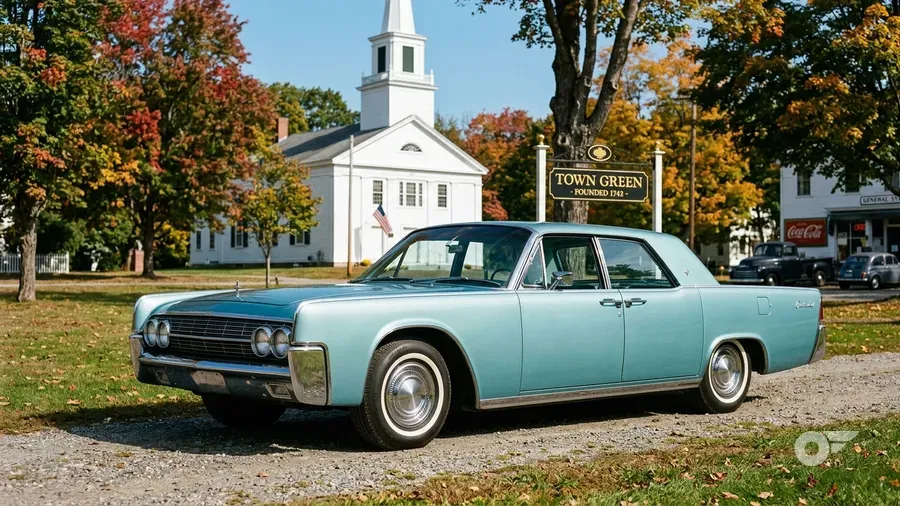
Lincoln Continental 4th Gen

Lincoln Continental 4th Gen

USA·Luxury·1961–1969
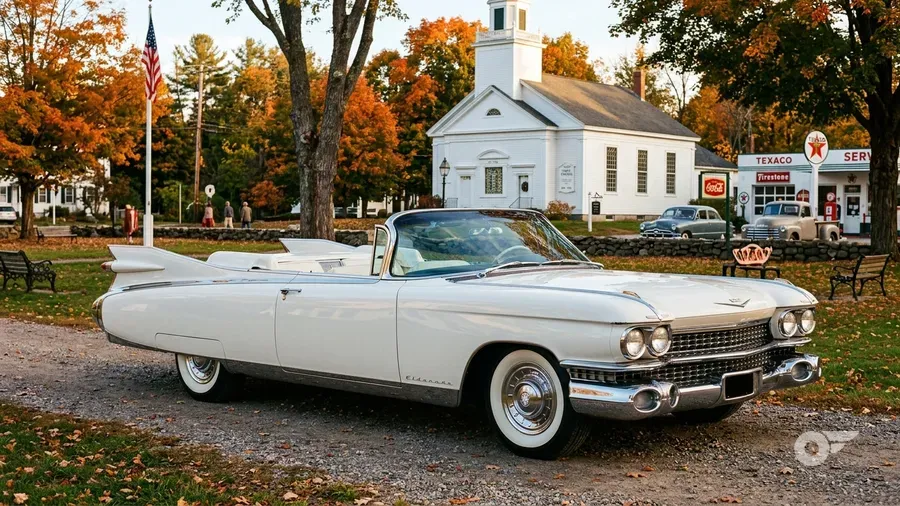
Cadillac Eldorado 4th Gen

Cadillac Eldorado 4th Gen

USA·Luxury·1959–1960

Cadillac Series 62 5th Gen

We haven’t profiled this car yet. Request to add

Facel Vega Excellence

We haven’t profiled this car yet. Request to add

Mercedes-Benz 300 W186

We haven’t profiled this car yet. Request to add
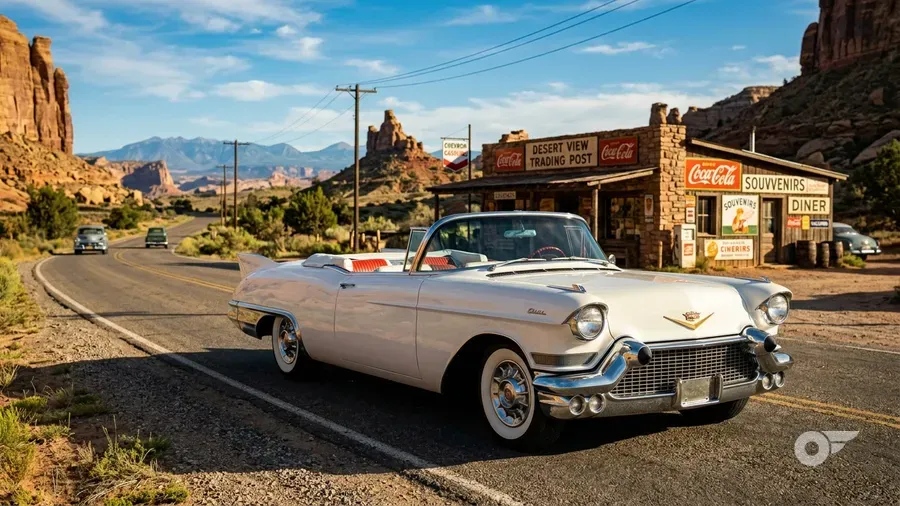
Cadillac Eldorado 3rd Gen

Cadillac Eldorado 3rd Gen

USA·Luxury·1957–1958

Owning One

Why collectors want it

A Silver Cloud I is the cheapest way into a Rolls-Royce that genuinely matters, and that combination is rarer than it sounds. This is the last six-cylinder car the company built, the last it sold as a bare chassis, and the shape that fixed what a Rolls-Royce looks like for everyone who came afterwards. Yet the standard steel saloon has spent two decades as an affordable classic. UK auction results since 2020 cluster around a median in the mid-twenty-thousands of pounds, and sound driving cars change hands for less than a new family hatchback. The hierarchy inside the generation is steep. The 2,238 standard saloons are the volume car and set the market. The 85 long-wheelbase cars carry a modest premium over them. The 121 coachbuilt chassis sit in a different market altogether: the H.J. Mulliner and Harold Radford estate car, chassis LSMH65, made $583,000 at RM Sotheby's Amelia Island sale in 2017, and the Mulliner dropheads trade in company the saloons never see. What holds the ordinary cars up is that they are good cars, not that they wear the badge. The six is smoother than the V8 that replaced it, and period testers said so at the time.

Which one to look for

Three things were sold here and they are nowhere near each other in value. The standard steel saloon is the car: 2,238 built, and the one to buy unless you have a specific reason not to. The long-wheelbase saloon arrived in September 1957, four inches longer between the axles, outwardly almost identical, with a division available for owners who were driven rather than driving; 85 were built and the extra length suits the shape. The other 121 chassis left Crewe bare. H.J. Mulliner built the dropheads everybody wants, Park Ward, James Young, Hooper and Freestone & Webb bodied most of the rest, and Harold Radford turned a handful of saloons into estate cars. Those are a separate market and a separate conversation. Within the saloons the running changes matter more than the year on the logbook. Twin brake master cylinders came in April 1956, power steering and air conditioning became options the same year, and the carburettion was upgraded in September 1957. A later car with power assistance is a far easier proposition than an early one without it. Note too that there is no Rolls-Royce Continental. The light, fast, coachbuilt version of this car wore a Bentley badge.

Coachbuilt Chassis · 1955–1958

Chassis supplied bare to the surviving coachbuilders. H.J. Mulliner built the dropheads that lead the market, with Park Ward, James Young, Hooper and Freestone & Webb bodying saloons and coupés, and Harold Radford converting a few saloons into estate cars. A separate market from the steel saloons in every respect.

Long-Wheelbase Saloon · 1957–1958

Announced in September 1957, four inches longer between the axles at 127in, with the extra room going to rear legroom and a division available for owners who were driven. Almost impossible to spot alongside a standard car until you look at the rear door.

Standard Steel Saloon · 1955–1958

The volume car and the one that defines the generation. Body shell pressed by the Pressed Steel Company with aluminium doors, bonnet and boot lid, then painted and trimmed at Crewe. Power steering and air conditioning became options during 1956; twin brake master cylinders arrived in April 1956.

What owning one is like

Owning one is less alarming than the badge suggests and more work than the shape implies. The mechanical parts are robust and were built to be maintained rather than replaced, which is why so many are still running their original engines seventy years on. What punishes owners is bodywork and neglect, in that order. Rust is the whole game and it hides in the wing wells, the rear chassis legs and the body mounts rather than anywhere you would look first. The interior is the other large bill: split hides, lifting veneers and, on too many cars, a dashboard cut about for a stereo or a bolted-in air-conditioning box. Day to day it drinks fuel at around 14mpg, it is over seventeen feet long, and without the optional power steering it takes real effort to park. The braking system is a semi-hydraulic, semi-mechanical arrangement that looks fearsome on paper and turns out to be reassuring in practice, because even a total hydraulic failure leaves the rear brakes working. Keep the servo adjusted and the axle serviced and the car simply keeps going.

Upkeep & parts

Parts are the good news. Flying Spares and Introcar between them stock most of what a Cloud needs, from engine internals to trim, and the mechanicals are straightforward enough that a competent classic garage can work on them without marque training. Body panels are available too, but they are expensive and need laborious fitting, which is where restoration budgets disappear. Documentation is unusually good. The Rolls-Royce Enthusiasts' Club is licensed by the factory and holds the build records for every historic Rolls-Royce and Bentley, so you can establish exactly what your chassis left Crewe with. The Rolls-Royce Owners' Club in America publishes a frank buyer's guide to the Clouds. The Rolls-Royce Foundation keeps the archive. Budget by category rather than by year. Servicing and mechanical work are ordinary money. Brakes and hydraulics become a proper job once the servo is involved. Chrome, hides and veneers are specialist trades at specialist prices, and coachwork is where a cheap car turns into an expensive one. The RROC's own advice still holds: buy the best one you can afford and let somebody else absorb the restoration.

Country of origin
UK
Class
Luxury
Production years
1955–1958
Units built
~2,444
Model
Silver Cloud
Nickname
No nickname ("Chinese eye" names the Mulliner Park Ward Silver Cloud III coupes specifically, not this generation)
Body
Sedan, Coupe, Convertible
Layout
Front-engine, RWD
Engine
4,887cc inlet-over-exhaust straight-six, twin SU carburettors
Transmission
4-speed Hydra-Matic automatic, built at Crewe under General Motors licence
Designer
John Polwhele Blatchley (chief styling engineer, under Ivan Evernden)