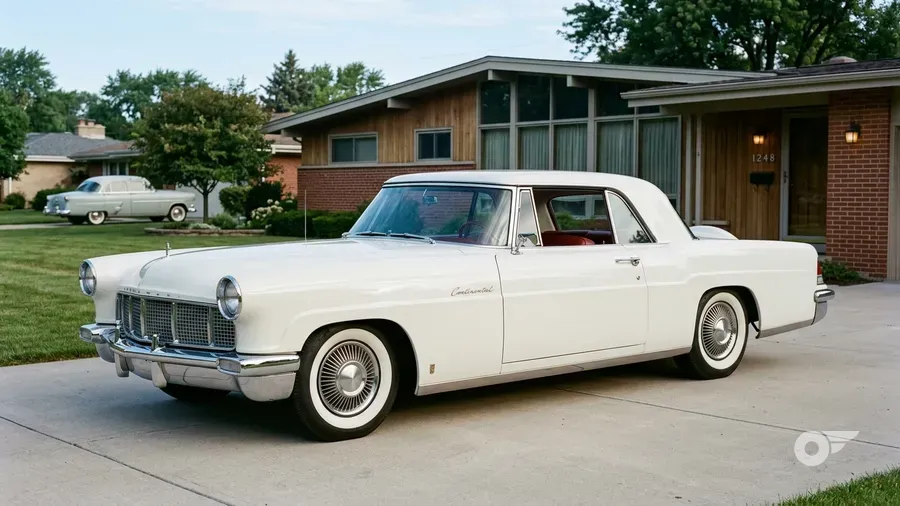
Octane Files
Browse CarsLincoln Continental 4th Gen

Lincoln Continental 4th Gen

Overview

Every American car got bigger in 1961 except this one. Lincoln had lost roughly sixty million dollars on the 1958 to 1960 Continentals, and Robert McNamara's answer was to take fifteen inches out of the length, eight out of the wheelbase and 326 pounds out of the weight, then charge more than Cadillac for the result. It worked because the shape was extraordinary.

Elwood Engel had drawn it as a two-door Thunderbird proposal that a product committee turned down. McNamara saw the full-size clay in Engel's studio about a week later and had it made into a four-door Lincoln instead: unbroken slab sides with a thin chrome edge running the full length of the car, a low grille, and rear doors hinged at the back so all four opened into one enormous aperture.

For the first five years Lincoln built exactly two body styles, a sedan and a four-door convertible, and backed them with a two-year, 24,000-mile warranty longer than anything else built in America, after running every engine on a dynamometer and road-testing every finished car.

It ran nine years and sold about 334,000. It also became the car the presidency rode in, which is a separate story and a heavier one.

Distinctions

The defining attributes and collector status that make this car garage-worthy.

Legend
A car that transcended the hobby, known far beyond the people who drive them.
Octane Files Select
Renowned for its history, engineering, or cultural weight.

Collectibility scorecard

Rated 1 to 10 on the traits that matter for owning, driving, and holding on to a car like this.

Desirability
9/10
Rarity
4/10
Driving thrill
5/10
Investment trajectory
7/10
Usability
6/10
Ease of restoration
4/10
Cultural impact
9/10
Electronic dependence
Fully analogHeavily electronic

Everything that makes the car go is mechanical: a carburetted V8 with points-and-coil ignition, a mechanical fuel pump, a hydraulic three-speed automatic and no engine management of any kind. What raises the score is the sheer amount of powered convenience wired into a 1960s luxury car. Power windows, seats, steering and brakes are standard-issue, and the four-door convertible adds a genuinely intricate electro-hydraulic roof: a pump, two cylinders, solenoid valves, relays and limit switches that have to fire in the right order along with the deck lid. It is the most electrically dependent part of the car by a wide margin.

Market data

Demand tier, price trend, and typical values by condition, based on recent sales data.

Demand tier
EntrySolidHighBlue-chip

Strong, sustained collector demand. Good examples never wait long for a buyer.

Value trajectory
AppreciatingStableCooling

Values are climbing. The market wants more of these than exist.

Price by condition
Driver
$14k
Excellent
$34k
Concours
$60k

The tier reflects the convertible rather than the whole generation, and the spread inside it is enormous. Recorded four-door convertible sales sit at a median near 72,700 dollars while running sedans still trade for well under twenty thousand, and current listings across the nine years start around 4,500 for a project. Two headline results have been excluded as unrepresentative: a 1,100,000 dollar sale in January 2026 and a 200,200 dollar Barrett-Jackson result the same month, both heavily modified cars rather than stock examples. The trajectory reads appreciating because convertibles and clean early short-wheelbase sedans have kept climbing while the rest has been flat. Band figures describe a volume sedan, August 2026.

Values as of August 2026.

Buyer's guide

What anyone seriously considering this car should know first.

Why it's worth it
It shrank fifteen inches in 1961 while every American rival was still growing
Callout
The last four-door convertible sold by an American manufacturer, dropped after 1967
What to watch for
Decide first whether you are buying a convertible, because it changes everything. The four-door top is a hydraulic and electrical sequence with two cylinders, a pump, solenoid valves, relays and limit switches, all of it working with the deck lid, and it originally ran on brake fluid that attacks seals over time. A car whose top cycles smoothly end to end has been sorted by somebody competent; a car whose owner demonstrates it with the engine off and a nervous smile has not. Cylinders are replaced in pairs, because one working harder than the other bends the frame. Rust matters more than on a body-on-frame rival. These are unitised cars, so the floors, rockers and torque boxes are structure, and convertibles add water traps around the well and the rear deck. Match the engine to the year. The 430 ran to 1965, the 462 arrived for 1966, and the 460 replaced it during 1968, and a seller who cannot tell you which is in the car has not looked. Trim is year-specific and getting scarce, but sedans are plentiful enough that walking away from a rough one costs nothing.

The Story

Driving character

This is a car that rewards a light touch. The MEL V8s and the 460 that replaced them are long-stroke engines built for torque at low revs, so the Continental leaves a junction on a whisper of throttle and reaches an indicated seventy without ever sounding like it is working. The 1961 car needed a bit over eleven seconds to sixty, which felt appropriate rather than slow, and by 1968 the 365hp 460 had made it genuinely quick in a straight line. The gearboxes suit it. Turbo-Drive in the early cars and the C6 from 1966 both shift softly enough that you notice by the speedometer. Weight is the honest limitation. Slow power steering with almost no feedback, drum brakes on the early cars and well over two tons mean the car should be driven with distance in hand rather than hustled. The centre-opening doors change the experience more than the numbers do. Open all four on a convertible with the top down and the entire side of the car is gone, which no modern car will ever do for you.

Design

The story starts with a rejected Thunderbird. Elwood Engel's two-door proposal was turned down by committee, then rescued a week later when Robert McNamara walked through the studio and saw the full-size clay, and the finished Lincoln kept the essentials of that drawing intact. What makes it work is restraint. There are no fins, no scoops, no side spears. The flanks are a single unbroken surface, and the entire ornamental budget is spent on one thin chrome moulding that runs from the front wheel arch to the tail and turns the corner at each end, framing the car like a picture. The grille is low and wide, the roof is thin and formal, and the proportions are symmetrical enough front to rear that the sedan reads almost like a scale model of itself. The rear-hinged doors were a packaging decision as much as a styling one. With no B-pillar interruption at the leading edge, a short car could still be easy to get into. For 1964 the roof was squared and the glass area grew, and the 1966 restyle stretched the nose. Neither undid the original idea, which is the highest compliment available.

Motorsport pedigree

There is none, and the absence is structural. Lincoln ran no factory competition programme in the 1960s, the 1957 AMA recommendation against manufacturer racing was still shaping Ford policy when the car launched, and no series existed for a two-and-a-half-ton luxury sedan. The MEL V8 was built for silence and low-speed torque and never became a performance engine in anyone's hands. Lincoln also had somewhere else to put its engineering effort, and it did. The whole 1961 programme was a durability exercise: every engine got an extended dynamometer run-in, every finished car got a twelve-mile road test, and the division backed the result with a two-year, 24,000-mile warranty at a time when American manufacturers offered ninety days. That was the competition Lincoln chose to enter, and it won it. The nearest thing to a racing connection is at the end of the run. The 460 fitted from 1968 belongs to Ford's 385-series big-block family, and the same architecture carried the Boss 429 cylinder heads Ford built to homologate an engine for NASCAR against Chrysler's Hemi.

In culture

No car of the 1960s carries more weight, and most of it attaches to a single example. SS-100-X was a 1961 four-door convertible built at Wixom and listed at 7,347 dollars, lengthened about three and a half feet by Hess and Eisenhardt, fitted with three interchangeable roofs and a hydraulic lift that raised the rear seat ten and a half inches so the president could be seen. Ford leased it to the federal government for 500 dollars a year and delivered it to the White House in June 1961. What surprises people is what happened afterwards. The car was not retired. It was rebuilt, repainted black, given 1,600 pounds of armour and a fixed enclosure of thirteen bulletproof glass panels, and returned to presidential service with Lyndon Johnson in October 1964. It carried Johnson, Nixon, Ford and Carter until March 1977, covering roughly 105,942 miles, and has been on display at The Henry Ford since 1981. The shape had a second life on screen. Goldfinger crushed a Continental sedan into a cube in 1964, and The Matrix put its characters in a black 1965 in 1999.

Rivals

Cars from other manufacturers that competed for the same buyers when new.
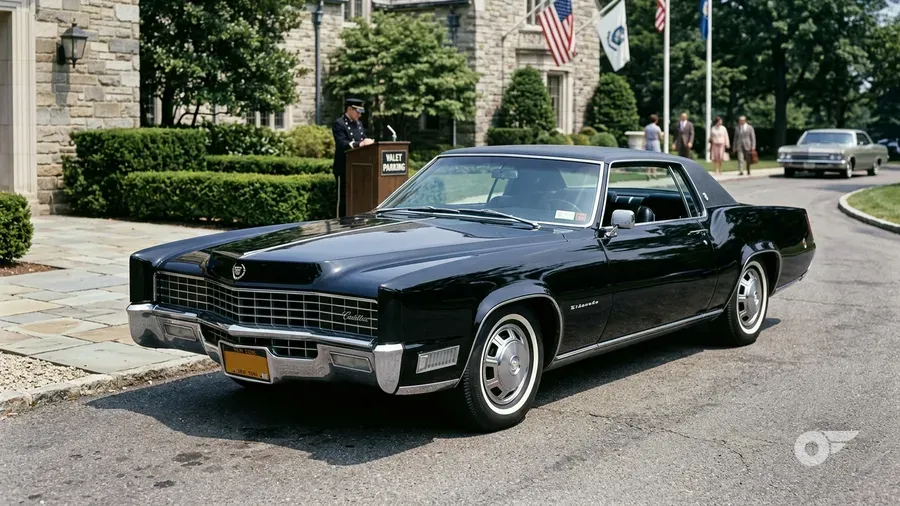
Owning One

Why collectors want it

This is the rare American luxury car whose reputation rests on design judgment rather than on size or power, and outsiders ratified it early. The Industrial Designers Institute, which almost never recognised cars, gave the 1961 Continental a bronze medal, and Car Life named it its 1961 Engineering Excellence Award winner. Sixty-five years on, the shape has not dated, which is the whole argument.

The market splits hard by body style and everyone knows it. Four-door convertibles are the prize and the reason: no other major American manufacturer built one after the war, and nobody has built one since. Recorded convertible sales run a median around 72,700 dollars, against sedans that can still be bought running for well under twenty. The 1967 cars are the last convertibles, at 2,276 built.

Within the sedans the hierarchy is subtler. Early 1961 to 1963 cars on the short 123-inch wheelbase are the purest expression of Engel's drawing and the ones collectors chase. The 1966 to 1969 coupes are the value entry into the generation and are quietly the best-driving cars of the nine years.

Which one to look for

The nine years divide into three cars. The 1961 to 1963 sedans and convertibles ride a 123-inch wheelbase and are the shortest, cleanest reading of Engel's design, with the tightest cabin and the 430 V8 at 300hp, then 320 from 1963. Purists start and often stop here. For 1964 Lincoln stretched the wheelbase to 126 inches, squared off the roof and put much more glass in the car, which made it far more usable without breaking the shape. These are the sensible ones. The 1966 restyle added five inches, a new 462 V8 with 340hp and, for the first time, a two-door hardtop. Sales jumped 36 per cent that year to 54,755, the generation's high point. Late cars from 1968 and 1969 use the 460 V8 at 365hp and are the quickest. The grail is unambiguous: a four-door convertible, ideally an early short-wheelbase car, with a top that works. The last of them were built in 1967, just 2,276 that year. The variant most people underrate is the 1966 to 1969 coupe. It is the least fashionable body, has no rear-hinged doors and no hydraulic roof to fail, and costs a fraction of anything open.

Convertible · 1961-1967

The four-door convertible, and the reason this generation is collected. The first offered by a major American manufacturer after the war and the last one any American manufacturer has sold. The fabric roof stows under a rear-hinged deck lid, worked by two hydraulic cylinders, a pump, solenoid valves, relays and limit switches. Rear doors are hinged at the back with frameless glass, so opening all four removes the entire side of the car.

Coupe · 1966-1969

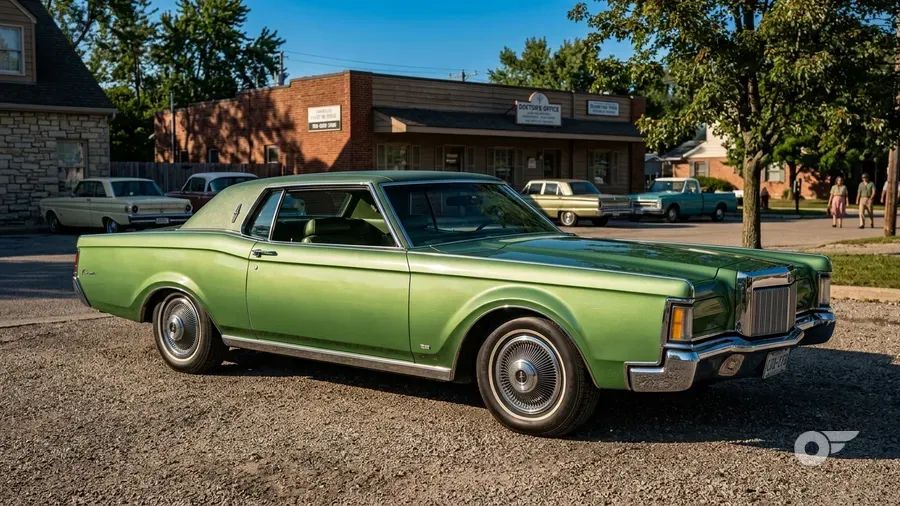
The two-door hardtop introduced with the 1966 restyle, which also brought five extra inches and the 462 V8 at 340hp. No rear-hinged doors and no hydraulic roof to maintain, which makes it the easiest car of the generation to own and the cheapest to buy. Quietly the best-driving of the nine years, particularly the 1968 and 1969 cars with the 365hp 460.

Executive Limousine (Lehmann-Peterson) · 1964-1969

A stretched Continental built by the Chicago coachbuilder Lehmann-Peterson, and unusual in that Ford tested the conversion and extended the full Lincoln two-year, 24,000-mile warranty to it. Debuted at the New York show in April 1964. The connoisseur's Continental and almost never offered.

What owning one is like

The good news is that this is a genuinely usable old car. The V8s are understressed, the automatics are durable, parts support for the mechanical side is decent, and a sorted sedan will cross a state without complaint. Most owners drive them far more than they expected to. The convertible roof is where the real ownership story lives. Two hydraulic cylinders, a pump, solenoid valves, relays, limit switches and the deck lid all have to work in sequence, and the original system used brake fluid that degrades seals over decades. Owners either convert to modern fluid with a full component refresh or spend years chasing intermittent faults. Cylinders get replaced as a pair; one working harder than the other slowly bends the top frame. Rust is structural. Unitised construction means the floors, rockers, torque boxes and cowl carry loads, and convertibles trap water around the well. Trim and glass are year-specific, and the 1961 to 1963 cars are hardest to supply. Everything else is a normal 1960s American car: rebuild the brakes, rebuild the suspension bushings, keep the cooling system honest and enjoy it.

Upkeep & parts

Support is unusually good for a car this size. The Lincoln and Continental Owners Club covers the generation properly, sets judging standards and is where the knowledge sits, and both TheLincolnForum.Net and Lincoln Forums carry heavy day-to-day traffic on these cars specifically.

Convertible owners have a specialist trade of their own. Replacement hydraulic pumps, cylinders, hose sets, solenoid valves and limit switches are all available new, and a small number of shops do nothing but 1961 to 1967 Continental roof systems. Budget for a complete hydraulic overhaul when you buy an open car rather than hoping, because doing it once properly is far cheaper than doing it in pieces.

Mechanical parts are straightforward. The 460 shares its family with an enormous Ford truck and performance aftermarket; the earlier MEL engines are narrower but adequately served. Brakes, suspension, steering and cooling components are all reproduced.

Interior trim, glass and year-specific brightwork are the constraint, and early short-wheelbase cars are the hardest. Ford's Heritage Vault carries the original brochures free of charge, which is the quickest way to confirm what a given car left the factory with.

Country of origin
USA
Class
Luxury
Production years
1961–1969
Units built
~334,345
Model
Continental
Nickname
Slab-side
Body
Sedan, Convertible, Coupe
Layout
Front-engine, RWD
Engine
430ci (7.0L) MEL V8, 300hp (1961-1962); 430ci (7.0L) MEL V8, 320hp (1963-1965); 462ci (7.6L) MEL V8, 340hp (1966-1968); 460ci (7.5L) 385-series V8, 365hp (1968-1969)
Transmission
3-speed Turbo-Drive automatic (1961-1965), 3-speed C6 automatic (1966-1969)
Designer
Elwood Engel (under design vice president George W. Walker)