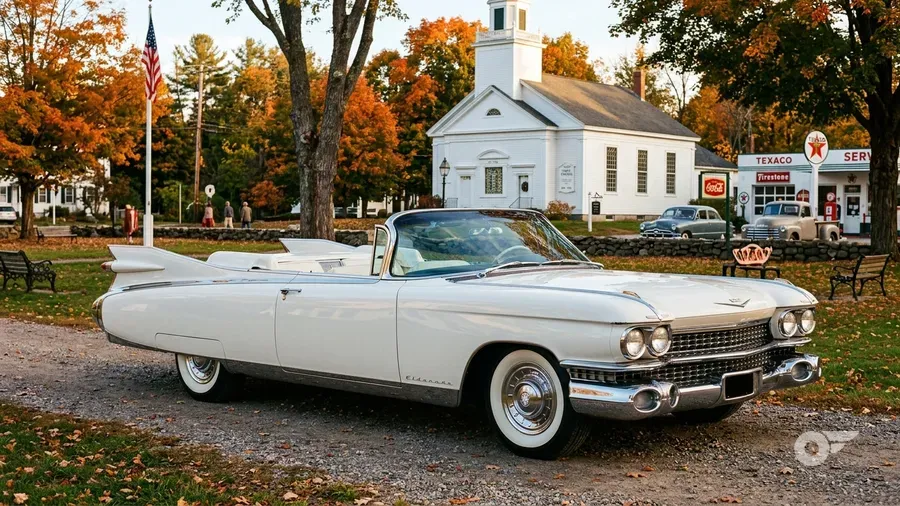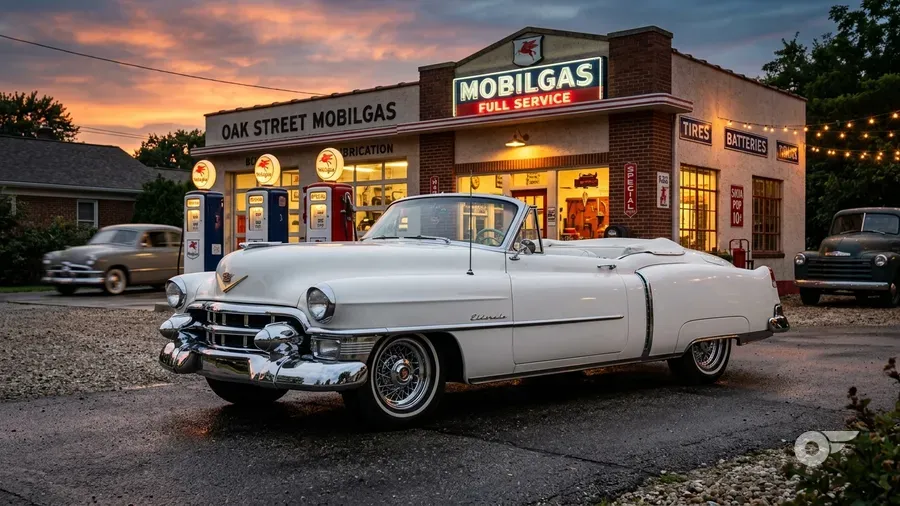
Cadillac Eldorado 1st Gen
USA·Luxury·1953–1953

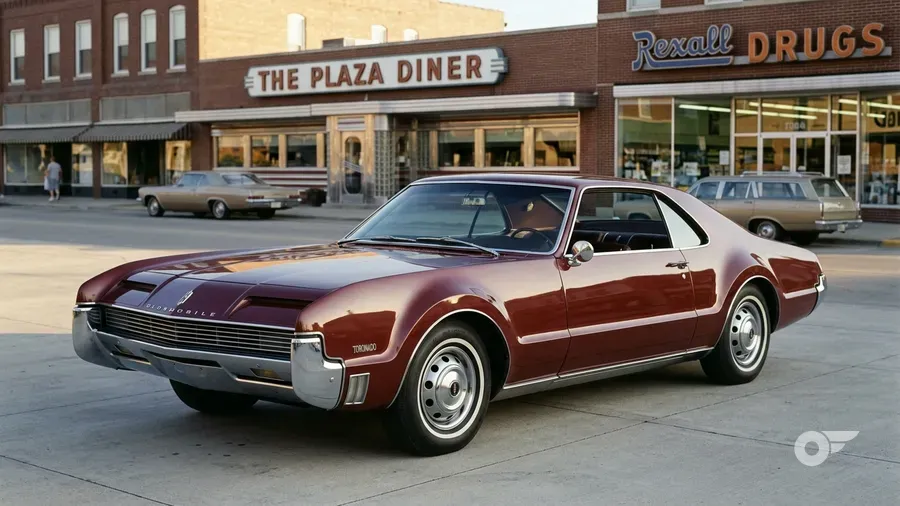
The 1967 Eldorado is the moment Cadillac stopped coasting on chrome and built something genuinely new. It was the division's first front-wheel-drive car and its first real personal luxury coupe, and it arrived a year after Oldsmobile's Toronado proved the layout could work in a big American car. Underneath sat GM's E-body and a clever packaging trick: the Turbo-Hydramatic was spun around and tucked beside the engine, driving the front wheels through a silent chain, which cleared the floor of a transmission tunnel and let a two-ton coupe ride flat and low. The body was the opposite of the tailfin era it replaced, all knife-edge fenders, hidden headlamps, and long clean flanks, and Bill Mitchell called it a personal favorite. Buyers agreed. The 17,930 cars sold in 1967 nearly tripled the old rear-drive Eldorado's best year and helped give Cadillac its finest sales year to that point. Over four seasons the engine grew from 429 to 472 to a 500 cubic inch V8, the last of which made the 1970 car the most powerful front-driver on earth. It is a landmark hiding behind a boulevard cruiser's manners.
The defining attributes and collector status that make this car garage-worthy.

Rated 1 to 10 on the traits that matter for owning, driving, and holding on to a car like this.
The driveline is entirely mechanical: a carbureted V8 with breaker-point ignition, a hydraulic Turbo-Hydramatic, and no engine computer of any kind, so nothing about how the car runs depends on electronics. It sits above fully analog only because of how much of the car is powered rather than manual. Power steering, power front disc brakes from 1968, power windows, six-way seats, climate control, and the vacuum-actuated hidden headlamps on 1967 and 1968 cars all add electrical and vacuum complexity a stripped prewar car never had. A driver still controls the car through direct linkages; the systems around the driver are what put it at a 2.
Demand tier, price trend, and typical values by condition, based on recent sales data.
A dependable market. Well-kept cars hold their value and find ready buyers.
Values are holding steady. What you pay today is what it's worth tomorrow.
Priced for decades as an unloved used Cadillac, the front-drive Eldorado still sits near the bottom of the postwar collector market despite its engineering significance and its styling, which is what makes it a Solid rather than Blue-chip car. Hagerty has summed it up as Rat Pack style on a rat rod budget. classic.com puts the generation's average sale near $26,000, with strong drivers trading well under that and only exceptional or heavily restored cars reaching the higher figures. Values have been broadly stable rather than climbing, held down by the more than 94,000 built and by lingering doubts about front-drive complexity that a good example quickly dispels. The 1967 and 1968 hidden-headlamp cars and the 500-powered 1970 draw the most attention within the generation.
Values as of July 2026.
What anyone seriously considering this car should know first.
Drive one and the front-wheel-drive layout mostly disappears, which was the whole point. There is no transmission hump, so the cabin feels enormous, and the nose simply pulls the car out of corners with a tidy, planted stability that a live-axle Cadillac of the same size could never manage in the wet. The V8s do their work in near silence. This is torque, not revs: the 472 and especially the 500 gather the car up on a wave of low-end shove, the Turbo-Hydramatic slurring between gears so smoothly you stop noticing it shift. Nobody bought an Eldorado to attack a canyon road, and it will not thank you if you try, leaning and understeering once you push past its comfort zone. What it does instead is cover ground at speed with a calm, isolated authority that still feels special, the long hood stretching out ahead, the ride absorbing everything. The steering is light and low-effort, tuned for the boulevard rather than for feedback. It is a car that makes a three-hour drive feel like one, and that is a rarer and more useful trick than outright pace.
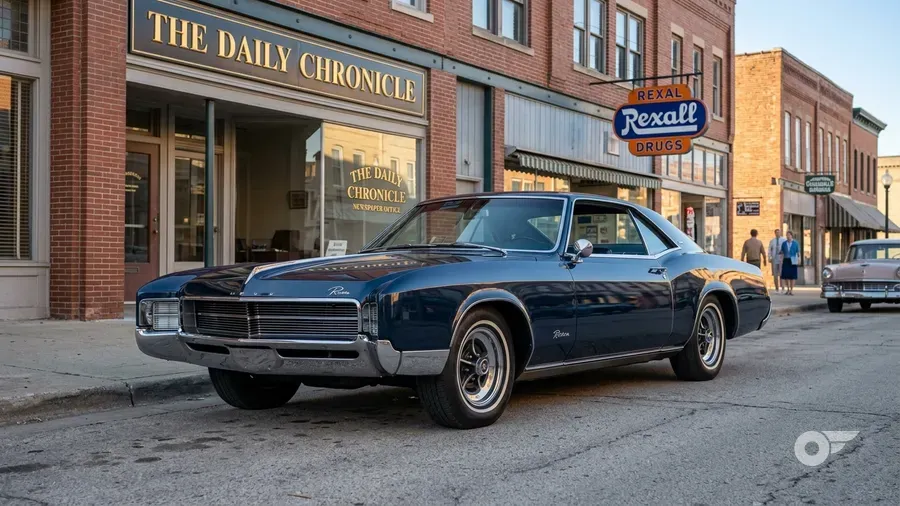
The shape is Bill Mitchell's studio at its most disciplined, and he counted it among his favorites. Where the tailfin Cadillacs had piled on chrome, the 1967 Eldorado went the other way, with a knife-edge crease running the length of the fenders, a formal razor-edged roofline, broad C-pillars, and almost no ornament on its flanks. The concept lineage runs through the XP-825 studies, and the production car was drawn in the Cadillac studio under Stan Parker, with Ed Taylor and Don Ropper credited as the principal designers. The signature detail is the vacuum-operated hidden headlamps of 1967 and 1968, which gave the front a clean unbroken grille when closed, a look that predicted where luxury styling would go for the next decade. For 1969 the headlamps were exposed and the front made squarer and heavier, a change most enthusiasts consider a step down. It shares its E-body architecture with the Oldsmobile Toronado and Buick Riviera, yet nobody would mistake one for the other. That was the achievement: a corporate platform car that still read, unmistakably, as a Cadillac.
This Eldorado, Cadillac's front-wheel-drive E-body flagship built for 1967-1970 alongside the Oldsmobile Toronado and Buick Riviera, has no motorsport pedigree. At close to two tons, the car was engineered around unibody construction and a front-drive layout borrowed from the Toronado's system, a ride tuned for isolating occupants from the road rather than connecting them to it. Cadillac offered it as a single body style, a Fleetwood Eldorado coupe with no separate performance sub-model or trim across all four model years, which underscores how singularly the car was aimed at one kind of buyer: someone who wanted Cadillac's biggest, most technologically ambitious car of the era, not a driver's car. Its real rivals were the Lincoln Continental Mark III and its own E-body siblings, the Riviera and Toronado, cars competing on comfort, technology, and prestige, not lap times. No factory racing effort was ever built around the Eldorado, and nothing resembling a privateer competition scene grew up around a heavy, front-drive luxury coupe from this era.
The front-drive Eldorado is the Cadillac of a very specific moment, the confident, wide-lapel turn of the 1970s, and it reads that way instantly on screen. It became shorthand for a certain kind of American success, the car of entertainers, executives, and anyone who wanted the newest and largest thing Cadillac made without the funeral-home formality of a Fleetwood sedan. Its real cultural weight, though, is quieter and more technical. This was the car that carried front-wheel drive from a curiosity into the American mainstream, one year after the Toronado broke the ground, and it did so at the very top of the market rather than the bottom, which is the reverse of how the layout would later spread. Every transverse-engine family sedan that followed owes a small debt to the idea that front drive could be premium rather than economy. The 500 cubic inch 1970 car has its own enduring fame among enthusiasts as a piece of superlative trivia, the biggest V8 and the most powerful front-driver, the kind of fact that outlives the car itself. It was aspirational when new, and it still fixes its decade in place the moment it rolls into frame.
Cars from the same manufacturer family, like platform siblings or shared-era relatives.
Cars from other manufacturers that competed for the same buyers when new.
The case for a front-drive Eldorado is that it gives you a genuine piece of engineering history wrapped in one of the best-looking bodies Cadillac ever shipped, for the price of a used commuter. This was the car that made front-wheel drive respectable in America, sharing its layout with the Toronado but wearing it with more restraint, and it did so while outselling everything Lincoln could field. The market has never treated it as blue-chip, and that is exactly the opportunity. Values sit in territory Hagerty has described as Rat Pack style on a rat rod budget, which means a sorted, handsome, air-conditioned Cadillac coupe changes hands for less than a project-grade muscle car. Within the four years the hierarchy is gentle rather than steep: the 1967 and 1968 cars carry the hidden headlamps most people want, the 1970 carries the 500 cubic inch engine and the bragging rights, and the 1969 sits quietly in the middle. None of them is rare, with more than 94,000 built, so condition and originality decide price, not year. Buy the nicest one you can find and it will not cost you money to own.
There were no factory sub-models to chase here, no Biarritz or performance package, just one Fleetwood Eldorado coupe that evolved year by year, so the choice is really about which season suits you. The 1967 is the purist's pick and the one that started it all, with the cleanest first-year detailing and the vacuum hidden headlamps up front, though it is also the only year without standard front disc brakes. The 1968 is arguably the sweet spot: it keeps the hidden headlamps, gains the larger 472 V8 and standard power front discs, and irons out the first-year teething. The 1969 loses the hidden lamps for exposed quad headlights and a squarer face, which cost it a little with collectors and make it the value buy of the four. The 1970 is the trophy year. Its 500 cubic inch V8 is the largest ever fitted to a production passenger car, and it made the Eldorado the most powerful front-wheel-drive car in the world, so it commands the strongest interest despite being the last and heaviest of the run. Condition still trumps year every time.
Living with one is mostly a pleasure, provided you make peace with its size and its thirst. These are heavy cars with big carbureted V8s, so fuel economy is a punchline, not a figure, and you will want a garage that fits eighteen feet of Cadillac. Mechanically the driveline is tough and forgiving. The item owners watch is the Morse chain inside the front transaxle, which can rattle and eventually wear, though a rebuilt unit is a known quantity rather than a mystery. The vacuum hidden headlamps on the earlier cars are the other quirk, prone to sticking or drooping as the hoses and actuators age, which is a tidy weekend fix once you learn the system. Expect the usual old-Cadillac electrical niggles: a power window that slows, a climate control that sulks, a seat motor that groans. Rust is the real enemy, hiding in the lower body and frame, and correct trim for these specific cars is genuinely hard to source, so a rusty or stripped project is a trap. A rust-free, sorted car, by contrast, is one of the most relaxing and imposing ways into the hobby.
Mechanical parts are the easy part of Eldorado ownership. The 429, 472, and 500 V8s share much of their design with the engines fitted across the full-size Cadillac range, so gaskets, pumps, brakes, ignition, and rebuild components are cheap and widely stocked, and any competent shop can service them. The Turbo-Hydramatic is a known quantity. The front-drive hardware is where it gets specialized: the transaxle, the Morse chain, and the constant-velocity joints are Eldorado-and-Toronado specific, and while rebuilders and specialists exist, this is not corner-garage work, so find one before you need one. Trim, brightwork, and interior parts unique to these cars are the genuine scarcity, and prices reflect it, which is the main reason to buy a complete car rather than chase missing pieces later. The Cadillac & LaSalle Club is deep and active, its Self-Starter magazine and forums carry decades of accumulated knowledge, and the GM Heritage Center can supply build documentation that both settles originality questions and adds value. Budget for consumables and the odd transaxle service, keep it garaged against rust, and running costs are modest for a car this substantial.