Octane Files
Browse CarsLincoln Continental 3rd Gen

Lincoln Continental 3rd Gen

Overview

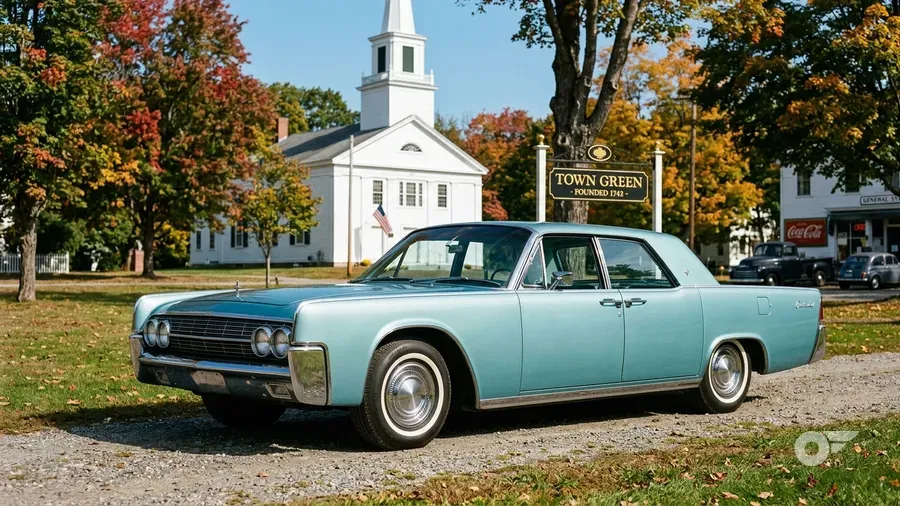
These are the largest Lincolns ever built and among the largest unitised cars anyone has ever built, which is a strange sentence and an accurate one. For 1958 Ford opened a new plant at Wixom and put two cars down the same line: the four-seat Thunderbird, and a Lincoln with no separate frame at all, 229 inches long on a 131-inch wheelbase, body and structure welded into one piece.

The Continental name went on the top of that range. Ford had shut the Continental Division in July 1956 and wanted continuity with the hand-built Mark II, so the 1958 cars were badged Mark III, the 1959s Mark IV and the 1960s Mark V. The result is a model line containing two entirely unrelated Mark IIIs eleven years apart.

They landed in a recession, they were expensive, and below the badges they were separated from the Lincoln Capri and Premiere mostly by trim. Lincoln lost roughly sixty million dollars across the three years and came close to being closed down.

That failure is precisely what produced the 1961 Continental, which is the reason anyone remembers the marque at all.

Distinctions

The defining attributes and collector status that make this car garage-worthy.

Octane Files Select
Renowned for its history, engineering, or cultural weight.

Collectibility scorecard

Rated 1 to 10 on the traits that matter for owning, driving, and holding on to a car like this.

Desirability
5/10
Rarity
7/10
Driving thrill
4/10
Investment trajectory
5/10
Usability
4/10
Ease of restoration
3/10
Cultural impact
4/10
Electronic dependence
Fully analogHeavily electronic

The running gear is entirely mechanical: a carburetted 430 MEL V8 with points-and-coil ignition, a mechanical fuel pump and a three-speed hydraulic automatic with no electronic control of any kind. What lifts the score off the floor is the convenience equipment, which is extensive and genuinely electric. Power windows, power seats and the motorised retractable backlight in the reverse-slant roof all run off relays and switches on a 12-volt system, and there are far more feet of wiring in this car than in a Lincoln of ten years earlier.

Market data

Demand tier, price trend, and typical values by condition, based on recent sales data.

Demand tier
EntrySolidHighBlue-chip

A dependable market. Well-kept cars hold their value and find ready buyers.

Value trajectory
AppreciatingStableCooling

Values are holding steady. What you pay today is what it's worth tomorrow.

Price by condition
Driver
$18k
Excellent
$40k
Concours
$72k

These are cheap cars for their size and have been for a long time, which is what puts the tier at Solid rather than higher. Recorded averages run about 42,100 dollars for a 1958 Mark III across 46 sales, 28,500 for a 1959 Mark IV across 62, and 39,000 for a 1960 Mark V across 86, with the generation average near 51,400 once convertibles are included. The recorded high of 808,500 dollars belongs to a heavily customised 1958 convertible and tells you nothing about a stock car. Nothing in the data suggests movement in either direction; hardtop sedans in particular have been flat for years. Band figures describe a volume hardtop sedan or coupe, August 2026.

Values as of August 2026.

Buyer's guide

What anyone seriously considering this car should know first.

Why it's worth it
The three-year failure that cost Lincoln around sixty million dollars and forced the 1961 rethink
Callout
Possibly the largest unibody cars ever built: 229 inches long with no separate frame
What to watch for
Rust is the whole inspection, because there is no frame underneath to save you. Unitised construction means the floors, rockers, torque boxes and cowl are the structure, and a car that has sat outdoors can look presentable while being unsound. Get it on a lift, sound the rockers and the trunk floor, and look hard where the rear quarters meet the wheelhouse. Check the retractable rear window before anything cosmetic. The reverse-slant roofline hides a motorised backlight that drops into the parcel shelf, and the mechanism, tracks and switchgear are unique to these cars and to the Mercury that shared the idea. A dead one is a long job. Confirm which engine rating you have. All three years use the 430 MEL, but output fell from 375hp in 1958 to 350 in 1959 and 315 in 1960 as compression and carburation changed, so a seller quoting 375 for a 1960 car is quoting the wrong year. Buy on trim completeness. Model-year brightwork is specific to each of the three years, was made in the low thousands, and is the single hardest thing to replace.

The Story

Driving character

The 430 MEL was built for one job and does it well. It is a big, long-stroke, low-revving V8 that produces its shove immediately and quietly, and in a car of this mass that is exactly right: the Continental gathers speed without ever feeling like it is trying, and the exhaust note stays a distant rumble rather than becoming a soundtrack. The three-speed Turbo-Drive automatic shifts softly enough that you notice the change by the tachometer rather than the seat. Everything else is about managing size. The 131-inch wheelbase and roughly two and a half tons produce a ride that is genuinely serene over broken pavement and genuinely alarming when the road turns, with slow power steering that tells you nothing and body roll that arrives early and stays. The party trick is the rear window. Push the switch and the backlight slides down into the shelf behind the seat, and the reverse-slant roof turns the cabin into something between a hardtop and a veranda. On a warm evening it is the best reason to own one of these cars.

Design

The shape traces back to the 1955 Ford La Tosca show car, and John Najjar led the production styling with Elwood Engel alongside him, under design vice president George W. Walker. What they produced was 1958 in its purest form: canted quad headlamps set into a wide grille, a slab of chrome down each flank, and fins that rise from the rear doors rather than being tacked to the tail. The roof is the real idea. Instead of sloping the backlight away, Lincoln slanted it forward at the top, so the rear window leans in over the parcel shelf and can retract into it. The effect is a formal, upright cabin that looks nothing like Cadillac's, and it is the one styling decision from these three years that later Lincolns and Mercurys kept using. Year to year the changes are in the face and the flanks. The 1959 car simplified the grille mesh, and by 1960 the whole design had been quietened, with less chrome and shallower fins. Later is calmer; 1958 is the statement.

Motorsport pedigree

Nothing here, and the reasons are worth stating because they are structural rather than accidental. The 1957 AMA recommendation against factory racing was still in force when these cars appeared, Ford had publicly stepped back from competition, and no series existed in which a five-thousand-pound unitised luxury sedan could have been useful. The 430 MEL was designed for silence and low-speed torque, not for revs, and it never became a performance engine in anybody's hands. Lincoln's real competition record belongs to a different model and had already ended. In 1952, 1953 and 1954, factory Lincoln Capris prepared by Bill Stroppe and Clay Smith dominated the International Standard class of the Carrera Panamericana, taking the first four places in 1952, repeating it in 1953 with Chuck Stevenson winning the class both years, and finishing one-two in 1954. The race was then discontinued and the programme with it, four years before the Mark III arrived. By 1958 Lincoln's engineering effort had moved entirely to refinement, and it stayed there.

In culture

The lasting cultural mark of these cars is a naming argument. Calling the 1958 car a Mark III, when the Mark II had been a hand-built two-seater sold by a separate division, struck people inside Ford as opportunistic at the time. Designer L. David Ash later called them the phony Marks, and enthusiast writing since has settled on a gentler label: the forgotten Marks, the three years that sit in the middle of the Continental story and get skipped over. The failure did real work, though. Robert McNamara used exactly these cars as the argument for shrinking the 1961 Continental by fifteen inches while every American rival was still growing, and that decision is the one Lincoln has been trading on ever since. The 1958 to 1960 cars are the reason the 1961 car exists. They remain the outlier at Lincoln club events, the enormous ones parked at the end of the row that people photograph and cannot name. That is an honest description of their standing, and it is slowly starting to change.

Owning One

Why collectors want it

The case for these cars is scale and scarcity, and it is a quieter case than the 1961 car's. Only 34,762 Continentals were built across all three years, which is less than Cadillac managed in some single months, and the numbers thin dramatically by body style: 2,044 convertibles in 1960, 1,461 hardtop coupes, and at the far end 214 Town Cars and 83 limousines finished by Hess and Eisenhardt across 1959 and 1960 combined.

They are also the cheapest way into a car of this presence. The generation average sits around 51,000 dollars, but that is dragged upward by convertibles and customs; hardtop sedans regularly change hands for a fraction of what a comparable 1959 Cadillac costs, and there is no other route to a 229-inch unibody car.

The market hierarchy is unambiguous. Convertibles lead by a wide margin, then hardtop coupes, then hardtop sedans, then the pillared sedan. The formal Town Cars and limousines sit outside that ladder entirely and rarely trade. A 1958 with the full 375hp rating and a documented history is the connoisseur's pick.

Which one to look for

The three model years are the three variants, and they are easier to tell apart than the naming suggests. The 1958 Mark III is the biggest at 229 inches and the most powerful at 375hp, and it is the one that reads as pure 1958 excess. The 1959 Mark IV lost two inches and 25hp. The 1960 Mark V is the calmest of the three, down to 315hp, and is usually the best-finished car of the run. Body style matters far more than model year. Across the generation the hardtop sedan dominates, and it is the car you will actually be offered: 5,891 in 1958, 6,146 in 1959, 6,604 in 1960. Convertibles are the ones worth chasing, at 3,048 in 1958 falling to 2,044 by 1960. The pillared sedan and the hardtop coupe sit in between and are genuinely scarce. The connoisseur's pick is neither. In 1959 and 1960 Lincoln offered a formal Town Car and a limousine with coachwork finished by Hess and Eisenhardt, and just 214 and 83 were built respectively across both years. They almost never come up, and when they do, nobody quite knows what to ask.

Limousine · 1959-1960

The rarest thing Lincoln built in these three years. A stretched formal limousine, again finished by Hess and Eisenhardt, listed at over 10,000 dollars when a hardtop coupe cost about 6,600.

Mark III · 1958

The first year and the biggest car of the three at 229 inches, with the 430 MEL V8 at its highest rating of 375hp. Offered as a hardtop sedan, pillared sedan, hardtop coupe and convertible. The most emphatically 1958 of the trio and the one most people picture.

Mark IV · 1959

Two inches shorter than the 1958 car, with the 430 V8 down to 350hp and a simplified grille. The year the formal bodies arrived, with a Town Car and a limousine finished by Hess and Eisenhardt joining the range.

Mark V · 1960

The last and the calmest, with less chrome, shallower fins and the 430 V8 down to 315hp. Usually the best-finished car of the three years and the one that reads least like 1958.

Town Car · 1959-1960

The formal four-door, with coachwork finished by Hess and Eisenhardt and a division between front and rear compartments. Catalogued as the Formal Sedan for 1959 and the Town Car for 1960. Almost never seen and priced when new close to double a hardtop sedan.
What owning one is like

The honest reality is that this is a very large car with a very small support network, and both facts shape ownership. The unitised body is the thing to stay ahead of: there is no frame, so structural rust is a restoration rather than a repair, and the cars reward a dry garage more than most. The 430 MEL itself is durable and understressed. It is heavy, it drinks, and it will run a long time on clean oil and a healthy cooling system, but machining parts are harder to source than for a small-block because the MEL family had a short life and was never a performance engine. The retractable backlight is the signature failure point. Motors, tracks and the seal that stops water sitting in the shelf all wear, and a leaking one quietly rusts the rear structure from inside. Trim is the recurring frustration. Every one of the three model years has its own grille, side spears and taillamp treatment, produced in the low thousands, and there is no reproduction industry to fall back on. Owners plan around this rather than fight it, and complete cars are worth paying up for.

Upkeep & parts

Parts fall into two categories and they behave very differently. Mechanical items are manageable: the 430 MEL shares family design with Ford's other big engines, gaskets, bearings and rebuild services exist, and brake, steering and suspension components can usually be sourced or rebuilt without drama. Budget in that area is predictable.

Bodywork, brightwork and interior trim are the opposite. Nothing is reproduced in volume because the total production run was under 35,000 cars split across three visually distinct model years, so the working method is the club network, the swap meet and patience. Buy the most complete car you can find rather than the prettiest, because filling gaps is what costs years rather than money.

The Lincoln and Continental Owners Club is the centre of gravity, with regional groups, judging standards and the members who own the parts you will need. TheLincolnForum.Net and Lincoln Forums carry the day-to-day technical traffic on the breezeway mechanism and the MEL engine.

Ford's Heritage Vault has the original 1958 to 1960 brochures online for free, which is the quickest way to check what a given car should have.

Country of origin
USA
Class
Luxury
Production years
1958–1960
Units built
34,762
Model
Continental
Nickname
The Forgotten Marks
Body
Sedan, Coupe, Convertible
Layout
Front-engine, RWD
Engine
430ci (7.0L) MEL V8, 375hp (1958); 430ci (7.0L) MEL V8, 350hp (1959); 430ci (7.0L) MEL V8, 315hp (1960)
Transmission
3-speed Turbo-Drive automatic
Designer
John Najjar with Elwood Engel (under design vice president George W. Walker)