Octane Files
Browse CarsChrysler 300 4th Gen (Letter Series)

Chrysler 300 4th Gen (Letter Series)

Overview

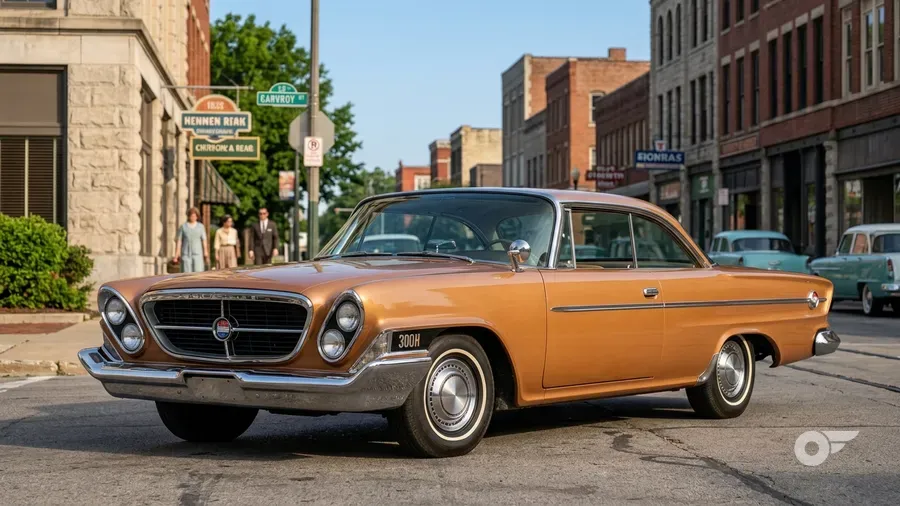
By 1963 the letter car had a problem that had nothing to do with the car. Chrysler was selling a cheaper non-letter 300 alongside it that looked much the same to anyone standing on a kerb, and the 1962 300H had sold 570 units as a result. The response for 1963 was to go the other way. The 300J dropped the convertible entirely, made the 390hp dual four-barrel ram-induction 413 standard rather than optional, included leather, and asked $5,184. Four hundred people bought one, making it the rarest letter car ever built. For 1964 Chrysler reversed course completely: the 300K hardtop's price fell by roughly a thousand dollars, leather became a $94 option, the 360hp single four-barrel became the standard engine with the ram setup available at extra cost, and the convertible came back. It worked. Chrysler sold 3,647 300Ks, more than any other letter car in the eleven-year run, the 1957 300C included. Two model years, two opposite answers to the same commercial question, and the widest spread in rarity anywhere in the series.

Distinctions

The defining attributes and collector status that make this car garage-worthy.

Octane Files Select
Renowned for its history, engineering, or cultural weight.

Collectibility scorecard

Rated 1 to 10 on the traits that matter for owning, driving, and holding on to a car like this.

Desirability
7/10
Rarity
7/10
Driving thrill
6/10
Investment trajectory
5/10
Usability
6/10
Ease of restoration
5/10
Cultural impact
4/10
Electronic dependence
Fully analogHeavily electronic

Nothing electronic touches the way these cars work. The 413 breathes through one or two Carter four-barrel carburetors and fires on a breaker-point distributor with centrifugal and vacuum advance. There is no injection, no electronic ignition and no computer of any kind. The TorqueFlite's push-button selector on the 1963 300J pulls a mechanical cable, and the 1964 300K's console lever works a rod linkage. Steering, brakes and throttle are hydraulic or direct rod and cable. A 12-volt system runs the lights, the radio and the accessories, and that is the full extent of the car's electrical ambition.

Market data

Demand tier, price trend, and typical values by condition, based on recent sales data.

Demand tier
EntrySolidHighBlue-chip

A dependable market. Well-kept cars hold their value and find ready buyers.

Value trajectory
AppreciatingStableCooling

Values are holding steady. What you pay today is what it's worth tomorrow.

Price by condition
Driver
$13k
Excellent
$22k
Concours
$40k

The cheapest way into the letter series, and the tier reflects it. A 1964 300K hardtop carries a median around $19,187 with convertibles near $27,250; good cars run roughly $12,000 to $20,500 and excellent ones $20,500 to $27,000, with a recorded high of $99,000 for an exceptional example and a January 2026 Mecum Kissimmee result of $25,300. The 1963 300J is the odd one. At 400 built it ought to be worth a great deal more, but it trades so rarely that public results are thin and dated, with recorded auction sales between $9,900 and $27,500 and asking prices around $38,500. Treat a 300J as a rarity play in an illiquid market rather than a known quantity. Values here have been flat for years. Band figures describe a 300K hardtop, August 2026.

Values as of August 2026.

Buyer's guide

What anyone seriously considering this car should know first.

Why it's worth it
The rarest letter car and the best-selling one, built twelve months apart
Callout
Just 400 300Js were built for 1963, the rarest letter car of them all
What to watch for
The good news is that almost everything under a 300J or 300K is ordinary C-body Chrysler, and ordinary C-body Chrysler is cheap, tough and well supported. The bad news is that the parts which make it a letter car are neither. Start by authenticating the car. The non-letter 300 of these years shared bodywork and much of its trim, so a convincing clone is easy to build and the Chrysler 300 Club is the place to settle the question rather than the seller's paperwork. Then check the induction. The 390hp cross-ram setup is standard on the 300J and optional on the 300K, and a car whose manifolds and carburetors have been replaced by a single four-barrel has lost a meaningful share of its value. The leather interior, the console, the bucket seats and the letter medallions are the other scarce items. Rust follows the usual full-size Mopar pattern: lower rear quarters, trunk floor, door bottoms and the cowl. On a 1963 car confirm the push-button selector works cleanly, and on a 1964 confirm the console shift linkage is right, because a changeover year means mismatched parts turn up.

The Story

Driving character

Both cars trade on the same trick: enormous low-down torque delivered so smoothly that the speed sneaks up on you. The 413 pulls hard from idle and keeps pulling, and in ram-induction form the tuned runners add a distinct second surge in the midrange that a single four-barrel car simply does not have. A ram 300J is noticeably the harder-edged of the two, with a rougher idle and a sharper top end; the standard 360hp 300K is smoother and more relaxed and the better companion for a long day. The chassis is the underrated part. Chrysler's torsion bars keep the nose flat where a leaf-sprung rival would wallow, and the heavy-duty springs and shocks that came with the letter package tighten the body motions without ruining the ride. Steering is slow and light and tells you almost nothing, which was the period norm. The brakes are drums and they are the limiting factor, so you drive it looking a long way ahead. Point it at an interstate and it is still one of the great American distance cars.

Design

These two years are the last of the Virgil Exner shape, cleaned up and calmed down after the fins came off in 1962. The 1963 car is crisper than anything Chrysler had built in a decade: flat sides, a squared-up greenhouse, a full-width grille with the 300 medallion at its centre, and none of the sculptural drama of the 300F. Exner had already left the corporation by the time it reached showrooms and Elwood Engel's influence was arriving, so the 1963 and 1964 cars sit in a genuine handover period and read as a bridge between two design languages. The 1964 update is subtle, mostly grille texture and trim. What identifies a letter car in these years is detail rather than shape, because the cheaper non-letter 300 shared the body: the letter medallion, the specific grille treatment, and inside, the leather bucket seats, the full-length console and the instrument panel. The 1963 car's squared steering wheel is the one piece of pure period eccentricity in the cabin, and it is the fastest way to date a Chrysler interior from across a showroom.

Motorsport pedigree

Neither of these cars raced, and the reason is specific rather than general. In 1963 and 1964 Chrysler ran one of the most serious factory competition programmes in America, but it was aimed at the lightest cars in the corporation, not the heaviest. The 426 Max Wedge went into stripped Plymouth Savoys and Dodge 330s that weighed hundreds of pounds less than a 300, and in 1964 the 426 Race Hemi arrived and Richard Petty won the Daytona 500 with it. A two-ton leather-lined luxury coupe had no class to run in and no reason to try. The closest the letter car got was a paperwork connection: a handful of 1963 300Js could be special-ordered with a 415hp 426 Wedge, the same displacement that was winning at the strip, though almost nobody did it. There is one more link and it is a slightly rueful one. A Chrysler 300 paced the 1963 Indianapolis 500 with Sam Hanks driving, but it had to be a non-letter 300 Sport convertible, because the 300J that year was built as a hardtop only.

In culture

These are the letter cars history walked past, and the reasons are worth knowing. The 300J was too rare and too expensive to register with anybody, and the 300K was sold cheaply enough that it stopped feeling special, which is the trap Chrysler set for itself when it put the 300 badge on an ordinary car. The name's public moment in 1963 went to that ordinary car: a non-letter 300 Sport convertible paced the Indianapolis 500 and Chrysler sold a Pace Setter commemorative edition of it, while the actual letter car of that year sat in the same showroom with no convertible and no publicity. The other thing the 1963 Chryslers are remembered for has nothing to do with speed. This was the model year Lynn Townsend's five-year, 50,000-mile powertrain warranty arrived, an industry first that forced General Motors and Ford to follow and did more for Chrysler's reputation than any letter car ever did. The 300J and 300K are footnotes to their own era, which is precisely why the people who collect them are so pleased with themselves.

Rivals

Cars from other manufacturers that competed for the same buyers when new.
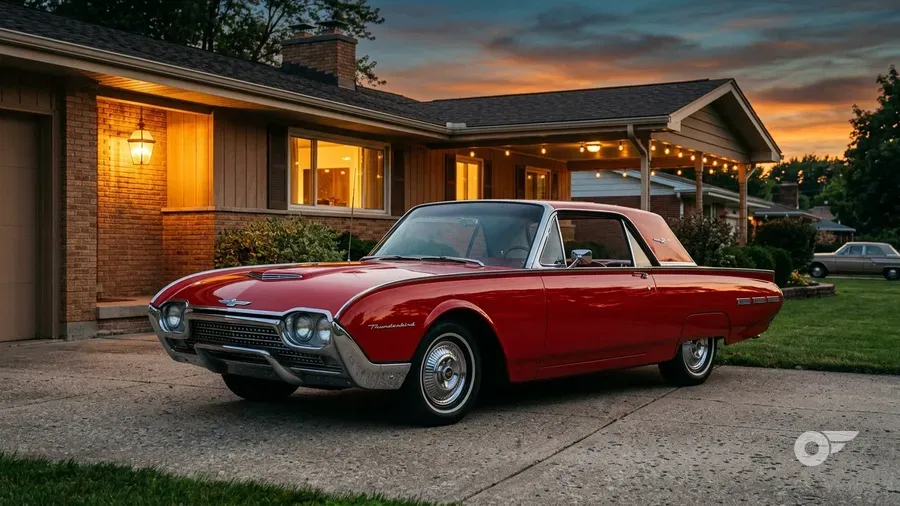
Ford Thunderbird 3rd Gen

Ford Thunderbird 3rd Gen

USA·Grand Tourer·1961–1963
Buick Riviera 1st Gen

Buick Riviera 1st Gen

USA·Grand Tourer·1963–1965

Pontiac Grand Prix 1st Gen

We haven’t profiled this car yet. Request to add

Studebaker Gran Turismo Hawk

We haven’t profiled this car yet. Request to add

Ford Thunderbird 4th Gen

We haven’t profiled this car yet. Request to add
Cadillac Eldorado 6th Gen

Cadillac Eldorado 6th Gen

USA·Luxury·1963–1964

Owning One

Why collectors want it

The argument for these two is arbitrage. The letter series is one of the founding documents of the American performance car, and this is the cheapest place to buy into it. A 300K hardtop carries a median around $19,187 and a convertible around $27,250, which is Mustang money for a hand-trimmed, 360-horsepower luxury coupe built in four-figure numbers. Very little else with this much history costs so little. Inside the generation the hierarchy is extreme rather than gentle. The 1963 300J is one of the rarest regular-production American cars of the decade at 400 units, all hardtops, all carrying the ram-induction 413 as standard, and it trades so infrequently that the public auction record is thin and dated. The 300K is the volume car and the sensible purchase, and the 625 convertibles among its 3,647 units are the ones that hold value best. What both share is a specification nobody offers now: two four-barrel carburetors on tuned runners, bucket seats, a full-length console and genuine 140mph capability, in a car a family of five could actually use.

Which one to look for

Two letters, and they are not remotely the same proposition. The 1963 300J is the collector's car: 400 built, hardtop only, no convertible offered at all, and it came with the 390hp dual four-barrel ram-induction 413 as standard equipment rather than an option box, plus leather as standard and a squared-off steering wheel that is a 1963 Chrysler signature. Period road tests put it at 8.0 seconds to 60mph and a 15.8-second quarter mile at 89mph, with a top end around 142mph, which made it one of the fastest cars sold in America that year regardless of size or origin. A handful of 300Js were special-ordered with the 415hp 426 Wedge, and those are unicorns. The 1964 300K is the volume car and the one you will actually find: 3,647 built, 3,022 hardtops and 625 convertibles, 360hp standard with the ram engine optional, and the reintroduced convertible is the body to buy. A 300K ordered with the ram setup, the four-speed and the leather is effectively a 300J you can afford.

300J · 1963

The grail of the late letter series. Offered as a two-door hardtop only, with a standard 390hp dual four-barrel ram-induction 413 and leather interior. A rare over-the-counter 426 wedge could be ordered. One of the rarest regular-production American cars of the decade and the most valuable of the four years.

300K · 1964

The value entry and the volume car. A lower base price brought buyers back, the convertible returned, and it became the best-selling letter car ever made. Standard 360hp single four-barrel 413, with the 390hp ram-induction setup optional.

What owning one is like

An honest 300K is one of the easier old American cars to live with, which is not something you can say about most of the letter series. The 413 will run past 100,000 miles without drama and rebuilds cheaply when it finally asks. The TorqueFlite is one of the best automatics of its era. The torsion-bar front end needs bushings and an alignment and then behaves. The 1963 and 1964 C-body is a well-sorted, well-built car, and this was the era of Chrysler's five-year warranty, which the engineering had to earn. Where it asks for patience is the letter-specific hardware. A cross-ram setup that has not been synchronised properly will run rough and make the whole car feel unwell when the problem is a linkage adjustment. The push-button shift cable on a 1963 car drifts and wants a knowing hand. Rust is the usual full-size Mopar story in the lower quarters, trunk floor and cowl. Leather, console and medallions are what you will hunt. Drum brakes and two tons mean a long view down the road, and that is about the extent of the compromise.

Upkeep & parts

This is the cheapest letter car generation to keep running, by a wide margin. The 413, the TorqueFlite, the torsion bars, the brakes and the electrics are shared across an enormous quantity of 1963 and 1964 Chrysler, Dodge and Plymouth production, so service parts, gaskets and rebuild components come from the ordinary Mopar suppliers at ordinary Mopar prices, and any competent shop has seen the drivetrain before. What costs money is what makes it a letter car: correct ram-induction manifolds and carburetors, the leather interior, the console, the bucket seats and the year-specific medallions and grille pieces. Those take hunting, and the hunting is where the time goes. The Chrysler 300 Club International and the Chrysler 300 Club, Inc. hold the registries, the technical knowledge and the authentication that matters when value turns on whether a car is genuine, and for a 300J in particular the club is the only realistic route to settling provenance. Reproduction support is thinner than for a Mustang or a Chevelle, so plan around specialist vendors and club classifieds. Keep the induction tuned and the brakes fresh.

Country of origin
USA
Class
Grand Tourer
Production years
1963–1964
Units built
4,047
Model
300
Nickname
Banker's Hot Rod
Body
Coupe, Convertible
Layout
Front-engine, RWD
Engine
413ci Golden Lion RB Wedge V8 with dual four-barrel ram induction (390hp, standard on the 1963 300J, optional on the 1964 300K); 413ci Golden Lion RB Wedge V8 with single four-barrel (360hp, standard on the 1964 300K); 426ci RB Wedge V8 (415hp, special order on the 300J)
Transmission
3-speed TorqueFlite automatic (push-button selector on the 1963 300J, console lever on the 1964 300K); 4-speed manual; 3-speed manual (rare)
Designer
Virgil Exner (styling); Robert M. Rodger (engineering)