Octane Files
Browse CarsChrysler 300 5th Gen (Letter Series)

Chrysler 300 5th Gen (Letter Series)

Overview

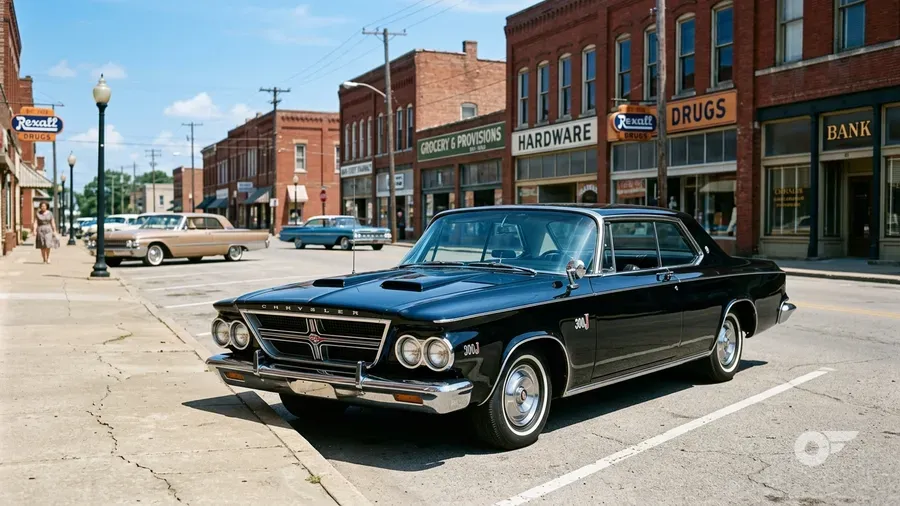
The 300L is the letter car that finally looked like the 1960s. Elwood Engel had arrived from Ford, where he had drawn the 1961 Lincoln Continental, and the 1965 Chryslers were his: slab sides, a tall formal greenhouse, sharp edges and none of Virgil Exner's sculptural drama. The panoramic windshield went, the wheelbase grew to 124 inches, and the whole line looked expensive in a way Chrysler had not managed since the mid-fifties. What went with the old shape was the old idea. There was no ram induction on offer, no dual four-barrel option and no 426. The 300L came with one engine, a 360hp 413 Golden Lion Wedge on a single Carter four-barrel, 10:1 compression, dual exhaust and an unsilenced air cleaner. A four-speed manual with Hurst linkage was a no-cost option and 96 hardtop buyers took it. Chrysler sold 2,405 hardtops and 440 convertibles, then retired the letter after eleven model years. The 300 badge carried on without it, which is precisely what had gone wrong.

Distinctions

The defining attributes and collector status that make this car garage-worthy.

Octane Files Select
Renowned for its history, engineering, or cultural weight.

Collectibility scorecard

Rated 1 to 10 on the traits that matter for owning, driving, and holding on to a car like this.

Desirability
6/10
Rarity
7/10
Driving thrill
6/10
Investment trajectory
5/10
Usability
7/10
Ease of restoration
6/10
Cultural impact
4/10
Electronic dependence
Fully analogHeavily electronic

Entirely mechanical. The single Carter four-barrel on the 360hp 413 is fed by a mechanical pump and fired by a breaker-point distributor with centrifugal and vacuum advance, with no injection, no electronic ignition and no computer anywhere on the car. The TorqueFlite is selected by a console lever working a rod linkage, the push-button era having ended with 1964, and the optional four-speed is a straight mechanical connection through Hurst rods. Power steering and power brakes are hydraulic. The 12-volt system runs lights, wipers, radio and the grille medallion lamp, and nothing else.

Market data

Demand tier, price trend, and typical values by condition, based on recent sales data.

Demand tier
EntrySolidHighBlue-chip

A dependable market. Well-kept cars hold their value and find ready buyers.

Value trajectory
AppreciatingStableCooling

Values are holding steady. What you pay today is what it's worth tomorrow.

Price by condition
Driver
$14k
Excellent
$24k
Concours
$42k

The most attainable letter car of the eleven, and stable rather than moving. Recorded auction data puts the 300L median around $21,450 across 24 sales, with fair cars roughly $4,125 to $14,500, good cars $14,500 to $21,450, excellent $21,450 to $33,000, and the recorded high at $82,500 for an exceptional convertible. A convertible brought $46,750 at Mecum Kissimmee in January 2025 and a hardtop $33,000 at the same sale in January 2026. Convertibles carry a clear premium at 440 built against 2,405 hardtops, and a documented four-speed hardtop, one of 96, should command more than the band suggests. Values have been broadly flat for a decade. Band figures describe a hardtop, August 2026.

Values as of August 2026.

Buyer's guide

What anyone seriously considering this car should know first.

Why it's worth it
The last letter car, and the only one Elwood Engel designed
Callout
Only 96 of the 2,405 300L hardtops were ordered with the no-cost four-speed
What to watch for
The 300L is the simplest letter car to buy because there is less to get wrong. One engine, no cross-ram hardware to verify, and a car built at the point when Chrysler's five-year warranty had already forced the build quality up. Authentication still matters. The non-letter 1965 Chrysler 300 shared the body and much of the trim, so check the VIN and the fender tag against the club's data before accepting that a car is a genuine 300L, and be especially specific about four-speed cars, because a floor shift is easy to add and only 96 real ones exist. Look for the grille medallion running light, which every 300L carried but which dealers only activated in states where it was legal, so its wiring is a useful originality tell. Rust runs to the usual full-size Mopar places: lower rear quarters, trunk floor, door bottoms and the cowl. Interior trim is the scarcest thing on the car, since leather was an option rather than standard by this point and correct seat material is hard to source. Mechanically, buy on compression and paperwork.

The Story

Driving character

Without the cross-ram, the 300L is a different kind of fast: no second surge, no theatrical intake, just one enormous flat wave of torque from a 413 making 470 lb-ft through a single four-barrel and an unsilenced air cleaner. It sounds deeper and less busy than a ram car and it never feels like it is working. Period figures put it at 8.8 seconds to 60mph and 17.3 seconds through the quarter, which is not quick by 300J standards and is entirely beside the point, because what the L does better than any earlier letter car is cover distance. The Engel body is stiffer and quieter, the torsion-bar front end is better developed by 1965, and the seating position and visibility are far better than the 1960 car's. In a four-speed example the character changes completely: a Hurst-linked box in a two-ton luxury coupe is a genuinely odd and rather wonderful thing, and the console tachometer starts to make sense. In either form the drum brakes remain the part that asks you to plan.

Design

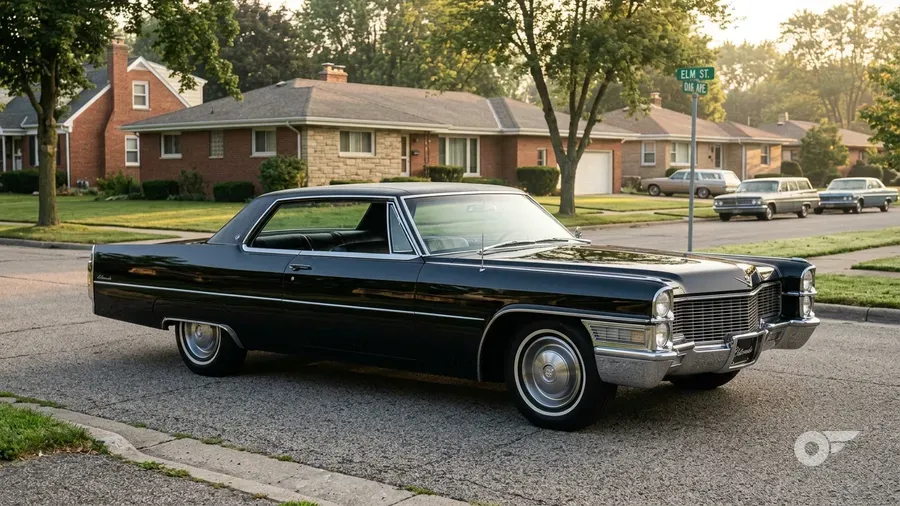
This is Elwood Engel's Chrysler and it looks nothing like what came before. Engel had come from Ford, where the 1961 Lincoln Continental made his name, and he brought the same instincts: flat, slab-sided flanks with a single crisp edge running the length of the car, a tall upright greenhouse, a squared-off roofline, and a refusal of ornament for its own sake. The wraparound windshield that had defined Chrysler interiors since 1955 was abandoned, which alone transforms how the cabin feels. Against a 300F this looks like a car from a different company; against a 1965 Cadillac it looks tauter and less decorated. The letter-car details are quieter than they used to be. There is a specific grille treatment, a 300 medallion with a small running light built into it that Chrysler fitted to every car but dealers only wired up where state law allowed, bucket seats, a full-length console and, on the four-speed cars, a real tachometer. It is the most restrained letter car and the most modern-looking, and it has aged better than any of the finned ones.

Motorsport pedigree

The 300L never turned a wheel in anger, and 1965 is the most interesting possible year for that to be true. In November 1964 NASCAR banned the 426 Hemi on the grounds that Chrysler was not selling it in a production car, and Chrysler responded by boycotting the entire 1965 Grand National season. Richard Petty spent the year drag racing a Barracuda with the word Outlawed painted on the door. So the corporation that had just been thrown out of stock car racing over an engine was, in the same twelve months, selling its flagship performance coupe with a single four-barrel carburetor and no high-performance option at all. The 300L's 413 shares the RB block architecture the 426 was built on, which is as close as the connection gets. By 1965 the letter car had been a luxury cruiser rather than a performance weapon for years, and the fight that mattered was happening in lightweight Belvederes and Coronets. Chrysler settled it that autumn by putting the Street Hemi in a showroom, which made the engine legal and made the 300L look even further from the action.

In culture

The 300L's cultural life is entirely posthumous, and it is more interesting than its sales figures suggest. It ended a run of eleven cars across eleven model years that nobody has repeated, and the badge it retired went on to have a longer career than the letter series itself. The non-letter 300 continued into the early 1970s, Hurst built a gold and white 300 in 1970 that people still argue about, and Chrysler brought the name back in 2005 on a car that sold in hundreds of thousands and made the 300 mean something again to a generation that had never heard of a 300F. All of that traces back through the L. Among people who study Detroit design the 1965 Chryslers are Engel's arrival and the moment the corporation stopped chasing Exner's fins, and the 300L is the sharpest example of that shift. It has no film credits and no song lyrics. What it has is the position at the end of the alphabet, and the quiet satisfaction of being the letter car nobody was looking at while everyone chased the finned ones.

Rivals

Cars from other manufacturers that competed for the same buyers when new.
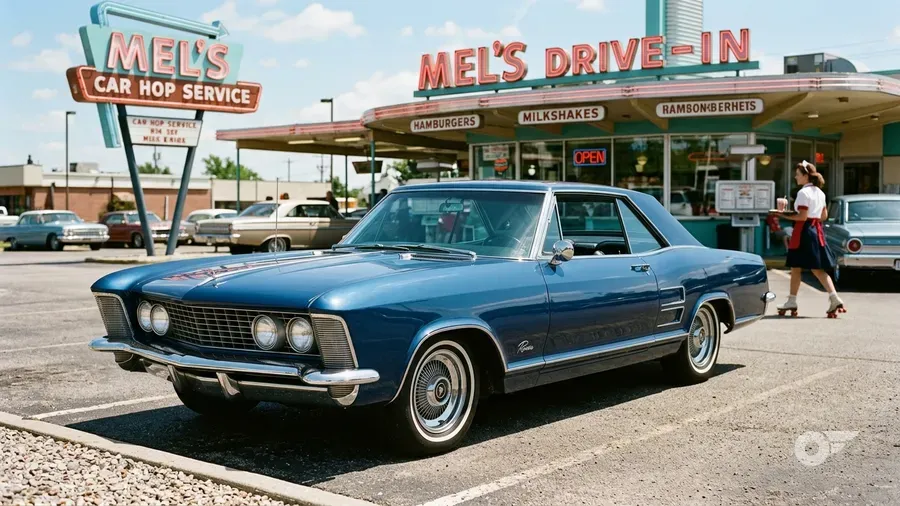
Buick Riviera 1st Gen

Buick Riviera 1st Gen

USA·Grand Tourer·1963–1965
Cadillac Eldorado 7th Gen

Cadillac Eldorado 7th Gen

USA·Luxury·1965–1966

Pontiac Grand Prix 1st Gen

We haven’t profiled this car yet. Request to add

Plymouth Fury 4th Gen

We haven’t profiled this car yet. Request to add

Ford Thunderbird 4th Gen

We haven’t profiled this car yet. Request to add

Owning One

Why collectors want it

Last-of-the-line cars usually make a weak argument, but the 300L has a better one than most. It is the only letter car with no styling twin, the only one drawn by Elwood Engel, and the only one that has to be judged on how it drives rather than on what is bolted to the top of the engine. Strip away the ram induction and what is left is a thoroughly resolved 1965 Chrysler with 360 horsepower, torsion bars, bucket seats and a full-length console, and it is the easiest of the eleven to actually use. It is also cheap. The 300L median sits around $21,450, with good cars roughly $14,500 to $21,450 and excellent ones $21,450 to $33,000, which buys a piece of history that costs three or four times as much two model years earlier. Rarity is real too, at 2,845 for a single model year, and only 440 of those are convertibles. The one to chase is a four-speed hardtop: 96 built, Hurst linkage, a proper console tachometer, and the closest thing this car has to a halo variant.

Which one to look for

One model year and one engine, so the choices here are body and gearbox rather than specification. The hardtop is the volume car at 2,405 built and it is the cheapest way into the letter series anywhere across the eleven years. The convertible is the scarce one at 440 and carries a clear premium, and it is the last open letter car Chrysler ever made, which is worth something on its own. The variant that actually matters is the four-speed. Chrysler offered a floor-shifted four-speed manual as a no-cost option with Hurst linkage, and it brought a real tachometer in the console rather than the usual warning lamps. Ninety-six hardtops were ordered that way, which makes a genuine four-speed 300L rarer than a 300J and a great deal cheaper. Verify it properly, because the conversion is easy to fake. Beyond that, look for the grille medallion running light and factory air conditioning, and prefer an unmolested car with its original interior over a repainted one, since 1965 trim is the hardest thing on this car to replace correctly.

300L · 1965

The last letter car. Elwood Engel's clean, slab-sided restyle, a lit L in the grille, and a 360hp single four-barrel 413 with no ram-induction option offered. When it sold out, Chrysler retired the letter after eleven model years.

What owning one is like

The easiest letter car to own, and by some distance. There is no cross-ram to synchronise, no push-button cable to adjust and no electroluminescent instrument cluster to fail, which removes the three things that make earlier letter cars fussy. What is left is a well-built 1965 Chrysler: a 413 that will run indefinitely and rebuild cheaply, a TorqueFlite that rarely complains, and a torsion-bar front end that wants bushings and an alignment every so often and then behaves. Rust is the main enemy and it follows the full-size Mopar script, starting in the lower rear quarters, the trunk floor, the door bottoms and the cowl, so a car that has lived under cover is worth paying up for. Interior trim is the scarce part, because 1965-specific seat material and console pieces are harder to find than mechanical components and correct reproduction is limited. Drum brakes on a heavy car mean planning ahead, and the four-speed cars need their linkage set up properly to shift cleanly. Sorted, it is a comfortable, quick, thoroughly usable car you can drive across a country.

Upkeep & parts

Running one is cheap by any classic-car standard. The 413, the TorqueFlite, the brakes, the torsion bars and the electrical system are shared across a vast quantity of 1965 Chrysler, Dodge and Plymouth production, so consumables, gaskets and rebuild parts come from ordinary Mopar suppliers and any competent shop has seen all of it before. The four-speed cars use a Hurst linkage that is well understood and still supported. Where you will spend time rather than money is trim: 1965 letter-car interior material, console pieces, bucket seat frames and the grille medallion with its running light are all specific, and correct reproduction is limited enough that club classifieds beat catalogues. The Chrysler 300 Club International and the Chrysler 300 Club, Inc. hold the registries and the model-year knowledge, and for a 300L the club is the fastest way to establish whether a four-speed car is genuine, which is the single biggest value question on this model. Budget for paint and interior rather than mechanicals, and expect to use the car regularly.

Country of origin
USA
Class
Grand Tourer
Production years
1965–1965
Units built
2,845
Model
300
Nickname
Banker's Hot Rod
Body
Coupe, Convertible
Layout
Front-engine, RWD
Engine
413ci Golden Lion RB Wedge V8 with single Carter four-barrel (360hp, 470 lb-ft, 10:1 compression, dual exhaust)
Transmission
3-speed TorqueFlite automatic with console lever; 4-speed manual with Hurst linkage (no-cost option)
Designer
Elwood Engel (design direction); Robert M. Rodger (engineering)