Octane Files
Explore CarsChrysler Imperial 1st Gen

Chrysler Imperial 1st Gen

Overview

In 1955 Chrysler stopped calling its most expensive car a Chrysler. Notices went out to the motor vehicle licensing agencies in all 48 states: from that model year an Imperial would be registered as its own make. Not a Chrysler model. A separate marque, sold by a new Imperial Division, with its own dealership sign.

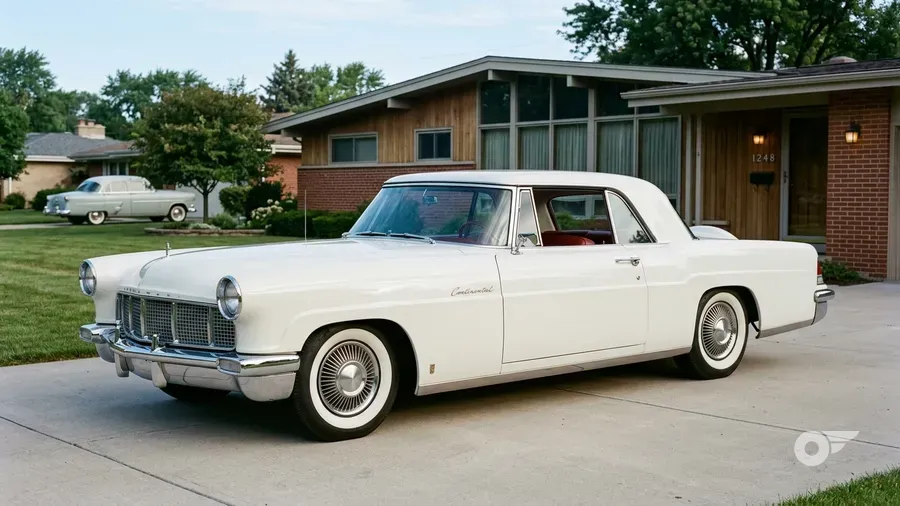
The reasoning was blunt commercial sense. Someone walking into a Cadillac showroom was never going to cross-shop a car with a Chrysler badge on the hood, and Chrysler wanted that sale. Ford found the argument convincing enough to try the same thing two years later with its Continental Division.

Almost nobody outside the company played along. Owners said Chrysler Imperial, dealers heard Chrysler Imperial, and seventy years on the cars are still catalogued that way, which is why this page sits where it does.

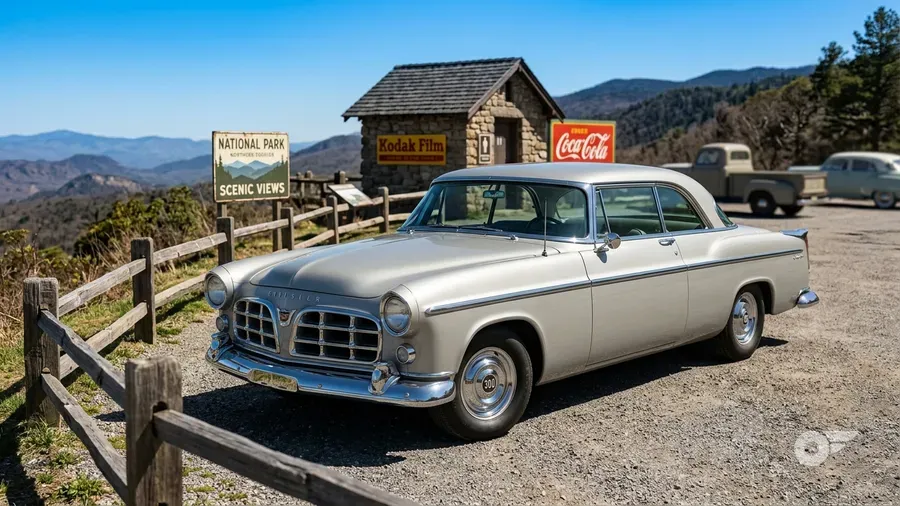
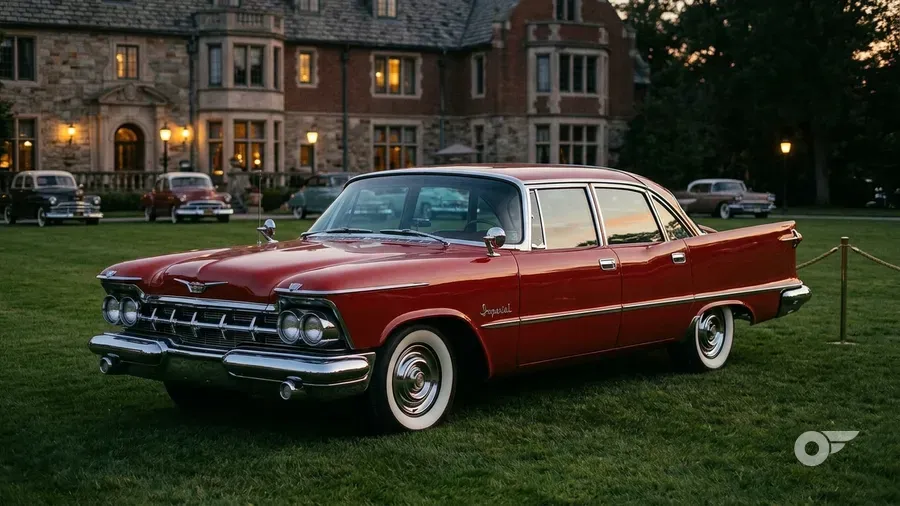
What the money bought was Virgil Exner's first Imperial: a wide-spaced split egg-crate grille shared with the C-300, free-standing gunsight taillights lifted clear of the rear quarters, and four more inches of wheelbase than the big Chryslers it shared a bodyshell with. 21,698 were built across the two model years.

Distinctions

The defining attributes and collector status that make this car garage-worthy.

Octane Files Select
Renowned for its history, engineering, or cultural weight.

Collectibility scorecard

Rated 1 to 10 on the traits that matter for owning, driving, and holding on to a car like this.

Desirability
5/10
Rarity
7/10
Driving thrill
4/10
Investment trajectory
5/10
Usability
6/10
Ease of restoration
5/10
Cultural impact
4/10
Electronic dependence
Fully analogHeavily electronic

Nothing on this car computes anything. The 331 and 354 FirePower Hemis breathe through a single Carter WCFB four-barrel and fire on breaker points, with no engine management of any kind between the throttle pedal and the carburetor. The push-button transmission control added mid-1956 looks like the exception and is not: Chrysler ran it on a mechanical cable, unlike the solenoid-operated Edsel Teletouch. The only transistor on a 1956 Imperial sits in the optional Mopar 914HR radio, a $150 box built by Philco.

Market data

Demand tier, price trend, and typical values by condition. Our own assessment, not a quoted valuation.

Demand tier
EntrySolidHighBlue-chip

A dependable market. Well-kept cars hold their value and find ready buyers.

Value trajectory
AppreciatingStableCooling

Values are holding steady. What you pay today is what it's worth tomorrow.

Price by condition
Driver
$14k
Excellent
$30k
Concours
$58k

The recorded sample is small. conceptcarz counts 19 auction results for the 1956 car, averaging $22,067, or $20,147 with the extremes trimmed, and the spread matters more than the average: a project has changed hands at $880 while a concours car took $75,900 at RM Sotheby's Hershey in October 2023. Bring a Trailer's best result is a 1956 Southampton two-door at $58,500 in June 2023, against $22,250 and $17,800 for two 1955 Newports in 2021. The band above describes a standard-series hardtop or sedan in honest condition, which is what almost every buyer will actually meet. Crown Imperial C70s trade in their own market and are excluded. Values have not moved much in either direction, so this is priced as stable rather than as a trend.

Values as of August 2026.

Buyer's guide

What anyone seriously considering this car should know first.

Why it's worth it
The two model years Chrysler stopped calling its flagship a Chrysler
Callout
Registered with all 48 states as its own make, not as a Chrysler model
What to watch for
Start with the year, because the two are not the same car. A 1955 runs the 331ci Hemi at 250bhp on a 130-inch wheelbase with the two-speed PowerFlite. A 1956 gets the 354ci Hemi at 280bhp, three more inches of wheelbase, small tailfins and the push-button transmission pod to the left of the driver. Late in the 1956 model year the three-speed TorqueFlite replaced PowerFlite, and it is the better gearbox by a wide margin. Work out which one is in the car in front of you before you agree a price. Check the taillights next. The free-standing gunsight assemblies are unique to these two years in that form, and the chrome rings and pot-metal mounts are the parts that have gone missing. Then look at the dash around the 1956 push-button pod. The selector runs on a mechanical cable, not a solenoid, and decades of cable pull warp the panel it passes through. Body-on-frame means rot is cosmetic before it is structural. Air conditioning was a $535 option on a $4,720 car, so it is rare and a dead system is expensive.

The Story

Driving character

Effortless rather than quick, and that was the whole brief. The 331ci Hemi makes 250bhp at 4,600rpm on 8.5:1 compression and has between 4,700 and 4,900lb to move, so it works by never running out of anything rather than by pulling hard. The 354 in the 1956 cars adds 30bhp and you notice it mostly as a shorter wait. The gearbox sets the character. A PowerFlite car gives you one upshift and a great deal of torque converter, and it swims. A late-1956 TorqueFlite car has three ratios and suddenly behaves like something designed after the war. Torsion bars were still two years away, so this rides on coils and leaves and it leans. Power steering and power brakes were standard from day one, which tells you exactly what Chrysler expected of the driver, and the steering is light to the point of being remote. Four-wheel drums stopping nearly two and a half tons: leave room. Settled at 60mph it is one of the quietest ways to travel that 1955 offered.

Design

Exner's 1955 cars were sold under Chrysler's "Hundred Million Dollar Look" slogan, which was the corporation telling everyone what the restyle had cost. On the Imperial the signatures are at both ends. At the front, a wide-spaced split egg-crate grille, the same idea the C-300 wore that year, which is the visual reason the two cars read as relatives. At the back, the gunsight taillights: a lamp lifted clear of the fender and ringed with chrome, also called sparrow-strainers after the device that keeps birds out of a jet intake. Exner had drawn them on the 1951 K-310 concept. They stayed an Imperial fixture through 1962 but stood free of the bodywork only here and again in 1961 and 1962. The proportions came off a show car: the 1952 Parade Phaeton one-offs are cited as the inspiration, and were later restyled to match these production cars. 1956 adds small tailfins, three inches of wheelbase and 6.6 inches of length. At 229.6 inches it was the longest non-limousine American car built after the war, a record it held until Imperial's own fuselage cars of the 1970s. Newport and Southampton, incidentally, name the hardtop bodies, not trim levels.

Motorsport pedigree

There is no competition record here, and Chrysler engineered the absence on purpose. The engine was the same family that was winning. The 331 FirePower Hemi under a 1955 Imperial is the same block that made the C-300 the car to beat in NASCAR that season. The specifications are where the two products part company: the 300 got dual four-barrel carburetors and 300bhp, the Imperial got a single Carter WCFB and 250bhp on 8.5:1 compression with hydraulic lifters. One car was built to be measured against a stopwatch, the other against a Cadillac. That separation was the point of the whole exercise. Chrysler had just spent 1954 persuading state licensing agencies that an Imperial was not a Chrysler, and putting a brand-new luxury make on a dirt oval would have unpicked the positioning it existed to create. The competition budget went to the 300. The Imperial was sold on quietness, insulation and the length of its wheelbase instead, and its public appearances were parades.

In culture

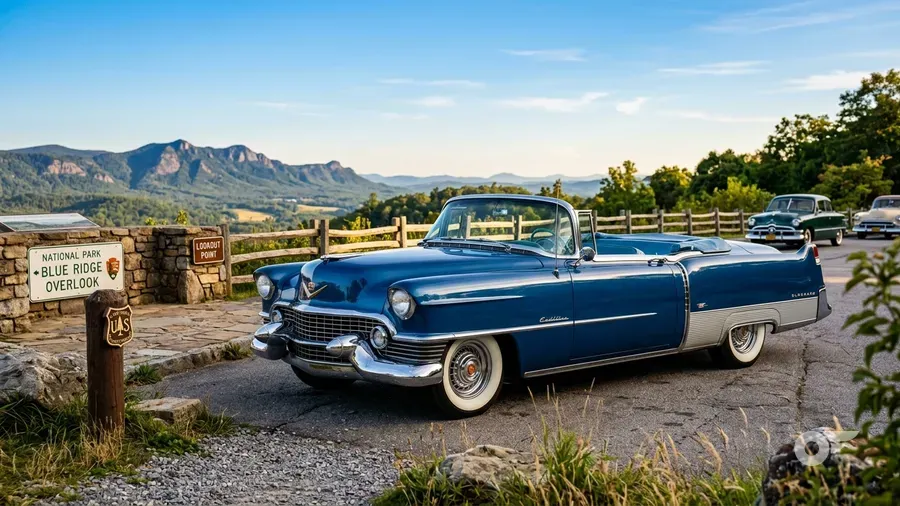
The strangest thing these cars did happened in China. When the People's Republic set out to build its first state limousine, the Hongqi CA72, the development car was a Chrysler Imperial C69 sourced locally, and the 1E prototype was effectively that Imperial rebodied with Chinese detailing. A car built to prove an American make could stand apart from Chrysler ended up as the template for a Communist state's ceremonial fleet. Closer to home the separation had an immediate effect on the competition. Cadillac had been calling its own top-line Series 70 limousines Imperials, and dropped the name for 1955 rather than share it. Chrysler also used the Imperial to carry the corporation's engineering showpieces. The world's first all-transistor car radio, the Mopar 914HR, was announced with Philco in April 1955 and sold as a $150 option on the 1956 cars. It was expensive, it was small, and it was the first radio in a car that did not need to warm up before it would play.

Rivals

Cars from other manufacturers that competed for the same buyers when new.

Lincoln Mark Series Mark II

Lincoln Mark Series Mark II

USA·Luxury·1956–1957
Cadillac Eldorado 2nd Gen

Cadillac Eldorado 2nd Gen

USA·Luxury·1954–1956

Cadillac Series 62 4th Gen

We haven’t profiled this car yet. Request to add

Owning One

Why collectors want it

The case is short and it is unusual. This is the founding pair of an American make that existed for twenty years and then stopped: two model years, 21,698 cars, and a bodyshell nobody else built.

The market ranks them predictably. Hardtops sit above sedans, and the 1956 two-door Southampton is the one people chase, partly for the small tailfins and partly because a late-1956 build brings the three-speed TorqueFlite instead of the two-speed PowerFlite. The 1955 Newport is the purist's answer: first year of the make, free-standing gunsights, 3,418 built. Four-door sedans are the volume car and the sensible way in, at 7,840 for 1955 and 6,821 for 1956.

The Crown Imperial C70 is not really in the same market. On a 149.5-inch wheelbase, seating eight, it was the last Chrysler limousine built entirely in Detroit. 172 left the line for 1955.

What holds values down is the same thing that makes the story good. A make almost nobody accepted as a make never grew the collector infrastructure Cadillac has, and the cars are cheap for what they are.

Which one to look for

Two series only, and they are nowhere near each other. The standard Imperial covers everything most buyers will meet. In 1955 that is a four-door sedan (7,840) and the two-door Newport hardtop (3,418). For 1956 the Newport name goes away, Southampton replaces it, and a four-door Southampton hardtop joins at 1,543 cars, which makes it the scarcest regular body of the two years. Rank them like this: the 1956 two-door Southampton first, ideally a late build with the TorqueFlite; then the 1955 Newport, which is the make's opening statement and wears the free-standing gunsights in their first year; then the 1956 four-door hardtop on rarity; then the sedan, which is the one to buy if you actually intend to drive it. The Crown Imperial C70 sits outside that ladder. Nineteen and a half extra inches of wheelbase in 1955, eight seats, three across the front and two on rearward-facing jump seats, and a $7,737 price when a Newport was $4,720. Colours were limited to dark green, dark blue, maroon or black, and wire wheels were the only option offered.

Crown Imperial · 1955–1956

The long-wheelbase eight-passenger car, series C70, sold as both a sedan and a limousine on a 149.5-inch wheelbase: 19.5 inches longer than a 1955 Imperial and 16.5 inches longer than a 1956. Three across the front, three across the back and two rearward-facing jump seats. Colours were limited to dark green, dark blue, maroon or black and wire wheels were the only option offered. It replaced the long-wheelbase offerings across every Chrysler marque, and it was the last Chrysler limousine built entirely in Detroit. Ghia took the work to Italy from 1957.

Imperial · 1955–1956

The standard series and effectively the whole car line: series C69 for 1955 on a 130-inch wheelbase, series C73 for 1956 on 133 inches. 1955 offered a four-door sedan and the two-door Newport hardtop; for 1956 the Newport name was retired, Southampton took its place, and a four-door Southampton hardtop was added. Newport and Southampton name the hardtop bodies, not separate trim levels.

What owning one is like

The good news first. This is a body-on-frame car, so when rust arrives it arrives cosmetically. Floors, lower quarters and trunk pans are the usual places, and none of them is holding the car together the way they would on the unibody Chryslers that came later. Chrome is the real running cost. There is a great deal of it, the split grille alone is a multi-piece assembly, and the gunsight taillight rings and their pot-metal mounts are the parts that turn up pitted and unobtainable rather than merely tired. On a 1956, look hard at the dash panel around the transmission buttons. The selector works through a mechanical cable and long-term cable tension warps the panel it passes through, something owners on the Imperial Club's repair archive have been describing for decades. Everything is heavy and everything is powered, so the steering box and the brake booster are both wear items on a car that spent thirty years parked. The four-wheel drums stop 4,700lb honestly rather than confidently. Drive it to suit and it is a genuinely restful car to own.

Upkeep & parts

The mechanical side is easier than the badge suggests. The 331 and 354 FirePower Hemis, the PowerFlite and TorqueFlite automatics and most of the chassis are shared with the 1955 and 1956 big Chryslers, so gaskets, bearings, brake parts and rebuild kits come out of the general Mopar supply rather than from a specialist.

The Imperial-only parts are the problem, and they are all the ones you can see: the split grille, the gunsight taillight assemblies, the exterior brightwork and the glass. Budget for chrome before you budget for anything else.

Three organisations do the heavy lifting. The Online Imperial Club publishes year-by-year factory literature, production tables, paint chips, replacement glass codes and a repair archive reaching back to the 1946 parts manual, all of it free. The Imperial Registry is trying to count what survives from 1926 onward, and adding your car costs nothing and helps the next owner. The Imperial Owners Club International II runs the events, and 2026 is the marque's centennial year, marked by a four-day national celebration in Chattanooga in October.

For the wider corporate parts network, the WPC Club covers everything Chrysler ever built.

Country of origin
USA
Class
Luxury
Production years
1955–1956
Units built
~21,698
Model
Imperial
Nickname
No nickname
Body
Sedan, Coupe
Layout
Front-engine, RWD
Engine
331ci FirePower Hemi V8, 354ci FirePower Hemi V8
Transmission
2-speed PowerFlite automatic, 3-speed TorqueFlite A488 automatic
Designer
Virgil Exner (Chrysler design chief)