Octane Files
Explore CarsAston Martin Valkyrie

Aston Martin Valkyrie

Overview

Adrian Newey had wanted to design a road car since he was a boy, and in July 2016, while still Red Bull Racing's chief technical officer, he got to. Aston Martin announced it as AM-RB 001 and gave it the name Valkyrie at Geneva the following March. What arrived is not an F1 car in the brochure sense. The 6.5-litre Cosworth V12 is a fully stressed chassis member, the driver lies back with feet raised inside a Multimatic carbon monocell, and almost all of the downforce comes from two venturi tunnels running the length of the underfloor into the diffuser rather than from anything bolted on top.

Cosworth's engine makes 1,000 bhp at 10,500 rpm and spins to 11,100, the first naturally aspirated production engine to pass a thousand horsepower. An electric motor adds 160 more for 1,160 hp combined.

It was late. Deliveries were promised for 2018, then 2019, then 2020, and only ten cars shipped in the final quarter of 2021. Production ran to December 2024 and stopped at 275 cars: 150 coupes, 85 Spiders and 40 track-only AMR Pros.

Distinctions

The defining attributes and collector status that make this car garage-worthy.

Poster Car
The car on the bedroom wall, the one people dreamed about before they could drive.
Octane Files Select
Renowned for its history, engineering, or cultural weight.

Collectibility scorecard

Rated 1 to 10 on the traits that matter for owning, driving, and holding on to a car like this.

Desirability
9/10
Rarity
9/10
Driving thrill
10/10
Investment trajectory
7/10
Usability
1/10
Ease of restoration
1/10
Cultural impact
7/10
Electronic dependence
Fully analogHeavily electronic

There is no serious argument for anything below the top of this scale. The V12 runs full engine management with a drive-by-wire throttle, paired with a 160 hp electric motor and a Rimac-supplied battery that also fills the torque gap during shifts, so every gear change is a computer arbitrating between two power sources. The suspension is active: pushrod dampers working through hydraulically actuated torsion bars, adjusting ride height on the move. There are no door mirrors, only camera stalks feeding screens, and no rear window at all. The failure modes follow from that. evo's long test found the engine has to be left running to recharge the battery after slow driving, or the car may not restart.

Market data

Demand tier, price trend, and typical values by condition. Our own assessment, not a quoted valuation.

Demand tier
EntrySolidHighBlue-chip

Strong, sustained collector demand. Good examples never wait long for a buyer.

Value trajectory
AppreciatingStableCooling

Values are holding steady. What you pay today is what it's worth tomorrow.

Price by condition
Driver
$2.7M
Excellent
$3M
Concours
$3.4M

Six Valkyries have sold publicly and two have not, a sell-through of about 75 per cent on a very small sample. The results split by body style and that split is the whole story. Coupes have traded between 1,996,544 and 2,463,590 pounds since March 2024 against a 2.5 million pound list price, so the closed car is flat to slightly soft. Spiders are doing something else entirely: 2,557,406 pounds at Broad Arrow in November 2025, then 4,735,000 dollars at RM Sotheby's Monterey in August 2026 for car 49 of 85 showing 85 miles, a record for any post-1970 Aston Martin and above the high estimate. The band below describes a normal low-mileage coupe and is converted from those four verified coupe results at the rate the Monterey sale implies. It deliberately excludes Spiders, which sit well above it, and the 40 AMR Pros, which almost never reach public sale. Because nearly every car carries delivery mileage, the spread inside the band reflects specification far more than condition: one London coupe carried 500,000 pounds of bespoke work on top of its list price.

Values as of August 2026.

Buyer's guide

What anyone seriously considering this car should know first.

Why it's worth it
The first naturally aspirated production engine to make 1000 horsepower
Callout
First production car to lap the Silverstone Grand Prix circuit in under two minutes, at 1:56.42
What to watch for
Six Valkyries have sold publicly since March 2024 and two more failed to find a buyer, so this is a market of a handful of cars a year rather than a queue. Patience is worth more than urgency. Decide which body you want first, because they are different propositions. The coupe is the one with a supply. The Spider commands a clear premium and holds the record. The AMR Pro cannot be registered at all and comes with a factory track programme instead of a number plate. Almost every car carries delivery mileage, which inverts the usual questions. A Valkyrie with 1,000 miles has been used, and that is a point in its favour provided the servicing followed it. Ask what has been done and by whom, because Cosworth's own powertrain director puts the V12's rebuild interval at roughly 62,000 miles and everything before that is main-dealer work at motorsport rates. Establish the service plan and whether it transfers. Bloomberg reported in February 2024 that owners had been quoted around 450,000 dollars for three years, with a cheaper plan available. Specification does the rest of the work on value: the London coupe that made 2,226,875 pounds carried 500,000 pounds of bespoke options.

The Story

Driving character

Getting in requires a technique borrowed from prototype racing, and once you are in you lie back with your feet raised and your shoulders and calves supported by a seat moulded to you. Then the noise starts, and it is the thing every reviewer leads with. evo's writer, 700 miles into a road test, called the cockpit industrial and put an earphone back in rather than listen to it on the motorway. The V12 does not deliver power the way a turbocharged hypercar does. There is nothing at the bottom to lean on and everything at the top, and the seven-speed dog box shifts with the electric motor filling the gap, which makes it behave far more like an automatic than the hardware suggests. What surprises people is the ride. The active suspension soaks up broken tarmac while holding the aerodynamic platform steady, and the car is narrower than most supercars, so it takes a precise line. The aero is felt rather than seen, and in Track mode the underfloor throws up a rooster tail of dust behind it. The claimed 1,800 kg of downforce is not what you get, though: road tyres cap it at roughly 1,100 kg under braking and 600 under power.

Design

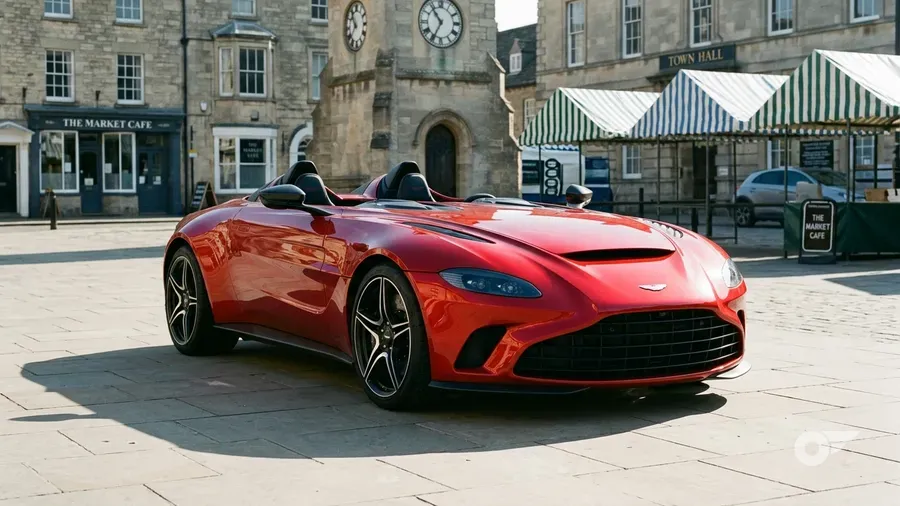
The shape is an argument about where downforce should come from. Newey ran two venturi tunnels the length of the underfloor into a very large diffuser, which meant the upper surfaces could stay clean. There is no fixed rear wing on the road car, no canards, none of the bolted-on apparatus that defines its rivals. What is left is a teardrop cabin on a waisted body with the wheels pushed to the corners, and it reads as an aerodynamic solution rather than a styling exercise because that is what it is. Miles Nurnberger handled the exterior under Marek Reichman, and much of that work was making Newey's surfaces look like an Aston Martin. There is no rear window at all; a camera does that job, and camera stalks replace the door mirrors. The grille is a shape rather than an opening. The obsession runs down to the fittings. The enamel wings badge was judged too heavy, so the design team had one chemically etched from aluminium thinner than a human hair. The Spider keeps all of it and adds a removable carbon roof panel, which is a harder trick than it sounds on a body doing structural and aerodynamic work at the same time.

Motorsport pedigree

This is the only one of the modern hypercars that actually went racing in the top class, and it took a decade to get there. Aston Martin announced a Valkyrie-based Le Mans Hypercar in 2019, then cancelled it in early 2020 when the Lawrence Stroll consortium took control and pushed the money towards Formula 1. The programme came back in 2025 with The Heart of Racing running it as the Aston Martin THOR Team. The debut season was honest rather than triumphant. Both cars finished Le Mans in 2025, 12th and 14th. Sorensen and Riberas took fifth at Fuji, Riberas led a World Endurance race on merit at Bahrain, and the year closed with seventh there. In IMSA it managed seven top-ten finishes from eight races and then second at Petit Le Mans in October, the Valkyrie's first podium anywhere and the first outright IMSA podium in Aston Martin's history. 2026 has gone better. Ninth at Imola, fourth at Spa, and eighth at Le Mans in June, the best finish there for any car derived from a road-legal hypercar, which made it a fifth consecutive points score. Aston Martin's own framing is worth repeating: it is the only car in the class that started life as a road car.

In culture

The Valkyrie had a reputation before it had customers, and the reputation was Newey's. His involvement was the story from 2016 onward, and it acquired a second act in March 2025 when he left Red Bull after nineteen years and started at Aston Martin's Formula 1 team as Managing Technical Partner. The man who designed the road car now works for the company that sells it. Ownership skews the way you would expect. Max Verstappen has one. Fernando Alonso took delivery of his in Monaco in 2024 and Aston Martin put out a press release about it. David Coulthard bought one, was filmed driving it through Monaco with his son, then had it stop and refuse to move under its own power, and sold it through Joe Macari within months. Nobody has established why he sold it and this page will not guess. Gran Turismo 7 added the road car in June 2023, which is where most people have driven one, and Polyphony's connection to the project runs back to the Red Bull X2010 that Newey designed for the series in 2010. The race car appears in Le Mans Ultimate.

Rivals

Cars from other manufacturers that competed for the same buyers when new.
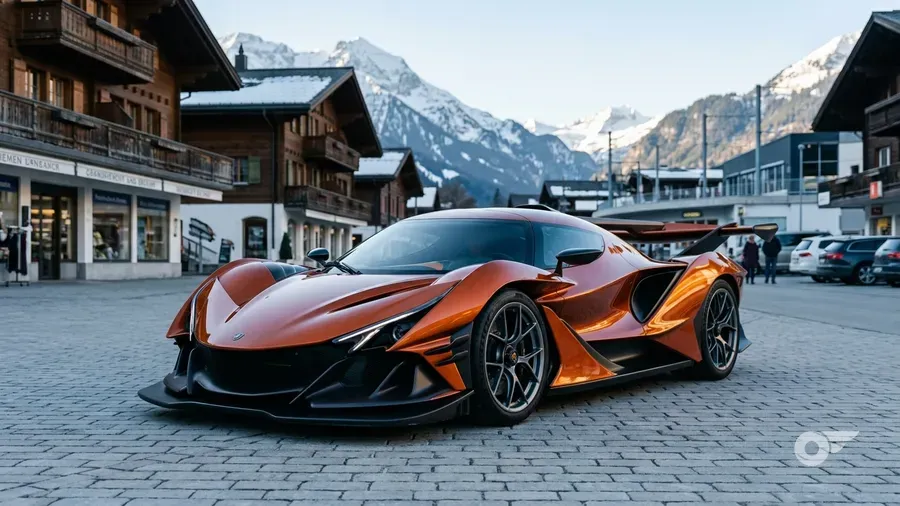
Owning One

Why collectors want it

The Valkyrie is the rare hypercar where the engineering claim survives contact with the spec sheet. Newey designed it while running Red Bull Racing's Formula 1 programme, and the parts that matter are the parts you cannot see: the underfloor, the fully stressed engine, the pushrod suspension working through hydraulically actuated torsion bars. Nothing else sold as a road car in the 2020s went at the problem that way.

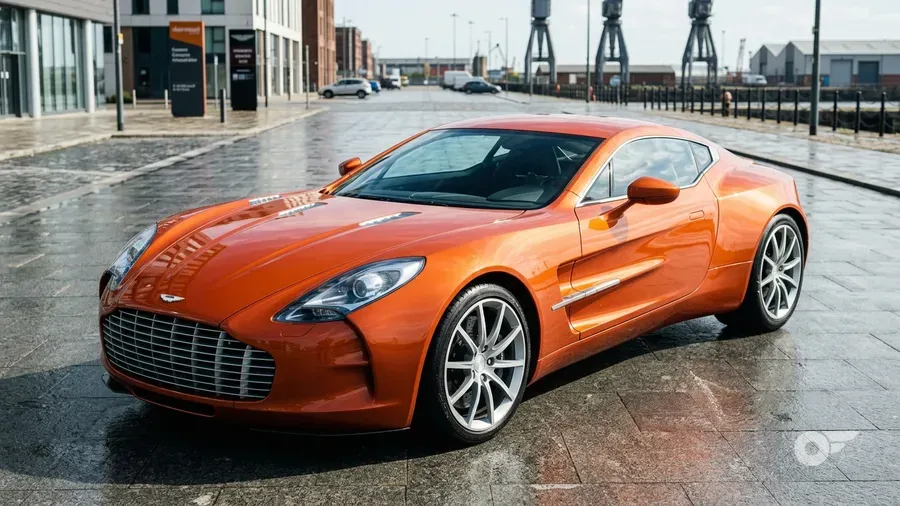
Then there is the engine, which is the argument by itself. Cosworth had already built the One-77's 7.3-litre V12, the most powerful naturally aspirated production engine of its day. Twelve years later it built one that made 1,000 bhp, and nobody has since put a stronger naturally aspirated engine in a road car.

The hierarchy inside the 275 is clear enough. The 40 AMR Pros are track cars and rarely trade. The 85 Spiders carry the money at the moment: one made 4,735,000 dollars at Monterey in August 2026, a record for any post-1970 Aston Martin. The 150 coupes are the volume car, and they are the ones you can realistically go and buy.

Which one to look for

Three cars were built inside the 275 and they are not interchangeable. The coupe came first, 150 of them, and is the definitive Valkyrie. The Spider followed at Pebble Beach in August 2021, 85 cars with a removable carbon roof panel and butterfly doors, delivered from the second half of 2022, and it is the variant the market currently wants. The AMR Pro is the outlier and the connoisseur's pick: 40 cars plus two prototypes, no hybrid system, a chassis 380 mm longer in the wheelbase and wider at both ends, carbon-carbon brakes, twice the road car's downforce and no possibility of registering it. It exists largely because the Le Mans programme was cancelled and the aerodynamics had nowhere else to go. Two more cars sit outside the count. The Valkyrie LM, announced in June 2025, is a ten-car track-only customer machine built to the Le Mans car's mechanical specification without the regulations, handed over from the second quarter of 2026. The Valkyrie AMR-LMH is the race car itself, which is a different animal again: no hybrid, restricted power, and a job to do.

AMR Pro · 2021–2024

Track only, and a different car underneath. No hybrid system, a wheelbase 380 mm longer, 96 mm wider at the front and 115 mm at the rear, carbon-carbon brakes and roughly twice the road car's downforce. It exists because the cancelled Le Mans Hypercar programme left the aerodynamics with nowhere to go. From 3.5 million dollars.

Coupe · 2021–2024

The definitive Valkyrie and the one the whole programme was designed around. Fixed carbon roof, hybrid 6.5-litre Cosworth V12 at 1,160 hp combined, Multimatic carbon monocell. Listed at 2.5 million pounds before tax. Twenty-five of the 150 were built in right-hand drive.

Spider · 2022–2024

Revealed at the Pebble Beach Concours in August 2021 with a removable carbon roof panel and butterfly doors in place of the coupe's gullwings. Mechanically identical, listed at 2,750,000 pounds, and now the variant carrying the money: one made 4,735,000 dollars at Monterey in August 2026.

What owning one is like

The Valkyrie was difficult before anyone took delivery. Cars were promised for 2018, then 2019, then 2020, and when Aston Martin finally announced full production in November 2021 only ten shipped that quarter, held up by electronics. Early owners described strict operating procedures and drive modes that had to be respected. David Coulthard's car stopped in Monaco and could not move under its own power. The cars that followed are better sorted, but nobody should mistake this for a usable machine. Fuel consumption runs between four and nineteen miles per gallon depending entirely on your right foot, so planning a route feels like planning one in an electric car. The turning circle is enormous and three-point turns become seven-point turns. The air conditioning will blow hot into the cabin while it is busy cooling the powertrain. After slow driving the engine has to be left running to recharge the battery or the car may not restart. Small things go wrong in interesting ways. evo's test car briefly lost its mirror cameras, once refused first gear from neutral, and melted the adhesive holding the rear numberplate on. None of that is a reason not to own one. All of it is a reason to know what you are taking on.

Upkeep & parts

Budget for the engine before anything else. Cosworth's powertrain director has said the V12 is projected to last around 62,000 miles before a full rebuild, at which point the unit comes out, comes apart, and the block is crack-tested before it goes back together with new pistons and valves. That is a race engine's service life in a car sold with number plates.

The running costs match. Bloomberg reported in February 2024 that a three-year service plan quoted to owners came to roughly 450,000 dollars, with a cheaper 340,000 dollar plan also offered, and Aston Martin had already publicly disputed the larger figures circulating in 2023. Either way the number is neither small nor optional, and it buys motorsport engineers rather than technicians.

There is no independent network and there will not be one. The monocell was built by Multimatic in Ontario, the engine by Cosworth, the gearbox by Ricardo, and structural damage means the factory and a long wait. What the marque does have is depth on the paperwork side: the Aston Martin Owners Club has run since 1935, and the Aston Martin Heritage Trust holds the largest collection of company records anywhere.

Country of origin
UK
Class
Exotic
Production years
2021–2024
Units built
275
Model
Valkyrie
Nickname
No nickname
Body
Coupe, Targa
Layout
Mid-engine, RWD
Engine
6.5-litre naturally aspirated Cosworth RA V12 (1,000 bhp at 10,500 rpm, 740 Nm at 7,000 rpm, 11,100 rpm maximum) with 160 hp Integral Powertrain electric motor and Rimac battery, 1,160 hp combined; AMR Pro runs the same V12 without the hybrid system
Transmission
7-speed Ricardo single-clutch automated manual with paddle shift
Designer
Adrian Newey (concept and aerodynamics), Miles Nurnberger (exterior), under Marek Reichman (Chief Creative Officer)