Octane Files
Explore CarsAston Martin V12 Speedster

Aston Martin V12 Speedster

Overview

In January 2020 Aston Martin confirmed that Q, its bespoke division, would build 88 cars with no roof and no windscreen. The V12 Speedster was shown that March at 765,000 pounds including tax, and it is best understood as what happens when a bespoke department is handed a whole car instead of a paint code.

Underneath is production hardware, which is not a criticism. The bonded aluminium platform borrows from the DBS Superleggera and the Vantage, and the 5.2-litre twin-turbo AE31 V12 makes 700 PS and 753 Nm through a ZF eight-speed automatic. Over that sits a carbon body sharing no panel with anything else Aston Martin sells, with twin humps behind the seats quoting the DBR1 and the DB3S, and pods inside those humps sized to carry helmets.

There is no windscreen, only two small glass aero ramps ahead of the occupants. There is no glovebox either, just a removable leather bag. Deliveries began in the first quarter of 2021 and the run was finished by 2022.

Distinctions

The defining attributes and collector status that make this car garage-worthy.

Octane Files Select
Renowned for its history, engineering, or cultural weight.

Collectibility scorecard

Rated 1 to 10 on the traits that matter for owning, driving, and holding on to a car like this.

Desirability
6/10
Rarity
9/10
Driving thrill
6/10
Investment trajectory
3/10
Usability
2/10
Ease of restoration
3/10
Cultural impact
3/10
Electronic dependence
Fully analogHeavily electronic

Comprehensively managed, but a generation short of the Valkyrie. The twin-turbo V12 runs modern engine management with a drive-by-wire throttle and electronically controlled boost, driving through a ZF eight-speed torque-converter automatic and an electronic limited-slip differential. There is adaptive damping with Sport, Sport Plus and Track settings, the usual ABS, traction and stability systems, and electric assistance for the steering. What is absent is the layer above that: no hybrid system, no active aerodynamics, no torque vectoring, no drive-mode matrix beyond the three. Take away the roof and the windscreen and the driver is left with a fairly conventional set of controls.

Market data

Demand tier, price trend, and typical values by condition. Our own assessment, not a quoted valuation.

Demand tier
EntrySolidHighBlue-chip

A dependable market. Well-kept cars hold their value and find ready buyers.

Value trajectory
AppreciatingStableCooling

Values are softening. Patience buys better cars for less.

Price by condition
Driver
Excellent
Concours

No V12 Speedster has sold publicly, as far as this research can establish, and that absence is the finding rather than a gap in it. Four have been offered at public auction and all four failed: Bonhams in September 2024, RM Sotheby's Munich in November 2024, Aguttes in December 2024 and Collecting Cars in October 2025. The Munich car, number 61 of 88 with 46 kilometres recorded, drew a top bid of 646,000 dollars against a 950,000 dollar list and an estimate opening at 780,000 euros. Because no verified public result exists, this page carries no price band. Dealer and broker asking prices run from around 950,000 pounds to 1.5 million dollars, and an asking price is not a sale. A band built from them would be an invented number. What is left is a clear read on direction. A limited-edition Aston Martin bought largely for its exclusivity is currently worth materially less than it cost, the market has not tested a floor, and nobody has yet been forced to find out where that floor is.

Buyer's guide

What anyone seriously considering this car should know first.

Why it's worth it
A 700 PS V12 road car built with no roof and no windscreen
Callout
Two pods behind the seats are sized to carry the helmets you need to drive it
What to watch for
This is a buyer's market and has been for a while. Four V12 Speedsters have gone to public auction since September 2024 and none of them sold. The clearest data point anyone has is a no-sale: car 61 of 88, showing 46 kilometres, was bid to 646,000 dollars at RM Sotheby's Munich in November 2024 against a 950,000 dollar list price. Sellers are still asking a million and more. Wait them out. Specification is where the differences lie, because mechanically every car is identical. The DBR1 specification is the one to look for, in Racing Green with Clubsport White roundels, solid silver wings badges under transparent enamel and more than fifty hours in the paint alone. The Top Gun: Maverick cars are the curiosity. Neither take-up figure has ever been published. Then the practical checks. Right-hand drive is believed to be twelve cars. Almost every example carries delivery mileage, so the questions are about storage rather than wear. This car has no roof, so ask where it has lived, and whether the cover and both aero ramps are intact and unmarked.

The Story

Driving character

The most interesting decision Aston Martin made here is invisible. The DBS Superleggera delivers 664 lb ft from 1,800 rpm in one slab; the Speedster's version of the same engine peaks at 555 lb ft and waits until 5,000 rpm to do it. That gives the car something to build towards rather than a wall to lean on, and it keeps a 700 PS rear-drive roadster on the right side of its tyres. It is quicker than it needs to be and more agile than 1,700 kg suggests. With no A-pillars the sightline is uninterrupted, which makes placing the nose unusually easy, and the ZF eight-speed is slick enough to disappear. In Sport Plus the rear will rotate a little under power and then settle. The limitation is the one you can see. Past about 60 mph the wind takes over and drowns the V12, which is a strange outcome in a car built around that engine's noise. You wear a helmet, you watch the forecast, and you allow half an hour at every fuel stop for the phones. Aston Martin did fit a heater and heated seats, which suggests they had thought about it.

Design

Miles Nurnberger's team started from two 1950s sports racers and a concept nobody could buy. The twin humps behind the seats come from the DBR1 and the DB3S. The proportions, and the idea of a road car with nothing above the waist, come from the CC100 Speedster Concept built in 2013 for Aston Martin's centenary. Over that they layered aviation references, the F/A-18 in particular, which is where the nostril in the bonnet and the canopy-shaped buttress covers come from. The body is carbon fibre and shares nothing with the Vantage underneath it. The grille is wider and lower than anything else in the range, the headlights are unique to this car, and the exhaust exits centrally into the diffuser. The wheels are 21-inch forged centre-locks over carbon ceramic discs, 410 mm at the front and 360 mm at the rear. Inside is where the bespoke division shows. Structural satin carbon, saddle leather, chrome, aluminium and 3D-printed rubber, and no glovebox at all: a removable leather bag does that job, with more storage under the humps.

Motorsport pedigree

There is none, and the reason is worth stating plainly, because the car is dressed as a racer. The V12 Speedster was built by Q by Aston Martin as a road object. It has no roof, no windscreen and no roll structure any scrutineer would pass, and no series exists for what it is. The architecture underneath did race, but not with this engine. When Aston Martin built the Vantage GTE, GT3 and GT4 from 2018 it used the Mercedes-AMG 4.0-litre twin-turbo V8, and the GT3 explicitly replaced the naturally aspirated V12 Vantage GT3 that came before it. The GT regulations of the period were written around that V8, so the AE31 twin-turbo V12 in this car has never been homologated for anything. What the Speedster has instead is a reference. The DBR1 whose colours the special specification wears won the 24 Hours of Le Mans outright in 1959 with Carroll Shelby and Roy Salvadori driving. That is the racing history in this car: borrowed, acknowledged and entirely secondhand.

In culture

The V12 Speedster's public life has been about the paint rather than the car. The Top Gun: Maverick specification landed in 2022 alongside the film, with Maverick's helmet design painted inside the buttresses and a Capt. Pete Mitchell decal on the door, and it remains the version most people have seen. Hot Wheels put the car into its Premium range, which is a decent proxy for how a shape is travelling outside the enthusiast press. Inside the enthusiast press the reception was more complicated, and evo's verdict is the one worth repeating: a much better car than the writer had expected, and the first Aston Martin he had ever driven that he had no desire to own. That is not a dismissal. It is an accurate description of a car built for a particular buyer. There is even a small aftermarket in windscreens, a two-piece canopy using the factory mounting points, which is either heresy or common sense depending on where you live.

Rivals

Cars from other manufacturers that competed for the same buyers when new.
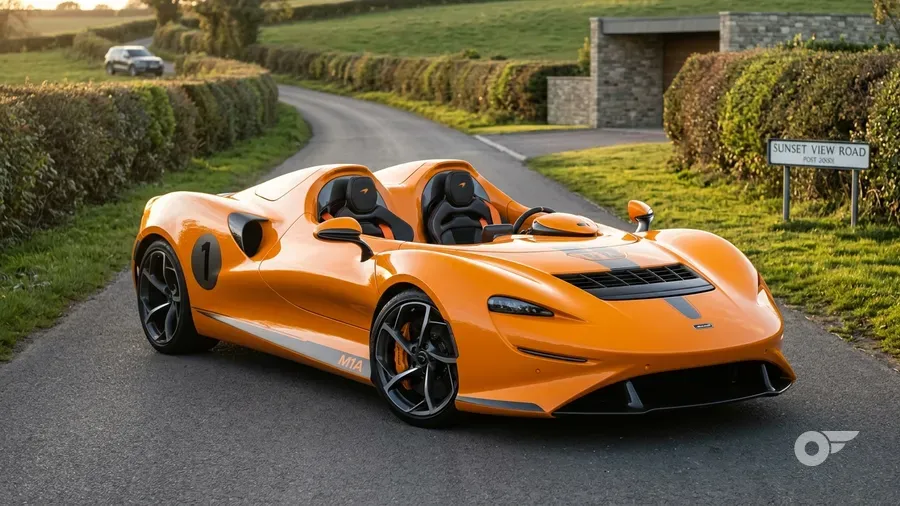
McLaren Elva

McLaren Elva

UK·Exotic·2020–2020
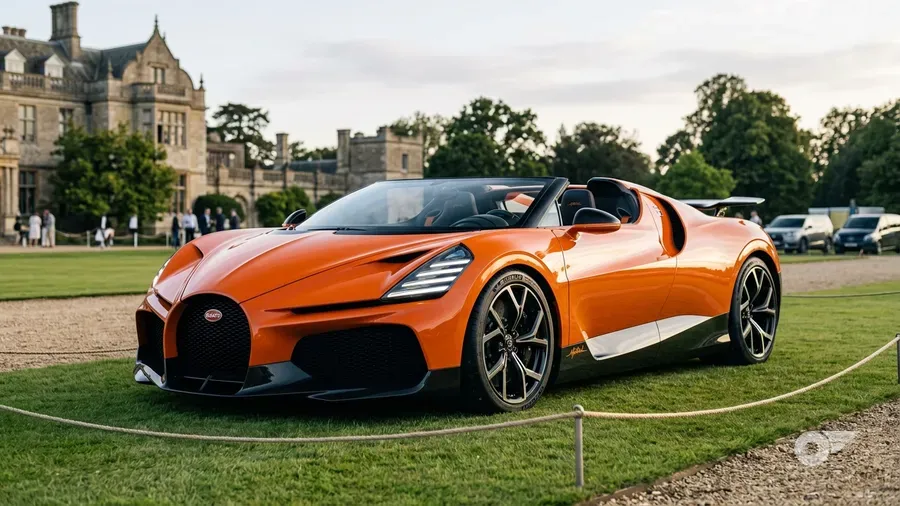
Bugatti W16 Mistral

Bugatti W16 Mistral

France·Exotic·2024–2026

Owning One

Why collectors want it

Be clear about what this is. The V12 Speedster is a design object with a numberplate, sold to 88 people who wanted an Aston Martin nobody else could order, and it is not pretending to be a driver's car in the Valkyrie's sense. Judged on its own terms it holds up well.

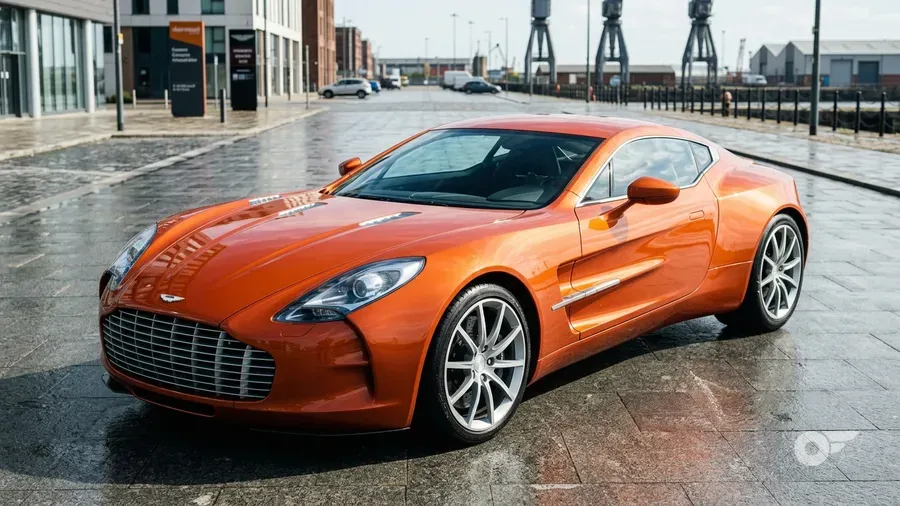
The case rests on three things. It is the whole-car expression of Q by Aston Martin, a division whose previous high-water mark was seven One-77s finished to special order. It is a serious piece of coachwork, an all-carbon body over a production platform, with a shape answering to the DBR1 and the DB3S rather than to anything modern. And it is genuinely rare at 88 cars, perhaps twelve of them in right-hand drive.

What it does not have, at least not yet, is a market that agrees with any of that. Values fell hard and have stayed down, which for a patient buyer is the argument rather than the objection. Nobody is going to build another one.

Which one to look for

There is one V12 Speedster mechanically, so everything separating one car from another is specification, and Q by Aston Martin published two named ones. The DBR1 specification, revealed in April 2021, is the one with an argument behind it. Aston Martin Racing Green with a Clubsport White pinstripe and roundels, a satin silver anodised grille, Conker saddle leather with Viridian Green and Caithness accents, solid silver wings badges set under transparent enamel, satin black diamond-turned centre-lock wheels, and over fifty hours dedicated to the paint process. It points at the car that won Le Mans outright in 1959. The Top Gun: Maverick specification followed in 2022, timed to the film. Skyfall Silver with blue accents, Maverick's helmet design painted inside the buttresses, and a Capt. Pete Mitchell decal on the driver's door. It is a period piece and it will always be the one people photograph. Aston Martin has never said how many of the 88 were ordered in either specification, so treat any number you are quoted as a claim rather than a fact.

DBR1 Specification · 2021–2022

A Q by Aston Martin option package rather than a separate car, revealed in April 2021 and aimed squarely at the DBR1 that won Le Mans outright in 1959. Aston Martin Racing Green with Clubsport White pinstripe and roundels, satin silver anodised grille, Conker saddle leather with Viridian Green and Caithness accents, solid silver wings badges under transparent enamel and satin black diamond-turned centre-locks.

Top Gun: Maverick Specification · 2022

The other named Q commission, timed to the film's release. Skyfall Silver with blue accents, Maverick's helmet design painted inside the buttresses, canopy-shaped covers over the helmet pods and a Capt. Pete Mitchell decal on the driver's door. Mechanically identical to every other Speedster.

V12 Speedster · 2020–2022

The standard car, and mechanically the only one. Carbon body over a bonded aluminium platform borrowed from the DBS Superleggera and the Vantage, 5.2-litre twin-turbo V12 at 700 PS and 753 Nm, ZF eight-speed automatic, 21-inch centre-lock wheels and carbon ceramic brakes. No roof, no windscreen, two glass aero ramps and helmet pods behind the seats. 765,000 pounds including VAT.

What owning one is like

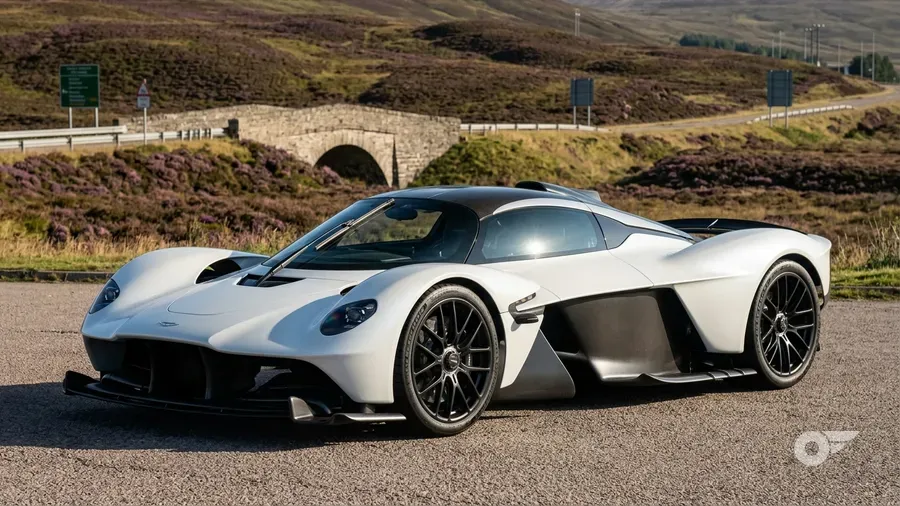
Everything about owning one starts with the fact that there is no roof. There is no windscreen either, so the car cannot live outside, cannot be driven in rain in any comfortable sense, and needs a helmet above about 60 mph. Owners plan around forecasts. That is the specification rather than a defect, but it is the reason most of these cars have covered almost no distance. The consequences are the familiar ones for a low-use exotic. Fluids, tyres, batteries and air conditioning are what want attention on a car that has been stored rather than driven, and a Speedster that has done a genuine few thousand miles is more interesting than one that has done fifty. Underneath, the news is good, and it is what separates this car from the One-77 and the Valkyrie. The engine, the gearbox, the electronics and most of the running gear are shared with cars Aston Martin built in the thousands, so a fault is diagnosable and a part usually exists. Only the carbon bodywork is unique, and that is the part you protect.

Upkeep & parts

This is the cheapest of Aston Martin's modern low-volume cars to keep, which is a low bar but a real one. The AE31 twin-turbo V12, the ZF eight-speed and the bonded aluminium platform are all shared with the DBS Superleggera and the Vantage, so servicing is ordinary main-dealer work at ordinary Aston Martin prices rather than a negotiation with a motorsport department.

Budget separately for the parts that are not shared. The carbon body panels exist for 88 cars and nothing else, so damage means the factory. The 21-inch forged centre-lock wheels want specialist fitting rather than a tyre bay, and the carbon ceramic discs, 410 mm front and 360 mm rear, are the usual four-figure consumable when they eventually go.

On the community side the marque is far better served than the model. There is no V12 Speedster club or registry beyond Exclusive Car Registry's listing, but the Aston Martin Owners Club has run since 1935 with sections on both sides of the Atlantic, and the Aston Martin Heritage Trust at Drayton St Leonard is where provenance gets established.

Country of origin
UK
Class
Exotic
Production years
2020–2022
Units built
88
Model
V12 Speedster
Nickname
No nickname
Body
Roadster
Layout
Front-mid-engine, RWD
Engine
5.2-litre AE31 twin-turbocharged all-alloy quad-cam 48-valve V12 (700 PS / 690 bhp, 753 Nm)
Transmission
ZF 8-speed automatic with limited-slip differential
Designer
Miles Nurnberger (Director of Design), under Marek Reichman (Chief Creative Officer)