Octane Files
Explore CarsApollo Intensa Emozione

Apollo Intensa Emozione

Overview

In 2017 the received wisdom was settled. A hypercar meant turbochargers, or a hybrid system, or both, and the naturally aspirated engine had run out of road. Apollo teased the Intensa Emozione on 17 October that year, revealed it a week later, and built ten cars around a 6.3-litre naturally aspirated V12 that revs to 9,000rpm with nothing helping it.

The company behind it had been Gumpert. Roland Gumpert, previously director of Audi Sport, founded Gumpert Sportwagenmanufaktur in 2004 and built the Apollo from 2005 until the firm filed for bankruptcy in August 2013. A Hong Kong consortium, Ideal Team Venture, bought it in January 2016 and renamed it Apollo Automobil. By November 2016 Roland Gumpert had no further connection with the company carrying his old car's name.

The IE is what that new ownership produced. The engine is Ferrari's F140, reworked by Autotecnica Motori and HWA AG to 780PS. The carbon monocoque comes from Capricorn Group, and HWA does the chassis setup and final assembly in Affalterbach. Ten were built, plus two prototypes, at 2.3 million euros each, and all ten sold.

Distinctions

The defining attributes and collector status that make this car garage-worthy.

Octane Files Select
Renowned for its history, engineering, or cultural weight.

Collectibility scorecard

Rated 1 to 10 on the traits that matter for owning, driving, and holding on to a car like this.

Desirability
8/10
Rarity
10/10
Driving thrill
10/10
Investment trajectory
7/10
Usability
2/10
Ease of restoration
2/10
Cultural impact
5/10
Electronic dependence
Fully analogHeavily electronic

The IE is contemporary at engine and transmission level and stripped everywhere else. The V12 runs modern engine management, and the six-speed Hewland sequential is shifted electro-pneumatically through paddles, so this is not an analogue car in the way a manual supercar is. What is absent is everything downstream. There is no hybrid system, no electric assistance, no turbocharging to manage and no infotainment. Downforce comes from fixed bodywork rather than moving aerodynamic elements, and the engine bay is left open to the air rather than covered.

Market data

Demand tier, price trend, and typical values by condition. Our own assessment, not a quoted valuation.

Demand tier
EntrySolidHighBlue-chip

Strong, sustained collector demand. Good examples never wait long for a buyer.

Value trajectory
AppreciatingStableCooling

Values are climbing. The market wants more of these than exist.

Price by condition
Driver
Excellent
Concours

No price band, because one public sale is not a market. The IE listed at 2,300,000 euros in Europe and 2,670,000 dollars in the United States, and all ten cars sold before delivery. The single public auction result is Bonhams at The Quail on 15 August 2025, where chassis 004, the Ocean Dragon car, showing 340 miles and with its interior removed, sold for 3,442,500 dollars including premium. That was the first IE ever offered publicly. Dealer asking prices since have started above 3,400,000 dollars, but an asking price is not a transaction. The trajectory is marked appreciating on the strength of that one result clearing the original list price by a wide margin six years on.

Buyer's guide

What anyone seriously considering this car should know first.

Why it's worth it
The Gumpert successor that answered the hybrid hypercar era with a screaming atmospheric V12
Callout
A naturally aspirated V12 revving to 9,000rpm, in the year everything else turned to turbos and hybrids
What to watch for
Ten cars means the buying process is a matter of introductions rather than listings, and the questions are different from a normal car. Establish where the car has been serviced. Three specialist firms made this vehicle: Capricorn Group built the monocoque, Autotecnica Motori and HWA AG developed the engine, and HWA carried out chassis setup and final assembly at Affalterbach. There is no dealer network, so a car with a documented relationship to HWA is a materially easier car to own than one without. Check the specification against the original commission. Each IE was individually finished, and the example Bonhams sold in 2025 had had its interior removed, which is the sort of thing that changes both the character and the value of a car in a ten-unit run. Confirm what is in the boxes if anything has been taken out. Expect very low mileage and treat it as a caution rather than a selling point. The Bonhams car showed 340 miles. Fluids, fuel, tyres and seals age on the calendar rather than the odometer, and a naturally aspirated race-derived V12 that has barely run needs proper commissioning before it is used.

The Story

Driving character

The engine is the car. A 6,262cc naturally aspirated V12 making 780PS at 8,500rpm and 760Nm at 6,000, with a 9,000rpm redline and no turbochargers or electric motors to blur the response, in a car weighing 1,250kg. Apollo claimed 2.7 seconds to 60mph and 335km/h, and the bodywork generates over 1,350kg of downforce at 299km/h, which is racing territory rather than road car territory. The gearbox is a six-speed Hewland sequential shifted by electro-pneumatic paddles, competition hardware rather than a smoothed-over road transmission, so shifts land quickly and abruptly in a way a twin-clutch is designed not to. What that combination gives is the thing the name is trying to describe. The IE was built to transmit sensation rather than filter it: an atmospheric V12 climbing to 9,000rpm behind your head, a race gearbox banging home, and enough downforce that the car changes character with speed. It is a track weapon with a numberplate rather than a grand tourer, and it never pretended otherwise.

Design

Jowyn Wong designed the IE, and he went on to draw the De Tomaso P72 for the same owner, which is the only way two cars this different can share a hand. Where the P72 is a period homage, the IE is aerodynamic function turned theatrical. Nothing on it is decorative. The body is carbon fibre over a 105kg Capricorn monocoque, with high-strength steel, aluminium and titanium components, and the surfaces exist to move air: vast side intakes, a full-width rear wing, a deep diffuser and channels cut through the bodywork rather than around it. At 5,066mm long and 1,130mm tall, the proportions are those of a sports prototype rather than a road car. The signature decision is leaving the engine bay open. There is no engine cover, so the V12 and its induction sit exposed for cooling and air, and the mechanical heart of the car is on permanent display. The name is Italian for intense emotion, and the design brief was an object that provokes a reaction before it moves. On that measure it works, and it is the reason a badge nobody recognises still stops a paddock.

Motorsport pedigree

The IE has no competition record, and there is a clear reason: it was built as a track car with no series to enter. Ten road-registered cars cannot satisfy any GT homologation requirement, no customer racing programme was set up around it, and by 2017 endurance racing's prototype and GT classes were closed structures requiring manufacturer-scale commitment. The hardware, however, has racing parentage throughout. The carbon monocoque was made by Capricorn Group, a motorsport composites supplier. Chassis setup and final assembly were done by HWA AG, the Affalterbach motorsport engineering firm, which also did engine development work with Autotecnica Motori. The gearbox is a Hewland sequential. The V12 is Ferrari's F140, the family that powered the Enzo and its descendants. The lineage reaches further back than the car itself. Apollo exists because Roland Gumpert, previously director of Audi Sport, built the original Apollo in 2005 after a career running a factory competition department. The IE inherited all of that engineering culture and never entered a race.

In culture

The IE's public life has been thin by design and the cars are rarely seen, which is what building ten of something means. Its widest exposure has come through games rather than roads: it appeared in Forza Motorsport 7, its first console outing, and in CSR Racing 2 and the Asphalt series, where it has ranked among the fastest cars in the game. Its second moment came at auction. When Bonhams offered Ocean Dragon at The Quail in August 2025, it was the first Intensa Emozione ever presented publicly for sale, and the 3,442,500 dollar result made news well beyond the specialist press. Beyond that, the IE occupies a strange cultural position. It is the successor to a car, the Gumpert Apollo, that is genuinely famous among a generation of gamers and Top Gear viewers, and the IE has neither that recognition nor that name. Ten cars carrying a badge most people do not know, built by a company most people cannot place, is a very particular kind of obscurity.

Rivals

Cars from other manufacturers that competed for the same buyers when new.

Aston Martin Valkyrie

We haven’t profiled this car yet. Request to add

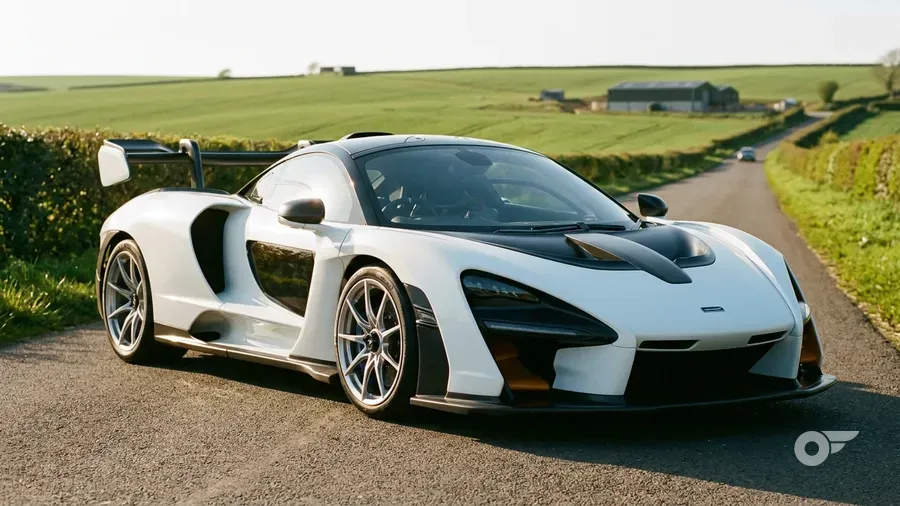
McLaren Senna

McLaren Senna

UK·Exotic·2018–2019

Owning One

Why collectors want it

Ten cars is the headline and it is a real one, but it is not the whole argument. What makes the IE collectible is that it was built as a deliberate refusal. In 2017 Ferrari, McLaren and Porsche had all put electric motors or turbochargers into their flagship cars, and a small German firm with no reputation left to protect answered with 6.3 litres, twelve cylinders, no assistance and a 9,000rpm limit. Cars built to make a point tend to age well.

The specification supports the story. A Hewland sequential racing gearbox, a Capricorn carbon monocoque weighing 105kg, 1,250kg all in, and more than 1,350kg of downforce at 299km/h. This is race car hardware wearing road car paperwork.

The market has begun to agree. When the first IE was offered publicly, at Bonhams at The Quail in August 2025, it made 3,442,500 dollars against a list price of 2,670,000 six years earlier. With ten cars in existence and four of them in the United States, that result is the only public price signal there is, and it pointed up.

Which one to look for

There is one specification, so the variation between IEs is a matter of commission rather than model. Each of the ten was finished individually and several carry names: chassis 004 is Ocean Dragon, in bare carbon with a colour-shifting finish that moves from deep blue to green, and a Red Dragon car also exists. Those names attach to the individual car, not to a version. Two prototypes were built alongside the ten customer cars and are counted separately. Four of the ten went to the United States. Because there is no lightweight version, no roadster and no track-only variant, the things that separate one IE from another are provenance and originality: which chassis number, what the original commission specified, whether the interior is as delivered, and whether the car has been run and maintained or simply stored. On a ten-car run those are the only levers that exist, and the Bonhams car of August 2025 set the reference point for all of them.

What owning one is like

Ten cars, most of them barely driven, means the ownership question is about preservation rather than wear. The Bonhams example had covered 340 miles in three years. A naturally aspirated race-derived V12 with a Hewland sequential gearbox is not improved by sitting still: fuel goes off, seals dry, tyres age out long before they wear out, and batteries and fluids need a schedule that has nothing to do with mileage. Everything on the car is a specialist item. The carbon monocoque came from Capricorn, the engine work from Autotecnica Motori and HWA, and final assembly from HWA at Affalterbach, so a straightforward job means talking to a motorsport engineering firm rather than a service department. Body panels are made in batches of ten. The F140 engine family is the one piece of good news, being a well-understood Ferrari V12 in wide use, though the IE's own calibration and induction are unique to it. Owners who use their cars keep them commissioned and sorted; the ones that sit are the ones that need work.

Upkeep & parts

This is a car maintained by engineering firms rather than dealers, and the address list is short. HWA AG in Affalterbach set up the chassis and assembled every car, which makes it the natural first call. Capricorn Group built the monocoque, so structural work leads back there. Autotecnica Motori developed the engine with HWA, which means calibration and induction questions go to them rather than to a Ferrari specialist, even though the V12 itself is an F140.

Plan for logistics as a running cost. With ten cars worldwide and four in the United States, there is no local expertise anywhere, and moving a car to the people who built it is often cheaper than bringing them to the car. A Hewland sequential is motorsport hardware and should be serviced on motorsport intervals rather than road car ones.

No owners club or public registry exists for a ten-car model, so the practical network is Apollo itself and the small circle of specialists who have handled these cars. Budget accordingly and keep every invoice with the car.

Country of origin
Germany
Class
Exotic
Production years
2019–present
Units built
10
Model
Intensa Emozione
Nickname
No nickname ("Ocean Dragon" and "Red Dragon" name individual commissions, not the model)
Body
Coupe
Layout
Mid-engine, RWD
Engine
6.3-litre naturally aspirated Ferrari F140 V12, developed by Autotecnica Motori and HWA AG (780PS at 8,500rpm, 760Nm at 6,000rpm, 9,000rpm redline)
Transmission
6-speed Hewland sequential manual with electro-pneumatic paddle shift
Designer
Jowyn Wong