Octane Files
Explore CarsToyota MR2 W20

Toyota MR2 W20

Overview

Toyota released the second MR2 in October 1989 and said plainly, in its own corporate history, what it had done: the car kept the sporty commuter concept but became more of a sports car than before, and the body became a size larger. Both are true and both are the story.

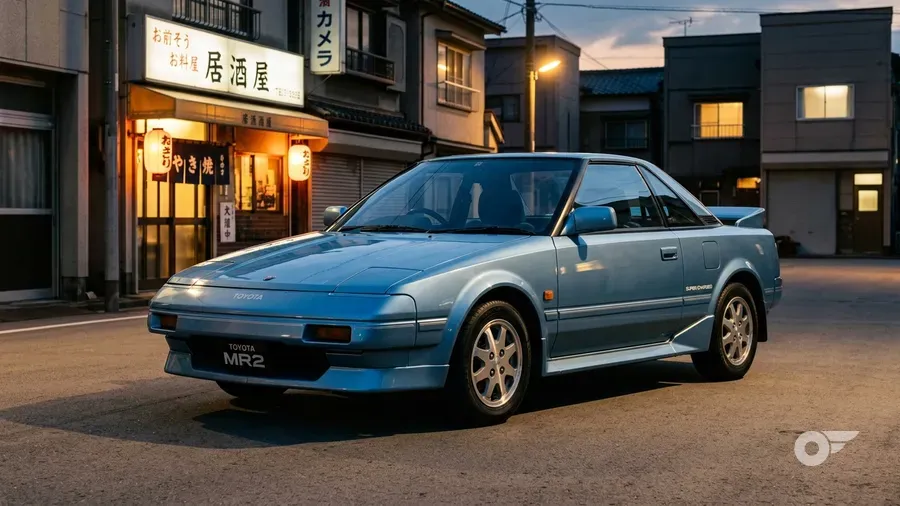
The W20 is bigger, heavier, curvier and much faster. Japan got a 165 PS naturally aspirated 3S-GE and a turbocharged 3S-GTE that Toyota's own material puts at 225 PS. America got a 2.2-litre four in the base car and the turbo at 200 horsepower. Europe got two twin cams and no turbo at all. From most angles it looks like a scale Ferrari, which is a comparison the car has never escaped and never entirely deserved.

Then there is the handling. Journalists reported that the car could let go at the back without much warning. Toyota agreed, and in January 1992 revised the suspension geometry, tyre sizes and power steering to reduce the chance of it, saying the changes were for drivers whose reflexes were not those of Formula One drivers. Three more revisions followed. Reading which one you are looking at is the single most useful skill a buyer of this car can have.

Distinctions

The defining attributes and collector status that make this car garage-worthy.

Octane Files Select
Renowned for its history, engineering, or cultural weight.

Collectibility scorecard

Rated 1 to 10 on the traits that matter for owning, driving, and holding on to a car like this.

Desirability
7/10
Rarity
5/10
Driving thrill
8/10
Investment trajectory
7/10
Usability
5/10
Ease of restoration
4/10
Cultural impact
7/10
Electronic dependence
Fully analogHeavily electronic

Every engine in the range is fuel injected and ECU-managed, anti-lock brakes are available and were upgraded at the November 1993 revision, turbo cars can carry a viscous limited-slip differential, and the whole car is wired for the convenience equipment of its period. That is a step beyond the first MR2 and it is where the step stops. The throttle is a cable, the steering is hydraulically assisted, the handbrake pulls on a wire, and there is no traction control and no stability system anywhere in the range, in any market, across ten years of production. The turbo's boost control is the most sophisticated thing on the car.

Market data

Demand tier, price trend, and typical values by condition. Our own assessment, not a quoted valuation.

Demand tier
EntrySolidHighBlue-chip

A dependable market. Well-kept cars hold their value and find ready buyers.

Value trajectory
AppreciatingStableCooling

Values are climbing. The market wants more of these than exist.

Price by condition
Driver
$9k
Excellent
$18k
Concours
$33k

No Toyota publication carries a W20 production total either. The figure shown, 130,732, is the MR2 community's own compiled number and is flagged estimated for that reason; it breaks down as 66,761 for Japan and 30,660 for markets outside Japan and North America, implying 33,311 for North America. The market splits sharply by engine. Base manual cars average $14,581, with a low of $5,000 for a 1991 in February 2024 and a high of $32,250 for a 1993 in April 2025. Turbos are a separate and much stronger market, averaging $24,733, from $5,200 for a 1991 in August 2026 up to $125,000 for a 1991 Turbo GT-S in April 2025. The band below describes the naturally aspirated car, which is what most buyers will meet. Turbo money sits above it, and the condition of the pre-catalyst and the sills moves a car within it more than any option does.

Values as of August 2026.

Buyer's guide

What anyone seriously considering this car should know first.

Why it's worth it
The mid-engined Toyota that Toyota kept re-engineering to stop it biting
Callout
Toyota revised the SW20 five times in ten years, and the second revision was an answer to its handling
What to watch for
Identify the revision before you look at anything else, because it decides how the car drives and what it is worth. Revision 1 is 1989. Revision 2 arrived in January 1992 with longer rear toe links, revised front geometry, larger brakes, fifteen-inch wheels and a viscous limited-slip option on turbos. Revision 3, November 1993, brought round tail lights, a one-piece rear wing, a passenger airbag and upgraded anti-lock brakes. Revision 4 was June 1996, Revision 5 November 1997, and the latter is when Japanese naturally aspirated cars got the 200 PS BEAMS engine. Then the pre-catalyst, which is the thing that kills these engines. The ceramic pre-cat breaks up with age or with oil passing a worn engine, the debris travels down to the main catalyst, clogs it, and gets blown back into the cylinders where it scores the bores. Power loss, heavy oil consumption and smoke are the symptoms. A car that has had the pre-cat dealt with is worth more, not less. Then rust and cooling. The sills rot from inside because the factory foam under them holds water, and the coolant pipes running the length of the car corrode where you cannot see them.

The Story

Driving character

A turbo SW20 is faster than its reputation and stranger than its shape suggests. The 3S-GTE does very little until the boost arrives and then delivers all of it at once, immediately behind your shoulders, in a car short enough that the whole event seems to happen inside the wheelbase. It is a genuinely rapid thing and it always was. The handling reputation is real and it is also overstated. The mid-engined layout gives the car a high limit and relatively little warning at it, and on the tyres and geometry of a 1990 car, in the wet, with a lift mid-corner, it will rotate. Toyota agreed with the criticism rather than disputing it, and changed the suspension geometry, tyre sizes and power steering in January 1992 specifically to reduce the chance. Every revision after that improved it further. Driven with respect on modern tyres, a later car is beautifully balanced rather than treacherous. The steering is quick, the visibility over that low nose is excellent, and the gearshift is short and completely dependable. The naturally aspirated cars are the sweeter drive, and the BEAMS-engined Japanese Revision 5 is the pick of them.

Design

Kunihiro Uchida's 1987 design is the reason people know this car, and also the reason they know it by the wrong name. Everything hard-edged about the AW11 is gone. The W20 is drawn in continuous curves, with a low blunt nose, a long side scoop feeding the mid-mounted engine, and a tail that rises into a spoiler. From several angles, particularly the rear three-quarter, it reads as a small Ferrari, and it has been called a poor man's one ever since. That is a comparison rather than a name, and it does the car a disservice, because the surfaces are Toyota's own and the proportions are set by a transverse four rather than a longitudinal V8. Pop-up headlamps survived the entire ten-year run, which by 1999 made this one of the last new cars anywhere still to have them. The visible dividing line for a buyer is Revision 3, from November 1993, which replaced the earlier tail light treatment with round lamps and a one-piece rear wing. A T-bar roof was available throughout, and Technocraft built a full soft-top conversion, the MR Spider, in 1996.

Motorsport pedigree

There was no works MR2 racing programme, and the reason is straightforward. Through the 1990s Toyota's competition budget went to Toyota Team Europe's World Rally Championship Celicas, to the JGTC Supra, and to sports prototypes at Le Mans. A mid-engined two-seater sold as a road car had no category it could win in and nothing that racing would have proved to a buyer. The engine did race, though, and that is the connection worth making. The turbocharged 3S-GTE sitting behind the driver's head is the same engine family that took three drivers' championships and two manufacturers' titles in the Celica GT-Four between 1992 and 1994. The MR2 never carried it into competition. The Celica did, and won everything with it. What this car actually has is a national one-make series, and it is a real one. The 750 Motor Club has run the Toyota MR2 Championship since 2008, open to all three generations, sixteen races across eight weekends, with wheels, transmission, brakes and engine internals kept to road specification and eligible cars available secondhand from around £4,000. Toyota GB sponsored it in 2011. It is a large part of why cheap SW20s keep being bought rather than scrapped.

In culture

Nothing has shaped this car's public life more than a name it does not own. Poor man's Ferrari has followed the SW20 since it was new, through the enthusiast press, the club sites and every second conversation about it, and it is why a lot of people know the car at all. It is a comparison rather than a nickname and this page treats it as one, but pretending it does not exist would be dishonest. Beyond that the SW20 has lived where cheap fast cars live: in games, in club racing and on forums. It has been a Gran Turismo fixture, it is one of the standard affordable mid-engined project cars in Britain and Australia, and the 750 Motor Club series has given it a visible competitive life that almost no other 1990s Toyota has. The handling reputation is its own cultural artefact by now. Two decades of retelling have made the snap-oversteer story larger than the evidence, to the point where the honest reading, that an early car on tired tyres deserves respect in the wet and not much more than that, has become the contrarian position.

Rivals

Cars from other manufacturers that competed for the same buyers when new.
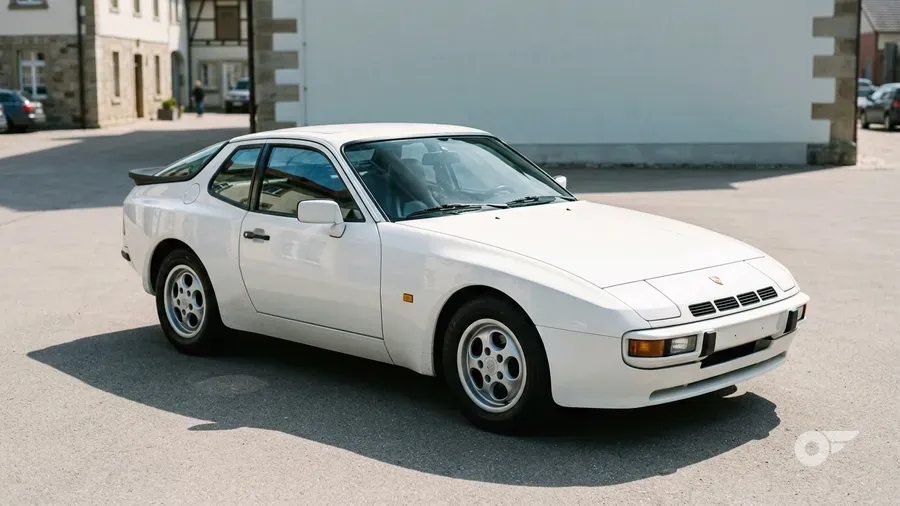
Porsche 944

Porsche 944

Germany·Sports·1982–1991
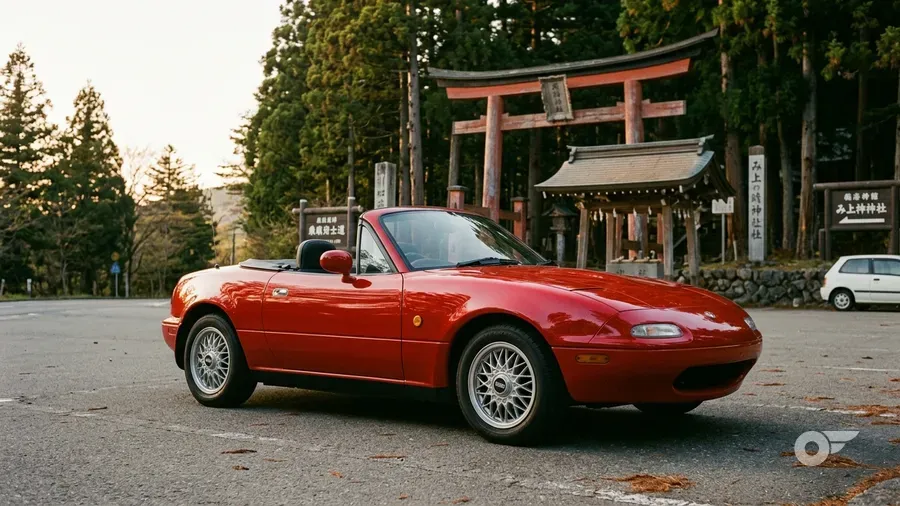
Mazda MX-5 Miata NA

Mazda MX-5 Miata NA

Japan·Sports·1989–1997
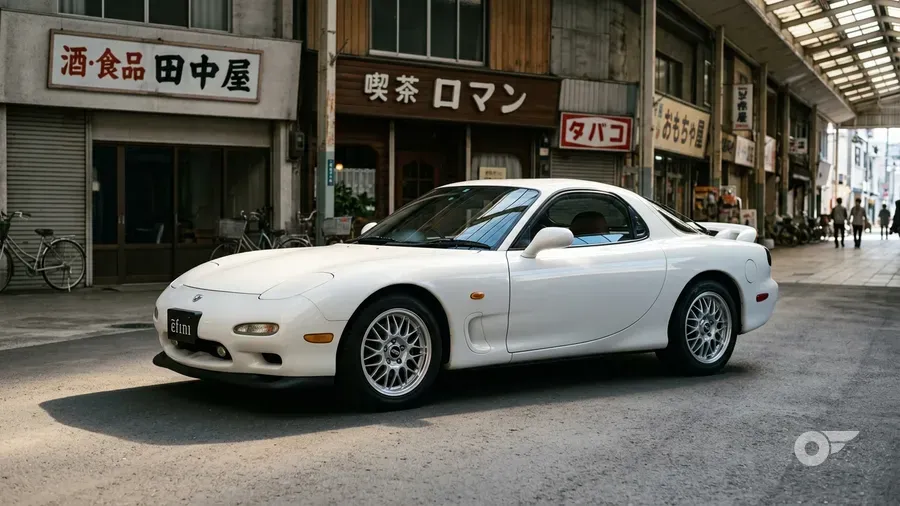
Mazda RX-7 FD

Mazda RX-7 FD

Japan·Sports·1991–2002
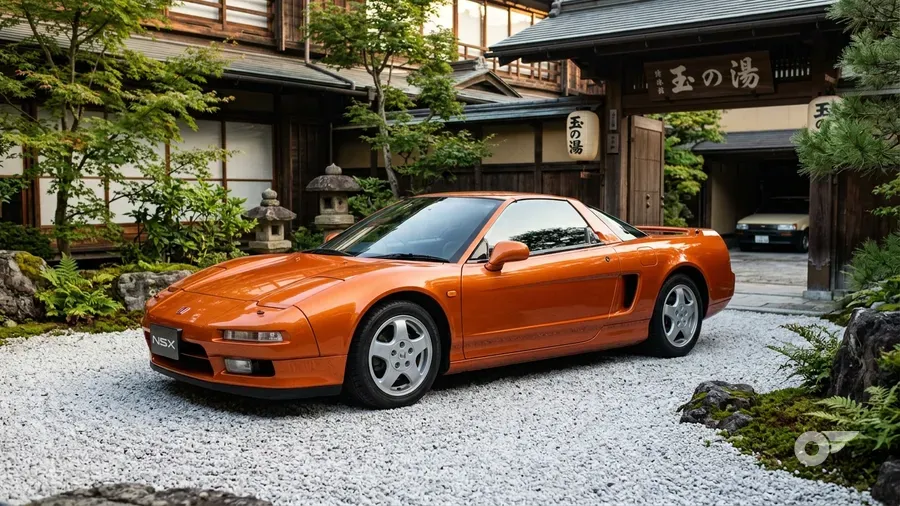
Honda NSX NA1/NA2

Honda NSX NA1/NA2

Japan·Exotic·1990–2005

Honda Prelude BA8/9/BB1/2/3/4

We haven’t profiled this car yet. Request to add

Lotus Elise Series 1

We haven’t profiled this car yet. Request to add

Owning One

Why collectors want it

The SW20 is the affordable mid-engined turbo car and the market has finally started treating it as one. Base manuals average $14,581 with a floor around $5,000, while turbos average $24,733 and a 1991 Turbo GT-S took $125,000 in April 2025. That is an enormous range for one model, and it is mostly a story about revisions and originality rather than about rarity.

The argument for the car is that it is genuinely quick and genuinely unusual. A turbo SW20 makes 200 horsepower in America and, by Toyota's own reckoning, 225 PS in Japan, from an engine family that took three drivers' titles and two manufacturers' titles in the Celica GT-Four, mounted behind the driver in a car of around 1,250 kilogrammes. Nothing else with that layout cost this little new, and nothing else does now.

Within the generation the hierarchy runs by revision. A Revision 3 or later turbo has the reworked suspension, larger brakes, upgraded anti-lock system and round tail lights, and it is the one to buy. Revision 5 Japanese naturally aspirated cars with the 200 PS BEAMS engine are the connoisseur's pick and are almost unknown outside Japan.

Which one to look for

Buy a revision rather than a trim. Toyota changed this car five times in ten years and the differences matter more than the badge on the back. Revision 1, from 1989, is the original and the one the reputation attaches to. Revision 2, January 1992, is the important one: longer rear toe links, revised front geometry, larger brakes, fifteen-inch wheels and an optional viscous limited-slip differential on turbo cars, all done in response to reports about the handling. Revision 3, November 1993, added round tail lights, a one-piece rear wing, a passenger airbag, upgraded anti-lock brakes and more power for the Japanese 3S-GE. Revision 4, June 1996, brought fender-mounted indicators and diamond-cut wheels. Revision 5, November 1997, added an adjustable rear spoiler and, in Japan, the 200 PS BEAMS 3S-GE. Engines split by market. Japan had the 3S-GE and the turbocharged 3S-GTE. Europe had the 3S-FE and 3S-GE and never got a turbo at all. North America had a 2.2-litre 5S-FE and the turbo at 200 horsepower. Two conversions are worth knowing and are not Toyota production models: the wide-bodied TRD 2000GT of 1997 and the Technocraft MR Spider soft-top of 1996.

Revision 1 · 1989–1991

The launch car, released in Japan in October 1989. Japan had the 165 PS 3S-GE and the turbocharged 3S-GTE; Europe the 3S-FE and 3S-GE; North America the 2.2-litre 5S-FE and the 200 horsepower turbo. This is the specification the snap-oversteer reports were written about.

Revision 2 · 1992–1993

January 1992, model year 1993, and the significant one. Revised rear suspension with longer toe links, revised front suspension losing castor adjustment, larger brakes, fifteen-inch wheels and a viscous limited-slip differential option on turbo cars.

Revision 3 · 1993–1996

November 1993, model years 1994 and 1995. Round tail lights in place of the earlier treatment, a one-piece rear wing, a passenger airbag, upgraded anti-lock brakes and more power for the Japanese 3S-GE. The easiest revision to identify from behind, and the first one most buyers should consider.

Revision 4 · 1996–1997

June 1996. Fender-mounted indicators, diamond-cut alloy wheels, exhaust gas recirculation added, and the European 3S-GE downrated. A tidying-up revision rather than a mechanical one.

Revision 5 · 1997–1999

November 1997, model years 1998 and 1999, and the last of them. An adjustable rear spoiler, clear indicator lenses, and in Japan the BEAMS 3S-GE rated at 200 PS. The Japanese Revision 5 naturally aspirated car is the connoisseur's pick of the whole generation and was never sold outside Japan.
What owning one is like

One failure defines ownership and it is worth understanding properly rather than fearing. The ceramic pre-catalyst breaks up with age, and faster if a worn engine is passing oil. The debris travels down to the main catalyst, clogs it, and pressure then blows fragments back up into the cylinders, where they score the bores. The symptoms are power loss, heavy oil consumption and smoke, by which point the engine is usually finished. It has killed a lot of otherwise healthy cars, it is completely preventable, and a car whose pre-cat has been dealt with is a better buy for it. The bodyshell is the second thing. The factory foam under the sills absorbs water and rots them from inside, then the arches, floors and the area around the rear subframe follow. Underseal on a car for sale is a reason to look harder. Third, cooling. A mid-engined car with the radiator at the front needs long coolant pipes running its whole length, they corrode where nobody can see them, and replacing them is awkward rather than expensive. Sorted, an SW20 is an undemanding car that will run for years.

Upkeep & parts

Service parts are a non-issue. The S-series engines went into Camrys, Celicas, Coronas and Caldinas by the million, so filters, belts, water pumps, clutches, sensors and brake components are cheap and available anywhere, and the timing belt is a scheduled job rather than an unknown. Budget for the cooling system as a matter of course rather than as a repair.

The two predictable bills are the pre-catalyst and the sills. Dealing with the pre-cat is cheap compared with the engine it protects and it is the first thing to do to a car that has not had it done. Sill and floor repair on a mid-engined car is more awkward than on a hatchback because of what has to come out to reach the metal, so pay for one proper job rather than three cheap ones.

Body panels, lamps and interior trim are breaker-yard items, and good unbroken plastics are the real constraint on a restoration. The community is excellent: MR2 Wiki holds the technical reference and the production numbers, the British and North American owners clubs run active forums, the New Zealand club is where much of the Japanese-import knowledge sits, and the 750 Motor Club series keeps parts and expertise circulating.

Country of origin
Japan
Class
Sports
Production years
1989–1999
Units built
~130,732
Model
MR2
Nickname
No nickname ("poor man's Ferrari" is a comparison the SW20 attracted, not a name the car owns)
Body
Coupe, Targa
Layout
Mid-engine, RWD
Engine
Japan: 2.0L 3S-GE DOHC I4, 2.0L 3S-GTE turbocharged DOHC I4, 2.0L BEAMS 3S-GE DOHC I4 from November 1997. Europe: 2.0L 3S-FE DOHC I4, 2.0L 3S-GE DOHC I4. North America: 2.2L 5S-FE DOHC I4, 2.0L 3S-GTE turbocharged DOHC I4
Transmission
5-speed manual, 4-speed automatic
Designer
Kunihiro Uchida (1987)