Octane Files
Explore CarsToyota MR2 W10

Toyota MR2 W10

Overview

Toyota's own history is unusually blunt about what the MR2 was for. It calls the car Japan's first mass-produced compact passenger car with a midship engine layout, and says it was developed in much the same way as GM's Pontiac Fiero, to establish a sporty commuter genre and find new buyers. That is a marketing brief rather than a sports car brief, and the surprising part is what came out of it.

What came out was a two-seater under a tonne with a 1.6-litre twin cam behind the driver's head, suspension developed with help from Lotus engineer Roger Becker, and a body drawn in flat panels with a chin like a doorstop. It went on sale in Japan in June 1984 and took Car of the Year Japan, beating the Honda CR-X and the Nissan Laurel.

The name is an acronym: Midship Runabout 2-seater. In French-speaking markets Toyota dropped the 2, because MR2 said aloud in French is a word nobody wants on a boot lid.

None of it was built on a Toyota main line. Central Motors assembled the car at Sagamihara, which is its own quiet clue about how the company saw the project.

Distinctions

The defining attributes and collector status that make this car garage-worthy.

Octane Files Select
Renowned for its history, engineering, or cultural weight.

Collectibility scorecard

Rated 1 to 10 on the traits that matter for owning, driving, and holding on to a car like this.

Desirability
7/10
Rarity
5/10
Driving thrill
8/10
Investment trajectory
8/10
Usability
5/10
Ease of restoration
5/10
Cultural impact
7/10
Electronic dependence
Fully analogHeavily electronic

The 4A-GE runs electronic fuel injection under ECU control with electronic ignition, and the supercharged 4A-GZE adds an electromagnetically clutched blower that the ECU decides when to engage, which for 1986 is a genuinely clever piece of engine management. That is where the electronics stop. Anti-lock brakes are rare, there is no traction control and no stability system, the throttle is a cable, the brakes are hydraulic with a servo, and many cars left the factory with unassisted steering because the car was light enough not to need it. Diagnosis is a multimeter, a test light and the factory manual.

Market data

Demand tier, price trend, and typical values by condition. Our own assessment, not a quoted valuation.

Demand tier
EntrySolidHighBlue-chip

A dependable market. Well-kept cars hold their value and find ready buyers.

Value trajectory
AppreciatingStableCooling

Values are climbing. The market wants more of these than exist.

Price by condition
Driver
$8k
Excellent
$16k
Concours
$30k

No Toyota publication carries an AW11 production total. The figure shown here, 163,845, comes from the MR2 community's own compiled numbers and is flagged as estimated for that reason; it breaks down as 40,982 for Japan, 96,666 for North America and 26,197 for everywhere else, and the three parts sum exactly. Tracked sales average $15,249 across the generation. The floor is $3,900 for a 1986 car in October 2025 and the ceiling is $77,000 for a low-mileage 1989 supercharged example in January 2025. That car is excluded from the band below, which describes a good, honest, rust-free naturally aspirated coupe. Supercharged cars trade above the band and rough ones trade well under it, and the gap between the two ends is mostly a question of how much welding a car needs.

Values as of August 2026.

Buyer's guide

What anyone seriously considering this car should know first.

Why it's worth it
The mid-engined Toyota that was never meant to be a sports car
Callout
Japan's first mass-produced midship passenger car, developed by Toyota as a sporty commuter
What to watch for
Rust is the whole conversation and it starts in places you have to lie down to see. Sills, the leading edge of the rear arches, the floors, the front bulkhead and the metal around the rear subframe mountings. Cars from Japan and the American southwest are usually structurally better than anything that saw road salt, and a car with fresh underseal deserves more suspicion than a car with honest surface rust. Then work out which engine you are looking at, because badges vary by market. The AW10, with the 1.5-litre single cam at 83 PS, was Japan only and is not the car anybody wants. The AW11 with the 4A-GE is the volume car, 130 PS in Japan and 112 horsepower in the United States. The supercharged 4A-GZE arrived in Japan in 1986 and North America in 1988 at 145 horsepower, and its supercharger clutch and intercooler want checking as carefully as the engine. Then the ordinary tax of a 1980s Toyota. Pop-up headlamp motors wear, interior plastics have gone brittle, and the T-bar roof offered from the August 1986 facelift leaks once the seals harden. None of it is difficult work. All of it is slow to source.

The Story

Driving character

The AW11 is the reason people who dislike small Japanese cars make an exception. Under a tonne in Japanese specification, with 44 per cent of that over the front axle, it changes direction with an immediacy that has nothing to do with power and everything to do with mass. The 4A-GE is the other half. A 1.6-litre twin cam with four valves per cylinder and a Yamaha-developed head, it is thin and unremarkable below four thousand revs and then genuinely urgent to the limiter, and sitting a couple of feet behind your ears it sounds far more serious than 130 PS suggests. You use all of it, all of the time, which is exactly the appeal. The steering is quick and, on cars without assistance, heavy at parking speed and beautifully weighted once moving. The gearshift is short and mechanical. The ride is firmer than the sporty commuter brief implies and it thumps over broken surfaces. What it does not do is intimidate. The mid-engined layout gives it a fast, clean turn-in and a limit that arrives progressively, and the reputation for treachery that attached itself to the next MR2 was never really this car's problem.

Design

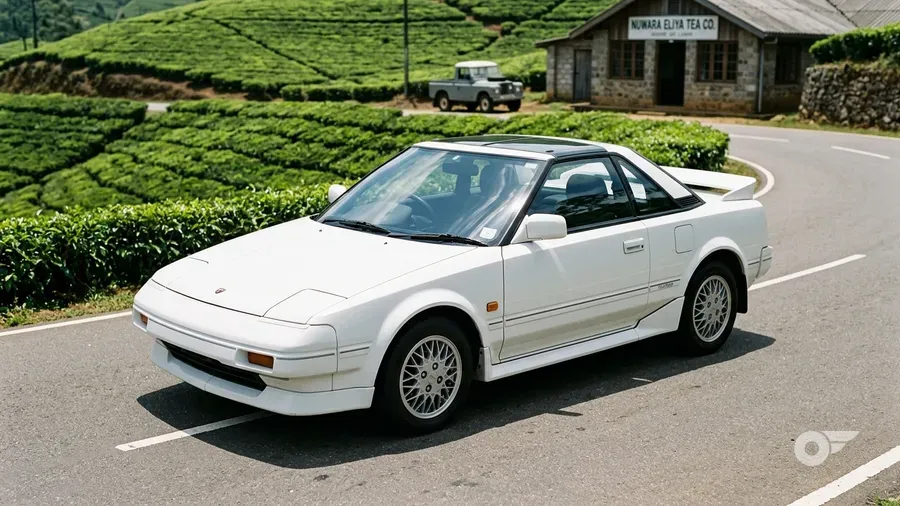
The MR2 is drawn in flat planes and hard folds, which by 1984 was already going out of fashion and is exactly why it has aged so well. The nose is a wedge with pop-up lamps, the sides are slab-flat with a deep swage, and the rear three-quarter is dominated by the intakes feeding the engine ahead of the rear wheels. There is barely a curve on the car. The shape came from the SV-3 concept shown at the 1983 Tokyo Motor Show, which is close enough to the production car that the concept effectively was the car. Seiichi Yamauchi is credited with the styling, dated 1981. Akio Yoshida is credited with the layout: he had been evaluating engine and drive configurations for the project since 1979, settled on transverse mid-engine, and then headed the project planning. The T-bar roof arrived with the August 1986 facelift for North America and Europe and changes the profile more than it should. The detail everyone misses is the badge in France. There the car reads MR, without the 2, because the full name spoken in French lands somewhere Toyota did not want it to.

Motorsport pedigree

There was never a works MR2 racing programme, and the reason is specific rather than dismissive. Through the 1980s Toyota's competition money went to the Group B and then Group A Celica, to Toyota Team Europe's World Rally Championship campaign, and to sports prototypes at Le Mans. A mid-engined two-seater with a Corolla engine had no category it could win in and no marketing job that racing would have done for it. What it does have is the strangest near-miss in Toyota's competition history. In 1985 Toyota Team Europe began a Group S prototype codenamed 222D, which used the AW11 floor pan and almost nothing else: a very short wheelbase, a transverse turbocharged four quoted at up to 750 horsepower, and a weight around 750 kilogrammes. Reportedly eleven were built and most were destroyed in testing. Group B and Group S were both cancelled in 1986 and the survivors became museum and collection pieces. It never turned a wheel in competition. The real record is a club one and it is still being written. The 750 Motor Club has run a one-make Toyota MR2 Championship since 2008, open to all three generations, sixteen races across eight weekends, with cars kept close to road specification.

In culture

The MR2's cultural standing is a running joke that turned into respect. For twenty years the AW11 was the cheap mid-engined car, the punchline about a Toyota with the engine in the wrong place, and the answer to how you got exotic-car layout on a hatchback budget. Somewhere in the last decade the joke stopped being funny and the cars started being collected instead. In Japan it was always treated more seriously. It took Car of the Year Japan for 1984-85 ahead of the Honda CR-X and the Nissan Laurel, and the layout was a point of national pride: Toyota's own corporate history still calls it Japan's first mass-produced midship passenger car, which is not a phrase a company uses lightly. The best-known fact about the car is a linguistic accident. In France and other francophone markets it was sold simply as the MR, because MR2 spoken in French sounds like the word for excrement. It is the sort of detail that gets repeated because it is genuinely true, and it has followed the car for forty years.

Rivals

Cars from other manufacturers that competed for the same buyers when new.
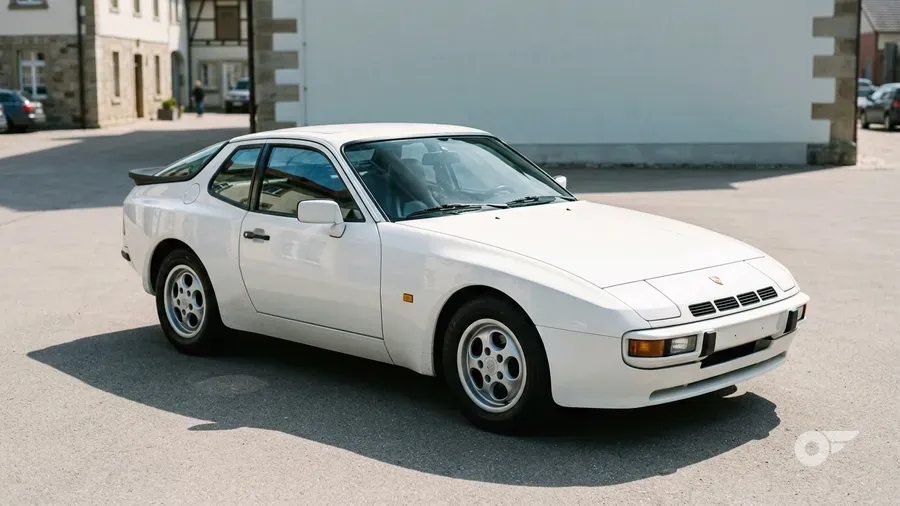
Porsche 944

Porsche 944

Germany·Sports·1982–1991
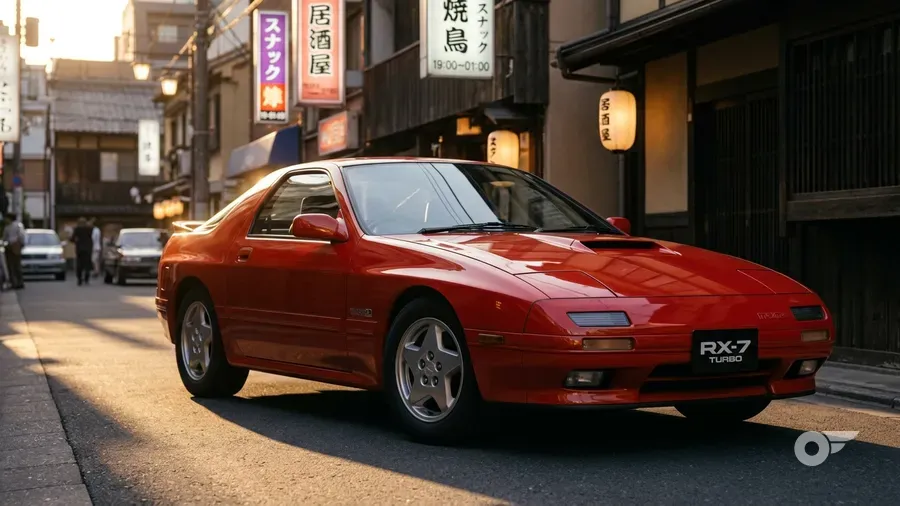
Mazda RX-7 FC

Mazda RX-7 FC

Japan·Sports·1985–1992

Owning One

Why collectors want it

An AW11 is one of the cheapest ways to own a properly engineered mid-engined car, and it is not going to stay that way. The market has worked out what it is. Tracked sales average $15,249, the floor is $3,900 for a 1986 example in October 2025, and a low-mileage 1989 supercharged car took $77,000 in January 2025. That top result is exceptional. The direction it points is not.

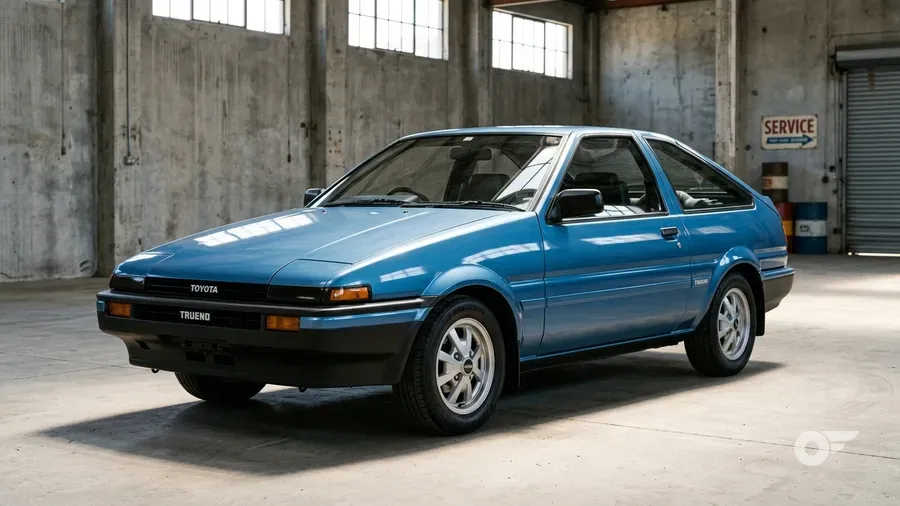
The argument for the car is that nothing about it is compromised in the way its brief implies. It weighs under a tonne in Japanese specification with a 44:56 weight distribution, the 4A-GE is the same twin cam that makes the AE86 what it is, and the suspension was signed off with Lotus involvement. It is a small, light, honest mid-engined car built by a company that had never made one before and has made only two since.

Within the generation the supercharged 4A-GZE cars carry the money and a T-bar roof adds a little more. The plain naturally aspirated coupe is the connoisseur's answer, because it is the lightest one and the purest version of what Toyota accidentally built.

Which one to look for

Three engines and one real decision. The AW10, with a 1.5-litre single cam making 83 PS, was a Japanese-market entry model and is the one to walk past. The AW11 with the 1.6-litre 4A-GE is the car, rated at 130 PS in Japan and 112 horsepower in the United States, and it is the same twin cam that made the AE86 famous. The supercharged 4A-GZE arrived in Japan in 1986 and North America in 1988, rated at 145 horsepower. The supercharged car is quicker, heavier and has more to go wrong. The naturally aspirated car is lighter, revs harder and is the one enthusiasts argue for. Both positions are defensible and the market has decided in favour of the supercharger. The other choice is the roof. From the August 1986 facelift a T-bar was optional in North America and Europe, and it adds a little money and a little water once the seals age. Then there is the one nobody can buy. The 222D was Toyota Team Europe's Group S prototype, and it used the AW11 floor pan and almost nothing else.

AW10 1.5 · 1984–1989

Japanese-market entry model with the 1.5-litre 3A-LU single cam rated at 83 PS. Never exported, and the version to walk past unless you want the lightest possible shell.

AW11 1.6 (4A-GE) · 1984–1989

The volume car and the one the MR2's reputation rests on. The 1.6-litre 4A-GE twin cam with four valves per cylinder and a Yamaha-developed head, rated at 130 PS in Japan and 112 horsepower in the United States. Under a tonne in Japanese specification.

AW11 Supercharged (4A-GZE) · 1986–1989

The supercharged car, with an electromagnetically clutched Roots blower and an intercooler, rated at 145 horsepower. Japan from 1986, North America from 1988. Quicker and heavier than the naturally aspirated car, and the one the market has decided is worth the most.

T-bar roof · 1986–1989

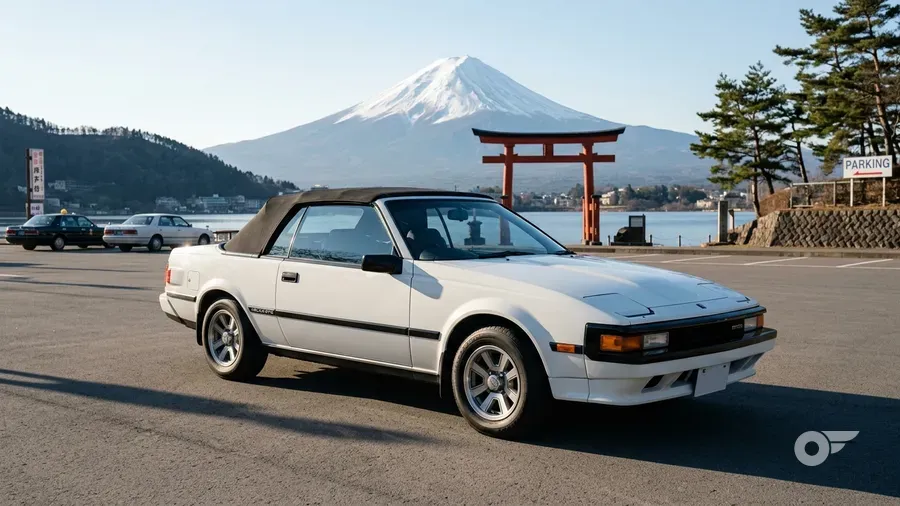
A removable twin-panel T-bar roof, optional in North America and Europe from the August 1986 facelift. Adds a modest premium and a maintenance item, since the seals harden with age and leak.
What owning one is like

The engine is the easy part. The 4A-GE is one of the most durable performance fours anyone has built, it went into Corollas and Celicas and Levins by the hundred thousand, and a well-maintained one will outlast the body around it by a wide margin. The supercharged 4A-GZE adds a clutched blower and an intercooler and asks for a little more attention, but not much. The body is where the cars go. Sills rot from the inside, the leading edges of the rear arches go, the floors and front bulkhead follow, and the metal around the rear subframe mountings is the one that turns a project into a parts car. Anything that spent winters in salt is usually worse than it photographs, and fresh underseal is a reason to look harder rather than to relax. After that, the small things. Pop-up headlamp motors and linkages wear. Interior plastics have gone brittle and Toyota supplies none of them. The T-bar roof leaks once the seals harden, which is a seal job rather than a disaster. Cooling pipes run the length of the car, as they do on every mid-engined MR2, and corrode where nobody looks.

Upkeep & parts

This is a cheap car to keep running and an expensive one to put right. The 4A-GE shares its service parts with a decade of Corollas, so filters, belts, water pumps, clutches and brake components are ordinary counter stock, and any competent workshop can look after it without knowing anything about MR2s. There is nothing to plug a scan tool into and nothing that needs a dealer.

The money goes on metalwork. Sill and floor repair on a mid-engined car is more awkward than on a hatchback because of what has to come out to reach it, and it is worth paying for one proper job rather than three cheap ones. Body panels, lamps and interior trim are breaker-yard items now, and good unbroken plastics are the genuine constraint on a restoration.

The owner community is unusually good and unusually well documented. MR2 Wiki holds the technical reference and the production numbers, the MR2 Owners Club in Britain and its North American equivalent run active forums, and the club in New Zealand is where a lot of the Japanese-import knowledge sits. The 750 Motor Club series keeps a steady supply of parts and expertise circulating.

Country of origin
Japan
Class
Sports
Production years
1984–1989
Units built
~163,845
Model
MR2
Nickname
No nickname ("MR" names the car as sold in French-speaking markets, not the generation)
Body
Coupe, Targa
Layout
Mid-engine, RWD
Engine
1.5L 3A-LU SOHC I4 (AW10, Japan only), 1.6L 4A-GE DOHC 16-valve I4 (AW11), 1.6L 4A-GZE supercharged DOHC 16-valve I4
Transmission
5-speed manual, 4-speed automatic
Designer
Seiichi Yamauchi (styling, 1981); Akio Yoshida (layout and project planning)