Octane Files
Explore CarsToyota Celica T200

Toyota Celica T200

Overview

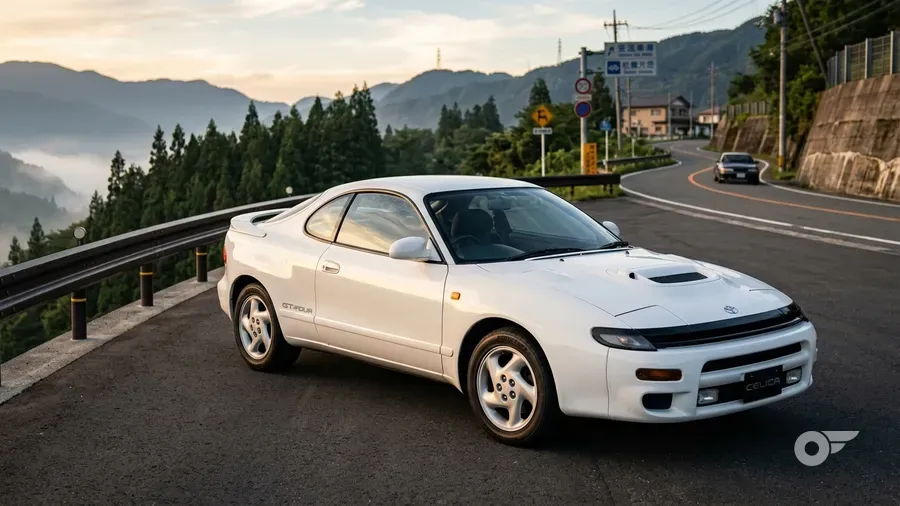
October 1993, and Toyota replaced the flat, folded T180 with a Celica that had no straight lines on it anywhere and four round headlamps set into the nose. Japan got the SS-I and SS-II, with the SS-III added in August 1995. America got the 1.8 ST and the 2.2 GT. Europe got a 2.0 GT Liftback that Toyota GB rated at 173bhp and 0 to 62 in 7.9 seconds. The body had grown to 1,750mm wide, which pushed the car out of Japan's compact tax class and cost domestic buyers money every year they kept it. Above all of it sat the ST205 GT-Four: 2,500 cars built from February 1994 so Toyota Team Europe could homologate a Group A rally car, 2,100 of them staying in Japan. What happened next is why anyone still argues about this generation. Toyota won one world championship rally with it, was caught at Rally Catalunya that October with a turbo restrictor that opened itself under load, and was thrown out of the championship and banned for a year. The Celica never contested a works rally programme again, and six years later the nameplate was gone.

Distinctions

The defining attributes and collector status that make this car garage-worthy.

Octane Files Select
Renowned for its history, engineering, or cultural weight.

Collectibility scorecard

Rated 1 to 10 on the traits that matter for owning, driving, and holding on to a car like this.

Desirability
6/10
Rarity
3/10
Driving thrill
6/10
Investment trajectory
6/10
Usability
8/10
Ease of restoration
5/10
Cultural impact
6/10
Electronic dependence
Fully analogHeavily electronic

Everything on a T200 that makes power is electronic and everything that steers or stops it is not. Every engine in the range is fuel injected under ECU control with electronic ignition, and the GT-Four adds a computer-managed centre differential, four-channel ABS with a G-sensor, and the plumbing for an anti-lag system on the homologation cars. The Japanese SS-I was also offered with four-wheel steering. Against that, the throttle is a cable, the steering is hydraulically assisted, the handbrake pulls on a wire, and there is no traction control or stability system anywhere in the range. It sits in the middle because the engine bay is fully digital and the chassis is entirely mechanical.

Market data

Demand tier, price trend, and typical values by condition. Our own assessment, not a quoted valuation.

Demand tier
EntrySolidHighBlue-chip

The accessible way in. Prices still forgive mistakes, and the upside is real.

Value trajectory
AppreciatingStableCooling

Values are climbing. The market wants more of these than exist.

Price by condition
Driver
$5k
Excellent
$10k
Concours
$19k

Still priced as a used car, and only the Japanese-market grades and the GT-Four have started moving. Tracked North American sales of the 6th-generation GT average a little over $10,000, running from $6,200 for a 1996 GT in April 2025 up to $20,250 for a 1996 GT Convertible 25th Anniversary in June 2022. The ST205 GT-Four is a separate market and a volatile one: recorded sales run from $5,625 in August 2022 to $31,250 for a 1994 car in June 2026, and low-mileage documented examples are asked considerably more. That car is excluded from the band below, which describes the front-wheel-drive liftback and coupe most buyers will actually be looking at. One caution when reading the tracked data: a $110,250 result filed under the 6th generation is an ST185 rally car and belongs to the previous generation entirely.

Values as of August 2026.

Buyer's guide

What anyone seriously considering this car should know first.

Why it's worth it
The Celica whose rally car got Toyota banned from the World Rally Championship for a year
Callout
2,500 ST205 GT-Fours were built to homologate the rally car, and 2,100 of them never left Japan
What to watch for
Rust first. Lift the carpets before you look at anything else, because the factory sound deadener holds water against the floor pan and rots it from inside where nobody sees it. Then the sills, the rear arches, the strut towers front and rear, and on liftbacks the hatch aperture and the seals around it. A car that leaks into the boot has usually been leaking for years. The Super Strut front end fitted to the SS-II, SS-III, GT-Four and some European GTs is the other big number: it is a multi-link design rather than a MacPherson strut, it wears out, parts are scarce and expensive, and a knock over bumps or uneven front tyre wear means a bill that can reach four figures. Nothing is wrong with a car that has been converted to standard struts, but know which you are buying. On a GT-Four, ask for cooling and turbo history and walk away from anything modified without tuning receipts, because the 3S-GTE punishes detonation. On any import, check the paperwork as hard as the car. And check that the 25th Anniversary and limited-edition badging on the car matches what the car actually is.

The Story

Driving character

The engine is the reason to bother. The 3S-GE is a proper twin cam that does its work at the top, thin and unremarkable below 4,000rpm and then hardening into a genuinely urgent last two thousand revs, and the BEAMS car with VVT-i pulls to 7,000 without running out of interest. The 2.2 5S-FE that Americans got is the opposite: torquey, quiet, entirely relaxed, and happier as a fast cruiser than as anything sharper. What separates the good ones from the ordinary ones is the front suspension. Super Strut cars steer with a directness that a MacPherson Celica never manages, holding the wheel more upright under cornering load so the front tyre keeps its contact patch, and on an SS-III with the shorter rack and the limited-slip differential the car turns in like something with a much smaller badge on it. It still understeers if you insist. The gearshift is short and mechanical and completely unremarkable in the way Toyota shifts of this era usually are, which is a compliment. The convertible flexes over broken surfaces and always did.

Design

Takashi Okuda's shape is the most divisive thing Toyota did with the Celica, and it has aged better than the reaction it got. Every edge from the T180 is gone. The nose is a single curved surface with four separate round headlamps let into it, the wheel arches swell out of the body rather than being pressed into it, and the liftback's tail is one continuous radius from roof to bumper. In Japan the four-lamp face became the generation's whole identity, and the family resemblance to the A80 Supra launched a year earlier was obvious enough that people still call it the small Supra. The 1,750mm width is a design decision with a tax consequence: it moved the Celica into Japan's 3-number class and Toyota did it anyway. Toyota also sold a rebodied version through a different dealer chain as the Curren, with conventional rectangular headlights, which is a useful demonstration of how much of this car's character was in the lamps. Convertibles were built nearly complete in Japan, then shipped to ASC in Rancho Dominguez, California, where the roof came off and a three-layer power top went on.

Motorsport pedigree

Everything the T200 is remembered for happened in one season. The ST205 GT-Four, homologated in February 1994, went to work for Toyota Team Europe in 1995 with Juha Kankkunen, Didier Auriol and Armin Schwarz. It won once, on the Tour de Corse from 3 to 5 May, Auriol beating Francois Delecour's Escort by fifteen seconds. Then came Rally Catalunya on 23 October. Scrutineers took the turbo restrictor apart and it failed on three counts: it was not sealed, so it could be moved without disturbing the seals; air could reach the engine without passing through it; and it could sit further from the turbine than the 50mm the rules allowed. Release the clamp and a spring flicked the assembly back into a legal-looking position. The FIA put the gain at roughly 25 percent more air than permitted. At an extraordinary World Motor Sport Council on 3 November the team was excluded from the 1995 championship, every driver point was taken back, and it was banned for twelve months. Max Mosley called it the most sophisticated device he had seen in 30 years of motorsport, and said nothing suggested the drivers knew. Toyota returned in 1997 with a Corolla.

In culture

In January 1995, three months before Auriol won in Corsica and nine months before the FIA took the restrictor apart, Sega put the Celica GT-Four ST205 in an arcade cabinet. Sega Rally Championship gave players two licensed cars, the ST205 and the Lancia Delta HF Integrale, with a Stratos hidden behind them, and it did more for this car's standing with people who were eleven years old in 1995 than any rally result ever did. The Castrol livery, white with green and red, is the image most people carry of the T200 and most of them have never seen the road car it came from. The scandal has had a stranger afterlife. Rather than reading as cheating, the restrictor has become an engineering party piece, retold with obvious admiration for a device the sport's own president described in the language of a compliment. Toyota's own history pages are quieter about it: the corporate WRC timeline moves from 1994 to 1997 without much of a pause. The road cars themselves left almost no cultural trace, which is a fair reflection of what they were sold as.

Rivals

Cars from other manufacturers that competed for the same buyers when new.

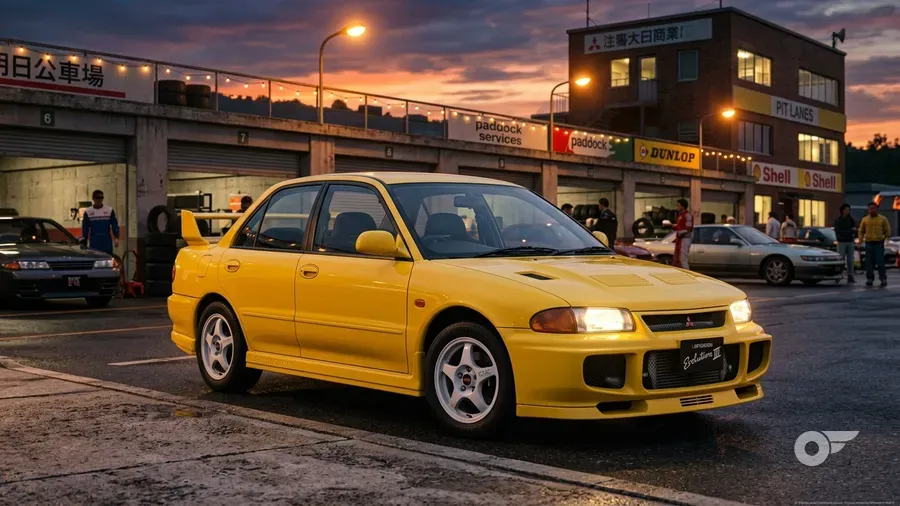
Mitsubishi Lancer Evolution III

Mitsubishi Lancer Evolution III

Japan·Sports·1995–1996
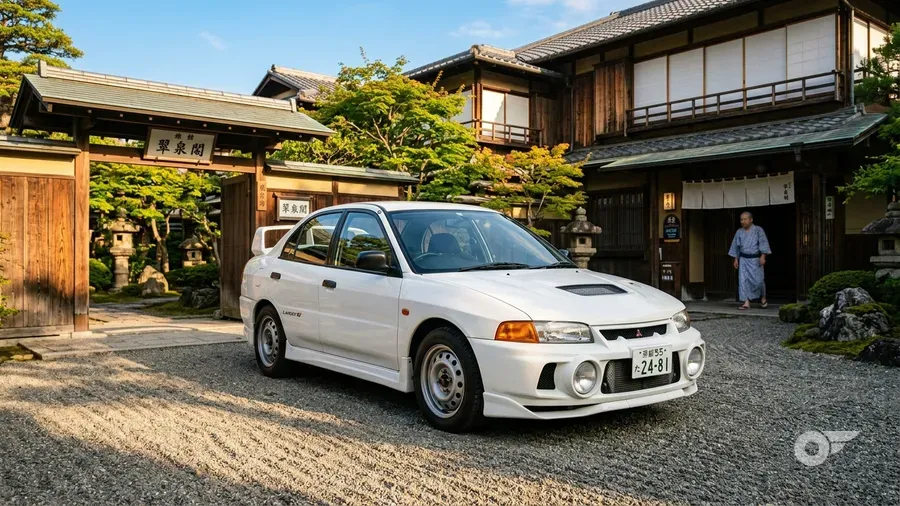
Mitsubishi Lancer Evolution IV

Mitsubishi Lancer Evolution IV

Japan·Sports·1996–1998
Subaru Impreza WRX STI GC8 / 22B

Subaru Impreza WRX STI GC8 / 22B

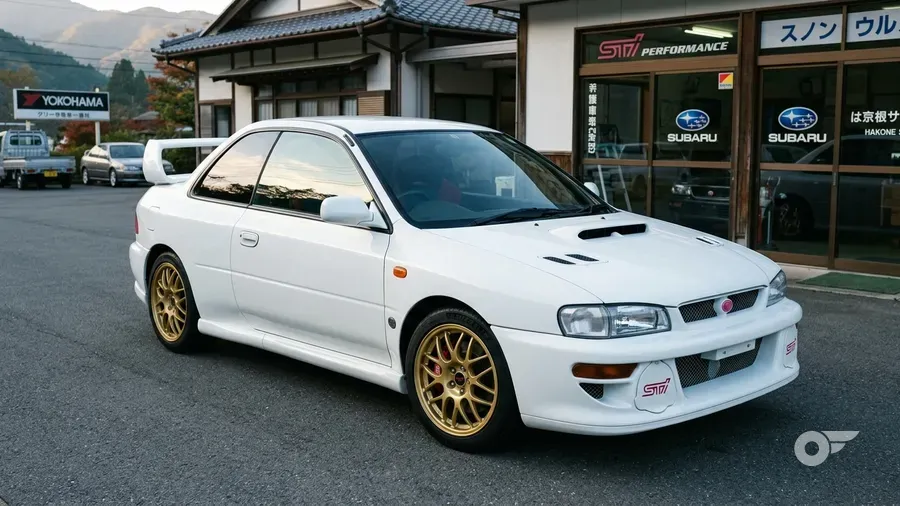
Japan·Sports·1992–2000
Lancia Delta HF

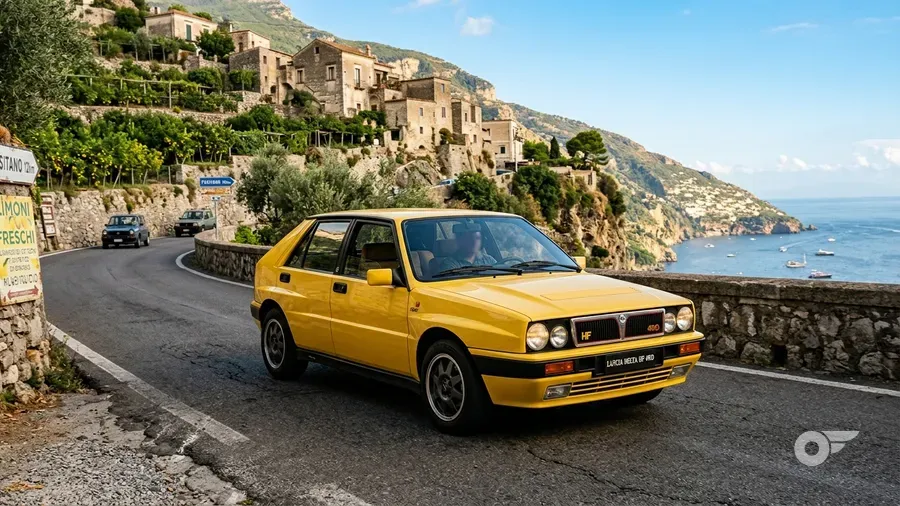
Lancia Delta HF

Italy·Sports·1986–1994

Honda Civic Type R EK9

We haven’t profiled this car yet. Request to add

Ford Escort RS Cosworth

We haven’t profiled this car yet. Request to add

Owning One

Why collectors want it

The hierarchy here is steep and it is not subtle. The ST205 GT-Four sits on top and always will, because it is the last works-engineered rally Celica and because the scandal attached to it is the best story in 1990s rallying. Under that sits a set of Japanese-market cars that almost nobody outside Japan knew existed until the import trade found them: the SS-III, added in August 1995 with Super Strut suspension, a helical limited-slip differential, twin-piston front calipers and a quicker rack, and from December 1997 the BEAMS 3S-GE with VVT-i and 200 PS. That car was a genuine rival to the Integra Type R and it costs a fraction of one. Below that are the ordinary ones, and this is where the generation is quietly interesting: a 2.2 GT liftback or a 2.0 European GT is a well-built, cheap, usable 90s coupe with real Toyota mechanical durability behind it, bought and thrown away for twenty years and now getting scarce in unmodified condition. Nothing about the FWD cars is going to make anyone rich. They are simply becoming hard to find with straight panels and an unmolested interior, which is how this always starts.

Which one to look for

The one to look for is the SS-III, and specifically a December 1997 or later car. Toyota added the SS-III in August 1995 with Super Strut suspension, a helical limited-slip differential, twin-piston front brakes, a shorter steering rack and side rocker panels, then in December 1997 swapped its 3S-GE for the BEAMS version with VVT-i and 200 PS. It is a Japan-only car and it is the best-driving front-wheel-drive Celica ever built. Below it the SS-II is the same 3S-GE without the chassis hardware, with Super Strut as an option. The SS-I is the 3S-FE economy grade and the ST203 version of it carried four-wheel steering. Outside Japan, Europe's GT Liftback is the ST202 with the 180 PS twin-cam, standard Super Strut in Germany, and badged GT-S in Austria when so equipped. North America got the 110hp 1.8 ST and the 135hp 2.2 GT in liftback, notchback and ASC convertible form. Australia had the SX and the better-equipped ZR. The curiosities are the 200-car Didier Auriol edition Toyota France released in March 1995 and the 1996 25th Anniversary cars.

25th Anniversary · 1996

Celica nameplate anniversary editions, with fender emblems, a badge on the mirror hanger and Celica embroidered into the front seats. The US got the ST Limited liftback and the GT Convertible; Japan got SS-I and SS-III Special Editions.

Didier Auriol · 1995

Toyota France limited edition marking Auriol's 1994 world title, based on the 1.8 ST. Super White only, red and green decals, rally logos on the front wings, a numbered plaque above the centre vents, and standard rear spoiler and CD player.

GT · 1994-1999

The North American volume car, model code ST204, with the 2.2 5S-FE shared with the Camry, rated at 135hp and 145 lb-ft. Offered as liftback, notchback coupe and convertible. An optional Sports Package on the GT liftback brought the sharper handling setup, badged GT-S in Canada.

GT Convertible · 1994-1999

The American convertible, ST204 with the 5S-FE. Built nearly complete in Japan, then shipped to ASC in Rancho Dominguez, California, where the roof was removed and a three-layer power-operated top fitted.

GT Liftback (Europe) · 1994-1999

The European and UK GT, model code ST202 with the 2.0 3S-GE. Toyota GB quoted 173bhp and 0 to 62 in 7.9 seconds. Manual only in Europe. Standard Super Strut suspension in Germany; in Austria the Super Strut car was badged GT-S and the MacPherson car GT-i.

SR · 1998-1999

UK limited edition based on the 1.8 ST, with a full body kit, mesh grille, 16-inch alloys and an upgraded stereo.

SS-I · 1993-1999

Japanese base grade, ST202 with the 2.0 3S-FE rated at 140 PS. Liftback only. Restyled 14-inch wheel covers came with the August 1995 facelift.

SS-I 4WS · 1993-1997

The four-wheel-steering SS-I, given its own model code ST203. Japan only, and discontinued at the December 1997 update.

SS-II · 1993-1999

Japanese sports grade, ST202 with the 2.0 3S-GE twin cam rated at 180 PS, with Super Strut suspension available as an option. Took the BEAMS 3S-GE with VVT-i at the December 1997 update.

SS-III · 1995-1999

Added in August 1995 and the best-driving front-drive Celica of the generation. Standard Super Strut suspension, helical limited-slip differential, twin-piston front calipers, a shorter steering rack, a power steering cooler and side rocker panels. From December 1997 the BEAMS 3S-GE with VVT-i, 200 PS at 7,000rpm. Japan only.

ST · 1994-1999

Base grade for North America and Europe, model code AT200, with the 1.8 7A-FE also used in the Corolla. Rated at 110hp and 110 lb-ft in the US. Liftback and, in North America, notchback coupe. Dropped from the US line-up after 1997.

SX · 1994-1999

Australian base grade, ST204 with the 2.2 5S-FE, liftback only.

SX-R · 1998-1999

Australian limited edition based on the SX, with black and red interior, white-faced instruments, fog lights and alloy wheels.

ZR · 1994-1999

The better-equipped Australian grade, ST204, with driver's airbag, fog lights and alloy wheels as standard. Fog lights became standard with the 1996 facelift.

What owning one is like

Mechanically these are Toyotas from the period when that meant something specific, and the ordinary ones simply keep going. The 7A-FE, 5S-FE and 3S-FE will do enormous mileages on nothing more than oil and a timing belt at the interval, and the 3S-GE is barely less durable as long as it is not being asked to make more than it was built for. What actually kills T200s is the bodyshell. Water gets under the sound deadener and into the floor, sits in the sills and the rear arches, and works on the strut towers, and none of it announces itself until it is structural. Hatch and boot seals harden and leak. Door glass rattles as the regulators and rubbers age. The Super Strut front end is a maintenance item rather than a fault, but it is an expensive one, and a neglected set is the single most common reason a good-looking car drives badly. On the GT-Four, add the cost of keeping the cooling system honest and the fact that a large share of surviving cars have been modified by somebody. Sorted, they are undemanding cars to live with.

Upkeep & parts

Service parts are a non-issue. These engines were fitted to Corollas, Camrys, Carinas and Caldinas by the million, so filters, belts, pumps, sensors and clutches are cheap and available from any factor. Celica-specific body panels, lamps, glass and interior trim are the opposite, and the four round headlamp units in particular are getting hard to find undamaged. Budget properly for the Super Strut front end if the car has it: a full set of arms and links is the biggest predictable bill on the car and there is no cheap version. Rust repair is the other one, and it is worth paying for a proper job on the floors and sills once rather than three cheap ones. The clubs are strong and specific. Celica-Club UK covers the whole nameplate, GT4DC exists for GT-Four owners, and both toyotacelicas.com and Celica Hobby run dedicated sixth-generation sections with the accumulated knowledge of twenty years of owners in them. For GT-Four parts the specialist trade in the UK, Australia and New Zealand is well established and used to shipping.

Country of origin
Japan
Class
Sports
Production years
1993–1999
Units built
Not recorded
Model
Celica
Nickname
No nickname ("GT-Four" names the four-wheel-drive ST205 specifically, not the generation)
Body
Coupe, Liftback, Convertible
Layout
Front-engine, FWD
Engine
1.8 L 7A-FE I4, 2.0 L 3S-FE I4, 2.0 L 3S-GE I4, 2.0 L 3S-GTE turbocharged I4, 2.2 L 5S-FE I4
Transmission
5-speed manual, 4-speed automatic
Designer
Takashi Okuda