Octane Files
Explore CarsToyota Celica T180

Toyota Celica T180

Overview

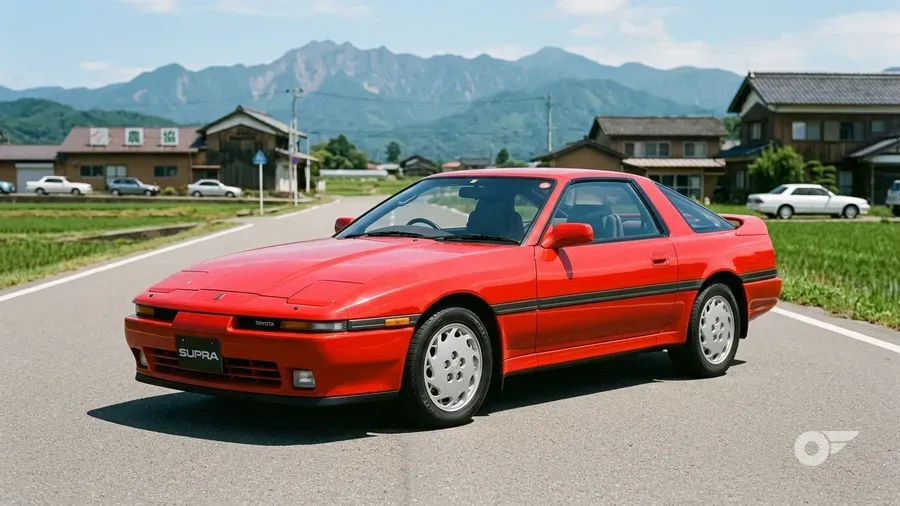
Toyota put the fifth Celica on sale in Japan on 6 September 1989 and called the shape Super Round. There is barely a straight edge on it, and the engineers made a structural argument for that rather than a stylistic one: continuously curved panels carry load better, so the body could be made stiffer without gaining weight.

It was also the most technically ambitious Celica so far. Dual-mode four-wheel steering appeared here first, the first time Toyota had put the system in anything it sold. One Japanese model got active suspension. And the turbocharged four-wheel-drive GT-Four went from 185 PS to 225.

That last car is why the rest of the world remembers this generation at all. The ST185 GT-Four carried Carlos Sainz to the 1992 drivers' title and Juha Kankkunen to the 1993 one, and in 1993 it made Toyota the first manufacturer from outside Europe to win the World Rally Championship for makers.

Almost nothing Toyota actually sold was that car. The volume T180 is a 103 horsepower ST or a 130 horsepower GT, front-drive, pop-up headlamps, Corolla and Camry engineering underneath. America bought 78,521 of them in 1990 and 29,237 in 1993.

Distinctions

The defining attributes and collector status that make this car garage-worthy.

Octane Files Select
Renowned for its history, engineering, or cultural weight.

Collectibility scorecard

Rated 1 to 10 on the traits that matter for owning, driving, and holding on to a car like this.

Desirability
6/10
Rarity
4/10
Driving thrill
5/10
Investment trajectory
5/10
Usability
8/10
Ease of restoration
5/10
Cultural impact
6/10
Electronic dependence
Fully analogHeavily electronic

Every engine in the range is fuel injected and runs under electronic engine management, which puts this generation well clear of anything analog. Above that sit systems with no mechanical fallback at all: dual-mode four-wheel steering on Japanese cars, Toyota Active Control Suspension on the Active Sports, an electronically controlled centre differential on the four-wheel-drive cars, anti-lock brakes on the better models, and a driver's airbag as standard on every American car. What holds the score at three rather than higher is how much the car still does with cable and hydraulics. The throttle is a cable, the steering is hydraulically assisted, there is no traction or stability control, and there is no network to plug into when something goes wrong. You diagnose one with a test light and a manual.

Market data

Demand tier, price trend, and typical values by condition. Our own assessment, not a quoted valuation.

Demand tier
EntrySolidHighBlue-chip

The accessible way in. Prices still forgive mistakes, and the upside is real.

Value trajectory
AppreciatingStableCooling

Values are holding steady. What you pay today is what it's worth tomorrow.

Price by condition
Driver
$4k
Excellent
$9k
Concours
$16k

Priced as a used Toyota for thirty years and only lately looked at as anything else. Tracked front-drive sales average around $8,400, with a 1992 GT convertible at $13,200 in January 2025 near the top of the range and a 1993 GT at $3,000 in November 2025 near the bottom. The band here describes those cars. The turbocharged four-wheel-drive GT-Four is tracked separately and trades far higher, with a recorded $112,500 in February 2025 at the exceptional end, so it sits outside the band deliberately. What moves an ordinary T180 is condition rather than specification: rust and bad modifications set the price, and a clean unmodified car is the scarce thing.

Values as of August 2026.

Buyer's guide

What anyone seriously considering this car should know first.

Why it's worth it
The car that made Toyota the first manufacturer from outside Europe to win the World Rally Championship
Callout
The most expensive Celica in Japan was not the GT-Four but the active-suspension Active Sports, at 3.2 million yen
What to watch for
Rust first, and start under the carpet. The factory sound deadener holds moisture against the floor pan and rots it from inside, and floor perforation is the failure that writes these cars off. Then the rockers, the seams behind the rear wheels, and the strut tower seams where water finds its way in. Then work out exactly which car you are looking at. A wide-body liftback with flared arches is a GT-S or a four-wheel-drive car; a narrow-body liftback or a notchback coupe is everything else. Four-wheel steering means a Japanese-market car. A convertible is an ASC conversion carried out in California on a shell shipped from Japan, so look at the structure, the frame and the rear window rather than trusting the paint. Mechanically the news is good and slightly surprising. The belt-driven S-series fours here are non-interference designs, so a snapped timing belt strands you rather than destroying the engine. Watch for a weeping water pump seal, which turns up on every year of the car, and on 1992 and 1993 examples the air conditioning expansion valve. Both headlamps should rise together and at the same speed.

The Story

Driving character

An American T180 was tuned for a buyer Toyota had studied closely. The 2.2 litre 5S-FE was chosen over a smaller high-revving engine specifically for low-end torque, so the car leaves a junction with no drama at all and has stopped being interesting by five thousand revs. It is smooth, quiet and completely unthreatening, and a wide-body GT-S corners rather better than that description suggests. Japan got the other half of the argument. The 3S-GE twin cam makes its 165 PS at 6,800rpm and wants to be worked for it, which turns the same shell into a quick front-drive coupe rather than a comfortable one. Four-wheel steering is the party trick and it is subtler than the badge suggests. Toyota's dual-mode system gives a normal setting and a sport setting, and what it mostly does is make a 2,525mm wheelbase feel shorter turning into a corner and steadier changing lanes at speed. It is a Japanese-market feature, which means most owners outside Japan have never driven a car that has it.

Design

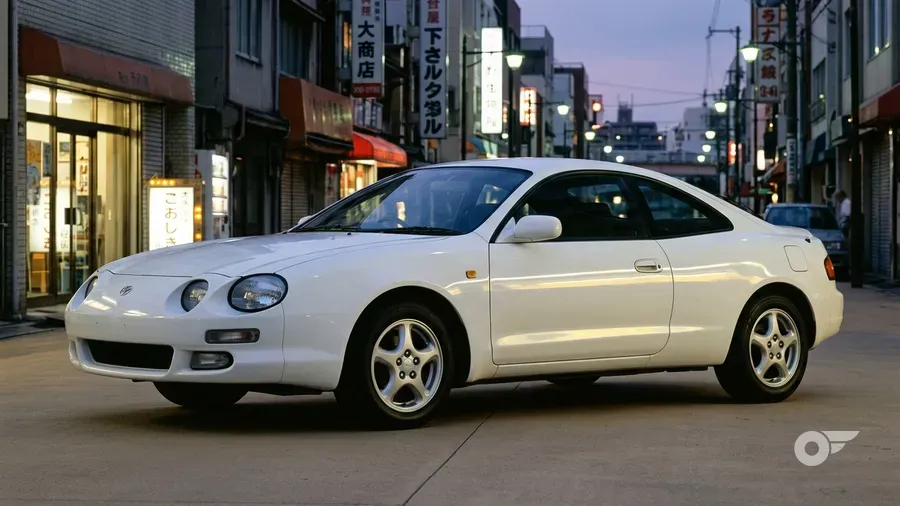
Super Round was Toyota's own name for the shape, and the marketing had an engineering argument behind it. The claim was that continuous curvature and the absence of straight edges stiffened the panels, so the body gained rigidity without gaining weight. Whether or not you accept that, it produced one of the softest, most organic shapes of the period, and it dates the car precisely to the turn of the nineties. The pop-up headlamps are the detail that matters most now, because this is the last Celica that had them. The car that replaced it in late 1993 used exposed round lamps that people still argue about. There are two liftbacks and they are different things to look at. The normal body is narrow and smooth; the wide body adds flared arches front and rear and was reserved for the GT-S and the four-wheel-drive cars, which is why a plain 2.2 in the right shell looks like a rally homologation car. The August 1991 facelift is the visible dividing line. Toyota's three-ellipse emblem arrived on the bonnet and boot, the tail lamps were redrawn with a smoked red frame, and the front-drive cars took a new bumper.

Motorsport pedigree

Carlos Sainz had already given Toyota a drivers' title in 1990, in the outgoing ST165. What the company still did not have was the manufacturers' championship, and this is the generation that delivered it. Group A demanded 5,000 road cars, so Toyota built them. The GT-Four RC launched in Japan in September 1991 and reached Europe and Singapore as the Carlos Sainz Limited Edition and Australia as the Group A Rallye, carrying a water-to-air intercooler that Toyota Team Europe had asked for because it was easier to tune. The FIA homologated the car for Group A from the start of 1992. TTE ran it from that year's Monte Carlo Rally and won with it first on the Safari in April. Sainz took four wins and a second drivers' title, sealed on the RAC, while Lancia held on to the makers' championship. 1993 settled that argument. Toyota won six rounds, Kankkunen took five of them and a fourth drivers' crown, and the manufacturers' title fell at Rally Australia. No maker from outside Europe had won it since the series began in 1973. Didier Auriol and a second manufacturers' title followed in 1994.

In culture

Toyota did something in 1991 that almost nobody else was doing. It put a driver's name on a road car. The Carlos Sainz Limited Edition was the European version of the homologation model, sold in showrooms alongside ordinary Celicas, and for a certain kind of European teenager that badge did more for Toyota than any advertisement. The rest of the car's fame arrived through the same door. Tamiya released the Castrol-liveried Toyota Team Europe car as a plastic kit while it was still winning, and it has been a radio-controlled model on and off ever since. The ST185 rally car has been in Gran Turismo since the second game. Almost none of this attaches to the car most people actually bought. That car has a quieter story and it is a market one. America took 78,521 Celicas in 1990 and 29,237 in 1993, which is what the collapse of the affordable sporty coupe looks like written out in four numbers. The T180 was the last Celica sold in genuinely large volume anywhere, and everything after it was a smaller car in a smaller segment.

Rivals

Cars from other manufacturers that competed for the same buyers when new.

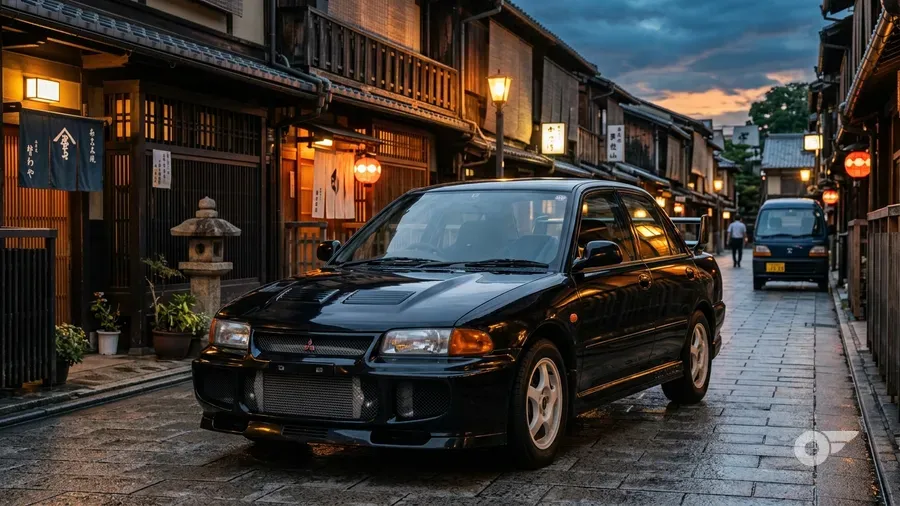
Mitsubishi Lancer Evolution I

Mitsubishi Lancer Evolution I

Japan·Sports·1992–1994
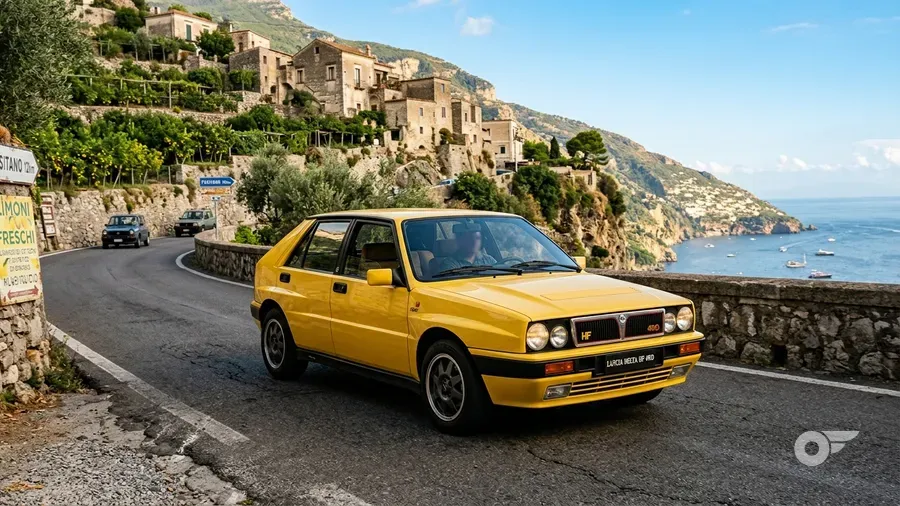
Lancia Delta HF

Lancia Delta HF

Italy·Sports·1986–1994
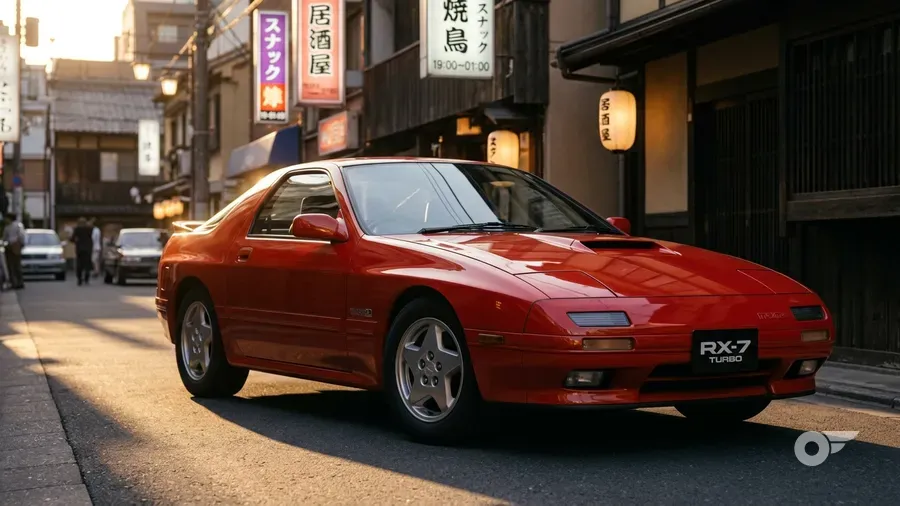
Mazda RX-7 FC

Mazda RX-7 FC

Japan·Sports·1985–1992

Ford Escort RS Cosworth

We haven’t profiled this car yet. Request to add

Honda Prelude BA4/BA5

We haven’t profiled this car yet. Request to add

Mitsubishi Galant VR-4

We haven’t profiled this car yet. Request to add

Owning One

Why collectors want it

Start with what this generation is not. It is not rare, it was never expensive, and for most of its life nobody treated one as anything but a used Toyota. The United States alone bought 209,695 of them between 1990 and 1993. Tracked sales of the front-drive cars average around $8,400, and a 1993 GT changed hands for $3,000 as recently as November 2025.

What has changed is that they have started to disappear. These rusted, they were cheap enough to modify badly, and pop-up headlamp mechanisms and Celica-specific panels were never worth putting right on a car worth four figures. Clean, unmodified, rust-free examples are now genuinely hard to find in any market, which is the usual first step.

The hierarchy runs by market and by body. Japanese GT-R and Active Sports cars sit at the top of the front-drive range, then the American wide-body GT-S with its flared arches, then the convertible that ASC built in California, then the ordinary ST coupe. Above all of them sits the turbocharged four-wheel-drive GT-Four, which trades in a different market altogether.

Which one to look for

The grail never reached America. Japan's GT-R runs the 165 PS 3S-GE twin cam with four-wheel steering available, and above it sat the Active Sports, the first Toyota fitted with Toyota Active Control Suspension. Toyota built 300 of those and priced them at 3.2 million yen, which made the Active Sports the most expensive Celica in the Japanese range, dearer than the GT-Four. Among cars sold new in the West the wide-body GT-S is the one to look for. It shares the flared arches and the front bumper of the four-wheel-drive cars, runs the 2.2 litre 5S-FE at 135 horsepower, and reads as the rally car from fifty feet away. The GT below it uses the same engine at 130 horsepower before the August 1991 facelift and 135 after it. The convertible is the interesting oddity. ASC in California cut the roof off shells shipped from Japan, and Japan and Europe got their own versions, the Japanese one with the 3S-GE and four-wheel steering. The turbocharged four-wheel-drive GT-Four sits outside this list entirely, with its own model line and its own homologation specials.

2.0 GT-i 16 · 1989–1993

The European performance Celica below the GT-Four, on the 3S-GE. In the United Kingdom it was one of only two Celicas officially sold, the other being the GT-Four itself.

2.0 GTS-i 16 · 1992–1993

A late and very local car: the wide-body liftback shell of the GT-S fitted with the European 3S-GE, sold new only in the Netherlands and Belgium.

20th Anniversary GT-R · 1990

A Japanese limited edition released in December 1990 to mark twenty years of Celica production. A GT-R wearing the GT-Four's front bumper, which is the quickest way to spot one.

Active Sports · 1989–1991

The variant almost everyone underweights. The first Toyota fitted with Toyota Active Control Suspension, on the 3S-GE with four-wheel steering, and at ¥3,200,000 the most expensive Celica in the Japanese range, dearer than the GT-Four. Discontinued at the August 1991 facelift.

Convertible · 1990–1993

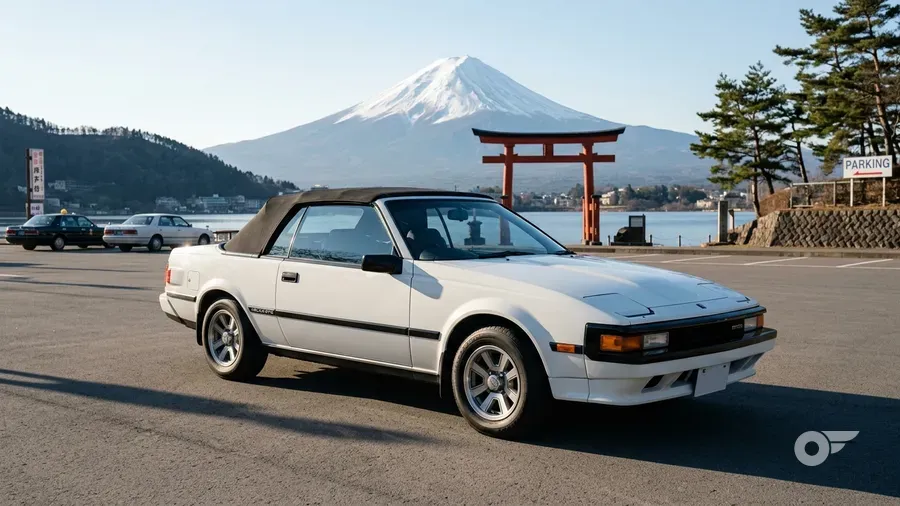
Added to the Japanese range in August 1990 and built by American Sunroof Corporation in California on shells shipped from Japan. Sold in the United States as a GT with the 5S-FE, in Japan in base and Type G trim with the 3S-GE and four-wheel steering, and in parts of Europe as the 2.0 GT-i 16 Cabriolet.

GT · 1990–1993

The volume American Celica. The 2.2 litre 5S-FE was picked over a smaller high-revving engine for low-end torque, and it makes 130 horsepower before the August 1991 facelift and 135 after it. Offered as coupe, liftback and, from 1991, the ASC-built convertible.

GT-R · 1989–1993

The enthusiast's front-drive Celica and a Japan-only car. The 3S-GE twin cam makes 165 PS at 6,800rpm, which is a different engine in character from anything sold in North America, and dual-mode four-wheel steering was available.

GT-S · 1990–1993

The one to look for among cars sold new in the West. A wide-body liftback with flared front and rear arches and the same front bumper as the four-wheel-drive cars, running the 5S-FE at 135 horsepower. It reads as the rally homologation car from any distance and costs a fraction of one.

S-R · 1989–1993

Japanese entry liftback on the 3S-FE. The 4WS version was dropped at the August 1991 facelift; the front-steer car continued to the end of production.

ST · 1990–1993

North American base car, sold as a notchback coupe and a liftback on the narrow body. The 1.6 litre 4A-FE gives 103 horsepower and is essentially the Corolla engine of the period, which is why an ST is the cheapest way into the generation and the easiest to keep running.

SX · 1989–1993

The Australian equivalent of the American GT, on the 5S-FE, as a coupe and a liftback. Australian cars were specified more plainly than Japanese or North American ones; fog lights only became standard at the 1991 facelift.

WRC Trophy · 1993

An Australian run-out special built on the SX, marking Toyota's championship season. It takes the GT-Four's sports front seats and adds cruise control, a rear window shade and spoiler and its own decals, without any change to the engine or drivetrain.

Z-R · 1989–1993

Japanese mid grade, again on the 3S-FE, with the equipment the S-R went without. Fifteen-inch wheels became optional at the facelift, along with the Cruise Control, SD and Luxury packages.

What owning one is like

Two different cars live inside one ownership experience. Mechanically these are among the easiest classics of their decade to run. The 1.6 is a Corolla engine, the 2.2 is a Camry engine without the balance shafts, and both will pass two hundred thousand miles on servicing and little else. The belts are non-interference, so the worst case of a neglected timing belt is a tow truck rather than a rebuild. The body decides whether a car is worth owning. Water sits in the floor pan under the sound deadener and rots it from the inside, which is why the first thing anyone should do to a T180 is lift the carpet. Rockers and the metal behind the rear wheels follow, then the strut tower seams. Then the small things that turn a cheap car into a project. Pop-up headlamp motors wear out and their linkages seize. Water pump seals weep across every year of production. 1992 and 1993 cars get through air conditioning expansion valves. The 3S engines leak oil past the distributor shaft seal into the cap, which presents as an ignition fault and is not one.

Upkeep & parts

Service parts are the good news and they are genuinely cheap. The 4A-FE and 5S-FE went into Corollas and Camrys in numbers that keep filters, belts, water pumps, brakes and clutches as ordinary counter stock thirty-five years later, and any competent workshop can look after the car without knowing a thing about Celicas. Do the timing belt and the water pump together, because the pump sits behind the belt and paying for that job twice is the only expensive mistake available here.

Body and trim is where the money and the patience go. Celica-specific panels, the pop-up headlamp mechanisms, lenses, badges and interior plastics were built for a car nobody expected to keep, so they come out of other cars rather than off a shelf. Convertible tops and their frames are harder again.

The community is where those parts actually live. Celica Hobby runs a dedicated fifth-generation forum, the Toyota Celica Forum has a large fifth-generation section with a standing how-to thread, and Alltrac.net covers the four-wheel-drive cars in more depth than any workshop manual. Join something before you buy rather than after.

Country of origin
Japan
Class
Sports
Production years
1989–1993
Units built
Not recorded
Model
Celica
Nickname
No nickname ("Super Round" is Toyota's own name for the styling, not a community nickname)
Body
Coupe, Liftback, Convertible
Layout
Front-engine, FWD
Engine
1.6L 4A-FE I4 (103hp, Europe and North America), 2.0L 3S-FE I4 (Japan S-R and Z-R), 2.0L 3S-GE I4 (165 PS in Japan, 158hp in Europe), 2.0L turbocharged 3S-GTE I4 (225 PS in Japan, 200hp US All-Trac Turbo), 2.2L 5S-FE I4 (130hp GT, 135hp GT-S, 135hp on all 2.2 cars after the 1991 facelift)
Transmission
5-speed manual (E150F, E151F and E152F on four-wheel-drive cars), 4-speed automatic
Designer
Data unverified, not shown