Octane Files
Browse CarsLancia Delta HF

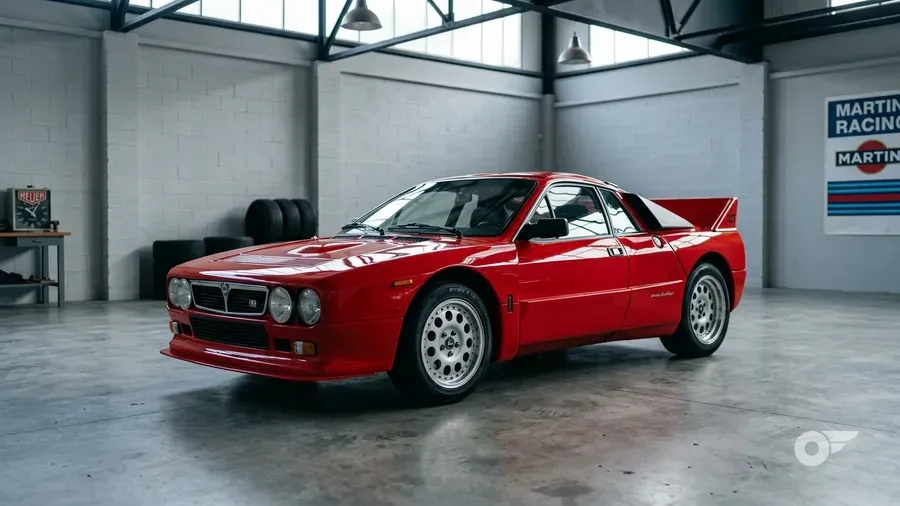
Lancia Delta HF

Overview

On 2 May 1986 Henri Toivonen and Sergio Cresto died in a Delta S4 on the Tour de Corse, and within hours FISA president Jean-Marie Balestre had abolished Group B for the following season. Lancia lost its rally programme overnight. What saved it was already in the showrooms: an ordinary five-door Delta hatchback, shown that spring, carrying a 1,995cc turbocharged twin-cam and a permanent four-wheel-drive system derived from the S4 itself.

The HF 4WD was not built as a rescue. It was simply the top of the Delta range, 165 PS, about 1,190 kilos, five doors, left-hand drive only, sitting on 14-inch wheels under unflared arches. But Group A demanded 5,000 road cars inside twelve months, and Lancia had completed 5,298 by early 1987. Homologation was granted on 2 January 1987. Later that same month Miki Biasion won the Monte Carlo Rally on the car's competition debut, and by December Lancia had taken nine of the season's thirteen rounds, the manufacturers' title, and the top three places in the drivers' championship.

Everything the Integrale became started in a car that still looks like a shopping hatchback.

Distinctions

The defining attributes and collector status that make this car garage-worthy.

Homologation Special
Built for the road only because racing rules demanded it.
Octane Files Select
Renowned for its history, engineering, or cultural weight.

Collectibility scorecard

Rated 1 to 10 on the traits that matter for owning, driving, and holding on to a car like this.

Desirability
7/10
Rarity
7/10
Driving thrill
7/10
Investment trajectory
6/10
Usability
7/10
Ease of restoration
4/10
Cultural impact
6/10
Electronic dependence
Fully analogHeavily electronic

One computer: the Weber IAW unit that runs ignition and fuel injection together. Everything else is mechanical. There is no ABS, which arrived on the 16V, no traction control, no adjustable dampers and no driver-selectable modes. The four-wheel-drive system does its thinking without electronics at all, splitting torque 56 front to 44 rear through an epicyclic centre differential, managing slip with a Ferguson viscous coupling and sorting the rear axle with a Torsen. No sensors, no solenoids, no software.

Market data

Demand tier, price trend, and typical values by condition, based on recent sales data.

Demand tier
EntrySolidHighBlue-chip

A dependable market. Well-kept cars hold their value and find ready buyers.

Value trajectory
AppreciatingStableCooling

Values are holding steady. What you pay today is what it's worth tomorrow.

Price by condition
Driver
$28k
Excellent
$42k
Concours
$56k

The family's money has gone almost entirely to the wide-body cars, and the HF 4WD has been left behind. Hagerty's UK guide put a 1987 example at 16,000 pounds fair and 40,100 concours; three years later Magneto's guide quoted 17,000 fair and 42,100 concours. That is single-digit growth over a period when Evoluzione values multiplied. Classic.com carries almost no United States sales for the HF 4WD at all, while the 8V Integrale averages a little under 23,000 dollars there, which tells you how thin the market is rather than what the car is worth. Rarity, the 1987 championship and the shrinking number of unconverted cars all argue for it. Low power, left-hand drive only and a plain body argue against. Expect it to move with the family rather than ahead of it.

Values as of August 2026.

Buyer's guide

What anyone seriously considering this car should know first.

Why it's worth it
The car that began Lancia's six straight WRC manufacturers' titles
Callout
Homologated on 2 January 1987 and won the Monte Carlo Rally later that same month
What to watch for
Start with identity, because this is the one Delta people fake. The HF 4WD is narrow-bodied with flat arches, a plain bonnet and 14-inch wheels. Blistered arches, side skirts, a louvred bonnet or 15-inch rims mean either a later car wearing 4WD badges or a 4WD that has been dressed up, and both are worth less than a correct one. All 5,298 were left-hand drive, so any right-hand-drive example is a conversion, and conversions use a slower steering rack than the original. Then rust, which is where the money goes. Check the trailing edge of the roof, the lower corners of both screens, the A-pillars and screen surround for cracks, the arches and their inner lips, the sills and jacking points, the suspension turrets, the chassis legs and the radiator panel behind the grille. Thick fresh underseal is a warning, not a reassurance. Mechanically, want about one bar of oil pressure at a hot idle and paperwork for the cambelt. Smoke on acceleration or overrun points at turbo seals. Crunching second or third means the box comes out. Remapped cars are common and hard on standard internals, so a modest, standard, well-serviced example beats a fast one.

The Story

Driving character

An eight-valve turbo of 1986 does not do subtlety. Below 2,500rpm there is very little happening, then the Garrett wakes and the car leans on you hard through the middle of the rev range, with the overboost function adding a short extra shove of torque when you ask for full throttle. It runs out of interest well before the red line, so you short-shift the five-speed and stay in the fat part, which is exactly how you drive it fast. What surprises people is the chassis. Because the centre differential sends 56 percent forward, the car turns in like a front-driver and then hooks up mid-corner as the Torsen loads the rear axle. On a wet road the traction is absurd for a car of this weight, and 1,190 kilos means it changes direction without drama. The steering is quick and unusually talkative. The brakes are the weak link, and every owner will tell you so. So will the driving position, which is upright and narrow and pure early-1980s Fiat. Lancia claimed 208km/h and 7.8 seconds to 100km/h, which sounds modest now and felt like nothing else on a wet Alpine pass then.

Design

The shape is Giorgetto Giugiaro's, drawn at Italdesign for the 1979 Delta, and it won European Car of the Year for 1980 before anyone thought about putting four driven wheels under it. Flat sides, thin pillars, a squared-off tail, no decoration at all. It was a compact family hatchback and it looks like one. The interesting thing about the HF 4WD is how little Lancia did to it. No blistered arches, no faired sills, no louvres cut into the bonnet. Those came a year later with the Integrale, along with 15-inch wheels and bigger brakes to fill them. Here the tyres are 185/60 section on 14-inch rims and they sit inside standard bodywork. It is the only member of the family that reads as a Delta first and a rally car second, and it is the reason people walk past one at a show. What it does wear is the HF badge, and that badge has a story. HF stands for High Fidelity, coined for the Lancia Hi-Fi club in 1960 and adopted in 1963 by Cesare Fiorio's Squadra Corse. The little red elephant came with it, and by 1986 it was the most loaded two letters in Italian motorsport.

Motorsport pedigree

One season, and it is the season that mattered. Group A became the World Rally Championship's top class for 1987 after Group B was abolished, and Lancia arrived with the Delta HF 4WD homologated on 2 January. Miki Biasion won the Monte Carlo Rally on the car's debut. Markku Alen took Portugal, the Acropolis and the 1000 Lakes. Juha Kankkunen won Olympus and the RAC. Franz Wittmann won New Zealand, Biasion added Argentina and Sanremo, and that is nine wins from thirteen rounds. Lancia finished the manufacturers' championship on 140 points, with Audi second on 82. Kankkunen took the drivers' title on 100 points, and Lancia filled all three podium places in that championship. The four rounds that got away went to a BMW M3 on Corsica, a Mazda 323 4WD in Sweden, an Audi 200 quattro on the Safari and a Golf GTI in the Ivory Coast. Be clear about what belongs where. The works cars were Group A machines built to a 300hp ceiling and shared only their architecture with a showroom HF 4WD. And the run stopped here: from 1988 the titles were won by the HF Integrale, not this car.

In culture

This is the Integrale nobody put on a wall. Gran Turismo models the Evoluzione. Colin McRae Rally and DiRT model the Integrale. The Martini posters, the die-casts and the magazine covers are all wide-body cars from 1991 onwards. Search for the HF 4WD and you mostly find the later cars wearing its achievements. What it has instead is the footage. The 1987 Monte Carlo Rally, the first world championship event of the post-Group B era, was won by a narrow-bodied Delta in Martini colours, and every subsequent Lancia victory in that six-year run traces back to it. Among people who actually know the family, saying you have a real HF 4WD carries more weight than saying you have an Integrale, because there are so few left and so many were cannibalised to keep later cars alive. It also quietly rewrote what a fast hatchback was allowed to be. Before 1986 the hot hatch was front-wheel drive and clever about it. After the Delta 4WD, the ambitious ones had a centre differential, and the Escort Cosworth, the Impreza and the Lancer Evolution all followed the template this car set.

Rivals

Cars from other manufacturers that competed for the same buyers when new.
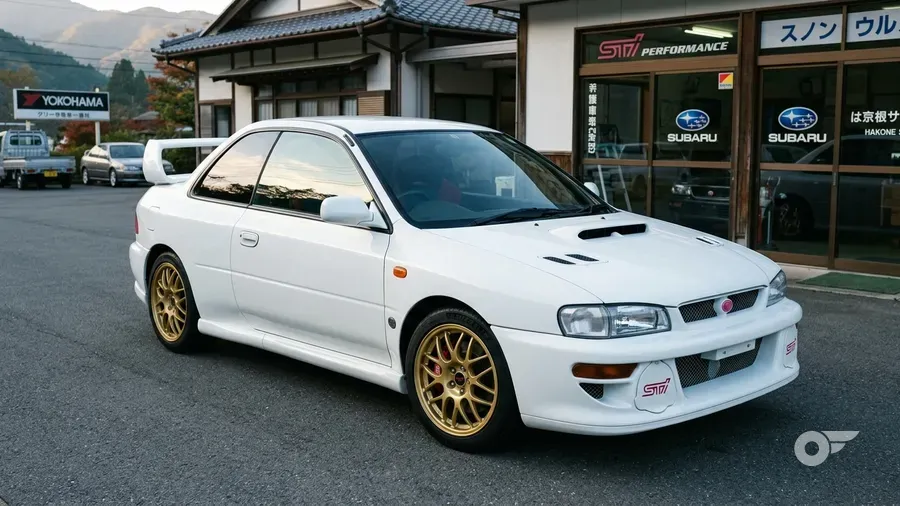
Subaru Impreza WRX STI GC8 / 22B

Subaru Impreza WRX STI GC8 / 22B

Japan·Sports·1992–2000
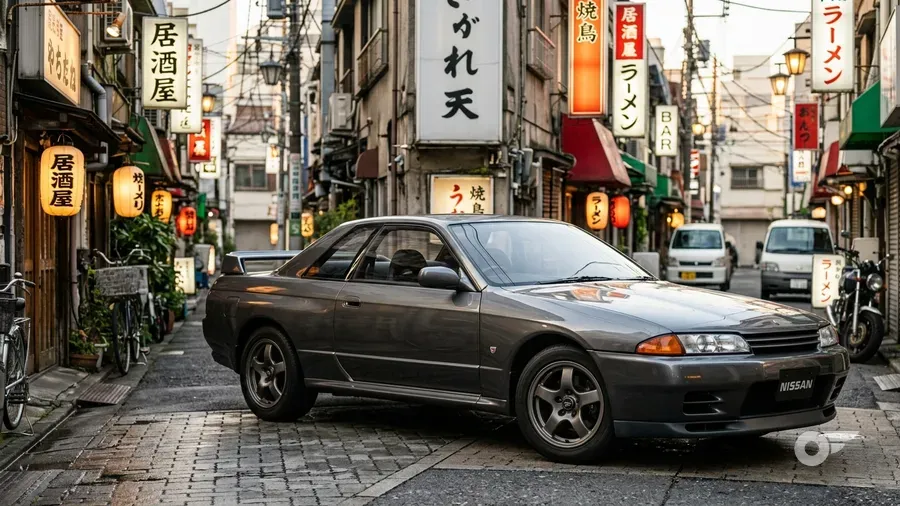
Nissan Skyline GT-R R32

Nissan Skyline GT-R R32

Japan·Sports·1989–1994
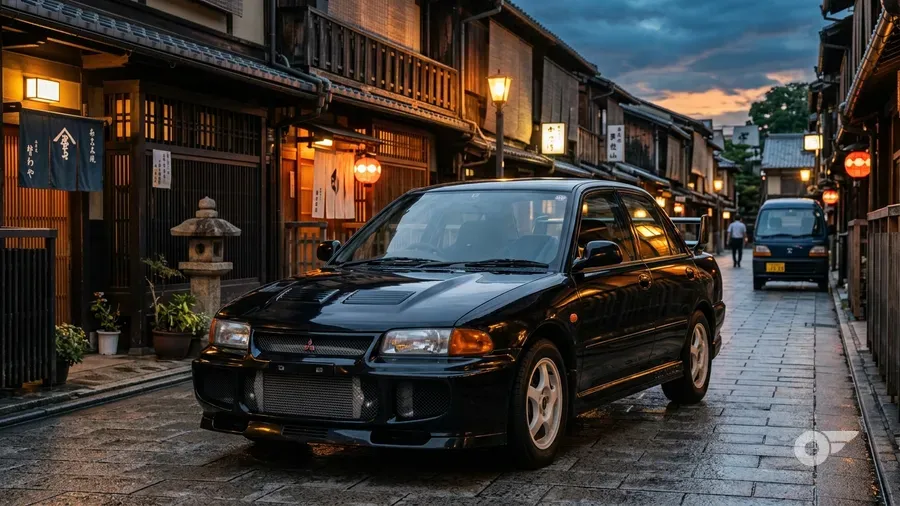
Mitsubishi Lancer Evolution II

Mitsubishi Lancer Evolution II

Japan·Sports·1994–1995
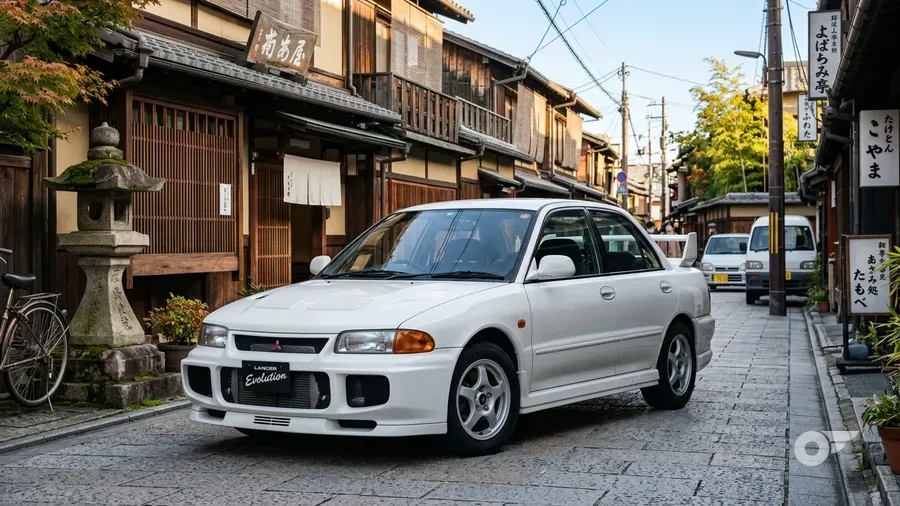
Mitsubishi Lancer Evolution I

Mitsubishi Lancer Evolution I

Japan·Sports·1992–1994
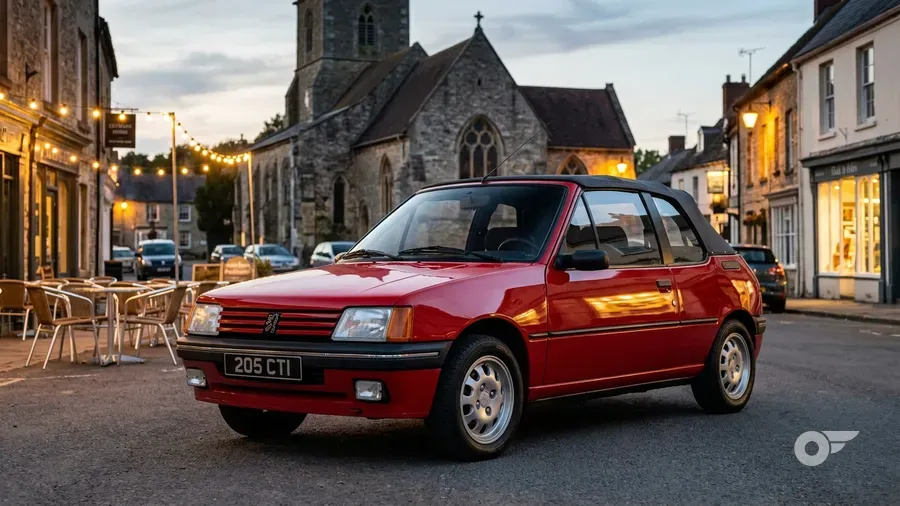
Peugeot 205 GTI

Peugeot 205 GTI

France·Sports·1984–1994
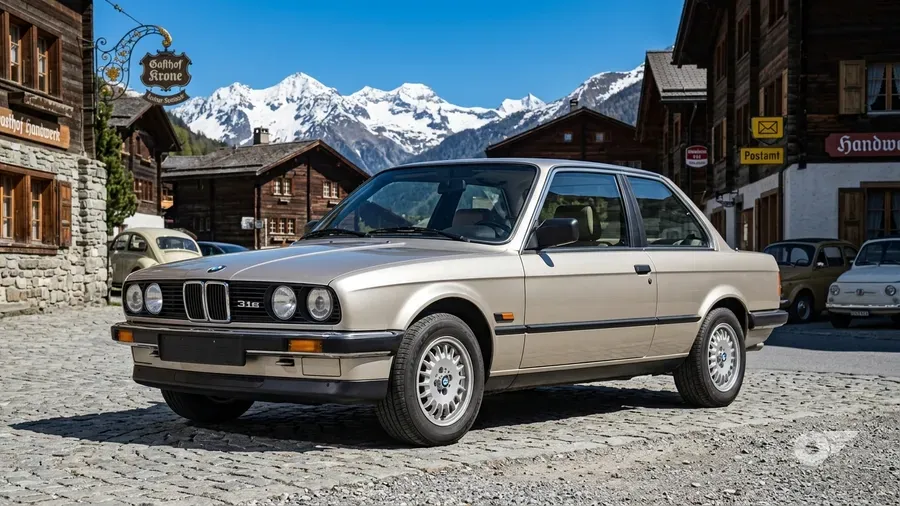
BMW 3 Series E30

BMW 3 Series E30

Germany·Sports·1982–1994

Owning One

Why collectors want it

Rarity and primacy, in that order. Lancia built 44,296 Integrales across the whole family and only 5,298 of these, every one of them left-hand drive, every one a five-door. This is the smallest production run in the line and the only one that was actually a world champion in period, because the 1987 title was won on the HF 4WD's homologation and nothing else.

The market has not caught up with that. Money in this family flows to the wide-body cars, the Evoluzione and Evoluzione II, and the 16V behind them. The HF 4WD sits at the bottom of the ladder despite being the rarest rung on it, which makes it the cheapest honest way into a Group A world champion.

There is a second argument, and it matters more every year. These cars were treated as spares. A narrow-body 4WD was worth less than the Integrale parts bolted to it, so gearboxes, turbos, seats and wheels were stripped out and cars were converted to look like later models. An unmolested, unconverted, correctly badged HF 4WD is now genuinely hard to find, and that is the whole collecting case.

Which one to look for

There is nothing to choose. The HF 4WD was sold in one specification for one short run, with no Martini edition, no Club HF, no numbered series and no factory special of any kind. The named cars everyone remembers, the Martini 5 and 6, the Club Italia, the Giallo and Blu Evos, all belong to later generations. So the hierarchy here is entirely about condition and honesty. In descending order: an unconverted left-hand-drive car with its original narrow bodywork, correct 14-inch wheels and a documented history; the same car with a sympathetic respray and replacement wear items; a right-hand-drive conversion; and last, the cars wearing Integrale arches and wheels, which are worth buying only if you intend to put them back. Two cars get confused with this one and neither is it. The Delta HF Turbo of the same period is front-wheel drive. The Prisma 4WD is the four-wheel-drive saloon, and it is not turbocharged. If the tailgate does not say 4WD and the transmission tunnel does not carry a centre differential, walk away.

What owning one is like

Nothing here is mysterious, and none of it stops anyone. The shell is a late-1970s hatchback and it rusts in predictable places: the back edge of the roof, the corners of the screens, the arches, the sills and the suspension turrets. Water finds its way into the floorpans and works from the inside out, so lift the carpets before you look at anything else. The engine drinks oil, roughly half a litre every thousand miles, and that is normal rather than a fault. Ignoring it is what kills turbos and bearings. The cambelt is the other discipline, with guides quoting anywhere from 24,000 to 36,000 miles on these eight-valve engines, and less if the car sits. The 90-degree elbows on top of the fuel tank perish with age and weep. Instruments and switchgear play up, usually a poor earth rather than a dead sender, though some senders are no longer made. Gearboxes lose synchro on second and third if they have been driven hard. The differentials themselves are reliable as long as they are not run dry. The brakes are simply small, and always were.

Upkeep & parts

Mechanically this is a friendly car to own. The twin-cam is a Lampredi design shared with a great many Fiat Group products, so machine work, gaskets, bearings and service items are cheap and universally understood. UK specialists quote roughly 220 pounds for a belt kit plus about 80 for the water pump that should go on with it, and 500 or so in labour. A turbo rebuild runs between 350 and 600. Dampers are around 120 a corner and a full bush kit about 400. Brake consumables are stock items.

Bodywork is the expensive half. Complete panels are hard to find and the narrow-body pressings unique to the HF 4WD are harder still, though specialists such as Walkers Garage supply repair sections and Stellantis Heritage has reissued some parts from original tooling. Deltaparts and the wider Integrale trade cover most consumables.

Club support is genuinely good. The Lancia Motor Club in the UK runs model advisors and a forum, the Lancia Delta Integrale Club in Italy is ASI-federated, and the Lancia Club holds the Registro Storico Lancia for certifying originality, which is worth doing on a car this easy to misrepresent.

Country of origin
Italy
Class
Sports
Production years
1986–1994
Units built
~5,298
Model
Delta HF
Nickname
No nickname ("Deltona" names the Evoluzione specifically, not the generation)
Body
Hatchback
Layout
Front-engine, AWD
Engine
1,995cc turbocharged DOHC 8-valve inline-four (165 PS)
Transmission
5-speed manual
Designer
Giorgetto Giugiaro (Italdesign)