Octane Files
Browse CarsLancia Rally 037

Lancia Rally 037

Overview

Audi turned up in 1981 with four driven wheels, and Lancia decided not to copy it. Group B asked for only 200 road cars in twelve months, which meant a manufacturer could build something close to a pure competition car and sell just enough copies to make it legal. That is exactly what Abarth did. It took the centre section of the Beta Montecarlo, bolted tubular subframes to each end, and had Pininfarina clothe the result in composite clamshells that lift off in seconds. Sergio Limone ran the project, Dallara built the prototype, and the engine sat behind the driver along the car's length: a two-litre twin-cam with a Roots-type Abarth Volumex supercharger rather than a turbo, chosen because a rally driver wants the power the instant the throttle opens.

The factory called the car simply Rally. Everyone else used the Abarth project number, 037. Around 207 road cars were built to satisfy the rulebook, and in 1983 the racing version took the world manufacturers' championship off Audi by two points. No two-wheel-drive car has managed it since, and after 1984 nobody seriously tried.

Distinctions

The defining attributes and collector status that make this car garage-worthy.

Homologation Special
Built for the road only because racing rules demanded it.
Poster Car
The car on the bedroom wall, the one people dreamed about before they could drive.
Octane Files Select
Renowned for its history, engineering, or cultural weight.

Collectibility scorecard

Rated 1 to 10 on the traits that matter for owning, driving, and holding on to a car like this.

Desirability
9/10
Rarity
9/10
Driving thrill
9/10
Investment trajectory
7/10
Usability
3/10
Ease of restoration
3/10
Cultural impact
8/10
Electronic dependence
Fully analogHeavily electronic

Almost every input on a Stradale is a mechanical linkage. The Volumex supercharger is belt-driven off the crankshaft rather than managed by anything, fuelling is a twin-choke Weber carburettor, and lubrication is dry sump. The one genuinely electronic system is the Marelli ignition, which is why this sits at 2 rather than 1. There is no engine computer, no fuel injection, no ABS, no traction control and no driver aid of any kind. Even the works Evoluzione 2 stayed analogue in spirit: its Kugelfischer injection is mechanical, driven off the engine.

Market data

Demand tier, price trend, and typical values by condition, based on recent sales data.

Demand tier
EntrySolidHighBlue-chip

The proven elite. Values are established, liquid, and defended at every auction.

Value trajectory
AppreciatingStableCooling

Values are holding steady. What you pay today is what it's worth tomorrow.

Price by condition
Driver
$425k
Excellent
$600k
Concours
$750k

Values roughly doubled between 2017 and 2023 and have since levelled off. A 3,300km unrestored Stradale made USD 654,000 at RM Sotheby's Monterey in 2023, another Stradale made USD 588,000 at Broad Arrow's Amelia sale in March 2024, and a 1984 car failed to sell at Gooding Christie's Pebble Beach in August 2025 against a USD 450,000 to 550,000 estimate. The high-water mark is still the EUR 770,000 paid at RM's Essen sale in 2019. Blue-chip standing rests on the 1983 championship and a production run of around 207; the trajectory is flat rather than falling, and documented works cars trade in a separate market entirely.

Values as of August 2026.

Buyer's guide

What anyone seriously considering this car should know first.

Why it's worth it
The last rear-wheel-drive car to win the World Rally Championship
Callout
Won the 1983 world manufacturers' title by two points, 118 to Audi's 116
What to watch for
Start with the history file, not the car. Around 207 Stradale were built, works cars add a few dozen more, and there is a healthy industry building 037 replicas on Beta Montecarlo bases, some of them excellent. A documented chassis with a continuous ownership record is what you are actually buying. Works cars carry their own trap. Many were upgraded from Evoluzione 1 to Evoluzione 2 specification in period, rebuilt after accidents, and in some cases converted back decades later, so establishing what a car was when it scored its results takes real research and usually a marque specialist. On the car itself, the composite clamshells come off completely, which makes inspection easy and hides nothing. Look for crash repairs, cracking around mounting points, and panels that no longer sit flush. Get underneath and study the centre cell and the tubular subframes for corrosion, particularly on any car that was used in period. Then listen to the Volumex. Roots blowers rumble and whine by design, but rattle or play in the rotors means a rebuild, and factory spares ran out decades ago. Many of these cars have covered tiny distances and want recommissioning rather than restoration, which is cheaper and far more common than it sounds.

The Story

Driving character

The supercharger is the whole personality. There is no lag and no step in the delivery. The Volumex is geared to the crankshaft, so torque arrives with the throttle and keeps arriving, and the noise is a hard four-cylinder bark with a mechanical whine layered over it that sharpens as the revs climb. After a turbocharged car of the same era it feels almost old-fashioned in the best way, because nothing has to be anticipated. The chassis is the other half. A works car weighed 960kg, and sources put the Stradale anywhere between 980 and 1,170kg depending on how it was weighed, but either way there is very little of it. The mass sits between the axles, and double wishbones at each corner keep it composed over surfaces that upset far more sophisticated machinery. Lift entering a corner and the nose tucks in; the steering stays light and honest throughout. The ZF five-speed transaxle is precise rather than quick-witted, and the cabin is a rally car's: hot, loud, spartan, with the engine right behind your shoulders. Nobody has ever called an 037 relaxing. Nobody has called it intimidating either.

Design

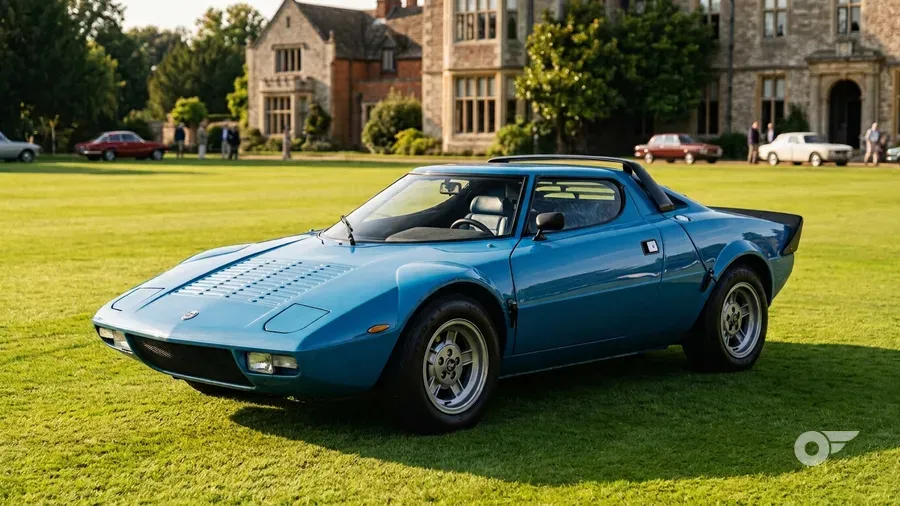
Pininfarina drew it, with Enrico Fumia on the pen and Sergio Limone directing from Abarth, and the shape is unusual among 1980s exotics for being almost entirely about function. The front and rear sections are single composite clamshells that lift clear of the car, exposing the whole engine and both suspensions, because a rally mechanic's time on a service halt is measured in minutes. The proportions follow from that. A short cabin sits well forward, the rear deck runs long and flat under a full-width wing, and the wheelbase is stretched beyond the Beta Montecarlo section buried underneath. The roof carries a double bubble, an Abarth signature borrowed from the firm's small competition coupes of the 1950s and 1960s, and one of the few details on the car that is there purely for pleasure. The Stradale keeps nearly all of it, including a roll cage integrated into the structure rather than bolted in afterwards, which is why the road car looks so convincing standing still. In Martini Racing white with its red and blue stripes, the works version became one of the most reproduced liveries in motorsport, and it is what most people picture when the 037 comes up.

Motorsport pedigree

The 037's first season was a write-off. It debuted at the 1982 Rally Costa Smeralda and both works cars retired with gearbox failures, and the year went on being a development exercise rather than a campaign. 1983 was the payoff. Cesare Fiorio ran a selective programme, skipping Sweden entirely because snow belonged to Audi, and concentrated on events where a light rear-drive car could beat a heavier four-wheel-drive one. It opened at Monte Carlo, where Fiorio talked French police into clearing an icy stage, bought salt for a snowy one, and had his drivers stop mid-stage to swap between slicks and studs in roughly 45 seconds. Walter Röhrl and Markku Alén finished first and second, won 20 of the 31 stages, and put the best Audi 11m18s behind. Röhrl added the Acropolis and New Zealand, Alén took the Tour de Corse and Sanremo, and Lancia won the manufacturers' championship 118 points to Audi's 116. Hannu Mikkola took the drivers' title for Audi, with Röhrl second and Alén third. Alén won the 1984 Tour de Corse in an Evoluzione 2, the last WRC victory for a rear-wheel-drive car. Attilio Bettega was killed in an 037 on that same event a year later.

In culture

The 037 is the underdog in rallying's most retold story, and that has kept it visible in a way six world championship event wins alone would not. The Audi against Lancia season finally got a feature film in 2024, Race for Glory: Audi vs. Lancia, with Riccardo Scamarcio playing Cesare Fiorio and Daniel Brühl as Audi's Roland Gumpert, built around exactly the tactics that won Monte Carlo. Group B's short life did the rest. The era is treated as a lost golden age by people far too young to have watched it, and the 037 in Martini white sits alongside the quattro and the 205 T16 in that iconography: on posters, in scale-model cabinets, and in the paddock at historic events where genuine cars still run in anger. Games carry it to a younger audience, the Evoluzione 2 in DiRT Rally and the Stradale in Forza Horizon 5 and 6. And in 2021 Kimera Automobili built the EVO37, a restomod engineered by Claudio Lombardi and Sergio Limone with Miki Biasion involved, making around 500bhp. Very few forty-year-old rally cars generate a modern industry around themselves.

Rivals

Cars from other manufacturers that competed for the same buyers when new.
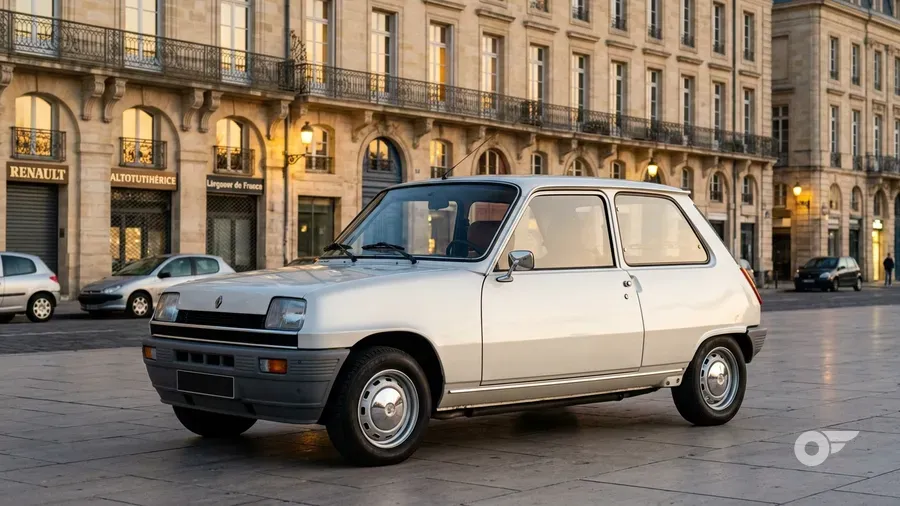
Renault 5 Turbo

Renault 5 Turbo

France·Sports·1980–1986

Owning One

Why collectors want it

Three things hold the 037's value up, and only one of them is rarity. Around 207 road cars is a small number, but plenty of 1980s specials are rarer and worth less. What the 037 has is a championship won on merit against a technically superior car, and a permanent record as the last rear-drive machine to take one. Group B's brief, dangerous window supplies the rest.

The hierarchy is steep and clear. Genuine works cars with period entries sit at the top, and an Evoluzione 2 with a documented result attached carries a premium that has nothing to do with how it drives. Below them come the Stradale road cars, which is what almost every private buyer will be offered: a 1982 example showing 3,300km sold for USD 654,000 at Monterey in 2023, and another 1982 car made USD 588,000 at Amelia in 2024. Below those sit the replicas, of which there are many, some beautifully made, and none worth 037 money.

Provenance is the whole market here. Two 037s in identical cosmetic condition can be separated by a factor of three purely on paperwork.

Which one to look for

There are three cars here, and the gap between them is enormous. The Stradale is the road car and the one anyone can realistically buy: 1,995cc, 205hp at 7,000rpm, a twin-choke Weber, a trimmed cabin with the roll cage built into the structure, and around 207 made. It exists only because the rulebook demanded it. The Evoluzione 1 is the 1982-83 works car, still 1,995cc, running 255 to 280 PS depending on specification and event. The Evoluzione 2 arrived for 1984 with the engine taken out to 2,111cc, a larger R18 Volumex running a full bar of boost, Kugelfischer mechanical fuel injection and 310 to 325 PS. It is the definitive competition 037, and the car Markku Alén won the 1984 Tour de Corse with. The grail is not the most powerful car but the best documented one: a works chassis with period results, ideally one of the 1983 championship cars. After that, an Evoluzione 2 with a clear history. Then a Stradale with low mileage and unbroken paperwork, which is the version most owners actually drive and the only one that makes sense to use.

Evoluzione 1 · 1982–1983

The first works specification. Still 1,995cc and still carburetted, running 255 to 280 PS depending on the event and the state of tune, at around 960kg. This is the car that took the 1983 manufacturers' championship: Röhrl's Monte Carlo, Acropolis and New Zealand wins, Alén's Tour de Corse and Sanremo.

Evoluzione 2 · 1984

The final competition 037. Engine taken out to 2,111cc, a larger R18 Volumex running a full bar of boost, Kugelfischer mechanical fuel injection, and 310 to 325 PS with 333Nm at 5,500rpm. Alén won the 1984 Tour de Corse in one, the last WRC victory by a rear-wheel-drive car, on the same weekend the Peugeot 205 T16 and Audi Sport quattro made their competition debuts.

Stradale · 1982–1984

The road car, built only because Group B demanded 200 of them in twelve months. A 1,995cc supercharged twin-cam behind the seats, 205hp at 7,000rpm through a ZF five-speed transaxle, a twin-choke Weber carburettor and Marelli ignition, with the roll cage integrated into the structure rather than bolted in. Trimmed and usable by the standards of what it homologated, and the only version most private buyers will ever be offered.

What owning one is like

Most 037s live gently, and that shapes what goes wrong with them. Cars that sit develop storage problems first: perished fuel lines and hoses, seized brake and clutch hydraulics, tired dampers, and a supercharger that has not been turned in years. Recommissioning is the normal job on one of these, not restoration. The Volumex is the component owners think about. It is an Abarth-built Roots blower, factory spares for the rotors and casings dried up decades ago, and a rebuild means sending it to one of the handful of people who genuinely know them. Done properly it lasts. Done optimistically it does not. The bodywork is composite, so it does not rot, but it cracks around mounting points and takes real skill to repair invisibly. The steel structure underneath is the thing to watch, especially on a car with competition use in its past. Inside, it is a rally car with trim fitted. The cabin gets hot, the noise never stops, and interior parts, glass and switchgear are hard to replace because they were made in tiny numbers. None of that puts owners off. The 037 is one of the more approachable Group B cars to actually use.

Upkeep & parts

The engine is the friendly part. It descends from the Fiat and Lancia twin-cam used in the 131 Abarth, so the architecture is well understood, internals are obtainable, and any competent Italian specialist can rebuild one. Service intervals are ordinary and belts, filters and consumables are shelf items.

Everything Abarth-specific is the opposite. The Volumex, the ZF transaxle, the suspension uprights and the body panels come from a small circle of specialists rather than a catalogue. Ricambio International and Amadei Ricambi cover Lancia classic parts, and composite panels for the 037 are reproduced by motorsport suppliers serving the historic rally scene, which is also where the knowledge sits.

Budget for the supercharger. A Volumex overhaul is the expense most likely to arrive uninvited, and it is specialist work at specialist rates.

For support, the Lancia Motor Club in the UK is the largest club for the marque and runs its own forum, library and shop, the International Lancia Forums are the busiest online gathering, and Stellantis Heritage maintains the factory's own archive. None of it is cheap, and none of it is mysterious.

Country of origin
Italy
Class
Sports
Production years
1982–1984
Units built
~207
Model
Rally 037
Nickname
No nickname ("Stradale" names the road-homologation cars specifically, not the generation)
Body
Coupe
Layout
Mid-engine, RWD
Engine
1,995cc supercharged DOHC 16-valve inline-four (205hp, Stradale), 1,995cc supercharged competition four (255-280 PS, Evoluzione 1), 2,111cc supercharged competition four (310-325 PS, Evoluzione 2)
Transmission
ZF 5-speed manual transaxle
Designer
Enrico Fumia (styling, Pininfarina), Sergio Limone (project leader, Abarth)