Octane Files
Explore CarsToyota Celica GT-Four ST165

Toyota Celica GT-Four ST165

Overview

Toyota put the Celica on front-wheel drive in August 1985 and, fourteen months later, spent a great deal of money partially undoing it. In October 1986 the ST165 GT-Four arrived on the same T160 liftback shell, with a turbocharged 3S-GTE across the nose, full-time four-wheel drive underneath, and a badge no Celica had worn before.

It existed to make a rally car legal. Group A asked for 5,000 road cars, and Toyota Team Europe in Cologne needed turbocharging and traction to have any answer to the Lancia Delta. What reached showrooms was recognisably a homologation exercise: 185 PS in Japan, 190 horsepower in the American All-Trac Turbo, a centre differential the driver locked with a switch, and a specification that made more sense on a Kenyan road than a Japanese one.

The results took two seasons. The car debuted on the 1988 Tour de Corse, won for the first time at Rally Australia in 1989 with Juha Kankkunen, then carried Carlos Sainz to the 1990 drivers' title, the first world championship any Toyota driver had won. What it never won was a manufacturers' title, which is precisely why the ST185 exists.

Distinctions

The defining attributes and collector status that make this car garage-worthy.

Homologation Special
Built for the road only because racing rules demanded it.
Octane Files Select
Renowned for its history, engineering, or cultural weight.

Collectibility scorecard

Rated 1 to 10 on the traits that matter for owning, driving, and holding on to a car like this.

Desirability
7/10
Rarity
7/10
Driving thrill
7/10
Investment trajectory
8/10
Usability
6/10
Ease of restoration
4/10
Cultural impact
6/10
Electronic dependence
Fully analogHeavily electronic

The electronics are all in the engine bay and they stop there. The 3S-GTE runs Toyota's own electronic fuel injection and ignition management with a knock sensor, which is the only reason a turbocharged two-litre could be sold with a warranty in 1986, and anti-lock brakes were available. Everything the driver touches is mechanical. The throttle is a cable, the steering is hydraulically assisted, the centre differential is either locked by a switch or left to a viscous coupling to sort out by itself, and there is no traction control and no stability system. A test light, a multimeter and the factory manual will find most faults on the car.

Market data

Demand tier, price trend, and typical values by condition. Our own assessment, not a quoted valuation.

Demand tier
EntrySolidHighBlue-chip

A dependable market. Well-kept cars hold their value and find ready buyers.

Value trajectory
AppreciatingStableCooling

Values are climbing. The market wants more of these than exist.

Price by condition
Driver
$9k
Excellent
$16k
Concours
$26k

Toyota has never published a production figure for any Celica GT-Four, so nobody can price this car against a known population, and that keeps it cheaper than its record deserves. Tracked fourth-generation four-wheel-drive sales average $15,679, with a low of $6,000 for a 1988 car in December 2024 and a high of $25,312 for a 1988 Turbo 4WD in March 2026. The band below describes an honest imported or American-market car in sorted condition. The front-drive Celica of the same years trades several thousand dollars under it and the gap has widened every year since the 25-year import rule started delivering Japanese GT-Fours to North America. What moves the price is originality: an unmodified car with cooling history and a solid floor pan is the scarce thing, not the model.

Values as of August 2026.

Buyer's guide

What anyone seriously considering this car should know first.

Why it's worth it
The car Carlos Sainz drove to Toyota's first World Rally Championship title
Callout
Toyota's first four-wheel-drive Celica, built only because Group A rules demanded 5,000 road cars
What to watch for
Establish which centre differential the car has before anything else. Cars built up to about October 1987 have one the driver locks manually with a switch. After that Toyota fitted a viscous-coupling limited-slip unit that does the same job on its own. Neither is wrong. The early one is more involving to drive and harder to find parts for. Then the shell, from the inside out. The Celica floor pan rots under the factory sound deadener, which holds water against the metal and hands you a damp carpet long before it hands you a bubble in the paint. Lift the carpet first. Then the sills, the rear arches, the strut tower seams, and on a Japanese import the whole underside rather than the parts you can see. The engine wants a specialist rather than a glance. The 3S-GTE is strong and does not forgive detonation or overheating, so a car that has been chipped, boosted or run hot without care can be sitting on a tired head gasket or worn rod bearings. Ask for cooling and turbo history in writing. Finally, check the drivetrain rather than assuming it. Transfer cases and centre differentials suffer badly from thirty years of missed oil changes.

The Story

Driving character

The ST165 is quick in a way that hides itself. Full-time four-wheel drive, a heavy nose, a soft turbocharged delivery and a shell drawn for a front-drive coupe combine into a car that covers ground faster than it feels like it is going. That trait made it good in a forest and slightly underwhelming on a dry Sunday road, and both halves of that are still true. The 3S-GTE is the interesting part. Nothing much happens below 3,000rpm, then boost arrives in one movement rather than a swell, and the car pulls hard and flat to the limiter on a hard, monotone four-cylinder note with the turbo audible over it. There is no automatic version of any GT-Four, in any generation. The five-speed is the only gearbox Toyota offered and it is light and unremarkable in the way Toyota shifts of the period usually were. What the car has is composure. It turns in, grips, understeers gently when it runs out, and does nothing sudden. On a wet road it is uncannily quick. The earliest cars, with the driver-locked centre differential, add a decision to all that and are the more engaging for it.

Design

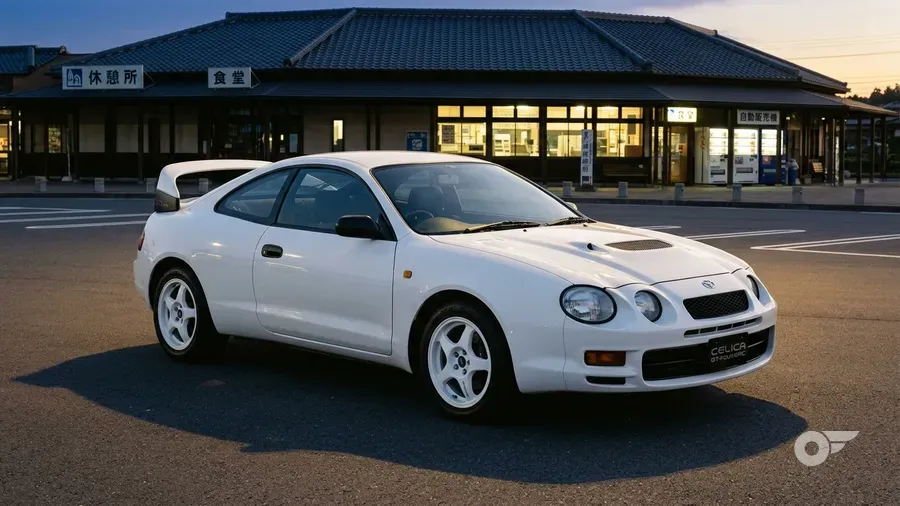
The GT-Four is a T160 Celica with a job to do, and nearly every difference is functional. The bonnet carries a raised scoop feeding the intercooler, the front bumper opens up, there are wider wheels and tyres under the arches, and the tailgate reads GT-Four rather than GT-S. In North America the same car says All-Trac Turbo instead, which is the most confusing decision anyone made about this model. Everything else is the Celica Toyota called ryumenkei, flowing surface form: pop-up lamps to keep the nose low, glass mounted flush with the metal around it, no straight edges anywhere, and a claimed drag coefficient of 0.31 with the rear spoiler fitted. That shape was drawn for a front-drive coupe and never redrawn for the rally programme, which is why the ST165 looks so much less serious than the ST185 that replaced it. Inside, the giveaways are small and specific. There is a centre differential switch on the console of the early cars and a boost gauge in the binnacle. Nothing else separates a GT-Four cabin from an ordinary fourth-generation Celica's, and that understatement is part of the appeal now.

Motorsport pedigree

Toyota Team Europe homologated the ST165 for Group A in May 1988 and ran it that season without much to show for it. The World Rally Championship debut was the 1988 Tour de Corse, and the car spent two years being quick and fragile against Lancia's Delta. The turn came in September 1989 at Rally Australia, where Juha Kankkunen gave the ST165, and Toyota, a first World Rally Championship win. The following season Carlos Sainz and Luis Moya won the Acropolis, New Zealand, the 1000 Lakes and the Lombard RAC, and Sainz took the drivers' championship at Sanremo in October 1990. It was the first world rally title won by a Toyota driver. The model won 13 world championship rallies in total, which for a first attempt at a four-wheel-drive turbocharged rally car is a serious return. What it never won was the manufacturers' championship, and that omission is the reason the ST185 was engineered the way it was. Toyota had proved it could build a car fast enough for one driver to win a title in and not consistent enough to carry a whole season of scoring. Everything the next car did differently follows from that.

In culture

The ST165's cultural life is Japanese and it is about snow. In 1987 the film Watashi wo Ski ni Tsuretette put GT-Fours on screen at the peak of Japan's ski boom, and Japanese owners still cite it as the reason they went looking for one decades later. That story is told in full on the Celica T160 page, which covers the shell this car shares. Outside Japan the car reached people through a livery and through games. The ST165 has been in the Gran Turismo series since its second game, which for a lot of players was the first time a four-wheel-drive Toyota rally car meant anything at all. The other half of its cultural life is a naming problem, and it is a real one. North America bought this car as the Celica All-Trac Turbo, so an entire market knows it under a badge that no rally result was ever filed under. Ask an American enthusiast about a GT-Four ST165 and you can get a blank look about a car they have owned for years, which is a strange fate for the machine that won Toyota its first world title.

Rivals

Cars from other manufacturers that competed for the same buyers when new.
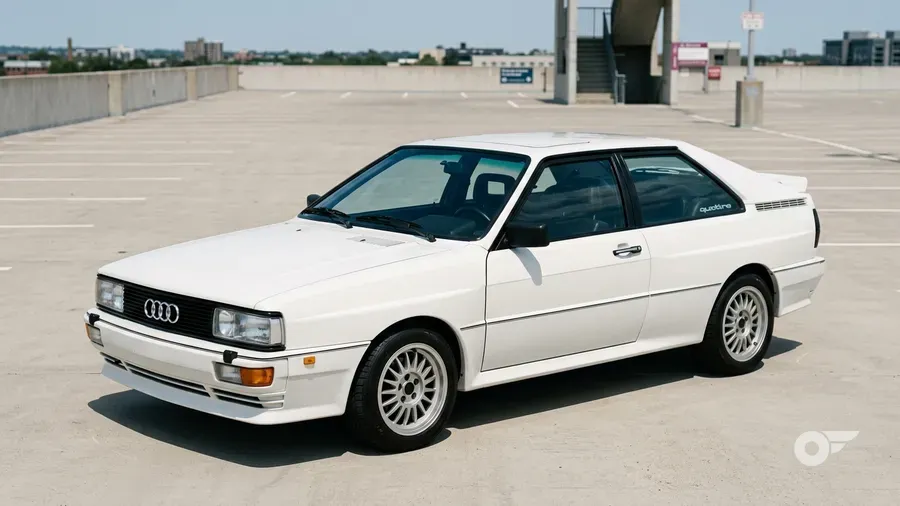
Audi Quattro

Audi Quattro

Germany·Sports·1980–1991
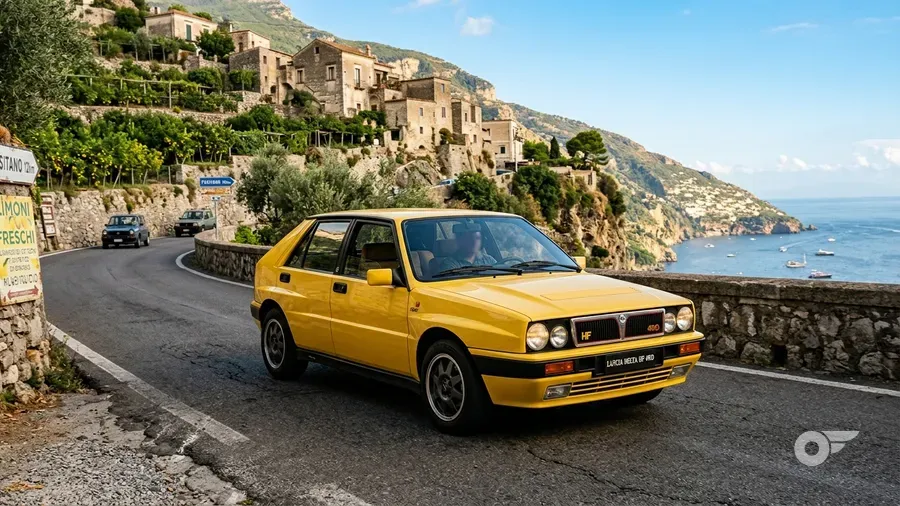
Lancia Delta HF

Lancia Delta HF

Italy·Sports·1986–1994

Ford Sierra RS Cosworth

We haven’t profiled this car yet. Request to add
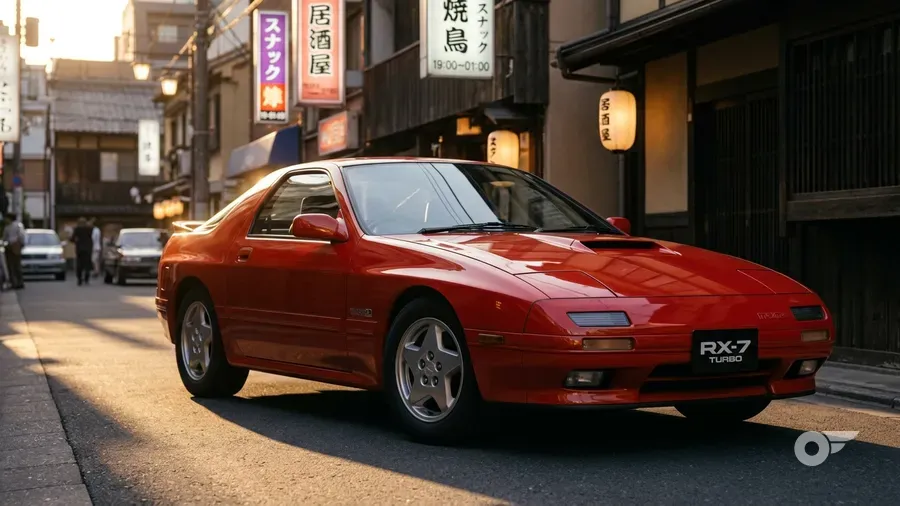
Mazda RX-7 FC

Mazda RX-7 FC

Japan·Sports·1985–1992

Mitsubishi Galant VR-4

We haven’t profiled this car yet. Request to add

Owning One

Why collectors want it

The ST165 is the first one, and in a three-car family where the later two are demonstrably better, being first is the whole argument. This is the car that turned Toyota from a rally entrant into a rally winner, and it is the only GT-Four whose road-car specification still reads like an experiment rather than a product.

It is also the cheap one, and that will not hold. Tracked fourth-generation four-wheel-drive Celica sales average a little under $16,000, with a 1988 turbo four-wheel-drive car taking $25,312 in March 2026 and tired examples still surfacing around six thousand. The front-drive T160 sits well below that and the two are drifting further apart every year.

Within the model, condition and originality decide everything. A Japanese-market car with the earlier manually lockable centre differential is the more interesting machine; the American All-Trac Turbo is easier to find and to register, and it is the only version most North American buyers will ever see. What nobody has is a number. Toyota has never published how many GT-Fours it built, so scarcity here is something you feel in the classifieds rather than something you can look up.

About 26,500 ST165s were built between October 1986 and August 1989. Toyota never itemised the figure itself, so treat it as the accepted specialist count rather than a factory number, and note that the 75 IMSA GTO Champion Edition cars sold through Californian dealers are inside it, not additional to it.

Which one to look for

There is one car here and three ways of having bought it. Japan sold it as the GT-Four from October 1986 at 185 PS, with the manually lockable centre differential at launch and the viscous-coupling limited-slip unit from late 1987. Europe took essentially the same car. North America got it from 1988 badged Celica All-Trac Turbo at 190 horsepower, which is why a lot of American enthusiasts do not realise they are looking at a GT-Four at all. The choice worth making is the differential rather than the market. An early manually locked car is the more mechanical thing to drive and the more awkward to keep running. A viscous car is easier and marginally quicker on a slippery surface because it never waits for a decision. Beyond that, look for what a homologation buyer would not have specified. Sunroofs and full trim were available and every kilogram of it is on a car with none spare. There is no special edition in this generation. The 5,000-car and 2,500-car homologation batches belong to the ST185 and ST205, and their absence here is a real difference between the first GT-Four and the two that followed it.

All-Trac Turbo · 1988–1989

The North American version, sold as the Celica All-Trac Turbo rather than the GT-Four and rated at 190 horsepower. Mechanically the same car with the viscous-coupling centre differential. The badge is the reason many American owners do not realise what they have.

GT-Four · 1986–1989

The Japanese and European car, on sale from October 1986 with the 2.0-litre 3S-GTE at 185 PS. Manually lockable centre differential at launch, replaced by a viscous-coupling limited-slip unit from around October 1987. Five-speed E50F manual, liftback body only.
What owning one is like

Two problems dominate and both are manageable if you go in knowing about them. The first is the bodyshell, and it is the reason so few good ones are left. The factory sound deadener holds water against the floor pan and rots it from the inside, so the first symptom is a damp carpet rather than a blister in the paint. From there it works outward into the sills, the rear arches and the strut tower seams. Japanese imports arrive with an underside that has spent thirty years in a climate nobody photographed. The second is the engine's tolerance for enthusiasm. The 3S-GTE is a strong unit with a known weakness for head gasket and rod bearing trouble if it has been overheated, run lean or boosted beyond standard without proper fuelling. Cooling system honesty matters more than power on a turbocharged car of this age, and a large share of survivors have been modified by somebody. After that it is the ordinary tax of a 1980s Japanese coupe. Pop-up headlamp motors wear, interior plastics have gone brittle, and Celica-specific trim that nobody expected to need is what turns a running project into a stalled one.

Upkeep & parts

The mechanical side is cheap, which surprises people. The 3S family went into Camrys, Coronas, MR2s and Caldinas by the million, so filters, belts, water pumps, clutches and brake parts are ordinary counter stock. The timing belt is a rubber one, so a car with no belt history has a job already queued rather than an unknown. Budget for the cooling system properly and treat it as the car's most important service item rather than its least interesting.

What costs money is everything specific to this car. GT-Four transfer cases, centre differentials and driveshafts are not Camry parts, body panels and lamps are getting hard to find undamaged, and the trim is gone from Toyota entirely.

The community is where those parts actually live. Alltrac.net covers the four-wheel-drive Celicas in more depth than any workshop manual, gtfours.co.uk is the standing technical reference, and GT4DC in Britain exists for owners of exactly this car. Celica-Club UK covers the model more broadly. Join one before you buy rather than after, because the useful knowledge on which import to take on is held by people rather than published.

Country of origin
Japan
Class
Sports
Production years
1986–1989
Units built
~26,500
Model
Celica GT-Four
Nickname
No nickname ("All-Trac Turbo" names the North American version specifically, not the generation)
Body
Liftback
Layout
Front-engine, AWD
Engine
2.0L 3S-GTE turbocharged DOHC 16-valve I4, 182-190 hp depending on market and model year
Transmission
5-speed E50F manual
Designer
Data unverified, not shown