Octane Files
Explore CarsToyota Supra A60

Toyota Supra A60

Overview

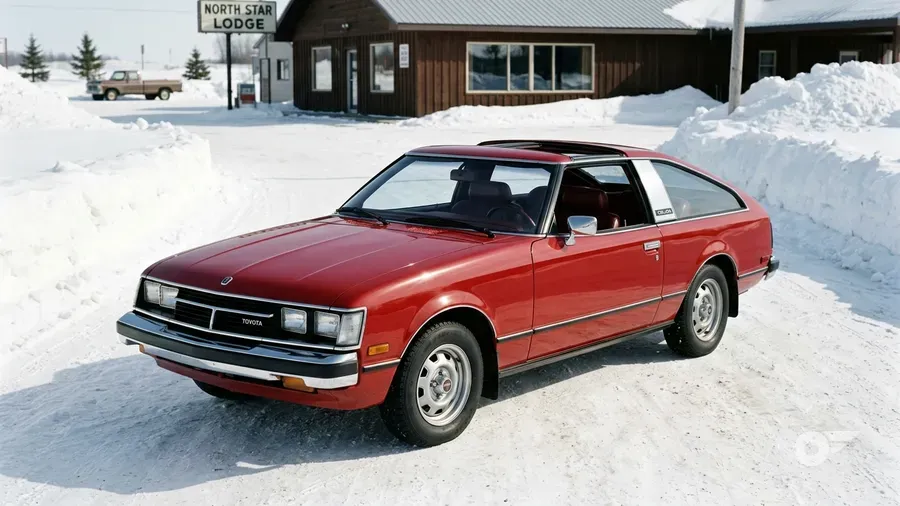
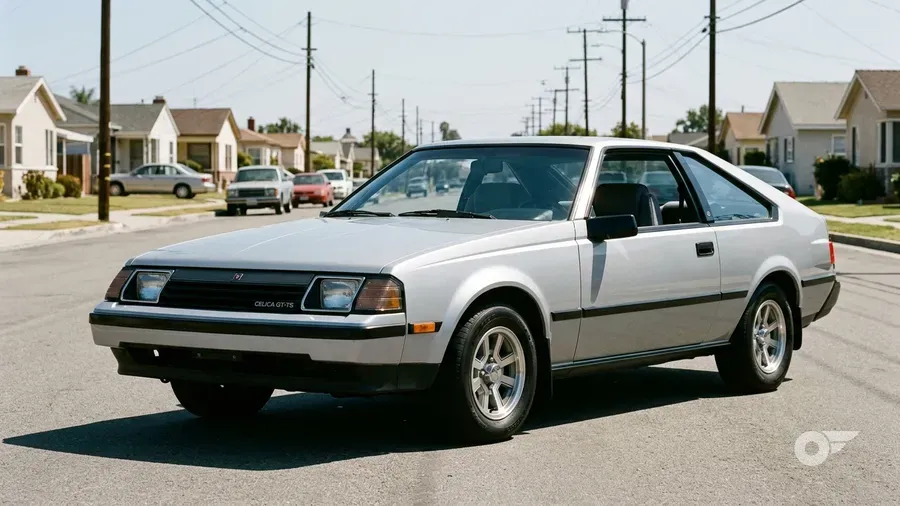
Toyota put the third-generation Celica on sale in Japan on 2 July 1981, and alongside it a car with the same doors, the same roof and a longer nose. Japan called it the Celica XX. Everywhere else it was the Celica Supra, and it was the most seriously engineered thing Toyota sold.

The extra length existed for one reason: to get a straight six ahead of the front axle. Export cars took the 2.8-litre 5M-GE twin cam, 145 horsepower at launch and 161 by 1985. Japan got a four-engine ladder running from a plain two-litre up through a single-cam turbo to a 24-valve twin cam, none of which left the country.

What made it more than a Celica with two extra cylinders sat underneath. The Supra got independent rear suspension the four-cylinder car did not, and Toyota, which then held a stake in Lotus, had Lotus tune the chassis. Motor Trend named it 1982 Import Car of the Year. Car and Driver put it on the first 10Best list in 1983 and again in 1984.

Then it stopped. Production ended in December 1985, and from mid-1986 the Supra was its own model, sharing nothing with the Celica but a badge.

Distinctions

The defining attributes and collector status that make this car garage-worthy.

Octane Files Select
Renowned for its history, engineering, or cultural weight.

Collectibility scorecard

Rated 1 to 10 on the traits that matter for owning, driving, and holding on to a car like this.

Desirability
6/10
Rarity
5/10
Driving thrill
6/10
Investment trajectory
7/10
Usability
7/10
Ease of restoration
5/10
Cultural impact
6/10
Electronic dependence
Fully analogHeavily electronic

Fuel and spark are computer-controlled and nothing else is. Every export A60 runs Toyota's electronic fuel injection and electronic ignition on the 5M-GE, and the Japanese turbo and 24-valve cars are injected too. The options list went further than most cars of 1981 managed: an LCD instrument cluster, a trip computer that worked out distance to destination, and in Japan the Navicom, a microcomputer compass Toyota advertised as a navigation aid. None of it touches how the car drives. The throttle is a cable, the steering and brakes are hydraulic, there is no anti-lock system, and nothing electronic sits between the driver and the rear axle.

Market data

Demand tier, price trend, and typical values by condition. Our own assessment, not a quoted valuation.

Demand tier
EntrySolidHighBlue-chip

A dependable market. Well-kept cars hold their value and find ready buyers.

Value trajectory
AppreciatingStableCooling

Values are climbing. The market wants more of these than exist.

Price by condition
Driver
$8k
Excellent
$19k
Concours
$36k

Toyota has never published a worldwide production figure for the A60, and the numbers circulating online vary by a factor of three, so nobody can tell you how thin the ground is. What Toyota does publish is a sales figure: about 115,000 A60s were sold in the United States, which is where most survivors live. Tracked sales average $19,113 across the generation. The floor is genuinely low, $5,100 for a 1983 car at the end of 2023, and a 124,000-mile 1985 P-type with cosmetic needs made $17,500 in October 2024. The ceiling has moved a long way in the other direction: $93,000 for a 1986 P-type in June 2026. That car is excluded from the band below, which describes an honest driver-quality export car with the 5M-GE.

Values as of August 2026.

Buyer's guide

What anyone seriously considering this car should know first.

Why it's worth it
The last Supra that was still a Celica
Callout
Car and Driver put it on the first ever 10Best list in 1983, and again in 1984
What to watch for
Start with the body, because the mechanical side of this car rarely decides anything. The A60 rots in a predictable order: the hatch aperture and the seals around it, then the rear wheel arches, then the sills, then the strut towers, with the base of the windscreen as a bonus. Take a magnet to the arches. Filler is the standard bodge here and it hides well under fresh paint. Then work out which car you are looking at. North American cars are P-type or L-type. The P has fibreglass fender flares, wider wheels and tyres, eight-way adjustable sports seats and, mechanically, the one difference that matters: a limited-slip differential as standard. The L went without it and offered the LCD dash and trip computer instead. Both use the same 5M-GE, so a flared car wearing an L interior has been assembled from two donors. Mechanically the news is good. The 5M-GE is stout and the W58 five-speed behind it was built for more torque than the engine makes. Early cars have a weak oil pressure regulator, which is known and cheap. What is not cheap is trim, because Toyota supplies none of it.

The Story

Driving character

The 5M-GE is the character of the car and it is not a fast engine. It is a smooth one. A 2.8-litre twin cam with hydraulic lifters, it pulls from idle without complaint, spins out without ever sounding busy, and makes the even, unhurried six-cylinder noise that turns an ordinary journey into a pleasant one. With 145 horsepower and a car this size, real progress needs planning. What surprises people is the chassis. Toyota gave the Supra independent rear suspension the four-cylinder Celica never got, then had Lotus rework the spring, damper and bush rates rather than the layout itself. The result turns in cleanly, stays flat, and rides better than anything else Toyota built at the time. Car and Driver rated its handling above cars that cost several times as much, which sounds like marketing until you drive one. The gearchange is light and slightly remote, the steering is fingertip-light by modern standards, and you sit low behind a wide flat dash. A P-type with the limited-slip differential will take a firm hand. An L-type with the automatic is happiest doing the grand touring it was equally built for.

Design

The A60 was styled in Japan, which matters because the car before it was not. The A40 Celica was Calty's work in California and it looked American. This one is straight lines, hard folds and a dead-level belt line, and the Supra version keeps every panel behind the front doors while replacing everything ahead of them. The nose is the difference. It is longer, because a straight six needed the room, and it carries proper pop-up headlamps rather than the Celica's semi-retractable rise-up units. The P-type adds fibreglass flares over its wider tyres. A drag coefficient of 0.35 was worth advertising in 1981. Inside, Toyota went further than it usually did. There was an optional LCD instrument cluster, a trip computer that would tell you how far was left, and in Japan a device called Navicom: a microcomputer-driven compass showing direction and distance to a destination you keyed in yourself. Toyota called it a world first. Honda's Electro Gyrocator arrived the same year and generally gets that credit instead, but the ambition tells you what the Supra was for inside Toyota.

Motorsport pedigree

The A60 was never built to race, and the record reads like it. It did race, though, and one of the results is a genuine championship. In 1985 Per Eklund took the Group A title in the British Open Rally Championship driving a Toyota Corolla AE86 and a Celica Supra, which is on Toyota GB's own record of the period. Eklund had already run a Celica Supra to a Group A class win on the 1983 Ulster Rally in a privately prepared car. Circuit racing went less well. Win Percy entered six rounds of the 1983 British Saloon Car Championship in a Toyota Supra Turbo and won one of them. Percy had taken the championship outright three years running before that in other machinery, so the Supra was not the making of him: a heavy Group A coupe against Rovers and Capris was always going to be hard work. In America, Toyota's serious IMSA money went to Dan Gurney's All American Racers, and it went there with Celicas rather than Supras. Toyota's rally programme of these years belonged to the Celica Twin-Cam Turbo, a different car entirely.

In culture

The A60 did its cultural work in magazines rather than on screen. Between 1982 and 1984 it took Motor Trend's Import Car of the Year, appeared on the covers of the four big American monthlies in one season, and made the first two Car and Driver 10Best lists. Buyers who had never taken a Japanese car seriously as a driver's car took this one seriously, and that is why a standalone Supra could exist four years later. In Japan the Celica XX had a different job. It was the sporting half of a pair with the Soarer, which took the luxury brief on the same six-cylinder hardware, and it sold on gadgets as much as on speed. Navicom and the LCD dash were the talking points. Since then it has lived in games rather than films. The Celica XX 2800GT is a Gran Turismo regular, which is where most people under forty have met it. Everything the Supra name carries in popular culture, the orange car and the drag strip and the film franchise, belongs to the two generations that came after this one.

Owning One

Why collectors want it

This is the last Supra that was still a Celica, and that is most of the argument. Every A70 and A80 exists because this car proved a six-cylinder Toyota coupe could be sold to people who read road tests, and in 1986 Toyota admitted as much by giving the Supra a platform of its own.

The market has been slow about it. Tracked sales average a little over $19,000 across the generation while honest driver cars still change hands in the eight to twelve thousand range, and the best original examples have started clearing $90,000. That gap is the interesting part. An A60 is one of the few 1980s Japanese coupes where a good car and a great car are still an order of magnitude apart, which is what a market looks like just before it decides.

Within the generation the hierarchy is clear. The North American P-type is the one people want, for the flared arches, the wider tyres and the limited-slip differential the L-type went without. Above it in collector terms sit the Japanese cars nobody else could buy: the 24-valve 2000GT Twin Cam 24 and the M-TEU turbo.

Toyota sold roughly 180,000 A60 Celica Supras between the mid-1981 launch and the end of production in December 1985, and most of them went to the United States, where about 115,000 were sold. A figure of 67,000 also circulates and cannot be right, since it is smaller than the American total on its own.

Which one to look for

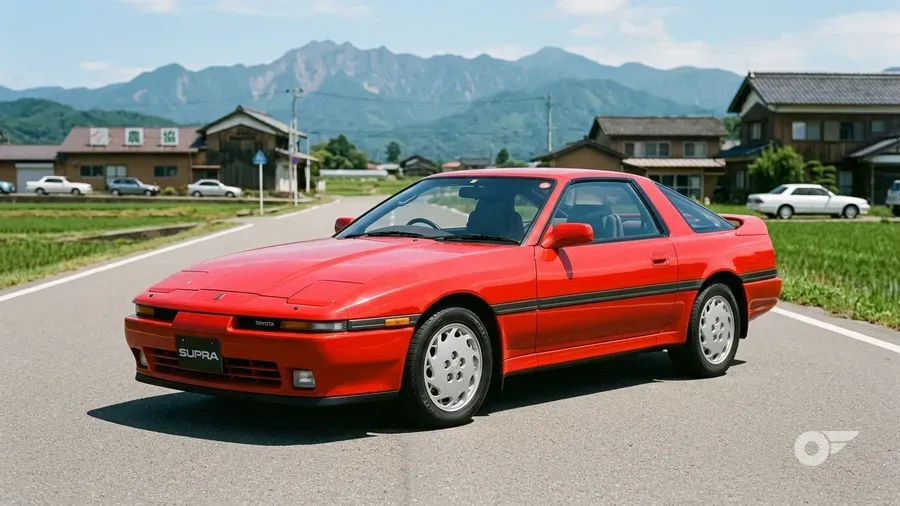
In North America there are two cars and one of them is better. The P-type, Performance Type, came with fibreglass fender flares over wider wheels and tyres, sports seats with eight-way adjustment, and a limited-slip differential as standard. The L-type, Luxury Type, dropped the flares and the differential and offered the LCD dash with trip computer instead. They cost roughly the same, about $14,600 for a P in 1982 with the L a thousand dollars under it, and both use the 5M-GE. Japan is where the interesting cars are. The launch range ran from a plain 125 PS two-litre up to the 2.8-litre twin cam, and in the summer of 1983 Toyota added two more: the M-TEU, a single-cam turbocharged two-litre, and the 1G-GEU, a 24-valve twin cam. Neither left Japan, and both are the connoisseur's pick by default now that importing one is legal. Europe got a single model, the 2.8i, in small numbers. Toyota GB was allocated a hundred cars a month from August 1982, which is why a right-hand-drive A60 is genuinely uncommon in Britain.

2.8i · 1982–1986

The European car, on sale from August 1982 with the 5M-GE rated between 174 and 180 PS depending on model year and market. Toyota GB was allocated around a hundred cars a month, which is why right-hand-drive examples are uncommon.

2000 (Celica XX) · 1981–1985

The Japanese entry grade, GA61, with the 1G-EU single-cam two-litre rated at 125 PS. Sold as L and S trims. The reason the Celica XX existed as a tax-friendly six rather than only as a 2.8.

2000 Turbo · 1983–1985

The other summer 1983 addition: the M-TEU, a single-cam turbocharged two-litre six, 145 PS at launch and 160 PS once an intercooler was fitted. Japan only. Torque low down rather than revs, which makes it the odd one out in a range built around twin cams.

2000GT Twin Cam 24 · 1983–1985

Added in the summer of 1983 with the 1G-GEU, a two-litre DOHC 24-valve six developed with Yamaha, rated at 160 PS. Japan only, and the connoisseur's pick within the generation now that importing one is straightforward.

2800GT (Celica XX) · 1981–1985

The Japanese flagship, MA61, with the 2.8-litre 5M-GEU twin cam. Sold as the Celica XX in Japan alongside the four-cylinder Celica launched the same day. Never badged Supra at home.

L-type · 1982–1986

North American Luxury Type, mechanically identical to the P-type apart from having no limited-slip differential. No fender flares, narrower tyres, and the option of an LCD digital instrument cluster with a trip computer that calculated fuel consumption and distance to destination. Priced $1,000 under the P-type.

P-type · 1982–1986

North American Performance Type. Fibreglass fender flares over wider wheels and tyres, eight-way adjustable sports seats, and the one mechanical difference that matters: a limited-slip differential fitted as standard. Analogue instruments only. Priced at $14,598 at launch in 1982.
What owning one is like

The mechanical side of an A60 asks very little of an owner. The 5M-GE is an iron-block twin cam with hydraulic lifters and a reputation for indifference to mileage, the W58 gearbox was built for more torque than it ever sees, and the axle and brakes are ordinary Toyota parts of the period. The one recurring engine complaint on early cars is the oil pressure regulator, a known weak point with an inexpensive fix. Rust is what actually decides whether a car is worth buying. It starts around the hatch aperture and its seals, moves into the rear arches and the sills, and finishes at the strut towers, which is where the sums stop working. Cars from the American southwest and cars imported from Japan are usually structurally better than anything that saw road salt. The harder problem is trim. Toyota stopped supporting this car a long time ago, so interior plastics, lamp lenses, badges and the small brightwork are breaker-yard items. Japanese imports arrive with hazed headlamp lenses and good ones are scarce. None of it is difficult work. It is slow, which is exactly why original cars carry the premium they do.

Upkeep & parts

Running one is cheap. The 5M family shares service parts with a decade of Toyota sixes, so filters, belts, water pumps, clutches and brake parts are ordinary counter stock, and anyone with the factory manual can do essentially everything under the bonnet. There is no immobiliser, no CAN bus and nothing that wants a scan tool. Fuel injection of this vintage is diagnosed with a multimeter and a test light.

Budget instead for metalwork and for trim. Proper rust repair around the hatch aperture and rear arches costs more than the paperwork says the car is worth, and it is still the right money to spend. Small parts are the slow burn: expect to spend months rather than money finding an unbroken dash vent or a clear tail lamp lens.

The community is the useful asset here. The Celica Supra Forum has been running since the early 2000s and holds the accumulated knowledge on P-type and L-type differences, the digital dash and the wiring. Supra Forums covers the whole nameplate. Toyota's own heritage material on this generation is unusually good, in Japan and through the American press archive.

Country of origin
Japan
Class
Sports
Production years
1981–1985
Units built
~180,000
Model
Supra
Nickname
No nickname ("Celica XX" is this car's Japanese-market model name, not a nickname)
Body
Coupe, Liftback
Layout
Front-engine, RWD
Engine
Japan: 2.0L 1G-EU SOHC I6, 2.0L 1G-GEU DOHC 24-valve I6, 2.0L M-TEU SOHC turbocharged I6, 2.8L 5M-GEU DOHC I6. North America and Europe: 2.8L 5M-GE DOHC I6
Transmission
5-speed W57 manual, 5-speed W58 manual, 4-speed A43DL automatic, 4-speed A43DE automatic
Designer
Calty Design Research