Octane Files
Explore CarsToyota Celica A40/A50

Toyota Celica A40/A50

Overview

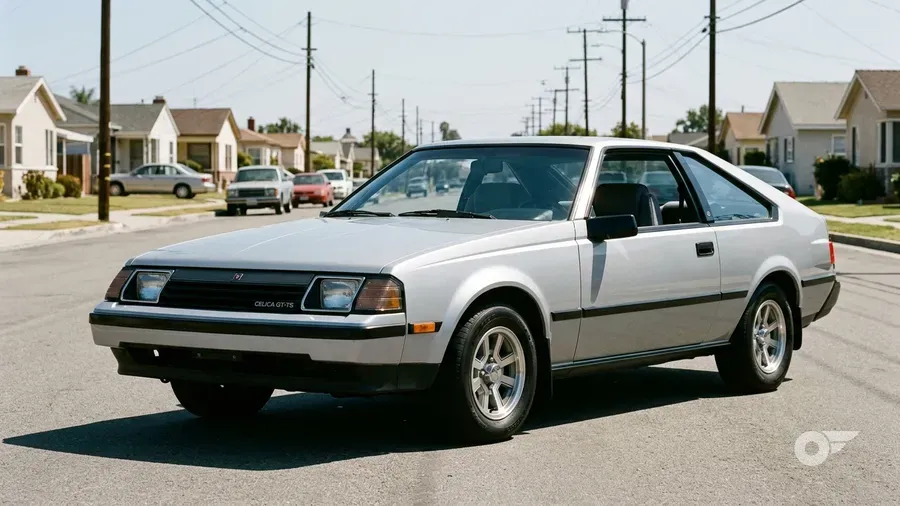
Toyota announced the second Celica on 22 August 1977, alongside a new Carina, the first full model change either car had seen since they arrived together in December 1970. What made it a different kind of car was where it was drawn. The body came out of Calty Design Research, the studio Toyota had opened in El Segundo, California in 1973, and this was the first Calty design to reach production. David Stollery led it.

That is the point of this Celica. The first one was Japan's reading of the Mustang formula, drawn in Japan for a market Toyota was still learning. The A40 was drawn in California by people who lived in it. Americans returned the compliment by calling it the Japanese Mustang, and Toyota did not argue.

Underneath, little changed. Carina floorpan, front engine, live rear axle, four-cylinder engines off Toyota's shelves, a menu of grades running ET to GTV in Japan and ST to GT in America. Motor Trend named it Import Car of the Year for 1978, the second time a Celica had taken that award. Then Toyota began dividing the car up: a six-cylinder version in April 1978, a four-door in January 1980, and two nameplates that would outlive the Celica itself.

Distinctions

The defining attributes and collector status that make this car garage-worthy.

Octane Files Select
Renowned for its history, engineering, or cultural weight.

Collectibility scorecard

Rated 1 to 10 on the traits that matter for owning, driving, and holding on to a car like this.

Desirability
5/10
Rarity
6/10
Driving thrill
4/10
Investment trajectory
6/10
Usability
7/10
Ease of restoration
4/10
Cultural impact
5/10
Electronic dependence
Fully analogHeavily electronic

Which market built the car decides this one. Every North American A40 runs a carburettor, on the 20R and then the 22R, with the vacuum emissions plumbing of the period draped over it and nothing resembling engine management anywhere on the car. Japan is where the electronics begin: the 2T-GEU twin-cam uses Toyota's electronic fuel injection, and the 1978 Japanese emissions standards brought the TGP lean-burn combustion system with them. Beyond fuelling, everything on every car is mechanical. Cable throttle, hydraulic brakes with a vacuum servo, unassisted steering on most examples, no traction control, and no module anywhere to interrogate when something stops working.

Market data

Demand tier, price trend, and typical values by condition. Our own assessment, not a quoted valuation.

Demand tier
EntrySolidHighBlue-chip

The accessible way in. Prices still forgive mistakes, and the upside is real.

Value trajectory
AppreciatingStableCooling

Values are climbing. The market wants more of these than exist.

Price by condition
Driver
$6k
Excellent
$15k
Concours
$28k

Priced as a used car for four decades and only now being looked at as a classic. Recorded sales run from $1,210 for a 1980 ST in May 2024 and $4,100 for a 1978 GT in November 2025 up through the low teens for a sorted GT Liftback. The tracked generation average of just under $17,000 is misleading on its own, because it carries an ex-works Group 4 rally car that made $135,000 in August 2023. The A40 currently trades at roughly half what a first-generation car does in comparable condition.

Values as of August 2026.

Buyer's guide

What anyone seriously considering this car should know first.

Why it's worth it
Calty's first production design, and the car both the Supra and the Camry names came from
Callout
The first production car designed by a Japanese maker's own American studio
What to watch for
Start with the windscreen aperture. Bubbling under the rubber there is the A40's signature, and it means water has been sitting in the scuttle for years. Then look at the door skins, and then look at the door shells from underneath, which is where the rot actually lives. Sills next, then the hatch aperture on a liftback, then the lower rear quarters and the floors that every Celica of the era shares. Cars that spent winters in salt are usually past economic repair however well they photograph. Then work out which car you are looking at. American cars ran the 2.2-litre 20R at 96 horsepower through 1980 and the 2.4-litre 22R at 97 for 1981, so a bigger engine bought you one horsepower and a little more torque, which tells you where the decade had got to. Four round headlamps mean a car built before August 1979; four rectangular ones mean the facelift. The mechanical news is good, and it is the reverse of the usual Toyota warning. These engines use a dual timing chain running on steel guides, the durable arrangement, not the single chain and plastic guides that gave later 22Rs their reputation. Buy the body and accept the engine.

The Story

Driving character

An American A40 is a slow car that does not feel slow, which is a specific and slightly odd sensation. Ninety-six horsepower in a coupe of roughly a tonne is not much, but the 20R makes its torque low down and the five-speed is spaced to suit it, so the car leaves junctions with more authority than the figures deserve and then runs out of enthusiasm well before the speedometer does. The chassis is the good part. A 2,500mm wheelbase, softer springing than the first Celica and much better isolation add up to a coupe you can drive for four hours without noticing. Steering is unassisted on most cars and light once you are moving. The live rear axle does what live rear axles do over broken surfaces, and the car understeers politely rather than doing anything sudden. A Japanese twin-cam changes the character completely. The 18R-GU wants revs, sounds like a proper twin-cam above 4,000rpm, and turns the same car into something you drive at the top of the gear rather than the bottom. That is the difference between a comfortable coupe and a small sports car, on identical bones.

Design

This is the car Calty was built to produce. Toyota opened the studio in El Segundo in 1973, the first design centre a Japanese manufacturer had established in North America, and the second-generation Celica was the first thing it put into production. David Stollery ran the project. He had spent seven years designing at General Motors before Toyota hired him to set the studio up, and it shows in the proportions: long bonnet, cabin set well back, a tail that lifts rather than falls away. The details are where it earns its place. Both bodies use frameless door glass against a deliberately thick B pillar, so the side view reads as a hardtop with the rollover structure hidden inside it. The glass itself is claimed as a first for a Japanese production car, curved in all three dimensions rather than rolled in two. August 1979 is the visible dividing line. Everything before it wears four round headlamps, carried over in spirit from the first Celica; everything after wears four rectangular ones with revised tail lamps behind. Which you prefer is genuinely argued about among owners, and the round-lamp cars are the ones that still look like 1977 rather than 1981.

Motorsport pedigree

The A40 is the Celica that went rallying and did not win. Toyota Team Europe, the Cologne operation that had grown out of Ove Andersson's own team, built a Group 4 car from it, and Toyota's own WRC history dates that car's debut to the 1980 Rally of Portugal. The FIA still holds homologation papers for the Celica 2000 GT in RA40 and RA45 form. It arrived at the wrong moment. A naturally aspirated two-litre with a live rear axle was being asked to race the first generation of turbocharged and four-wheel-drive rally cars, and the results read accordingly: sixth on the 1980 Acropolis for Andersson and Liddon, seventh on that year's 1000 Lakes, and a genuinely quick run on the 1980 RAC where Bjorn Waldegard led before retiring. No World Championship win, at any event, in any year. Two things get filed here that do not belong. The 560 horsepower Group 5 Celica LB Turbo that Schnitzer ran in the German championship used the first-generation bodyshell, not this one. And the Safari wins and the Group B headlines belong to the TA64 Celica Twin-Cam Turbo, a car three years newer than the last A50.

In culture

There is no film to point at, and pretending otherwise would misdescribe the car. A 1979 GT Liftback turns up in a 1980 Colombian action picture, and later A40s appear as period furniture in television drama, which is what happens to a car that sold in ordinary numbers and was then thrown away. Its cultural work is industrial, and it is larger than it looks. Two nameplates that dominate Toyota's next forty years arrive on derivatives of this exact car. The Celica XX went into production in April 1978 and reached America as the Celica Supra for 1979 with a 2.6-litre six, which is where the Supra begins. The Celica Camry, a four-door launched in Japan in January 1980, is where the Camry name starts, on a car wearing Celica front-end language over Carina engineering. The third piece is the reception. American writers called it the Japanese Mustang, and by 1978 that had stopped being an accusation of imitation. It was a description of the segment Toyota now competed in, with a car drawn a few miles from the beach.

Rivals

Cars from other manufacturers that competed for the same buyers when new.
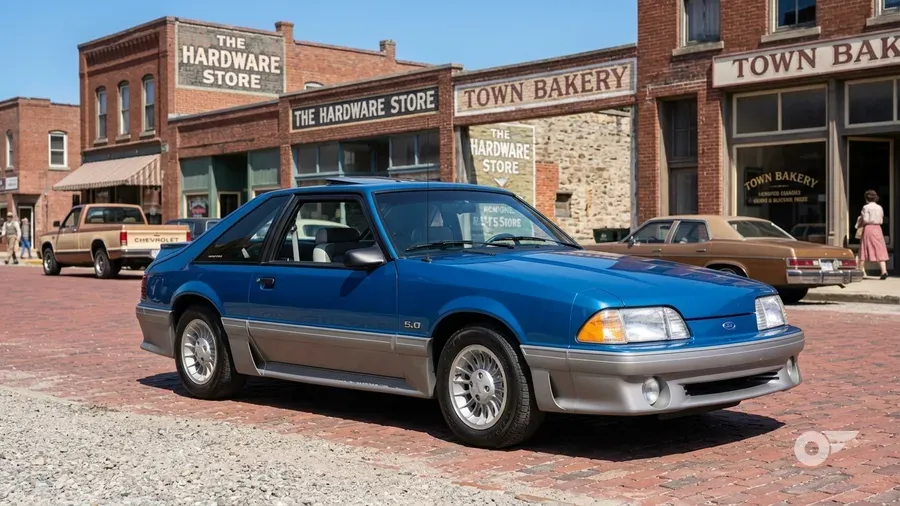
Ford Mustang 3rd Gen

Ford Mustang 3rd Gen

USA·Muscle·1979–1993
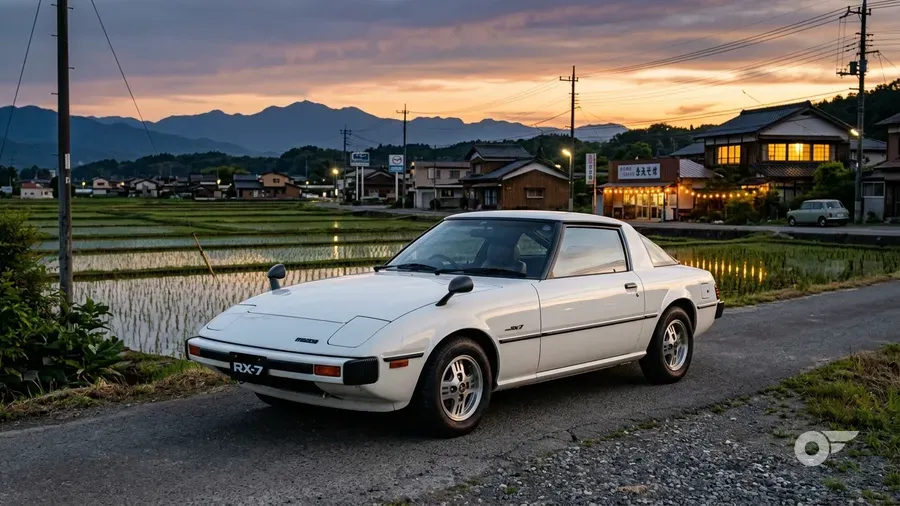
Mazda RX-7 SA/FB

Mazda RX-7 SA/FB

Japan·Sports·1978–1985
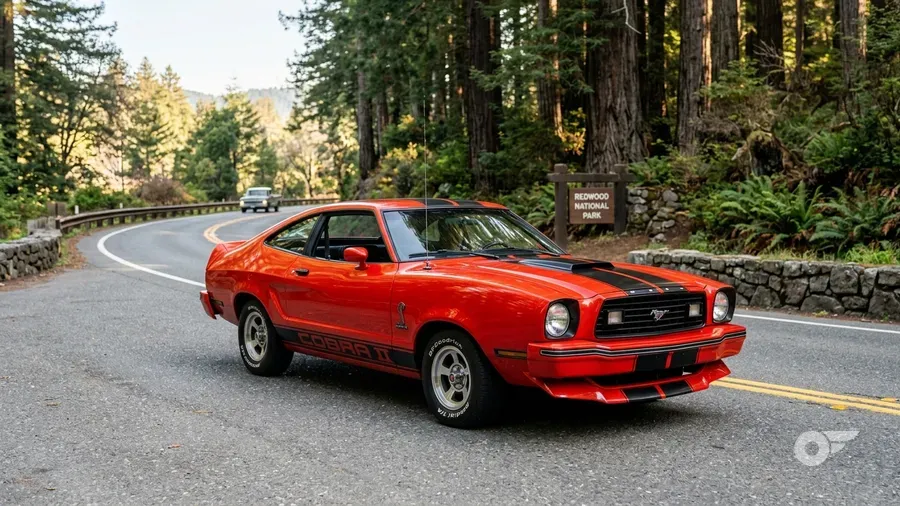
Ford Mustang 2nd Gen

Ford Mustang 2nd Gen

USA·Sports·1974–1978

Owning One

Why collectors want it

The A40 spent forty years as a used Toyota, and that is most of the argument. It was cheap, it was everywhere, it rusted, and nobody thought to keep one. No production figure for the generation has ever been published, so nobody can tell you how many were built, but you can see the answer in what comes up for sale: almost nothing, in any market, in honest condition.

What has changed is that the car now has a story attached to it. Calty's first production design is a real piece of industrial history, and this is the moment a Japanese manufacturer stopped exporting to America and started designing for it. That argument has not reached prices yet, which is the opportunity.

The hierarchy is straightforward. Japanese-market twin-cams sit on top, the fuel-injected 2T-GEU in the 1600 and the 18R-GU in the 2000 GT and GTV, none of which was sold new in America. Below them comes the American GT Liftback with the five-speed, then the ST coupe. The Sunchaser is its own category, priced on novelty rather than on condition. At the bottom sit automatics and rough shells, which are bought for parts rather than restored.

Which one to look for

The grail never left Japan. Toyota's home market got the twin-cams, the fuel-injected 2T-GEU in the 1600 and the 18R-GU in the 2000, the latter rated at 130 PS in a year when the American car made 96 horsepower. GT and GTV are the grades to look for, and every one in the United States arrived as an import. Among cars sold new in America the GT Liftback with the five-speed is the one. It is the shape Calty drew the car around, it has the better gearbox, and it is what Motor Trend was looking at when it handed over the 1978 award. The ST coupe is the honest cheap entry and a cleaner-looking car than people expect. Two oddities matter more than their numbers suggest. The Sunchaser is a conversion by the Griffith Company sold from 1979 to 1981, with a lift-out targa panel and a folding rear section behind the B pillar; the community count is roughly two thousand cars. The GTA 10th Anniversary of 1981 is the other, a two-tone coupe with Supra interior trim that was built only with the four-speed automatic, which is exactly why so many survive in better condition than the cars people drove hard.

ET

Japanese-market entry grade, the plainest way into the second-generation Celica. Small-capacity pushrod four, minimal equipment, and the grade that explains how the car sold in the volumes it did at home.

GT

The performance grade, and it means two completely different cars. In Japan the GT carries a twin-cam, the fuel-injected 2T-GEU in the 1600 or the 18R-GU in the 2000. In North America it is a trim level over the ST, with the same 20R engine but the five-speed gearbox, better seats and the liftback body option. Both are worth having; only one of them is quick.

GTA 10th Anniversary · 1981

North American commemorative coupe marking ten years of the Celica. A GT coupe with two-tone paint, Supra-style interior trim, power windows, an upgraded stereo and alloy wheels, sold only with the four-speed automatic. That automatic-only specification is why a disproportionate number survive in good condition: they were bought by people who were never going to thrash them.

GTV

Top Japanese grade and the connoisseur's pick of the whole generation. Twin-cam engine, sport suspension and the least American of all the second-generation Celicas. Never sold new in the United States, so every one there is an import.

LT

One step above ET in Japan and also sold in Europe as the 1600 LT. Still a pushrod car, still no pretence of performance, but better trimmed than the ET.

SE

Japanese comfort-orientated grade sitting between ST and XT, aimed at buyers who wanted the shape without the performance pitch.

ST

The volume grade, and the only one sold in North America below GT. In the United States it came as a notchback coupe with the 2.2-litre 20R. A cleaner-looking car than most people remember, and the cheapest honest entry point today.

Sunchaser · 1979-1981

An open Celica, in the only form Toyota ever allowed for this generation. The Griffith Company cut the roof out behind the windscreen for a lift-out targa panel and again behind the B pillar for a folding rear section, then fitted a fibreglass surround and a Sunchaser badge on each B pillar. Sold through Toyota dealers in the United States on both ST and GT cars.

XT

Upper trim grade in Japan and Europe, usually paired with the two-litre engines. The European 2000 XT is the version most often found in Britain and Germany today.

What owning one is like

Two separate cars live inside one ownership experience here. The mechanical car is close to indestructible. The 20R and 22R are among the toughest four-cylinder engines Toyota ever built, they run a dual timing chain on steel guides rather than the plastic-guided single chain that came later, and the gearboxes, axles and running gear all outlast the bodyshell by a wide margin. People genuinely did run these to enormous mileages without doing much to them. The bodyshell is the other car, and it is why so few are left. Water sits in the scuttle and works outward into the windscreen aperture, doors rot from inside the shell rather than through the skin, and sills, floors and rear quarters follow. On a liftback the hatch aperture joins in. After rust comes trim. Badges, lenses, interior plastics, the dash and the Celica-specific brightwork were made for a car nobody expected to keep, and they are what stall restorations, not anything mechanical. Sunchasers add a list of their own: the fibreglass surround, the folding rear section and its frame, and water finding its way past a forty-five-year-old seal into a floor that was never designed to be open to the sky.

Upkeep & parts

Servicing one is cheap and unglamorous, which is the good news. Filters, gaskets, brakes, clutches and suspension parts for the 20R and 22R are still ordinary stock items, because the same engines went into Hilux pickups by the million, and any competent workshop can look after the car without knowing anything about Celicas.

Body and trim is where the money goes, and where you need the community rather than a catalogue. ToyHead Auto carries a dedicated 1978 to 1981 Celica parts section, Celica Hobby runs a second-generation forum and hosts scanned owner's manuals, and Celica-Club UK covers the model in Europe. Second-hand panels, badges and interior pieces move between owners rather than through shops, which is a good reason to join something before you buy rather than after.

Budget in the right order. Set aside serious money for metalwork and very little for mechanicals, which is the reverse of most 1970s classics. A shell needing sills, floors and quarters will cost more to put right than the finished car is worth unless it is a Japanese twin-cam, a Sunchaser or an exceptional original. Buy the best body you can find and fix the engine later.

Country of origin
Japan
Class
Sports
Production years
1977–1981
Units built
Not recorded
Model
Celica
Nickname
No nickname ("Daruma Celica" names the first-generation A20/A30 specifically, not this generation)
Body
Coupe, Liftback
Layout
Front-engine, RWD
Engine
Japan and export: 1.6L 2T-U, 1.6L 12T-U, 1.6L 2T-GEU DOHC, 1.8L 3T-U, 1.8L 13T-U, 2.0L 18R-U, 2.0L 18R-GU DOHC (130 PS), 2.0L 21R. North America: 2.2L 20R (96hp, 1978-80), 2.4L 22R (97hp, 1981). Australia: 2.0L 18R only
Transmission
5-speed W50 manual, 5-speed W55 manual (1981), 3-speed A40 automatic (1978-80), 4-speed A40D automatic (1981)
Designer
David Stollery (Calty Design Research)